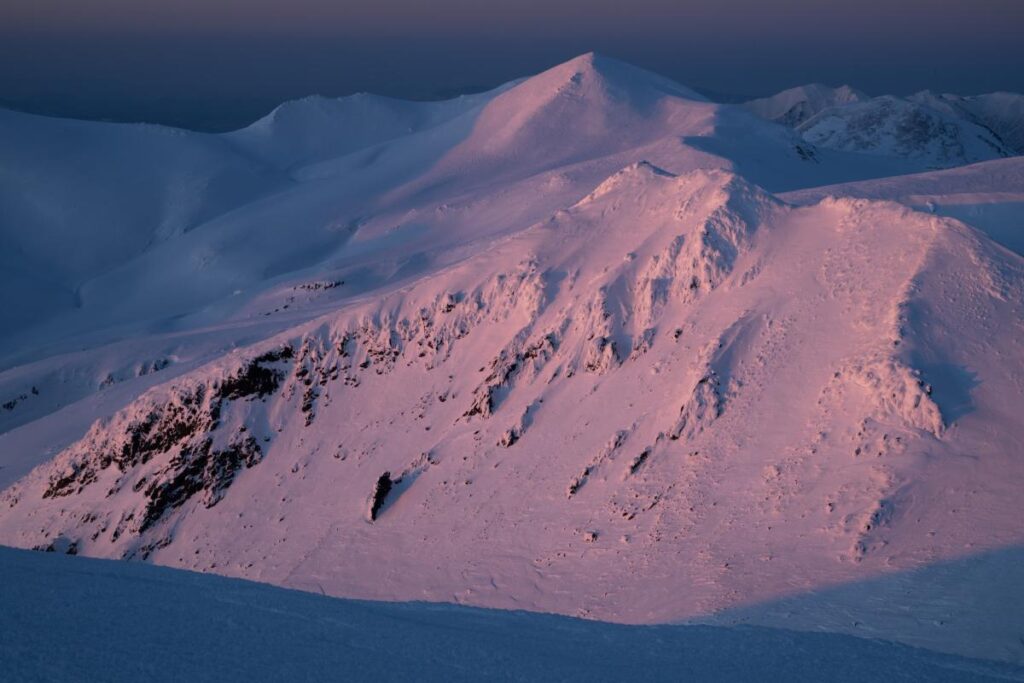
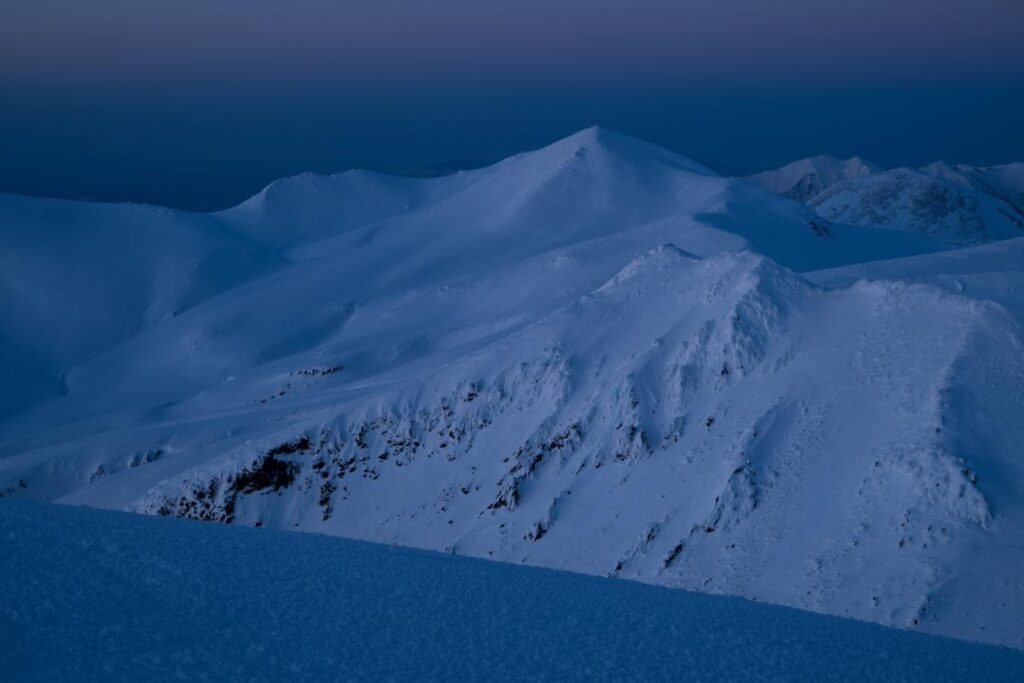
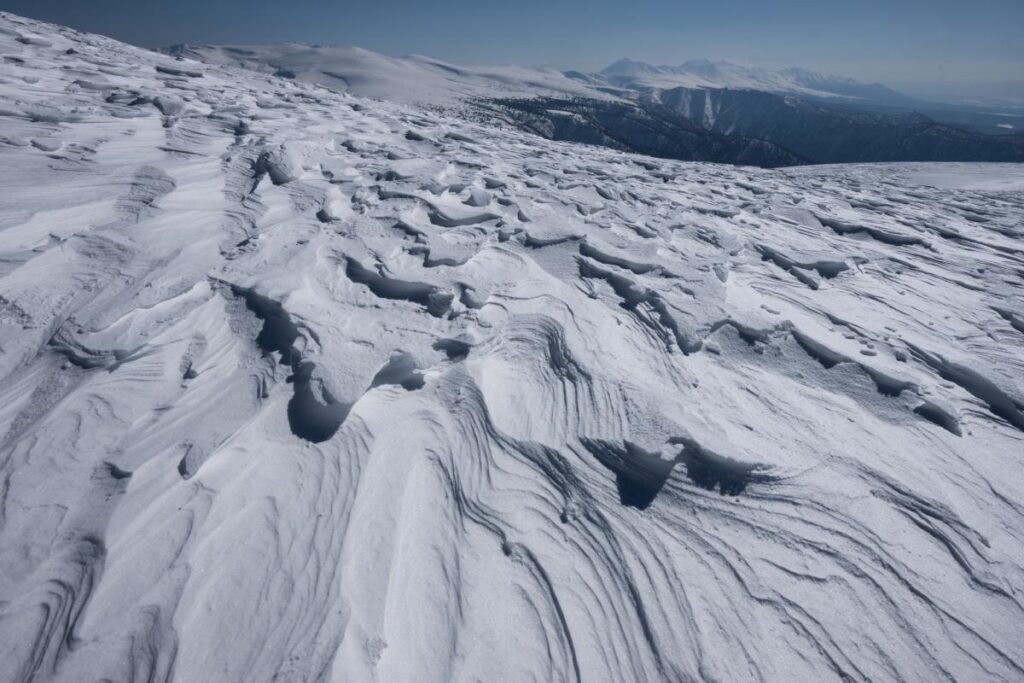
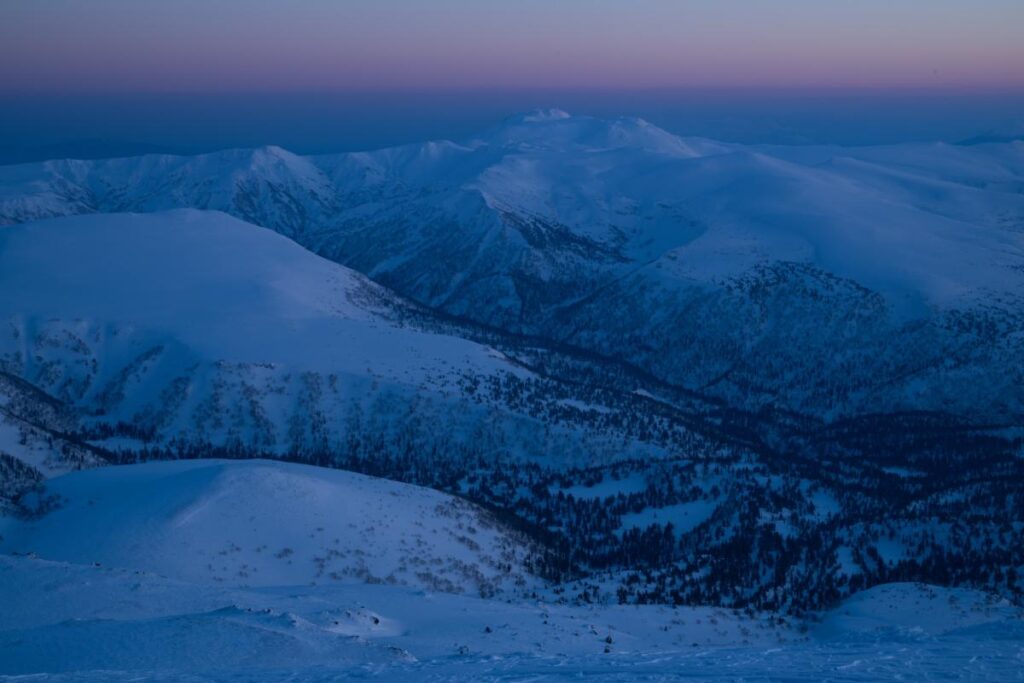
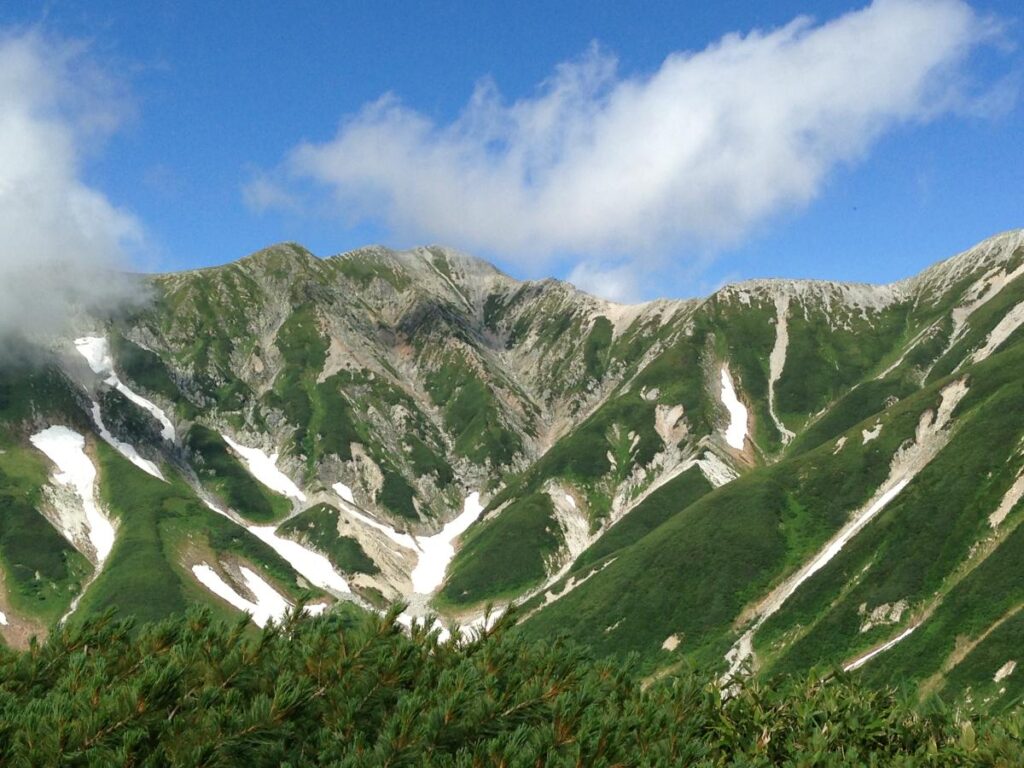
Toshiyuki Ishikawa, a resident of Obihiro City in Hokkaido, shares a breathtaking evening scene from Mt. Asahidake (2,291m)— the highest peak of Hokkaido
March 25, 2026
On a day blessed with clear, stable weather, I fulfilled a long-held wish – to take photograph mountains in the evening light from the snow-covered summit of Mt. Asahidake
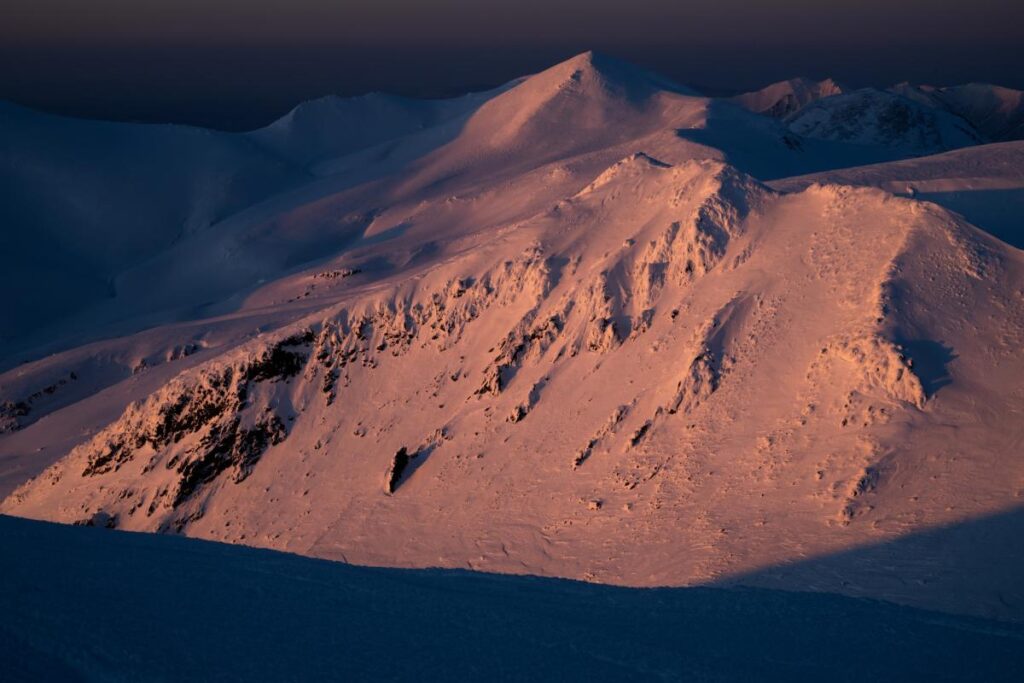
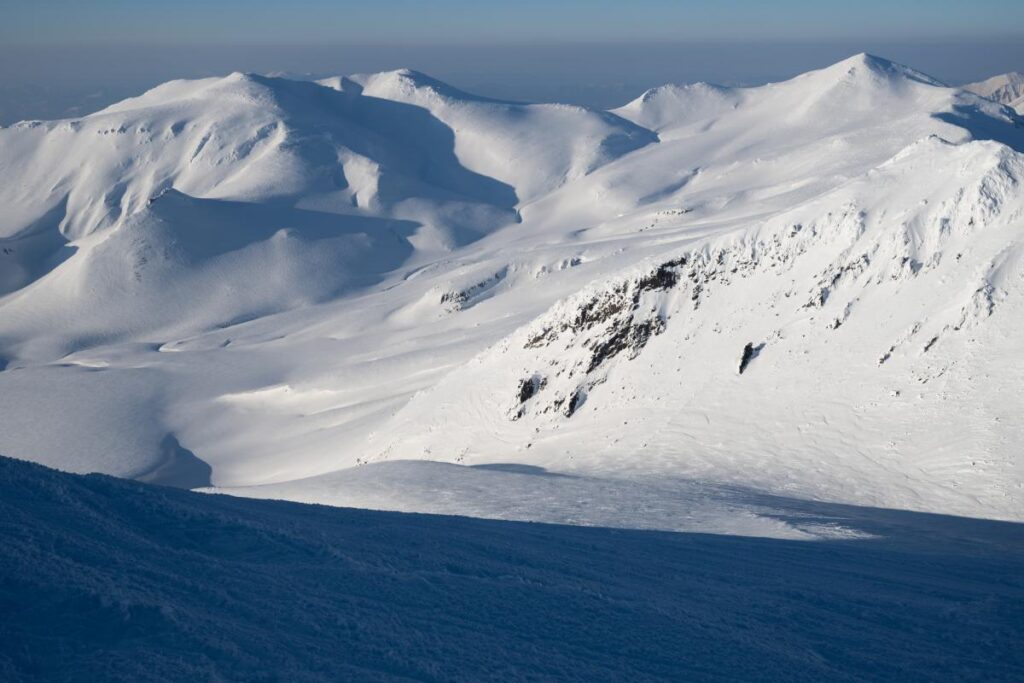
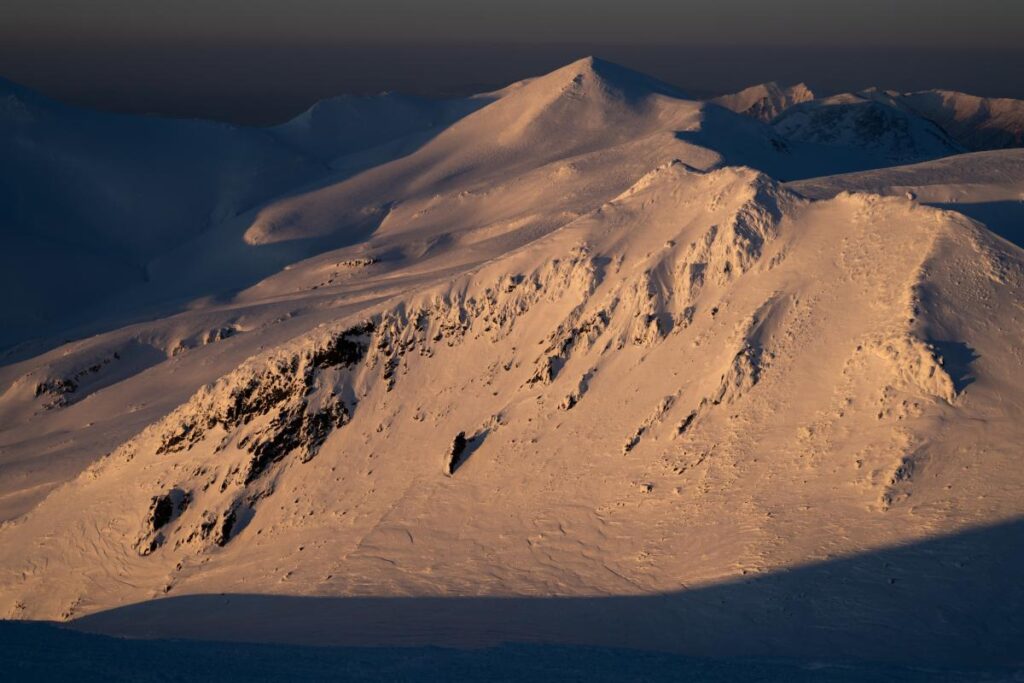
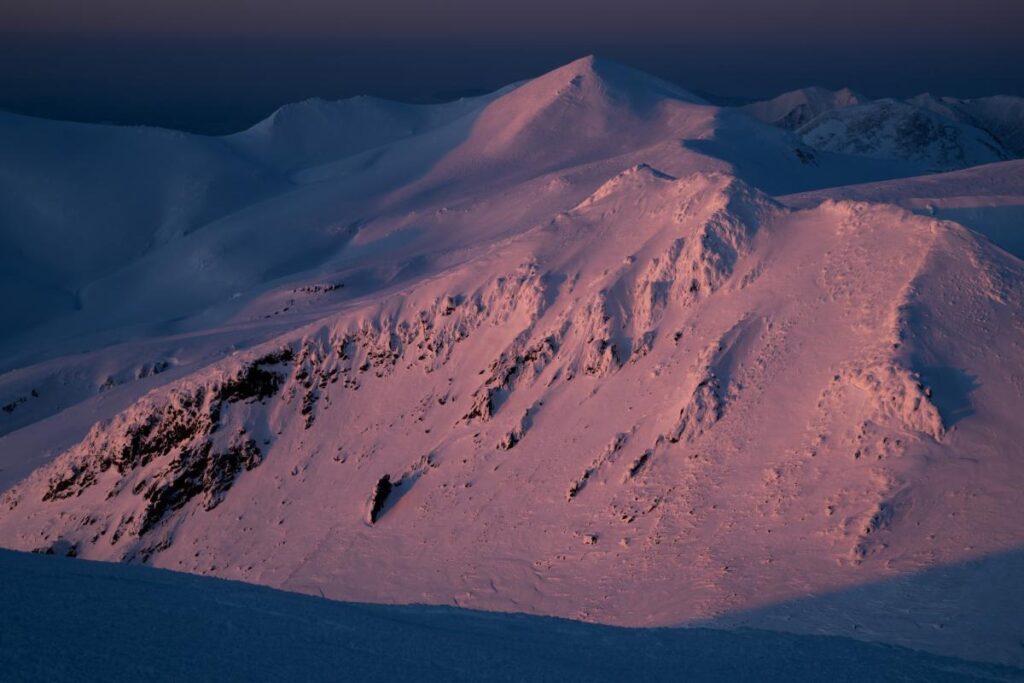
Before reaching the summit, my goal was to see Mt. Tomuraushi at sunset but Mt. Hokuchindake was the best as the way the light hit the mountain.
It was magnificent that Mt Hokuchindake changed colors minute by minute from white to yellow, orange, red, pink, and blue. In addition, I was impressed by the view that we can only see in the snowy mountains such as skavla,After sunset, I began my descent via the well-maintained ski slope near Sugatami Ropeway Station.
16:40 White : View of Mt. Hippudake and Mt. Hokuchindake from the summit of Mt. Asahidake17:32 Yellow : View of Mt. Hokuchindake from the summit of Mt. Asahidake17:43 Red : View of Mt. Hokuchindake from the summit of Mt. Asahidake17:44 Pink : View of Mt. Hokuchindake from the summit of Mt. Asahidake17:44 Blue : View of Mt. Hokuchindake from the summit of Mt. AsahidakeView of Scavla and Tokachi mountain range from the trail of Mt. AsahidakeView of the belt of Venus and Mt. Tomuraushi from the summit of Mt. Asahidake
In the aftermath of the 2015 earthquakes in Nepal, information about the devastation in rural mountain communities was not widely covered by international media, which tended to focus on the capital and well-known tourist regions.
However, mobile phones were already widely used across Nepal at the time. Survivors in affected villages were able to communicate directly with family members and friends living abroad, sharing details of the damage and seeking assistance.
Shortly after the earthquake struck, Dhalma began receiving messages from relatives and acquaintances in his hometown of Lisank Village. Fortunately, his immediate family members were safe and their home had not suffered major damage. However, roads connecting the village to the nearest main highway had collapsed in multiple locations, and many homes belonging to friends and neighbors had been destroyed.
Dhalma’s family owned relatively large agricultural landholdings in the area, and the Lama lineage had long played a significant role as spiritual leaders within the Tamang community. He felt a strong sense of responsibility to respond.
Yet as an individual, there was little he could do alone.
He therefore reached out to Ms. Kawabuchi, the director of a Toyama-based NGO called as Asia’s Dream for Children, which provides support in disaster-affected areas both within Japan and abroad. Although they had no prior personal connection, Dhalma established the Toyama–Nepal Cultural Exchange Association, creating a platform through which assistance could be directed.
“I couldn’t simply ask for help for my own family or village,” he explains. “So we created an organization that could serve as a recipient for support.”
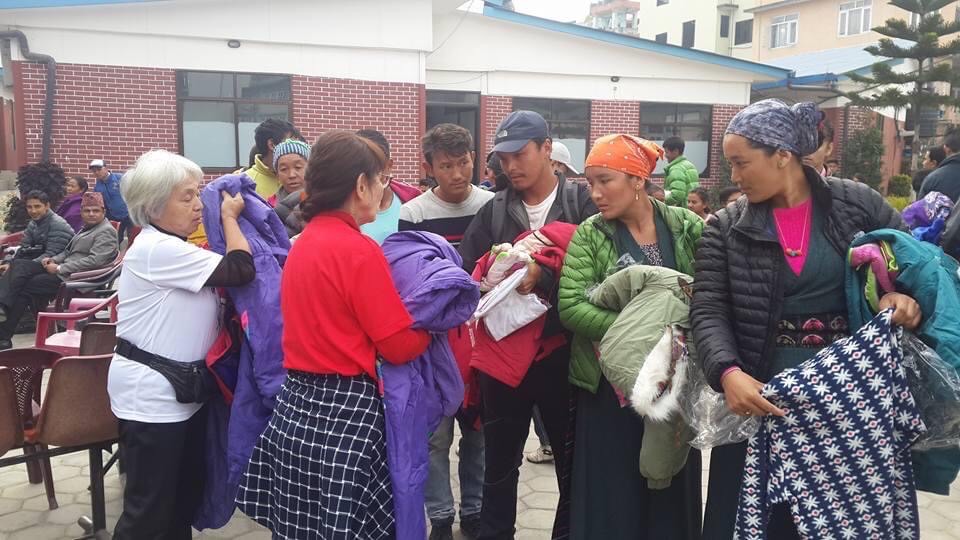
Ms. Kawabuchi responded immediately. Within a week, emergency relief supplies that were difficult to obtain locally — such as tarpaulins — were prepared in Japan. Accompanied by members of the NGO and several Nepalese residents in Toyama, Dhalma traveled to Kathmandu to coordinate their delivery.
His elder brother had already arranged transportation to their home district.
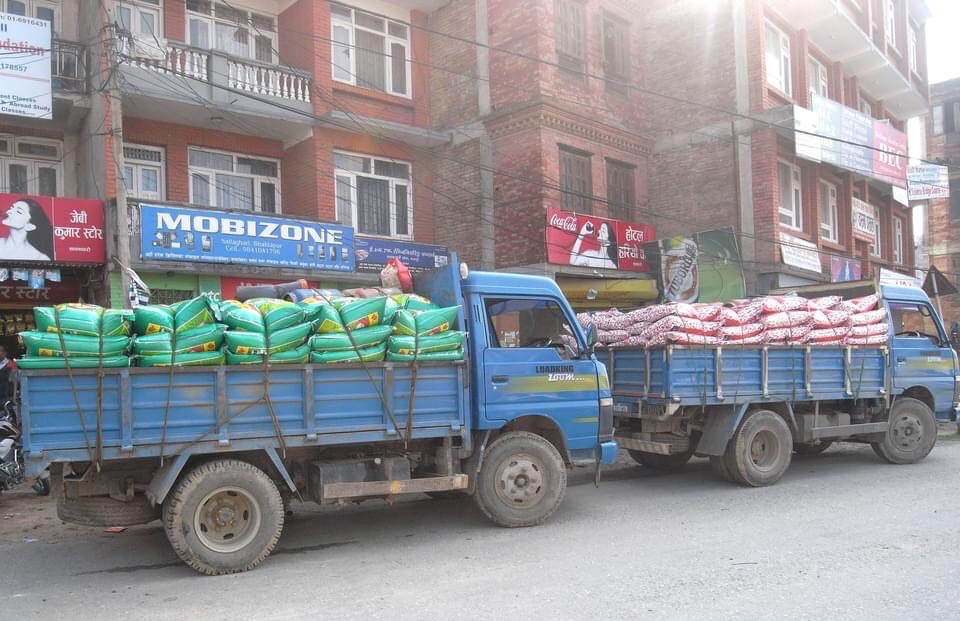
Transporting relief supplies procured in Kathmandu
“Our approach is somewhat unconventional,” Ms. Kawabuchi notes. “We are a small organization, so rather than waiting for formal procedures, we focus on delivering support quickly to areas that are often overlooked by governmental assistance.”Dhalma had anticipated that the Nepalese government would face challenges in providing timely support to rural areas. Indeed, a report released in April 2017 indicated that nearly 90 percent of the approximately US$4.1 billion in reconstruction funds provided by foreign governments and international organizations had yet to be disbursed.
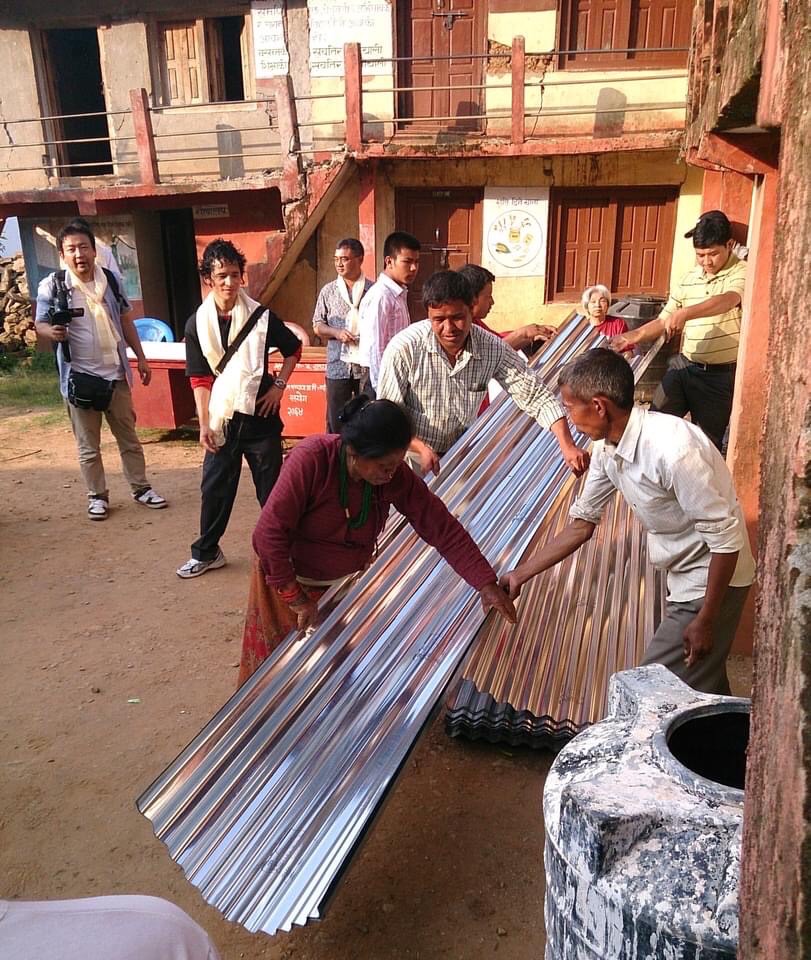
Distributing reconstruction materials delivered from Japan
The support provided by Asia’s Dream for Children extended beyond emergency relief. Through discussions with local residents, it was agreed that materials required for repairing the road connecting Lisank Village to the main highway would be provided on the condition that villagers would carry out the reconstruction work voluntarily.
Approximately two years later, members of the NGO returned to the village to assess the progress of the recovery effort — a visit that I accompanied in November 2016.Following the initial relief activities, Dhalma remained closely involved in the reconstruction project while maintaining regular communication with Lisank Village. Over time, he began to consider how the connections that had been formed between communities in Toyama and Nepal might be transformed into more sustained, everyday exchanges.
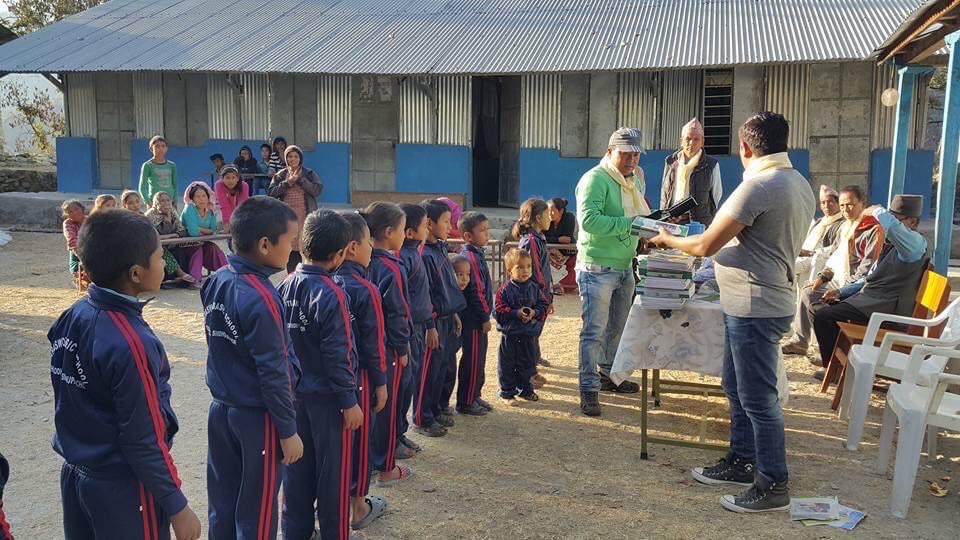
Providing school supplies at a village school in Lisank
Around the time Dhalma moved to Japan in 2005, Nepalese residents were still relatively uncommon in rural regions such as Toyama. However, their numbers began to grow rapidly in the following years. Many were young workers employed by small and medium-sized enterprises, often with limited opportunities to interact with local Japanese residents.
Dhalma therefore decided to develop the Toyama–Nepal Cultural Exchange Association into a platform for fostering mutual understanding and integration within the local community.“I became the chair — although in reality, it mostly meant coordinating requests and handling various tasks,” he says. “Many of the people who supported us were those I had come to know through my work in agriculture.”
Related Topics
• Community-led Disaster Recovery in Mountain Regions • Transnational Mountain Communities • Diaspora Networks in Rural Revitalization • Local-to-Local International Cooperation • Cultural Exchange and Community Integration
Learn More
This episode highlights how informal networks and diaspora communities can play a critical role in supporting recovery and long-term resilience in remote mountain regions. Related initiatives can be found in: • Community-based Mountain Resilience • Cross-border Cultural Exchange Programs • Post-disaster Rural Reconstruction
In Ōno, groundwater is what people drink every day.
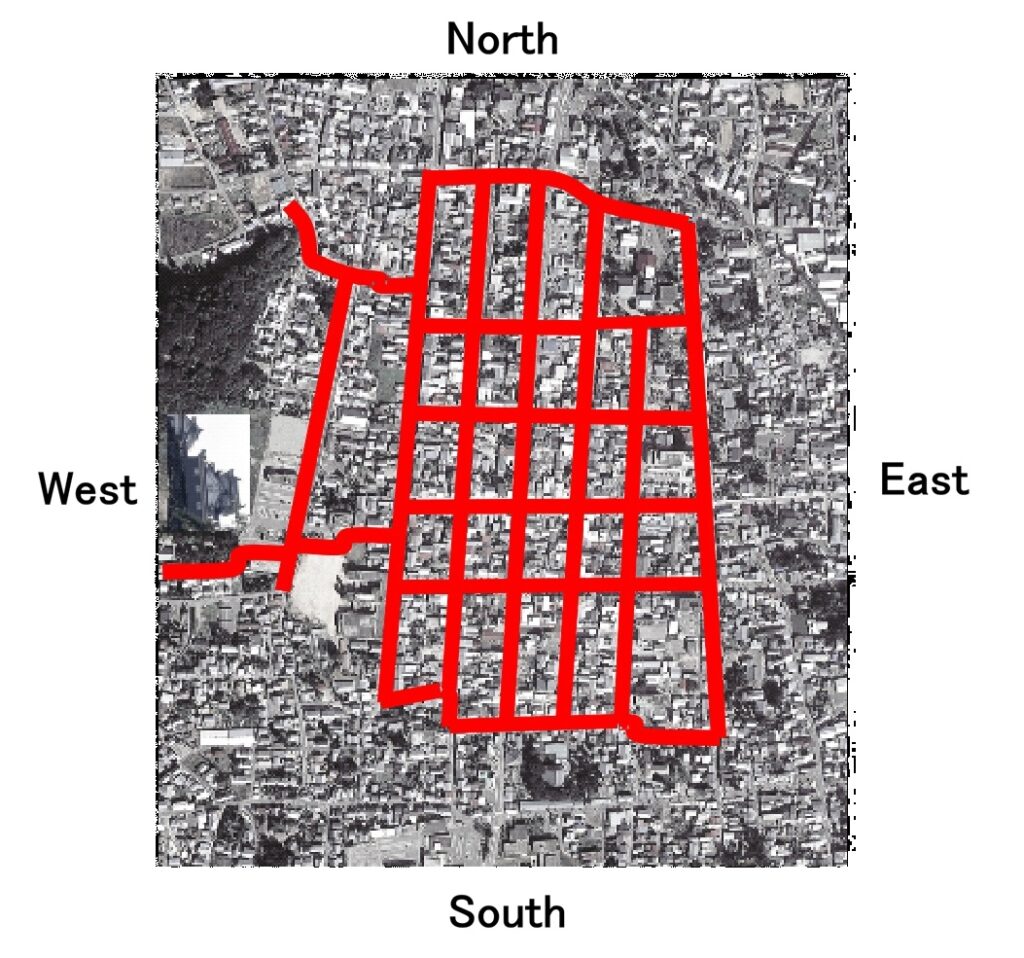
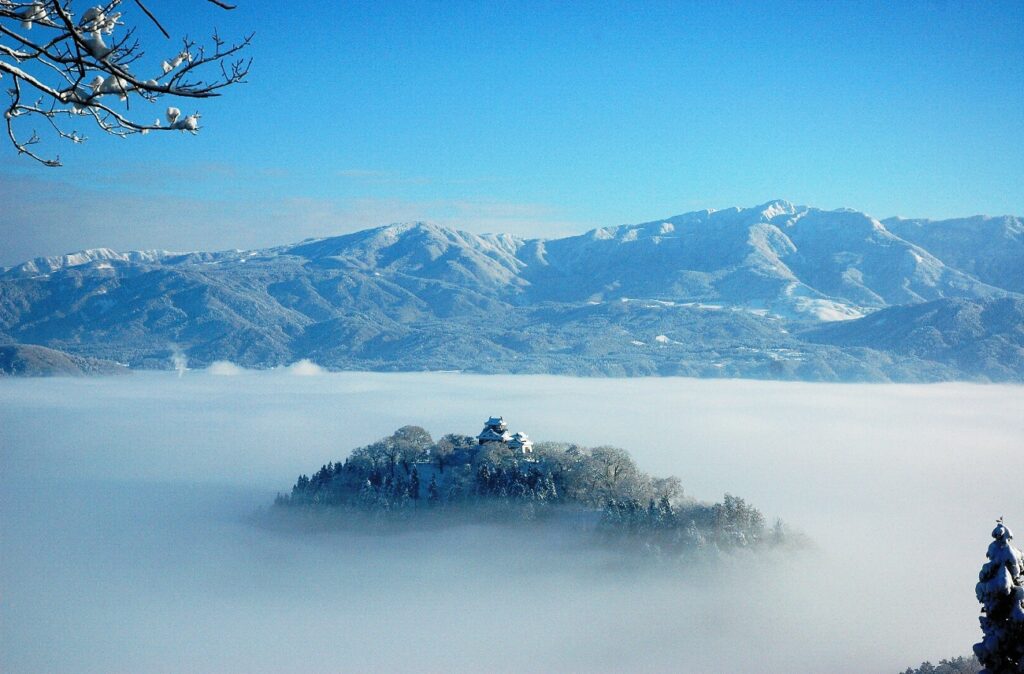
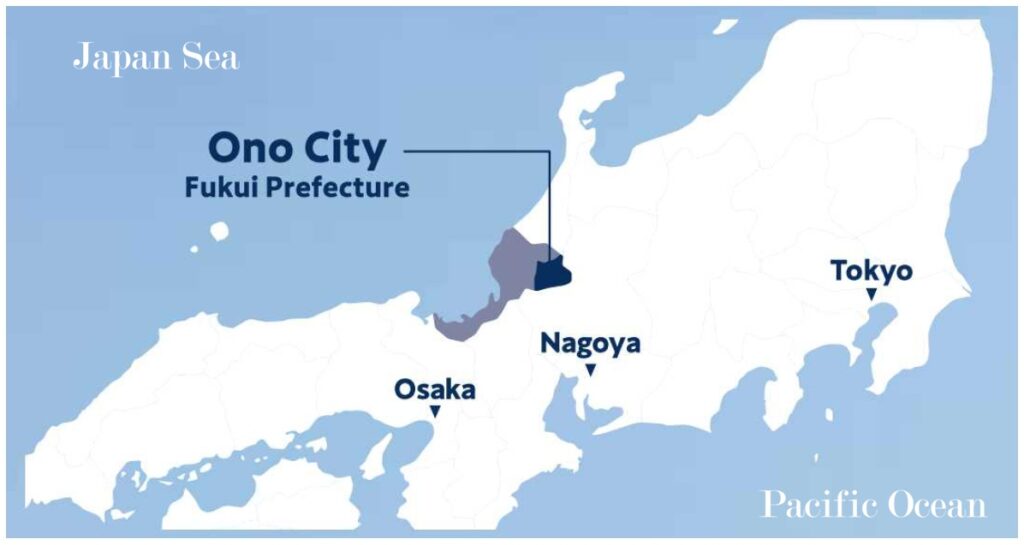
Ōno City in Fukui Prefecture—often called the “Castle in the Sky”—was founded approximately 450 years ago by Nagachika Kanamori, a retainer of Oda Nobunaga. Modeled after Kyoto, he constructed a castle town laid out in a grid pattern, complete with an advanced water supply system for its time.
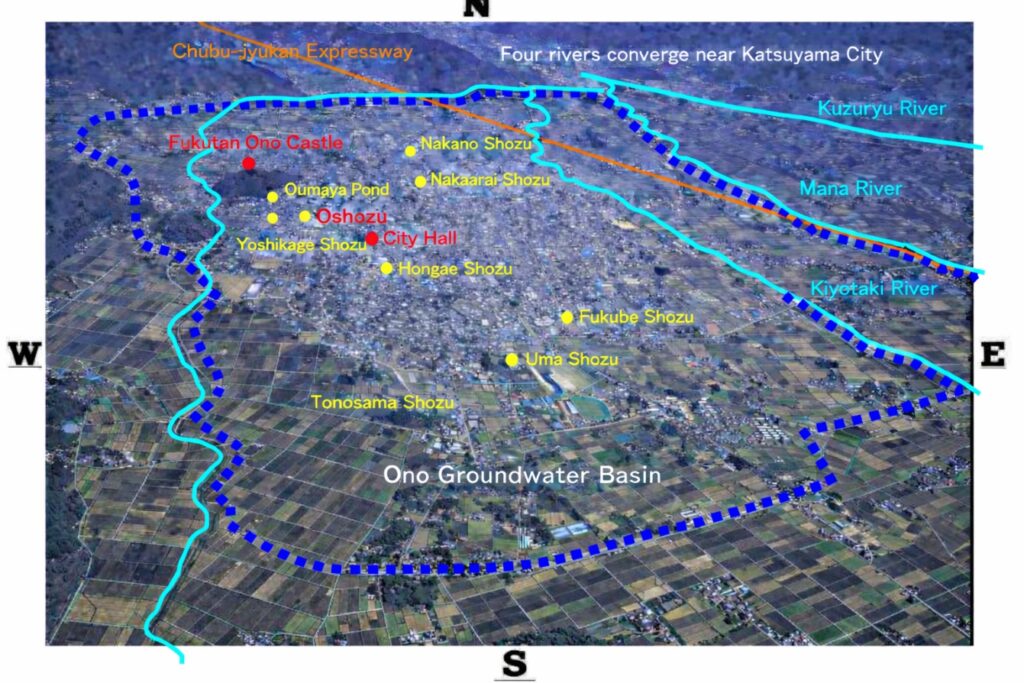
At the southern edge of the town, a spring known as Hongan Shozu served as the primary water source, supplying water for daily life throughout the settlement. The original town layout—structured around this water system—remains visible today, as shown by the red lines on the map below.
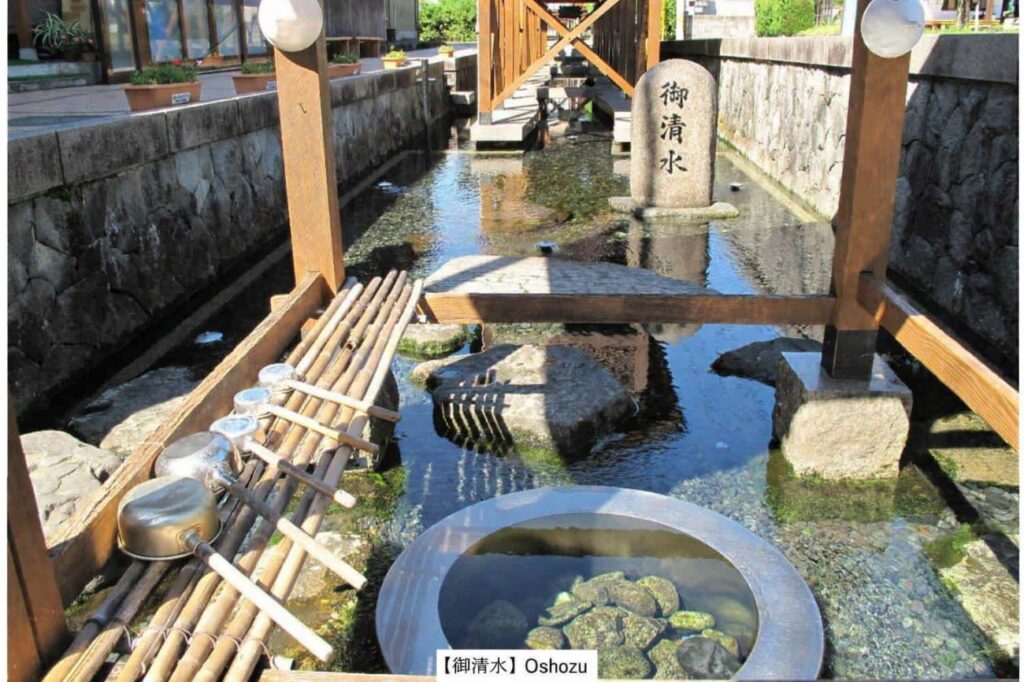
Ōno is also known for its long-standing citizen-led efforts in water conservation. The Ōno Basin has long been blessed with abundant groundwater, which has supported drinking water, agriculture, and industry alike. Numerous spring sites, including Oshozu- selected as one of Japan’s 100 Exquisite Waters- are scattered throughout the city.
Over generations, a unique culture has emerged—one that lives with water and reveres it. Local lifestyles, customs, and oral traditions reflect a deep relationship between the people of Ōno and their groundwater.
However, during Japan’s period of rapid economic growth, groundwater levels began to decline, and springs gradually diminished or dried up. The continuation of Ōno’s distinctive springwater culture was at risk.
In response, the city has undertaken a series of initiatives to conserve and sustain its groundwater resources.This six-part series introduces Ōno City’s efforts to protect and pass on its water heritage.
Episode 1 – The Castle in the Sky, City of Water
What you see above the clouds is sustained by what lies beneath the ground.
Ōno is not only a city built on water—it is a city that lives by it.
A City Built Inside a Natural Basin
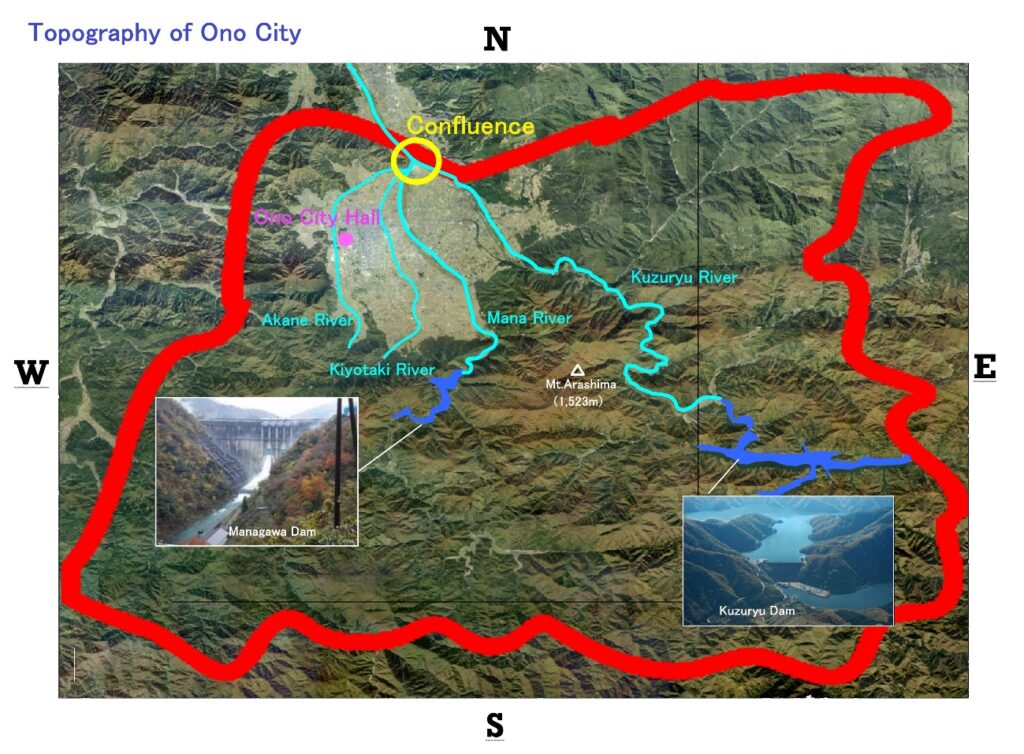
Ōno City is located in eastern Fukui Prefecture, nestled within the Ōno Basin and surrounded by mountains. Of its total area of 872.43 km², approximately 87% is covered by forest, making it a richly natural regional city.The Kuzuryu River, originating from Mt. Hakusan, along with its tributaries—the Mana, Kiyotaki, and Akane Rivers—flow northward through the basin. For centuries, abundant springwater has sustained life here, affectionately known by residents as Shozu.
Four major first-class rivers flow through the Ono Basin from south to north before joining the Kuzuryu River.
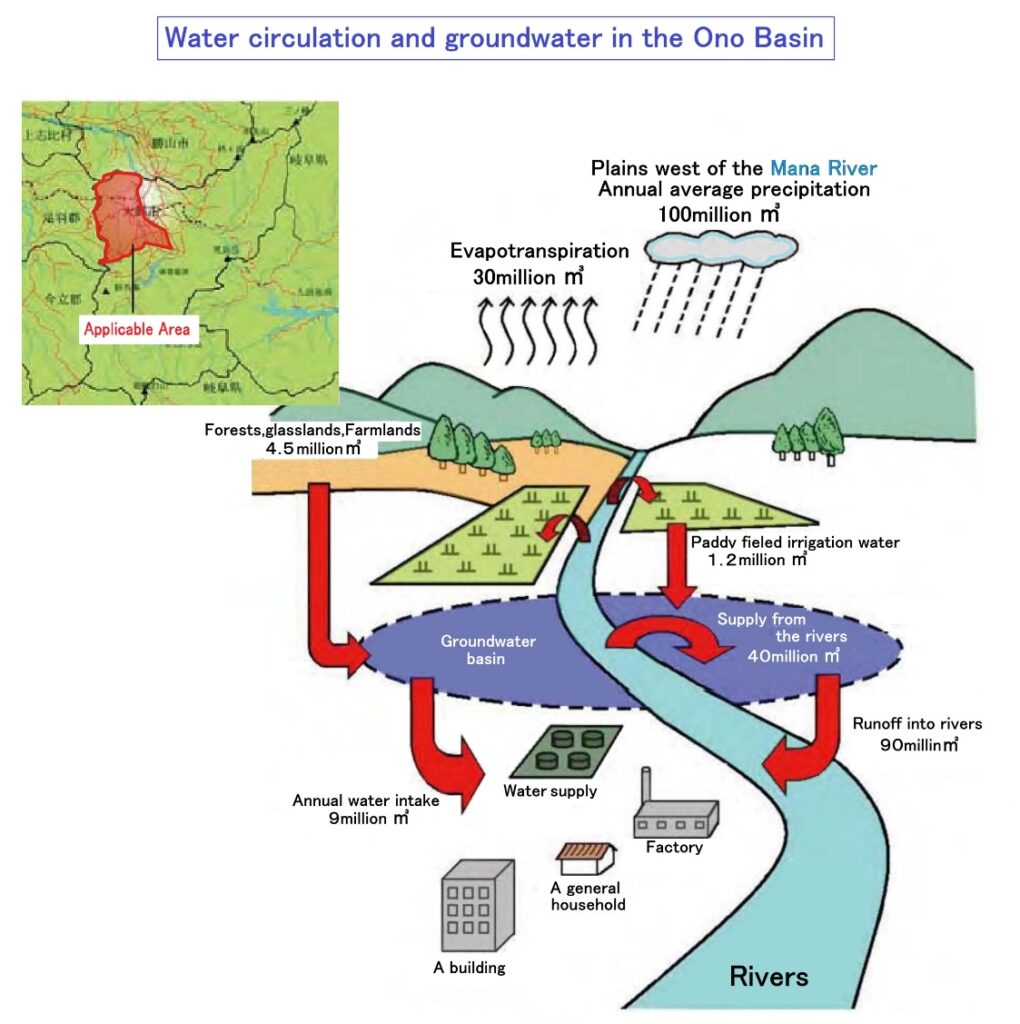
The Ono Basin functions as a natural underground dam, storing abundant groundwater that has sustained the city’s water culture for centuries.
Around 450 years ago, Nagachika Kanamori developed a castle town that utilized these springs. Remarkably, it featured both water supply and drainage systems—an advanced form of urban infrastructure for its time.
Even today, groundwater remains central to daily life in Ōno. Many households in the city center have private pumps installed, drawing groundwater for drinking, cooking, bathing, flushing toilets, laundry, and even car washing. It also continues to be widely used in agriculture and industry.
In 1985, Oshozu was selected as one of Japan’s 100 Exquisite Waters, followed by Hongan Shozu in 2008 under the Heisei-era list. In 1996, Ōno City itself was recognized as one of Japan’s “100 Villages of Water.”These recognitions reflect the exceptionally deep connection between the city’s residents and their water resources—one that has nurtured a distinctive culture of coexistence with groundwater.
Springs That Shaped Everyday Life
Approximately 70% of all households in Ōno own private wells—totaling over 8,000. New wells continue to be drilled as residential areas expand.For most residents, drawing groundwater and using it directly as drinking water is simply part of everyday life.
Groundwater That Stays Within the City
Not only does Ōno possess abundant usable groundwater, but the flow of groundwater is largely contained within a single municipal boundary, creating a unique local water cycle system
Although Dhalma never expected to become the successor to a Japanese farm, he felt that it would be wrong to let the enterprise disappear simply because there was no one to take over.
“The previous owner had spent decades improving the soil, developing cultivation techniques for komatsuna, and building relationships with buyers,” he recalls. “It didn’t feel right to abandon all of that just because there was no successor.”
In Nepal, when Dhalma was growing up, inheriting farmland was traditionally reserved for the eldest son. While this norm has begun to shift in recent years due to increasing labor migration abroad, Japan appears to have faced similar structural changes much earlier than Nepal. Yet agriculture — the foundation of human livelihood — should not be easily abandoned.
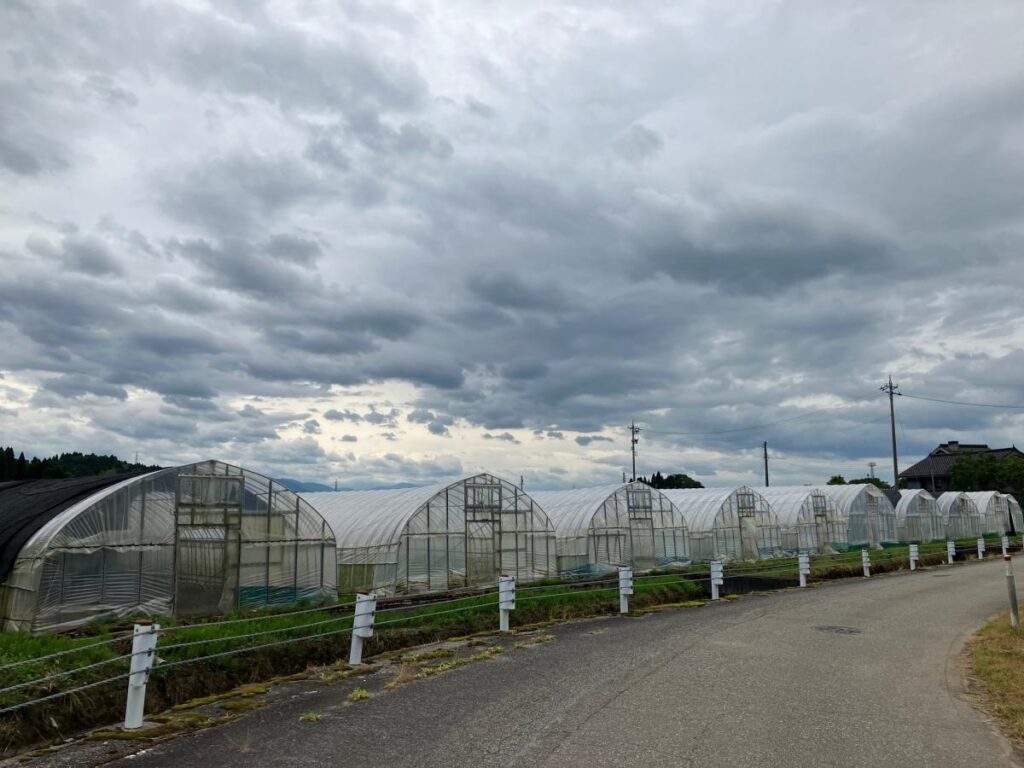
Greenhouses at Happy Farm
Although Dhalma was taught all the technical aspects of cultivation, there was one practice he found difficult to accept: the disposal of produce that did not meet size standards at the time of shipment.
Of course, vegetables that are wilted or damaged by pests cannot be sold. However, even when seeds are sown on the same day, grown with the same fertilizer, and harvested at the same time in the same greenhouse, variations in size are inevitable in living organisms. Nevertheless, produce that is even a few centimeters too large or too small is rejected by distribution channels such as the Japan Agricultural Cooperatives (JA).
As a result, the farm’s average disposal rate reached nearly 20 percent.“It felt wasteful — and environmentally irresponsible,” Dhalma explains.
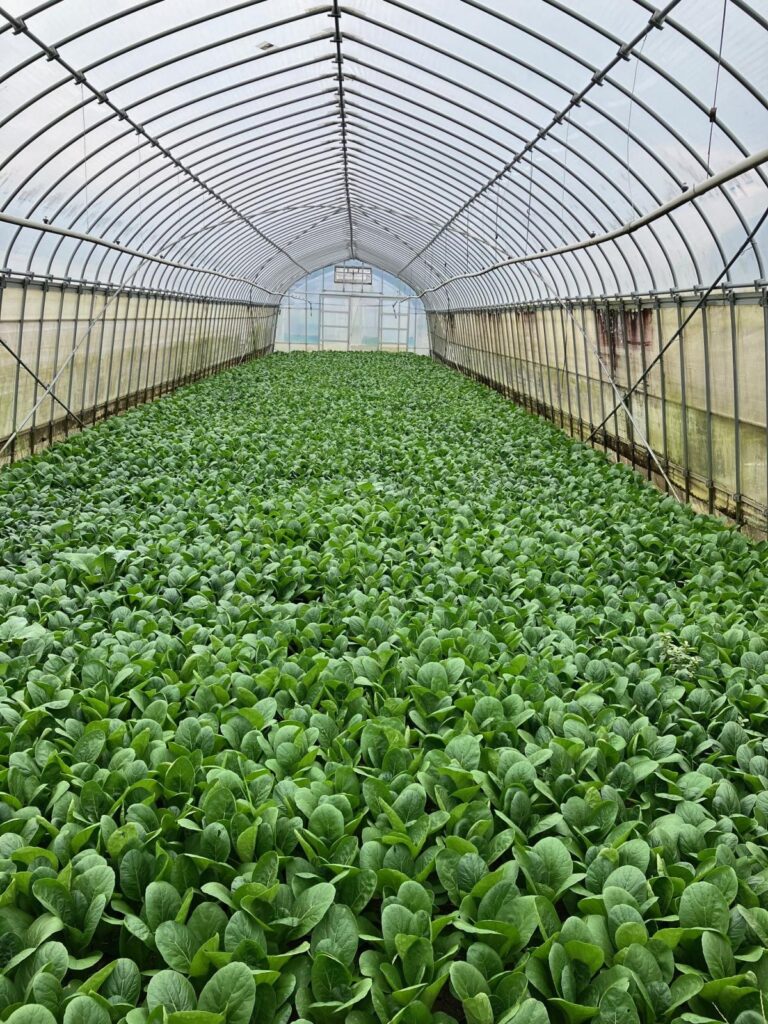
Dhalma Lama working inside a greenhouse
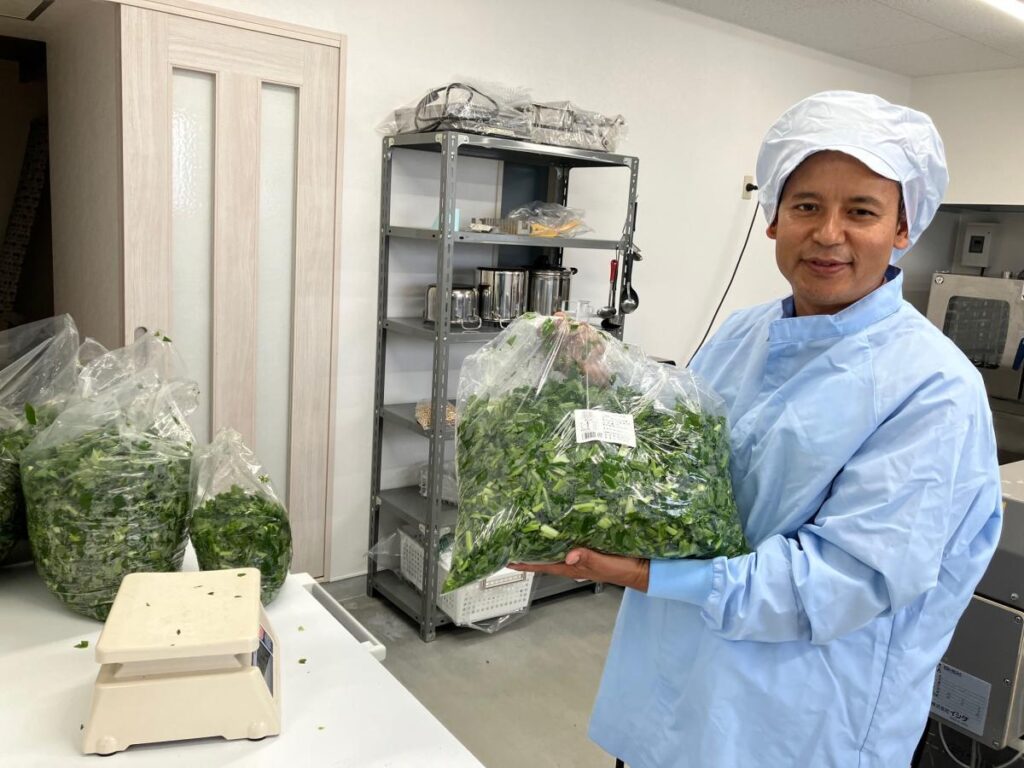
To address this issue, he introduced a new approach: washing, cutting, and packaging out-of-spec produce for direct sales to local schools and eldercare facilities. A small prefabricated building was constructed next to the farm to serve as a processing facility, complete with freezing equipment that allowed the packaged vegetables to be stored for several days without compromising quality.
As demand grew, Dhalma began processing not only komatsuna but also other vegetables such as turnips and green onions on a small scale.
Word of mouth soon spread among local residents, and households began requesting direct purchases as well. While the profits from these sales were modest, Dhalma notes that the relationships built with people who had previously had no connection to the farm became one of the most meaningful outcomes.
Encouraged by advisors, he later established Happy Farm Co., Ltd., formalizing the business.“Throughout the process, I received support from many people,” he says. “Everyday conversation in Japanese wasn’t too difficult, but the language used in official procedures and documentation was entirely different. I was also surprised by the various support systems available in Japan, such as subsidies and tax incentives for starting a business. I wouldn’t have been able to apply for them on my own.”
Komatsuna ready for harvest
Happy Farm has since been recognized as a model agricultural enterprise in the region. Looking ahead, Dhalma hopes to establish a café that utilizes produce grown on the farm, creating a space where he can engage directly with customers and explore new ideas.
At the same time, he faces ongoing challenges in securing labor. The core workforce currently consists of more than a dozen part-time employees, most of whom are women in their sixties with farming backgrounds. How long they will be able to continue working remains uncertain.
In addition, several young people from Dhalma’s hometown in Nepal are currently learning agricultural techniques and farm management at Happy Farm, with the aim of returning home in the future. However, the evolving policies governing foreign workers in Japan create an uncertain outlook.
Succession also remains an open question. Dhalma’s eldest son is already enrolled in a university in Tokyo, and his younger son, now in high school, will likely follow a similar path.
“For now, I’ll keep doing my best,” he says. “And after that, we’ll see what the future brings.”
Related Topics
Japan’s Aging Rural Communities
Sustainable Agriculture in Mountain Regions
Reducing Food Waste in Agricultural Supply Chains
Community-based Food Distribution Models
Foreign-born Entrepreneurs in Rural Japan
Japan Mountain Day Foundation – Homepage
Learn More
This story highlights the structural challenges facing mountain agriculture in aging rural communities, including labor shortages, food waste, and succession issues.
Part 7: Ashikuraji and Iwakuraji – Settlements Supporting Tateyama Worship –
Hello everyone, I am Yasuhiko Takano, Director of the Toyama Prefectural Tateyama Museum.During the Edo period (1603-1868), pilgrims who visited Mount Tateyama for zenjō ascetic climbing were assisted with lodging and mountain guidance by two settlements located at the foot of the mountain: Ashikuraji and Iwakuraji. In this installment, I will introduce the characteristics of these communities, which functioned as key bases of Tateyama faith.
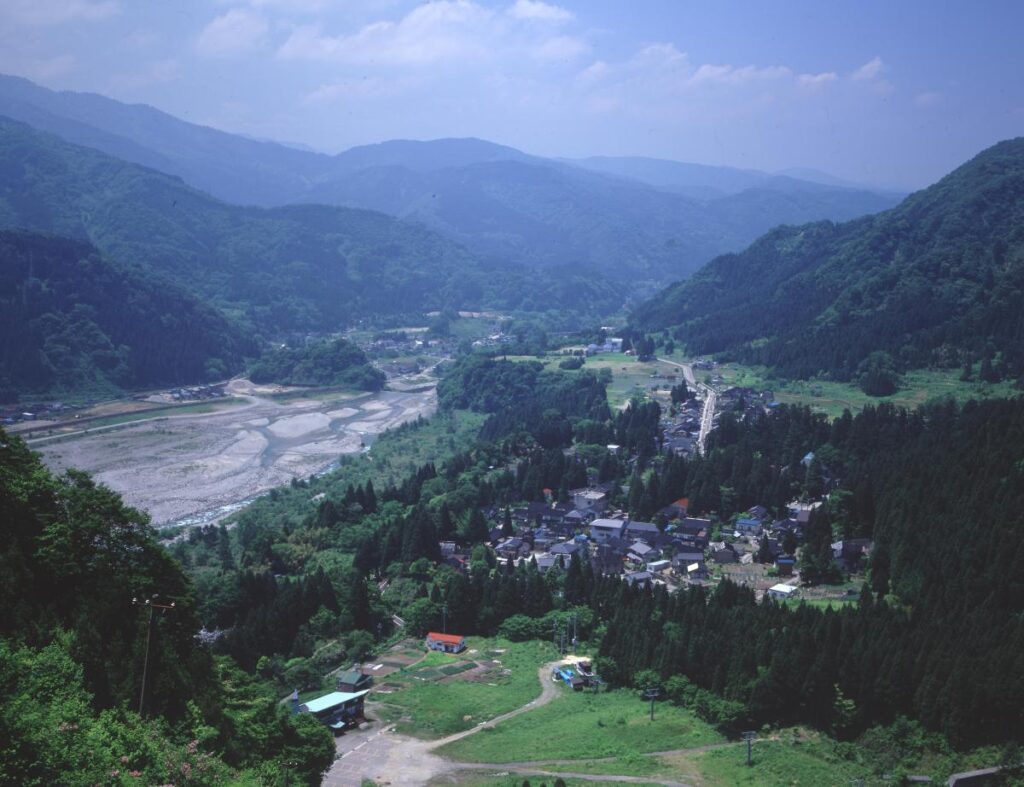
View of Ashikuraji, a settlement that supported Tateyama worship
(1) Settlements as Religious Bases
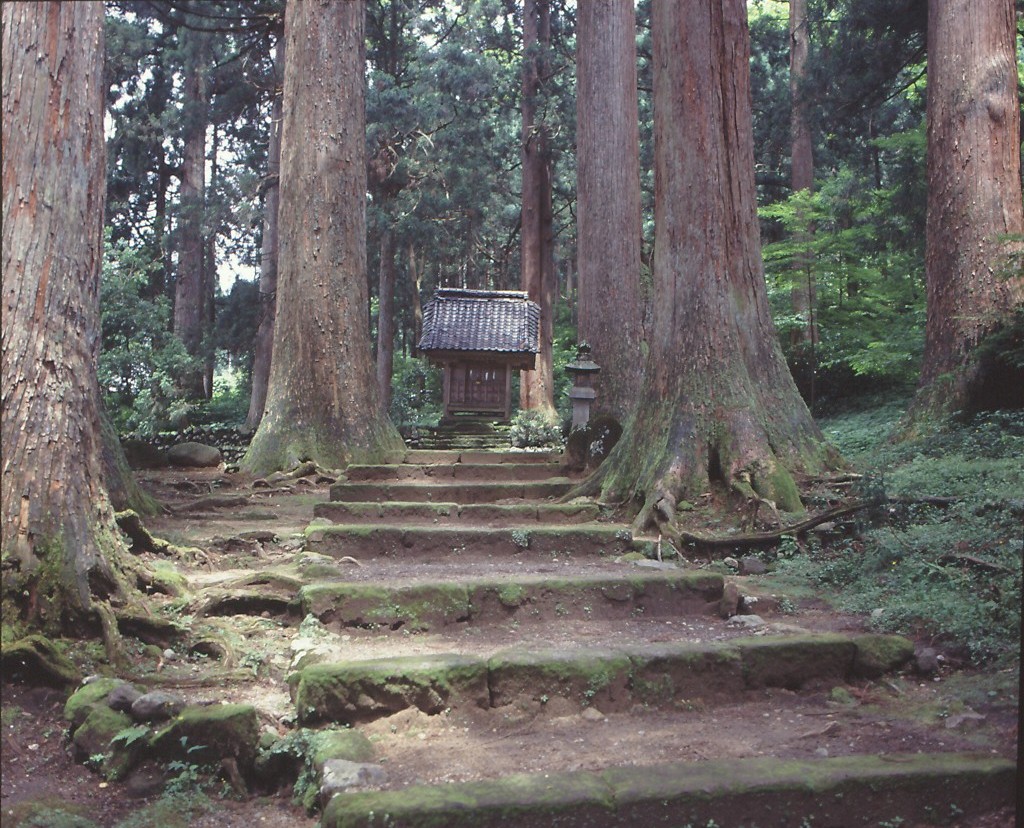
Ashikuraji and Iwakuraji flourished as central settlements supporting Tateyama worship during the Edo period. Earlier sources suggest that there had once been seven such religious communities. A document dated 1815 records that although temples were originally established in seven locations by the founder of Tateyama worship, only Ashikuraji and Iwakuraji remained active in later times.
Both settlements were under the authority of the Kaga Domain. The heads of the shukubō (pilgrim lodgings combined with religious facilities) were regarded as monks and were known as shuto. While fulfilling religious roles, they also engaged in agriculture and slash-and-burn cultivation, living in a manner often described as “half monastic, half secular.”Each settlement maintained an organization known as issan, a form of religious self-governance responsible for managing rank, communal land, and relations with domain authorities. Historical documents such as the Ashikuraji Issan Recordsprovide insight into the strict regulations governing these communities.
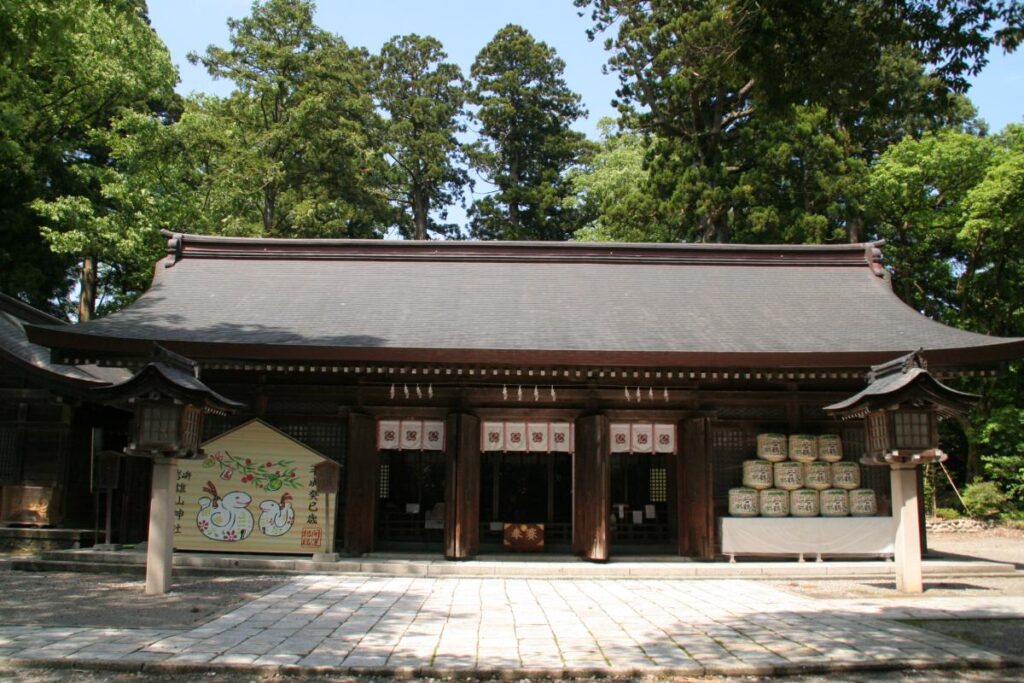
Main prayer hall (Ōmiya Shaden) of the Chūgū precinct of Oyama Shrine
(2) The Settlement of Ashikuraji
Ashikuraji is located on a river terrace along the Jōganji River at an elevation of approximately 400 meters. The natural environment was not well suited to rice cultivation, and local livelihoods developed through slash-and-burn agriculture, charcoal production, and hunting.
By the early nineteenth century, the Ashikuraji issan consisted of 33 shuto and five shrine priests, living together with farming households. The central temple complex was Chūgū-ji, which included precincts dedicated to Tateyama Gongen and to the Uba Hall.
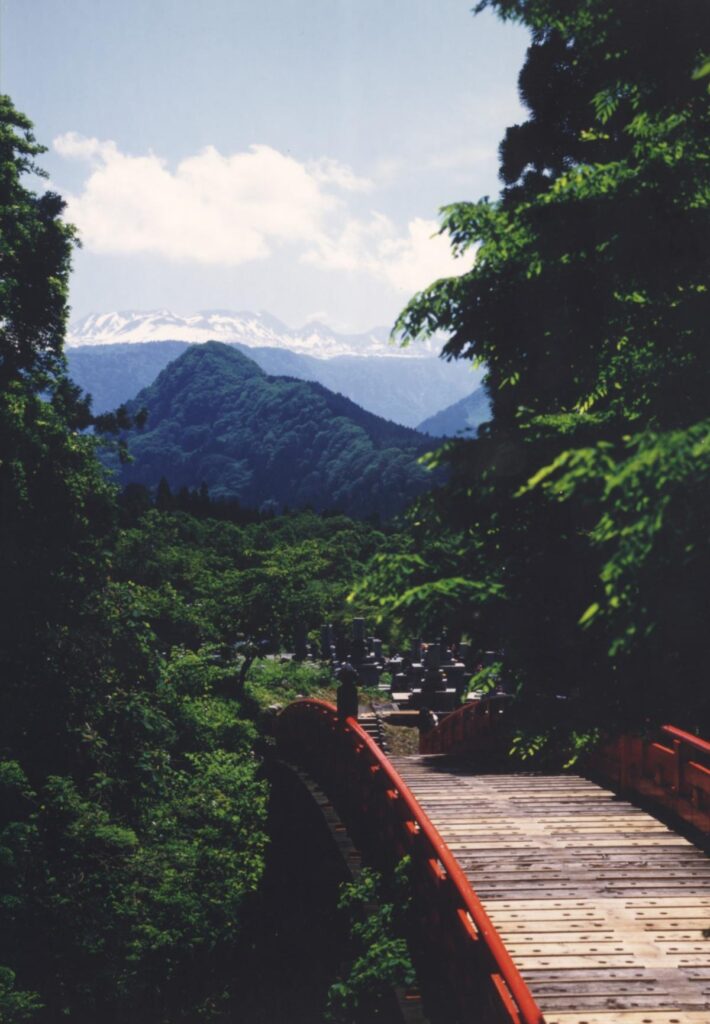
Important structures such as the Niō Gate, Enma Hall, and Bell Tower once formed part of the sacred landscape. A distinctive ritual known as the Nunobashi Kanjo-e was performed each autumn for women seeking rebirth in the Pure Land. During this ceremony, a bridge covered with white cloth symbolized the passage to the other world. Nearby stood the Uba Hall, where numerous images of Uba, a mountain deity, were once enshrined.
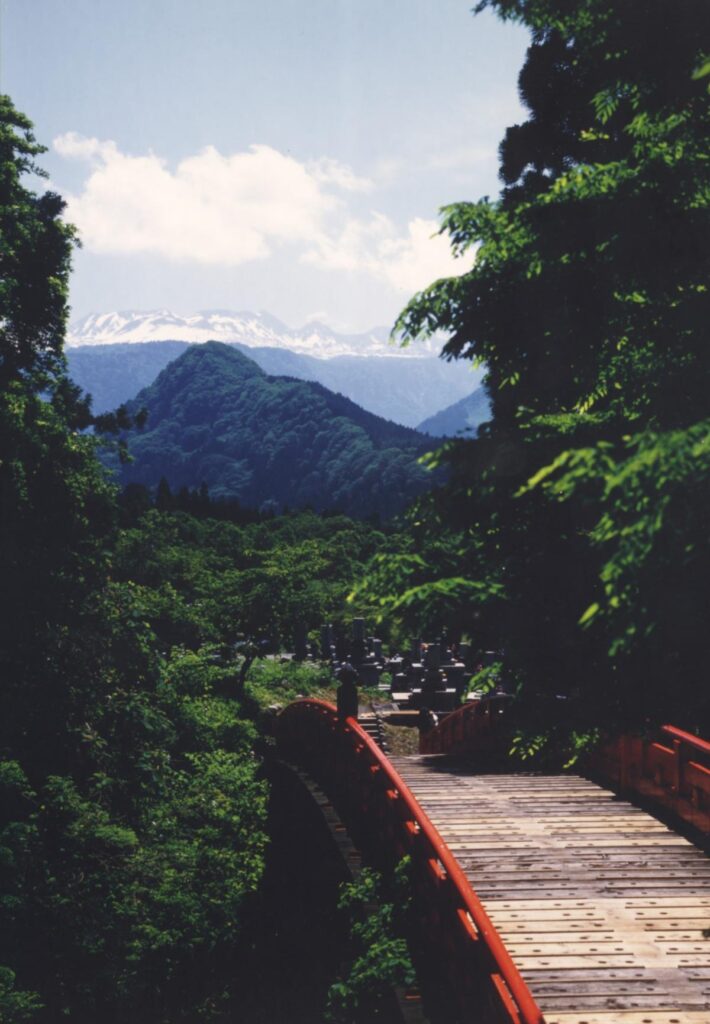
Nunobashi Bridge with Mount Tateyama in the background
(3) The Settlement of Iwakuraji
Iwakuraji lies on a lower river terrace at about 100 meters elevation, where rice cultivation was feasible. Up to 24 shutoresided there with farming households. Their duties included prayers for the well-being of the Kaga Domain and the maintenance of sacred sites within the Tateyama mountains.The central temple was Tateyama-ji, now known as the Mae-tate Shadan of Oyama Shrine. Its main hall, built in a late Muromachi period (1336-1573) style, is designated an Important Cultural Property of Japan. Within the precincts stood various halls dedicated to deities associated with Tateyama worship, collectively referred to as the Two Great Gongen of Tateyama.
Worship hall (Haiden) of the Mae-tate Shadan of Oyama Shrine
Thus, in the religious landscape of Tateyama, Iwakuraji functioned as the entrance to the sacred domain of the mountain, marked by its great torii gate, while Ashikuraji represented the threshold to the other world, symbolized by the Nunobashi Bridge and the cult of the mountain deity Uba. Together, these settlements supported the reception of more than 6,000 pilgrims each summer season.
In the next installment, I will introduce how Tateyama faith spread throughout different regions during the Edo period.
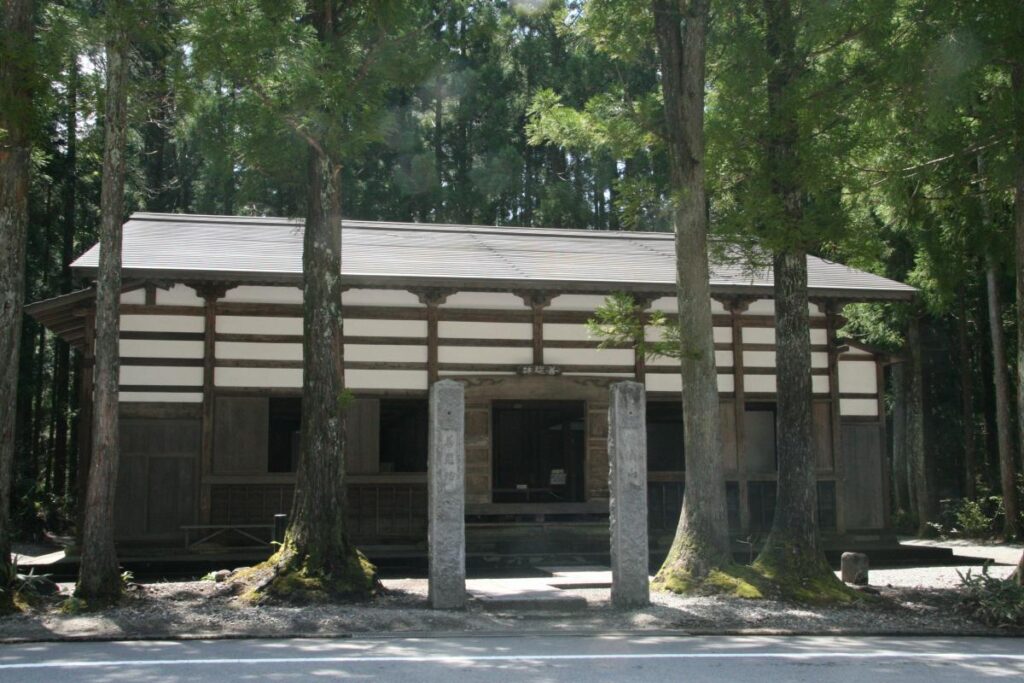
Visitors today can still experience this history at the Tateyama Museum, where former shukubō buildings are preserved and open to the public.
Zendōbō, a former shukubō (pilgrims’ lodging) in Ashikuraji
Portrait of Dhalma Lama From a Himalayan Village to Rural Japan
Introduction
Born in a small mountain village in Nepal, Dhalma Lama never imagined that one day he would become the successor to a Japanese farming enterprise.
After moving to Japan in 2005 with his Japanese wife, Dhalma struggled to find a stable livelihood as a traditional Buddhist tanka painter. It was through an unexpected part-time job at a vegetable farm in rural Toyama Prefecture that his life took a decisive turn.
Recognized for his diligence and leadership, Dhalma was eventually asked to take over the management of a local komatsuna (Japanese mustard spinach) farm that faced closure due to the lack of a successor.
Today, he leads a multicultural team of more than a dozen employees and manages an agricultural enterprise that connects Japan’s rural mountain communities with global markets— while also supporting community revitalization projects in his native mountain villages of Nepal.This six-part series traces Dhalma’s journey from the hills of Nepal to the fields of Japan, exploring how migration, agriculture, and mountain livelihoods intersect in an increasingly interconnected world.
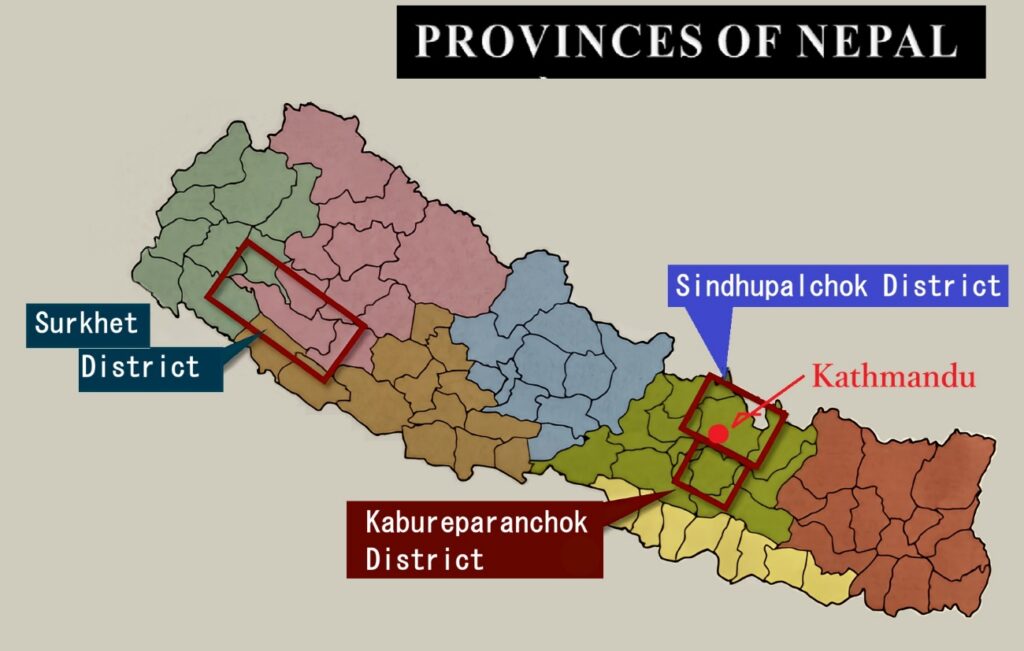
Map of Nepal
Story byKatsuhiko Kano
Professor Emeritus of Cultural Anthropology, Kanazawa University Member of the Scientific Committee, Japan Mountain Day Foundation
About the Author
Professor Emeritus – Kanazawa University Katsuhiko Kano is a cultural anthropologist whose primary fieldwork has focused on Nepal and Himalayan Mountain communities. Having conducted extensive research on rural livelihoods, migration, and community resilience in mountain regions, he brings an interdisciplinary perspective to the challenges facing Japan’s aging rural and forest communities.
Episode 1 :From a Mountain Village in Nepal
Dhalma Lama’s Journey to Rural Japan
I first met Dhalma Lama in Kathmandu in November 2016, one year after Nepal was struck by two devastating earthquakes that caused widespread destruction across the country.
While international aid was directed primarily toward the capital and major tourist regions such as the Everest area, many rural mountain communities — including Dhalma’s home district in eastern Nepal — received far less attention due to limited infrastructure and accessibility.
It was during a field visit organized by a Toyama-based NGO engaged in long-term recovery support that I encountered Dhalma, who had already been living in Japan for over a decade.Born in 1985 in Sindhupalchok District, a mountainous region located east of Kathmandu, Dhalma grew up in a Tamang community belonging to the Tibetan Buddhist tradition. Coming from a lineage of monks, he learned the traditional art of tanka painting from an early age.
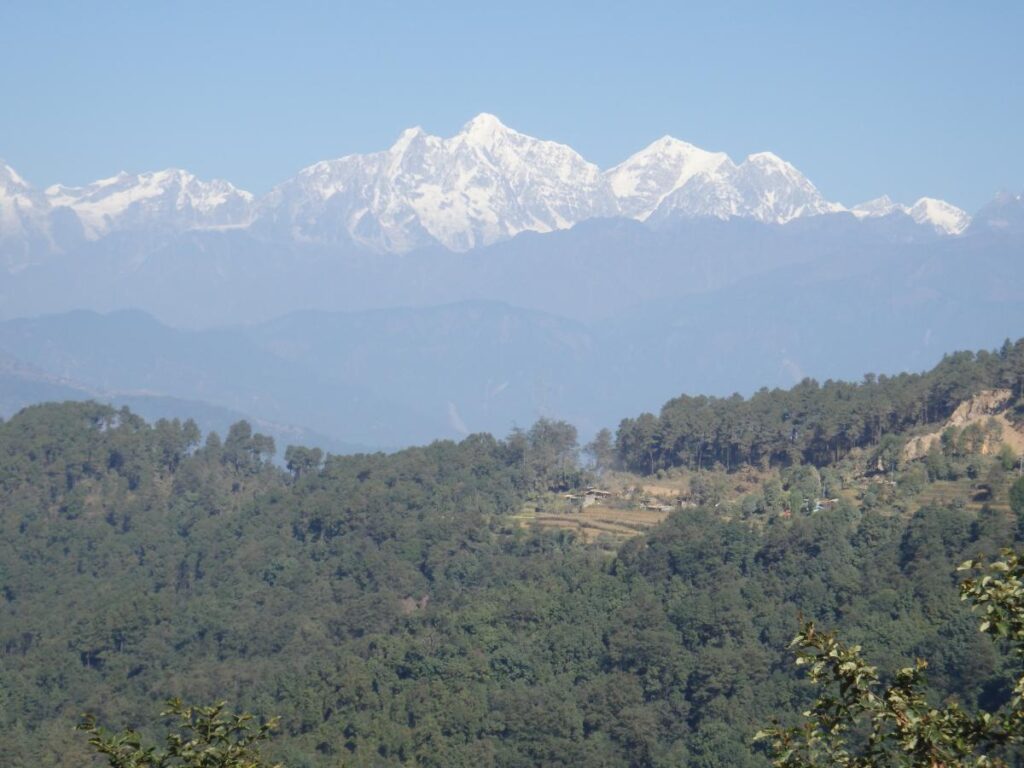
Mountain Village in Eastern Nepal
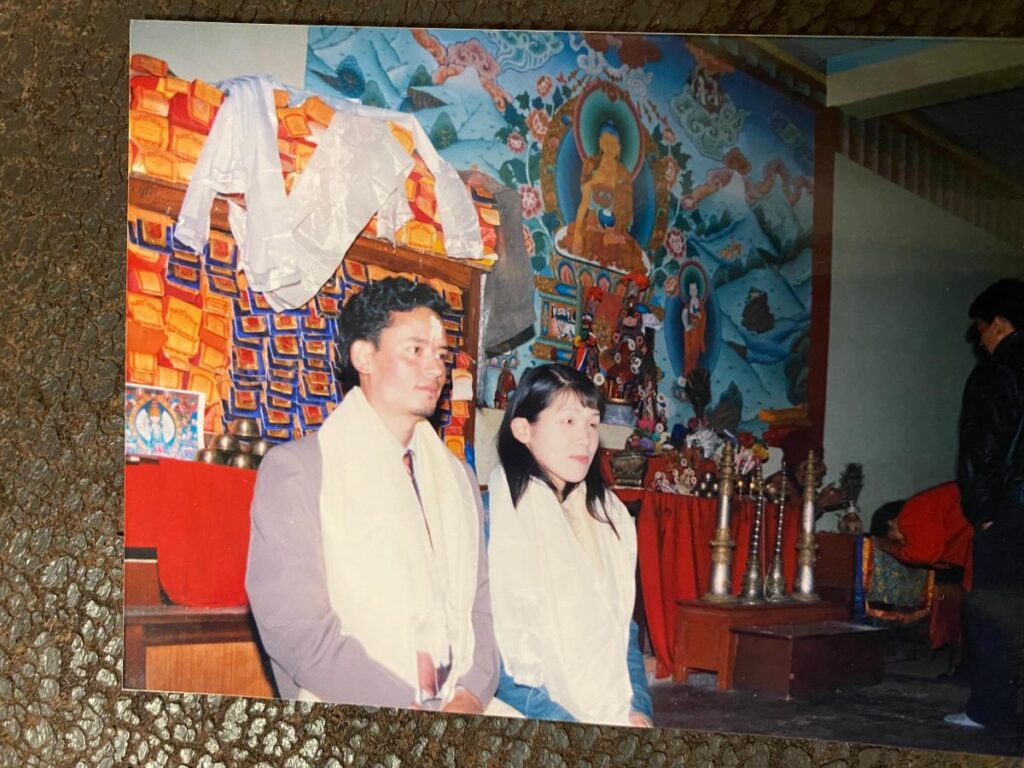
However, guided by his father’s belief that younger generations should pursue formal education, Dhalma enrolled in university in Kathmandu, majoring in economics. To support himself during his studies, he taught Buddhist painting to tourists — an experience that eventually led him to meet his future wife from Japan.
Marriage Ceremony
Following the birth of their first child, the couple decided to move to Japan in 2005 so that their children could receive their education there. They settled in Toyama Prefecture, where Dhalma would begin a new chapter of his life.
Related Topics
Migration and Rural Succession
Labor Shortages in Mountain Communities
Foreign-born Leaders in Local Economies
Multicultural Workforce in Rural Japan
Agricultural Continuity in Aging Societies
Learn More
This episode explores how migration intersects with succession challenges in aging rural mountain communities, where the continuity of agriculture increasingly depends on new forms of leadership and international human mobility.
Related initiatives can be found in:
Rural Community Revitalization
Sustainable Mountain Livelihoods
Cross-cultural Integration in Local Economies
Japan Mountain Day Foundation – Homepage
Series Overview:
Why This Matters for Policy
This six-part series presents a case study of how foreign-born leadership can contribute to rural revitalization in mountain communities through agriculture, cultural exchange, and transnational collaboration.
The initiative addresses key policy challenges related to:
labor shortages in rural areas
agricultural succession
sustainable mountain livelihoods
international cooperation in regional development
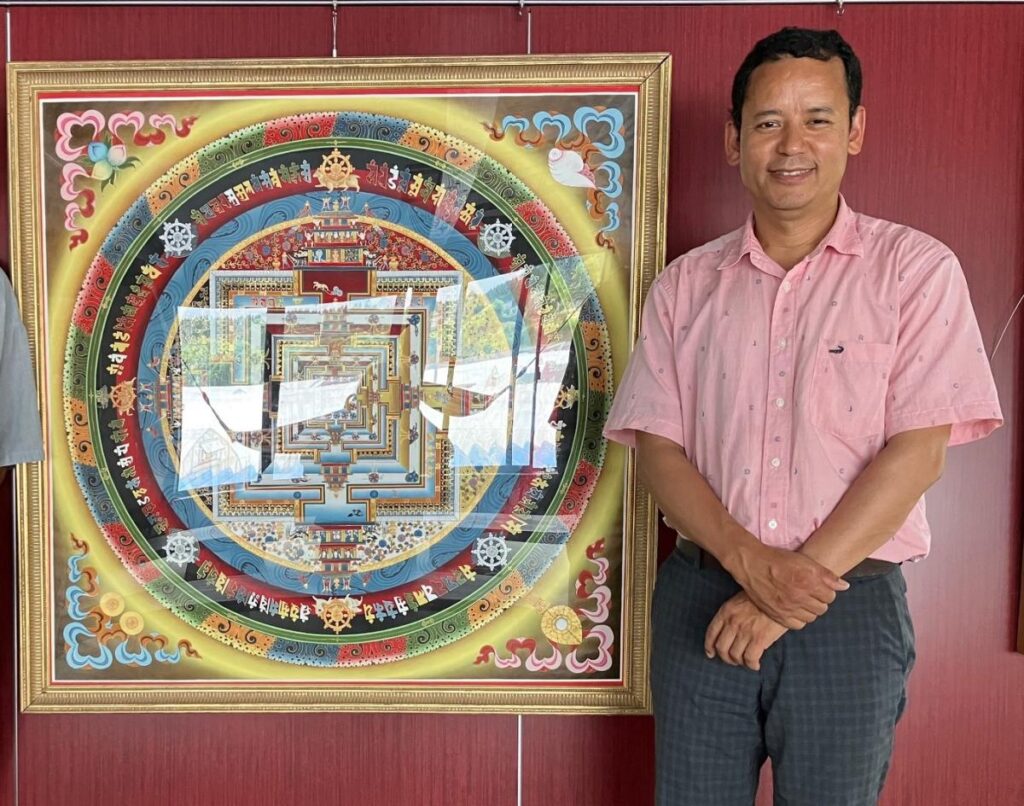
Dhalma Lama with a Tibetan Buddhist mandala painting of his own creation
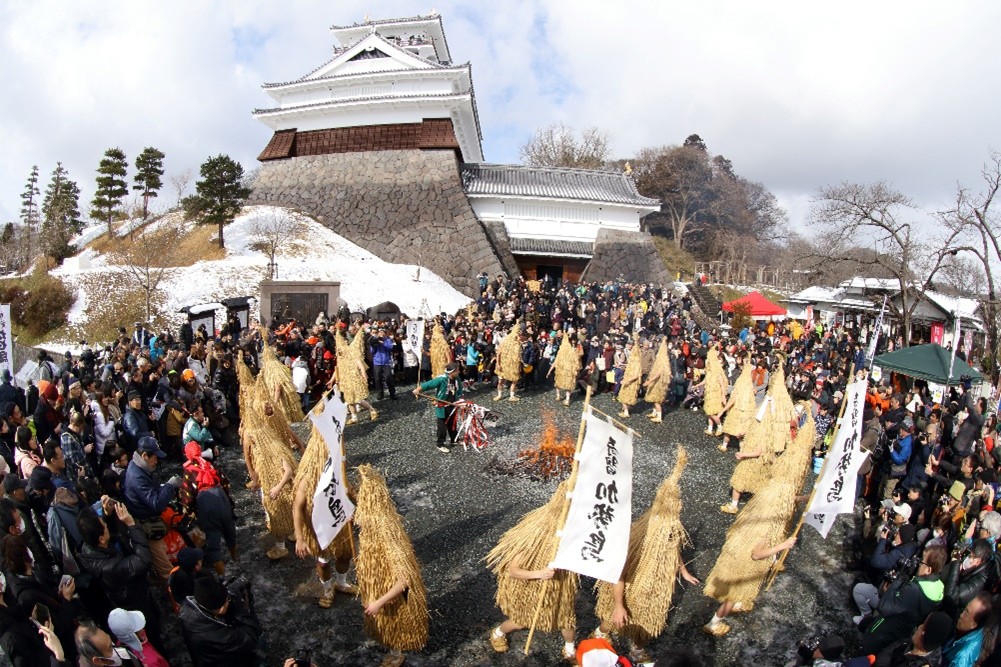
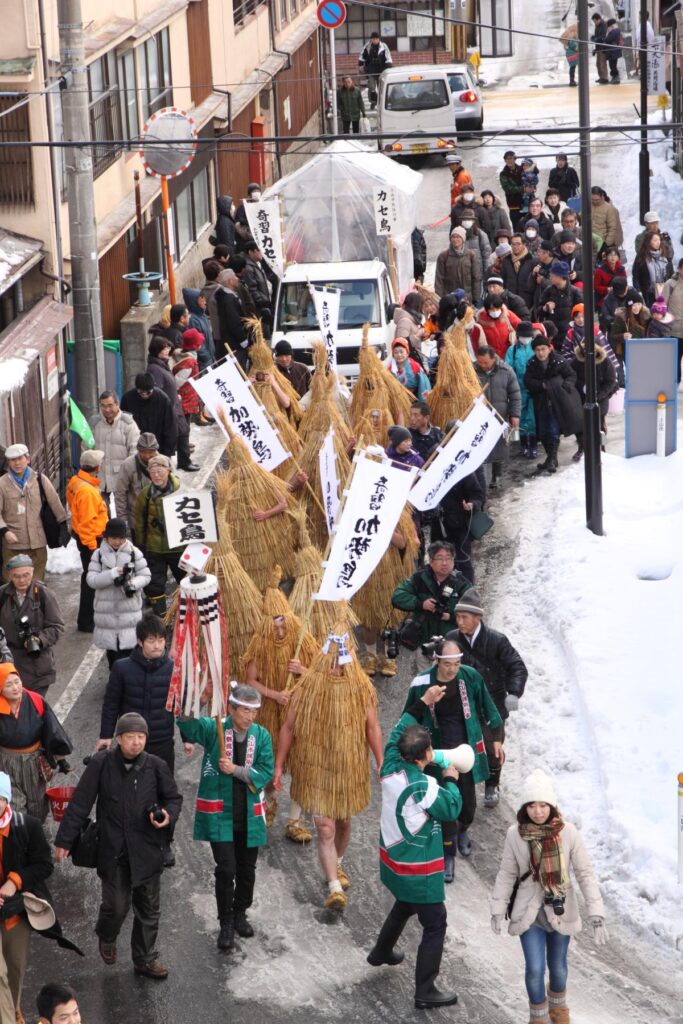
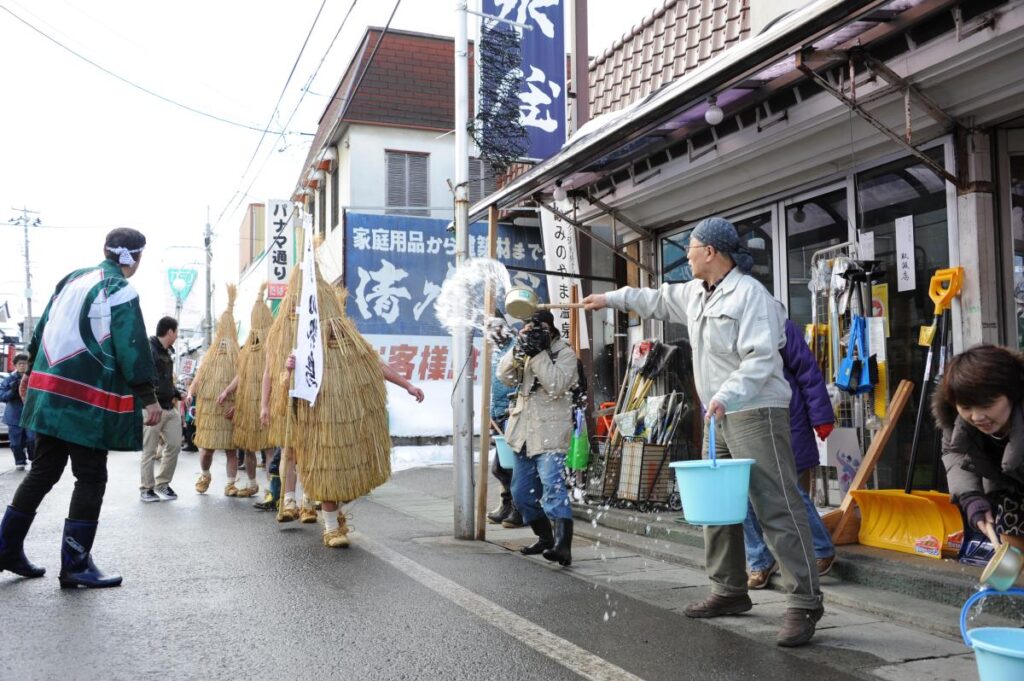
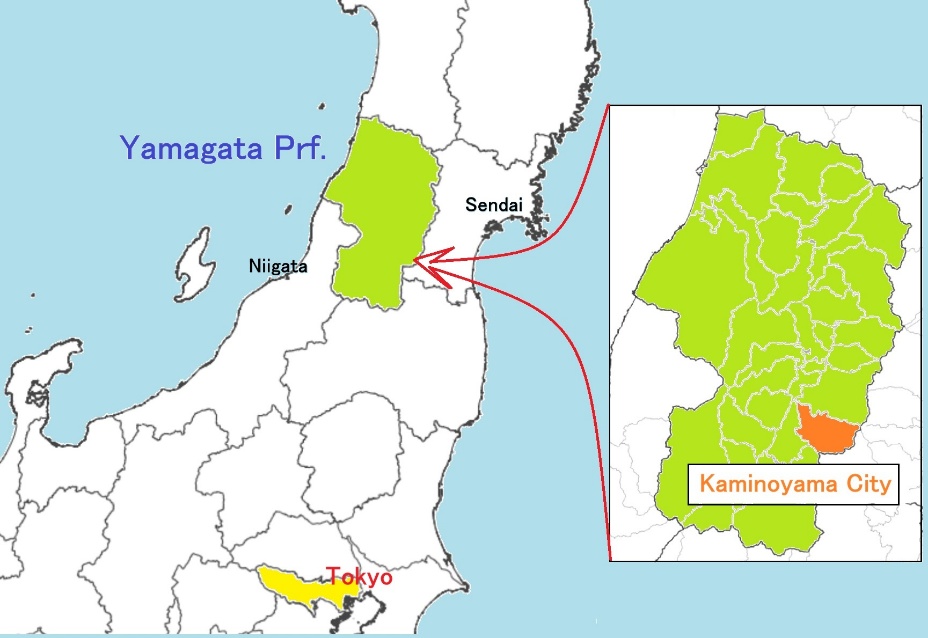
Every February 11, the quiet castle town of Kaminoyama transforms into a scene unlike anywhere else in Japan. Men dressed in straw cloaks walk through the streets shouting “Kakkakkaa!” as residents splash them with buckets of water.
This is Kasedori, one of Japan’s most unusual winter festivals.
On a freezing winter morning in northern Japan, a strange figure appears in the streets.
Covered entirely in straw and shouting “Kakkakkaa!”, the figure walks through the old castle town while people throw buckets of water over him.
This dramatic scene is part of Kasedori, a traditional winter festival held every year on February 11 in Kaminoyama City, Yamagata Prefecture.Despite the cold, the festival is filled with laughter and excitement. For the people of Kaminoyama, it is a joyful ritual that celebrates good fortune, prosperity, and protection for the year ahead.
A “Bird” That Brings Good Fortune
The name Kasedori is often interpreted as “the bird that brings prosperity.”
In earlier times, people believed that during the New Year season a divine spirit would visit villages from distant lands, bringing blessings for the coming year.
The Kasedori represents this visiting spirit.
As the straw-covered figure walks through the town, residents welcome it and pray for
successful harvests
thriving businesses
family happiness
and safety from disasters.
Three young men from Takano Village were once allowed to perform the Kasedori ritual before the lord of Kaminoyama Castle during the Edo period.
Why People Throw Water
One of the most unforgettable sights of the festival is when residents pour water over the Kasedori.
The water is known as “celebration water.”
In traditional belief, clean water symbolizes life, purity, and abundance, so splashing water is a way of wishing prosperity for the year ahead.
There is another meaning as well.Kaminoyama experienced devastating fires in the past, and people once believed that a mysterious “fire-eating bird” in the sky spread flames during those disasters. Because the Kasedori resembles a bird, throwing water on it also came to symbolize prayers for protection from fire.
A Kasedori performer walks through the castle town streets shouting “Kakkakkaa!” as part of the winter ritual.
A Costume Made from Straw
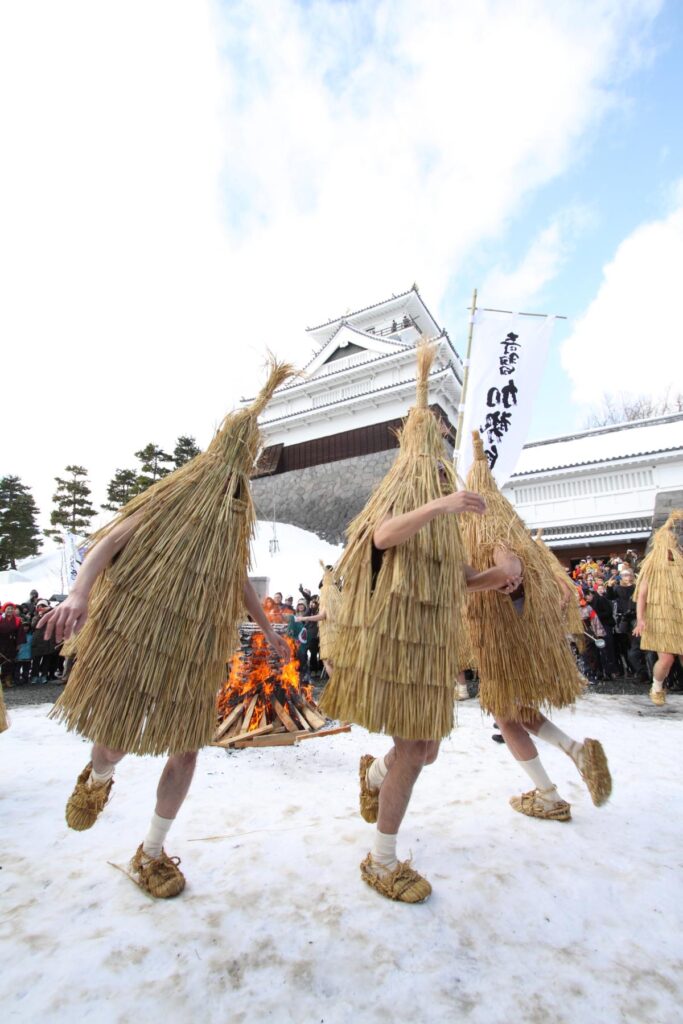
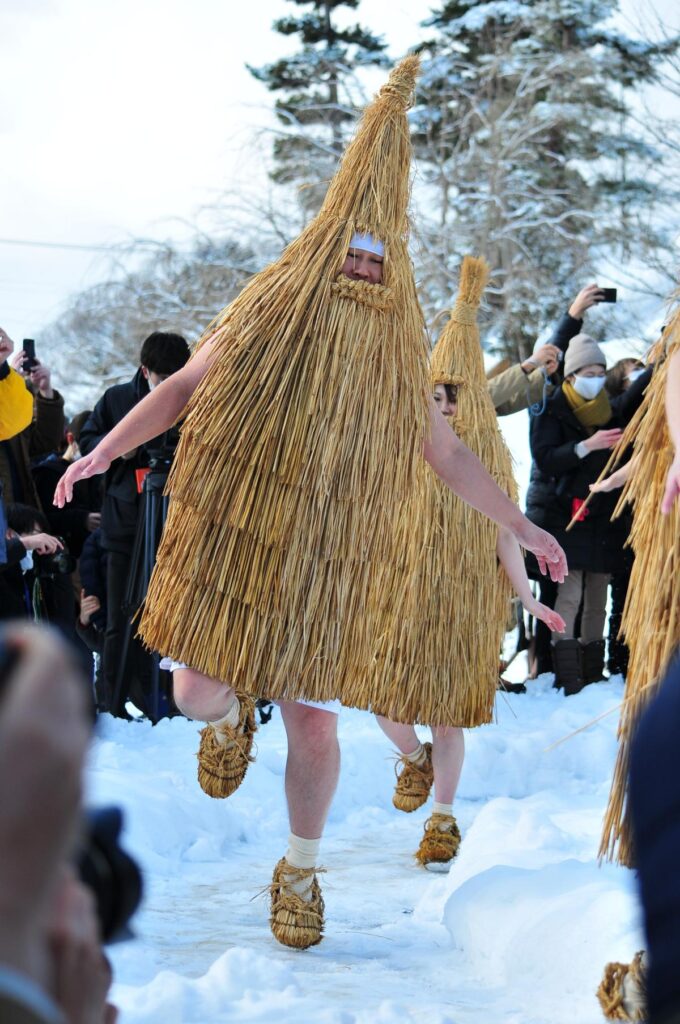
The performer wears a large straw cloak called a Kendai, woven entirely from rice straw.
It covers the body from head to toe and can weigh up to 10 kilograms when soaked with water.
Making this costume is itself a rare traditional skill. Only a few members of the local preservation society still know how to weave the Kendai using traditional tools.The straw sandals worn by the performers are also handmade by local residents, reflecting the deep community involvement that keeps the festival alive.
Residents pour “celebration water” over the Kasedori, a traditional act believed to bring prosperity and protect the town from fire.
Good Luck from a Strand of Straw
Visitors can participate in several small traditions during the festival.
When the Kasedori arrives, people may wrap a new towel or cloth around the straw costume while making wishes for the coming year.
Strands of straw that fall from the costume are considered lucky charms, believed to carry the blessing of the visiting spirit.
A local saying even suggests that tying a girl’s hair with Kasedori straw will help her grow into a beautiful woman with long black hair.
A Tradition Revived
Like many traditional festivals in Japan, Kasedori once disappeared.
After the political changes of the late nineteenth century, the event was abolished and eventually faded away.
But in 1959, local residents revived the festival, determined to preserve their heritage. Today the Kasedori Preservation Society continues to pass the tradition to younger generations.
The Kendai, a large straw cloak worn by the Kasedori performer, is carefully woven from rice straw by local craftsmen.
Experience Kasedori
Every year on February 11, the streets of Kaminoyama once again echo with the cry “Kakkakkaa!” As the straw-clad figures move through the town and water splashes into the winter air, visitors can experience a living tradition that connects the present with centuries of local history. Kasedori is not just a festival. It is a celebration of community, resilience, and hope for the year ahead.
Acknowledgment
This article was prepared based on materials provided by the Kaminoyama Folk Festival Kasedori Preservation Society.All photographs are courtesy of the Kaminoyama Tourism and Products Association.
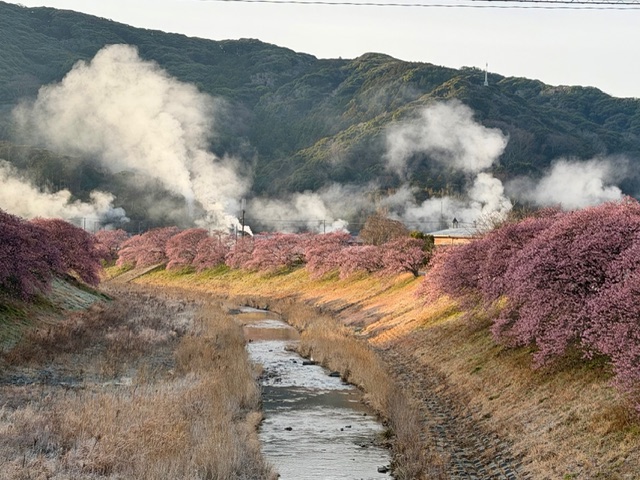
Kawazu Sakura trees in bloom along the Aono River Minami-izu, Southern Izu Peninsula
Report by Masahiko Kaji
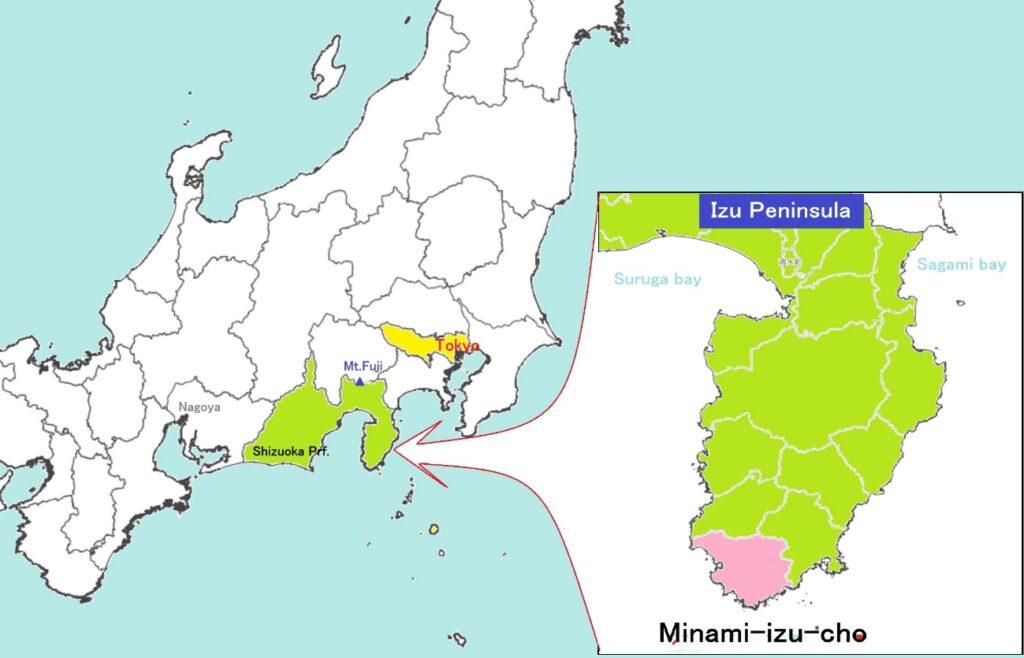
Spring in Japan is widely associated with cherry blossoms that bloom in late March. But in the warm valleys of the Izu Peninsula, spring arrives much earlier.I recently visited Minami-izu, located at the southern tip of the peninsula, to see the famous Kawazu Sakura, an early-blooming variety of cherry blossom.
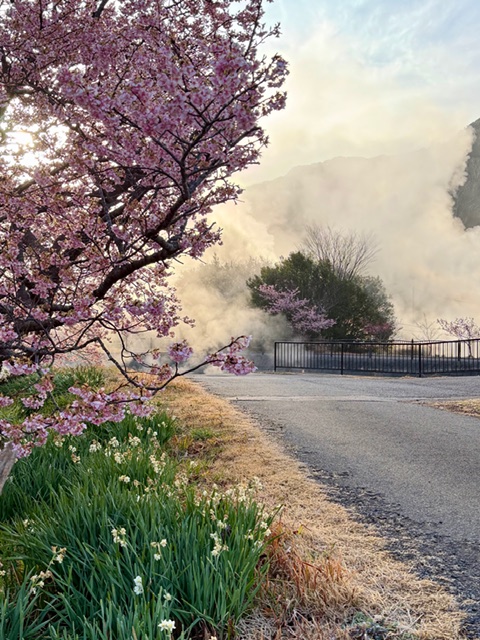
Steam rising from Shimogamo Onsen drifts through the cherry blossom landscape.
The Izu Peninsula is recognized as part of the UNESCO Global Geoparks Network, a region shaped by volcanic activity that created dramatic coastlines, abundant hot springs, and fertile river valleys.
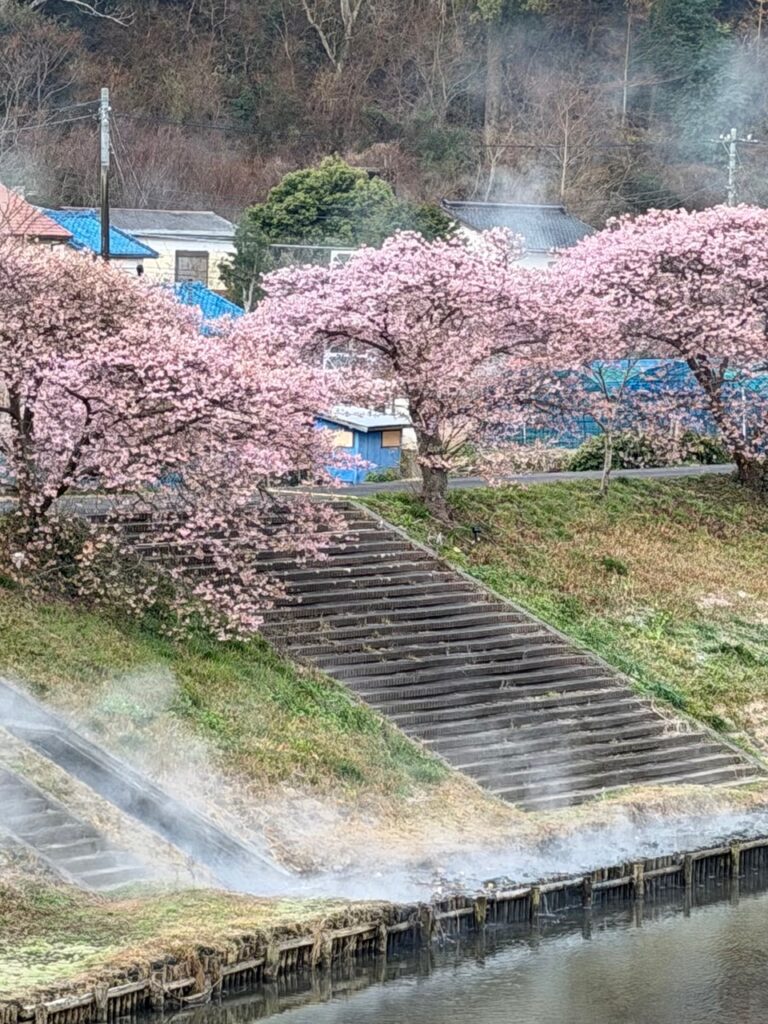
Along the Aono River in Minami-izu, about 800 Kawazu Sakura trees line both sides of the river for nearly two kilometers, forming a continuous corridor of soft pink blossoms.
The trees here are large and full-shaped, creating an especially impressive landscape.One of the most memorable sights is the contrast between the blossoms and the steam rising from the nearby Shimogamo Onsen hot springs. White steam drifts through the riverside air, while the pink blossoms spread across the sky above the river.
Nearly 800 cherry trees form a two-kilometer corridor of blossoms along the riverbanks.
A Cherry Blossom That Blooms Ahead of Spring
Kawazu-zakura (Cerasus × kanzakura ‘Kawazu-zakura’) is a cherry tree variety native to Japan.
While Japan’s most famous cherry blossom, Somei Yoshino, typically blooms in late March in Tokyo, Kawazu Sakura begins flowering in mid-February.
Another distinctive feature is its long blooming season. Unlike many cherry blossoms that fall within a week or two, Kawazu Sakura can remain in bloom for nearly a month.
Japan is said to have around 600 varieties of cherry trees, each with its own seasonal rhythm.
Kawazu Sakura is cherished because it signals the very beginning of spring in Japan.
A Moment of Life Beneath the Blossoms
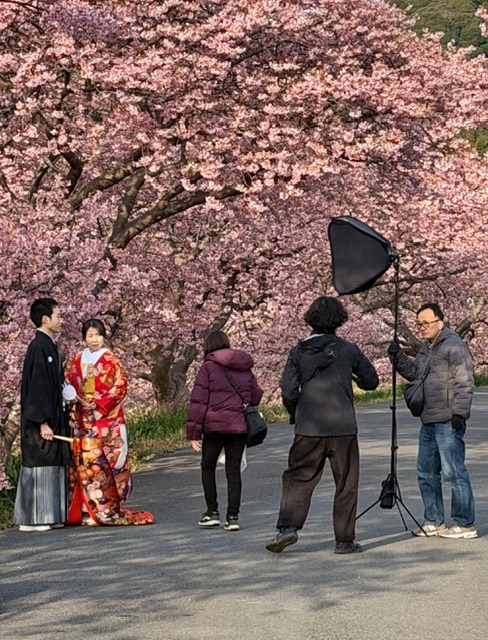
While walking along the river, I noticed a newly married couple taking commemorative photographs beneath the blossoms.
Scenes like this are common during Japan’s cherry blossom season.
For many people in Japan, cherry blossoms are not only a natural spectacle, but also a moment to celebrate life—gathering with family and friends, welcoming the arrival of spring, and marking milestones.
In Minami-izu, where the blossoms appear earlier than anywhere else, that celebration begins quietly in February.
Newlyweds taking commemorative photographs beneath the early spring blossoms.
Noriko Sakoh, one of the leaders of Tokyo International Hiking, shares highlights from the group’s recent early-season flower hike. She also volunteers for the English-language website of the Japan Mountain Day Foundation.
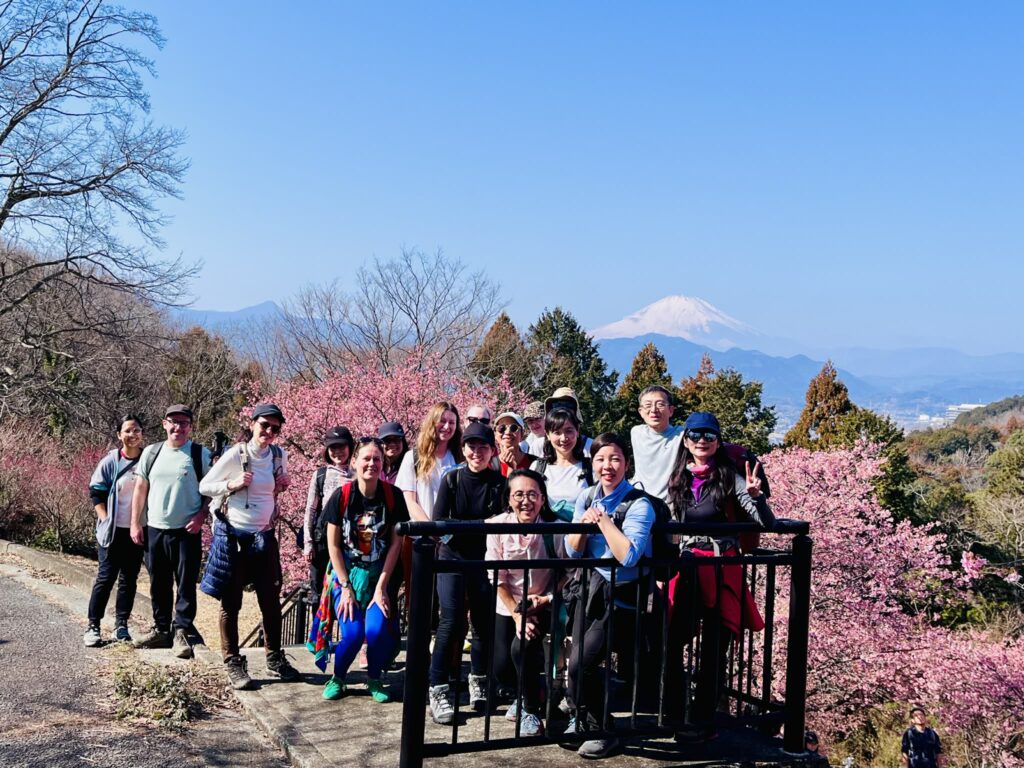
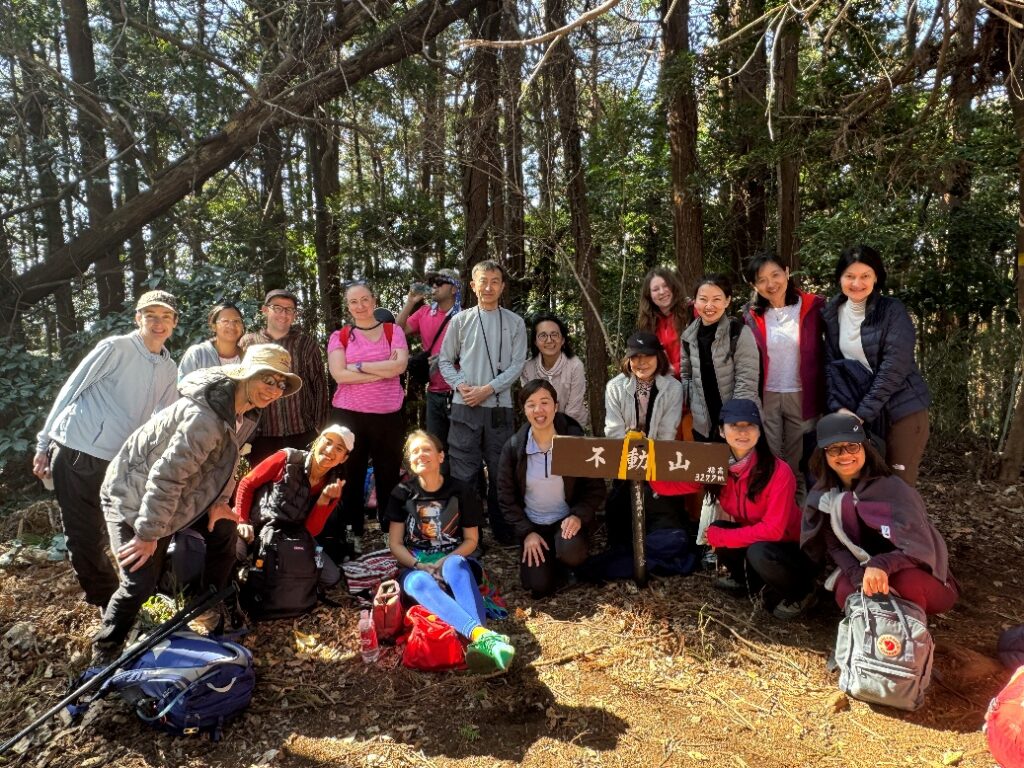
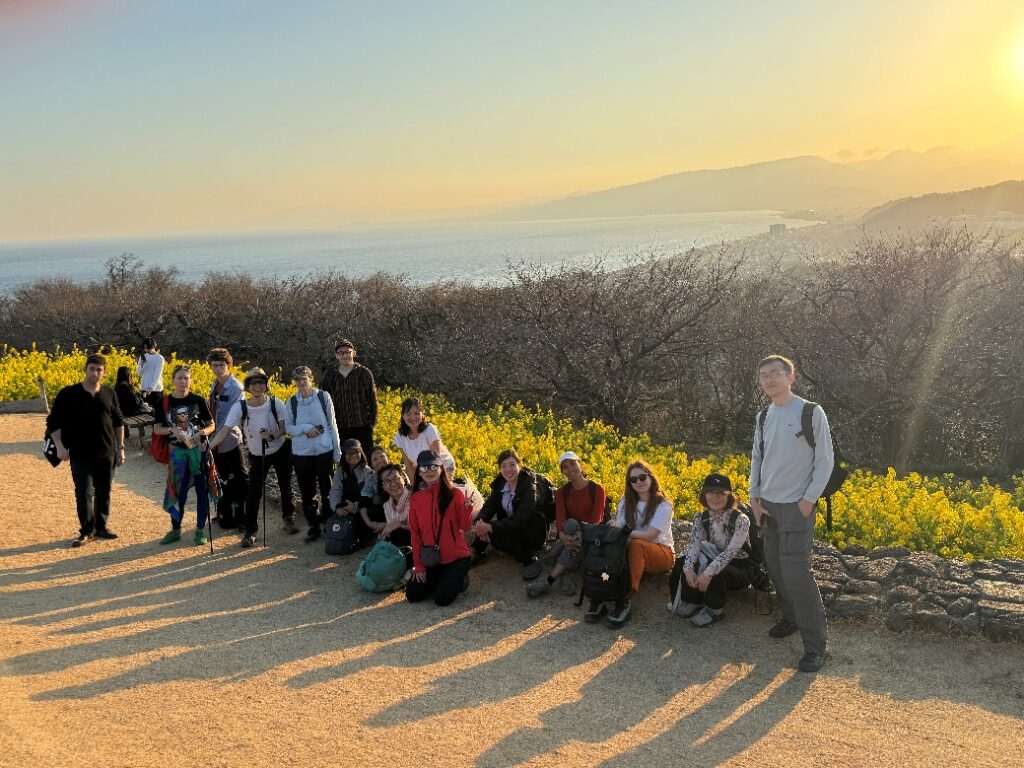
Tokyo International Hiking is a Facebook-based hiking group that enjoys nature in Tokyo and the surrounding areas.On February 15, 17 members from nine countries celebrated the opening of Japan’s flower season together.
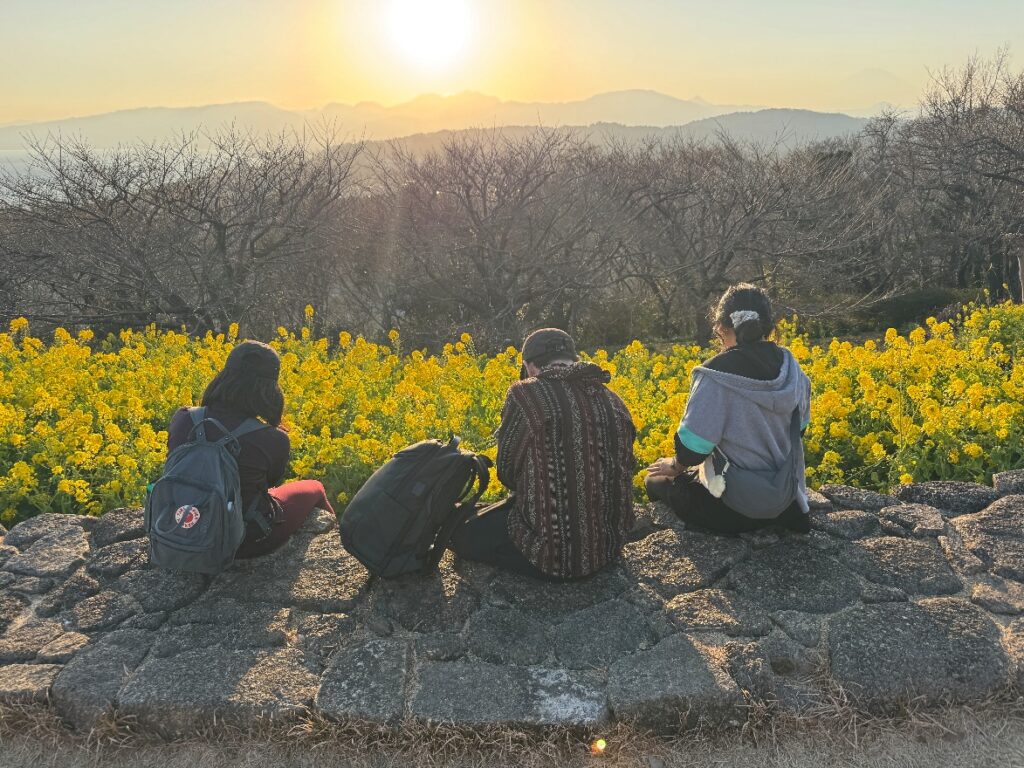
Starting in Kami-Oi, Kanagawa, we admired the beautiful Kawazu-zakura with majestic Mt. Fuji as a stunning backdrop, various plum blossoms, and a gorgeous canola field overlooking the sparkling waters of Sagami Bay.
Due to the snow, we had to cancel our original plan on February 7. But in the end, it was definitely worth the one-week wait.
#Japan Mountain Day Foundation #Tokyo International Hiking Club # Mt Fuji
Hello everyone, I am Yasuhiko Takano, Director of the Toyama Prefectural Tateyama Museum.
In the previous installment, I introduced how Jigokudani (Hell Valley) on Mount Tateyama came to be revered as a place where hell described in Buddhist teachings was believed to exist in reality. I also discussed Heian-period Buddhist tales in which women who had fallen into hell were saved through metsuza kuyō—memorial offerings based on the Lotus Sutra—and were reborn in Trāyastriṃśa Heaven.
In this installment, I will focus on the relationship between Tateyama and Taishakuten, the deity believed to reside in Trāyastriṃśa Heaven, and examine his role within Tateyama faith.
According to Volume 14 of the Konjaku Monogatari-shū, Tateyama is home not only to hell but also to a great peak known as Taishaku no Take, the mountain where Taishakuten is said to reside. There, Taishakuten gathers with officials of the netherworld to observe and judge the good and evil deeds of human beings, determining whether they are to be cast into hell.
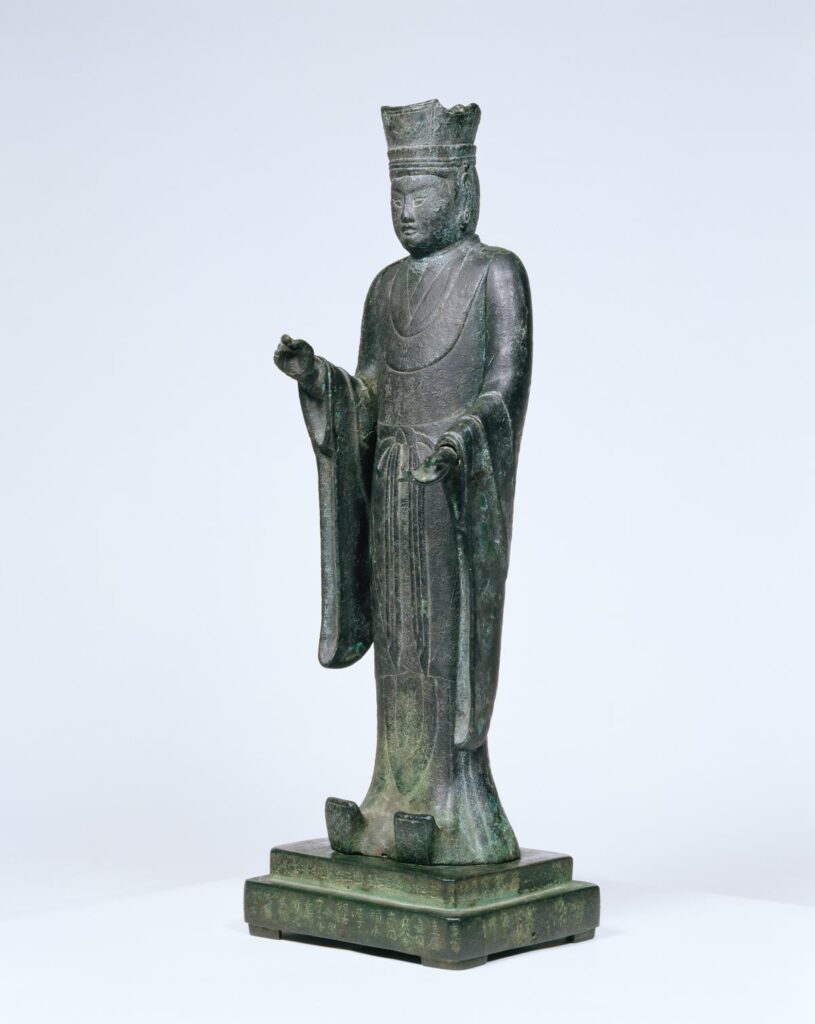
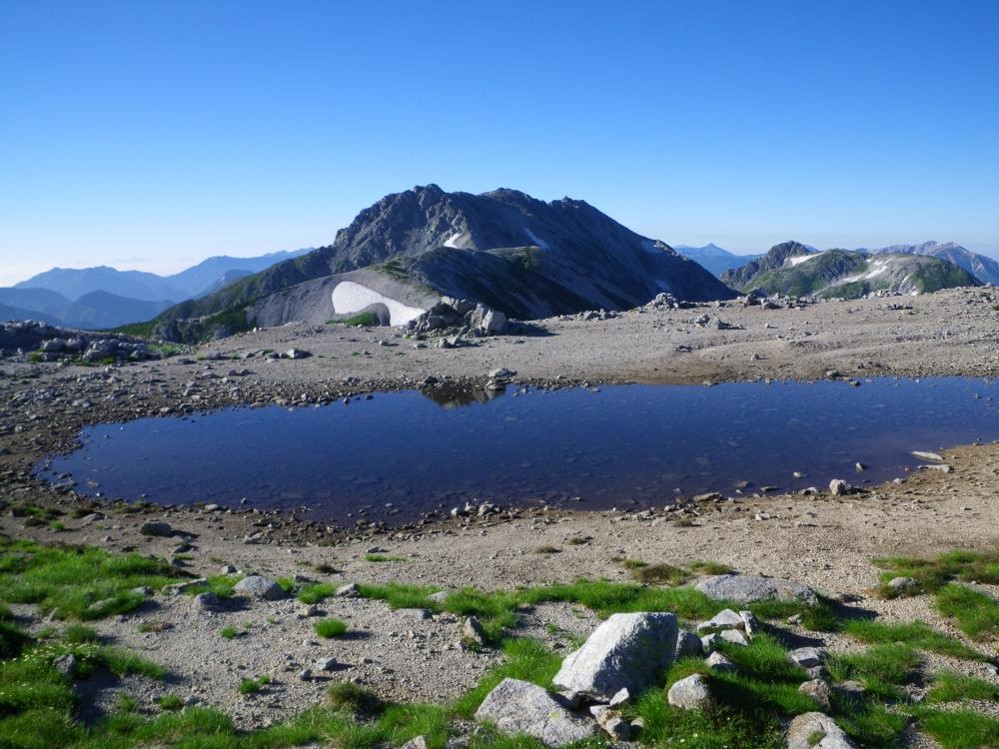
Taishakuten is one of the heavenly beings (tenbu) who protect Buddhism and originates from Indra, the ancient Indian god of war. He is sometimes depicted holding a brush and a scroll, symbolizing his role as a recorder and judge of human actions. In this respect, Taishakuten functioned much like King Enma, serving as a judge of hell in Buddhist belief.Edo-period (1615-1868) sources such as the Wakan Sansai Zue and the Tateyama Mandala identify Mt. Bessan, one of Tateyama’s three sacred peaks, by the alternate name Mount Taishaku. During this period, Taishakuten was enshrined on Mt. Bessan. Near its summit lies Suzuriga-ike (Inkstone Pond), believed to be the place where Taishakuten used its water as ink to record and judge the deeds of sentient beings.
Standing bronze statue of Taishakuten (National Important Cultural Property of Japan, Kamakura period; collection of the Toyama Prefectural Tateyama Museum)
Suzuriga-ike (Inkstone Pond) near the summit of the southern peak of Mt. Bessan
(2) What the Inscriptions on the Standing Bronze Statue of Taishakuten Reveal
At the Toyama Prefectural Tateyama Museum, we preserve and display a Standing Bronze Statue of Taishakuten, designated a National Important Cultural Property of Japan. In 1991, the statue was exhibited overseas at the British Museum as part of the exhibition Kamakura Sculpture, and it is recognized as one of the representative sculptures of the Kamakura period in Japan.
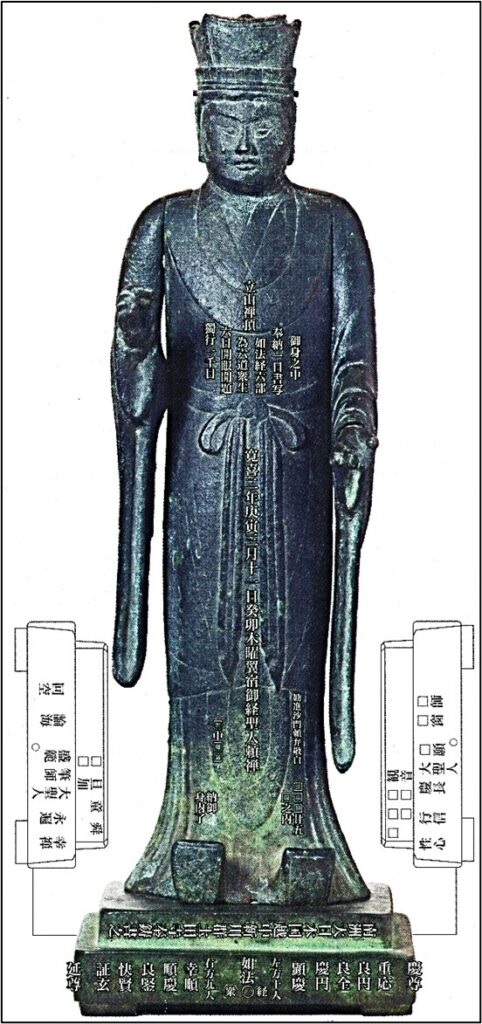
A distinctive feature of this statue is the presence of inscriptions carved across the chest, legs, and pedestal. These include the phrases “Tateyama Zenjō,” “Kanki 2,” and “Raizen.” The term Zenjō means “mountain summit,” and it is most likely a reference to the summit of Mt. Bessan. Kanki 2corresponds to the year 1230, and Raizen is the name of a monk. From these inscriptions, we can understand that this monk dedicated the statue at the mountain summit.
According to the inscriptions, the purpose of this dedication was to save sentient beings wandering through the Six Realms of rebirth. To this end, the monk copied one fascicle of the Lotus Sutra each day for six consecutive days, following the practice known as nyohōkyō, and placed the completed sutras inside the statue before performing a memorial offering.
In fact, the interior of the statue is hollow and was designed to function as a container for the copied Lotus Sutra.
During the Kamakura period, ascetic practices centered on nyohōkyō—the copying and dedication of the Lotus Sutraaccompanied by rigorous austerities—were carried out on Mt. Bessan at Tateyama. It appears that through these practices, the extinguishing of sins (metsuzai) was believed to be achieved. The judgment of whether such salvation was granted was entrusted to Taishakuten.
Inscriptions on the standing bronze statue of Taishakuten
Mt Bessan (elevation 2,880meter)
(3) Enma, King of Hell at Mount Tateyama
At Mount Tateyama during the Kamakura period, it can be confirmed that Taishakuten (Indra) initially fulfilled the role of judge of the underworld. By the late Kamakura period, however, this role appears to have been assumed by Enma, the King of Hell.
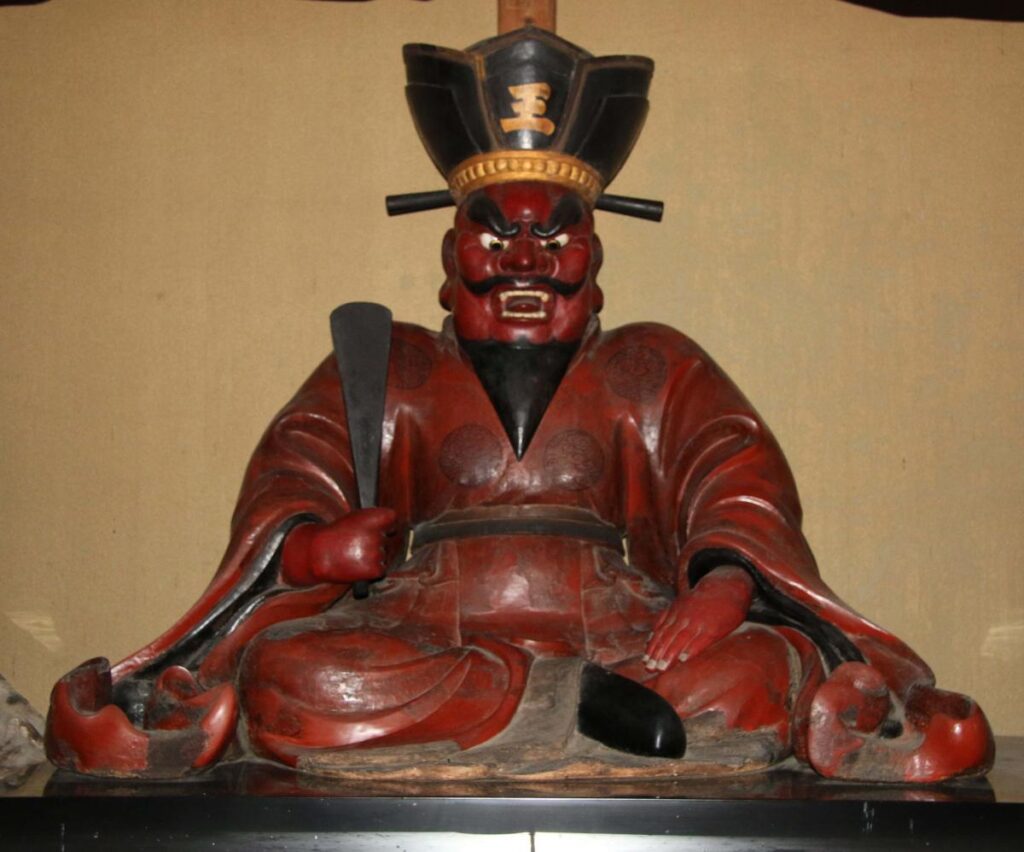
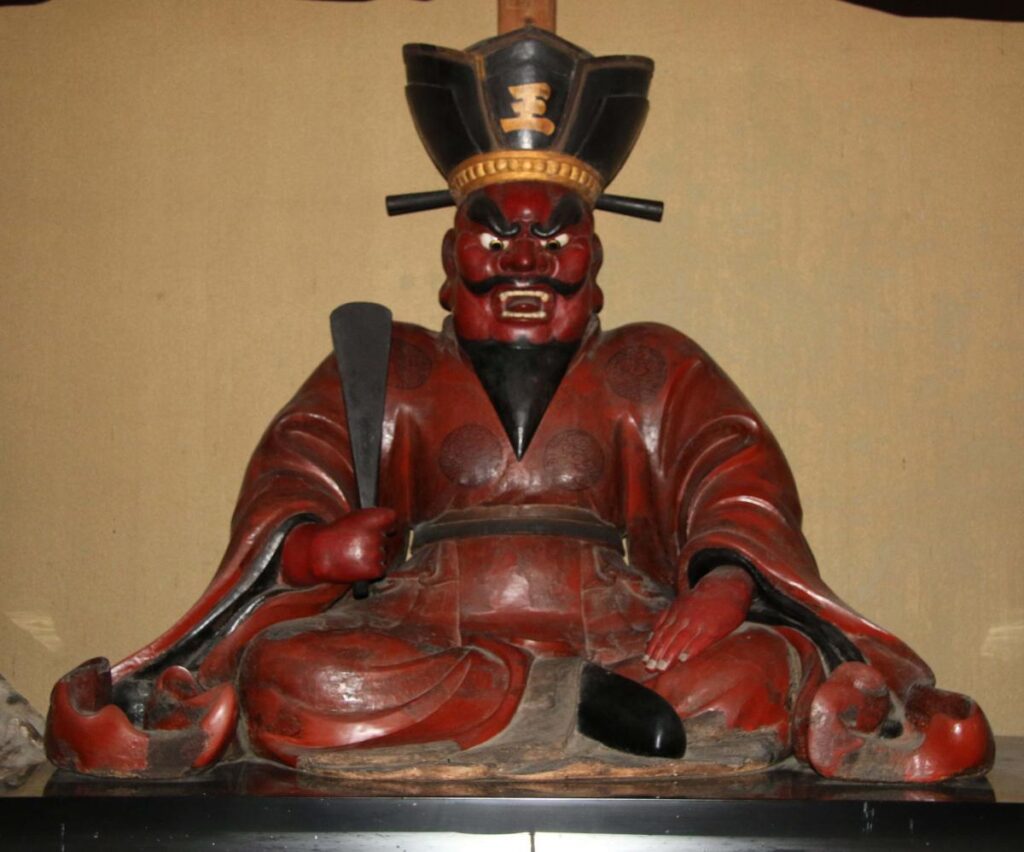
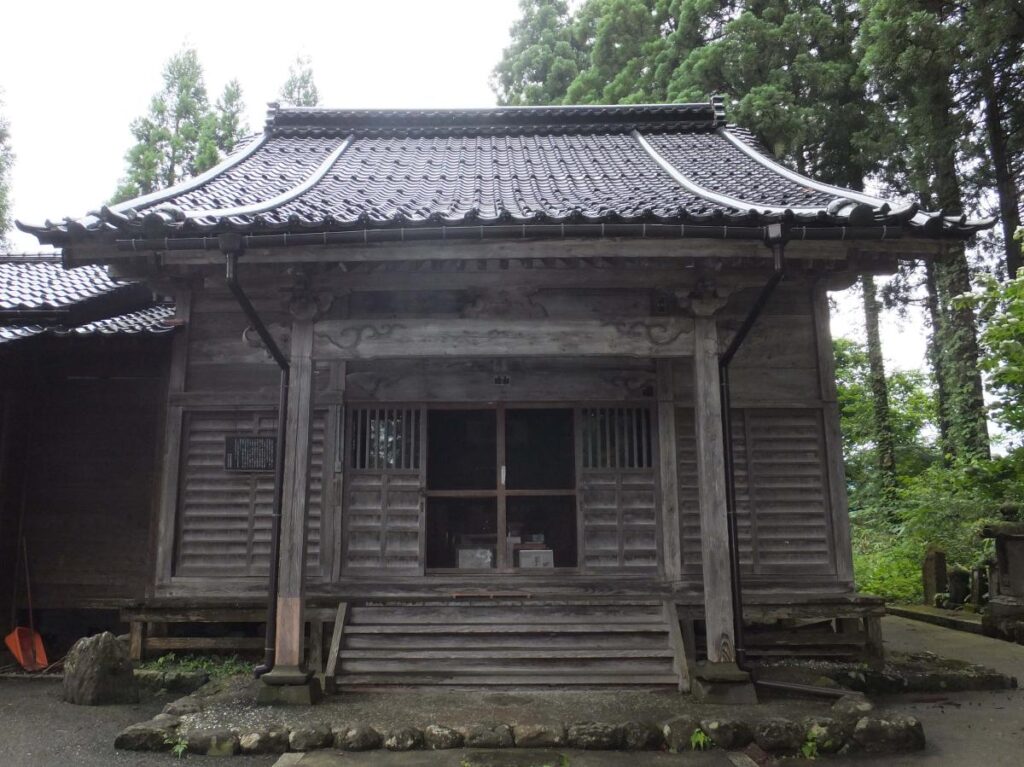
At Ashikuraji Temple in Tateyama stands the Enma Hall (rebuilt in 1928), which houses a seated wooden statue of Enma believed to date from the late Kamakura period. The statue measures over 160 centimeters in height and is relatively large in scale. As Pure Land Buddhism spread during the Kamakura period, it is thought that at Ashikuraji, Enma was enshrined together with Taizanō, Godō Tenrinō, Shimei, and Shiroku in what is known as the “Enma Five-Deity Configuration” (Enma Goson Keishiki). Incidentally, the name “Enma Hall” at Ashikuraji appears in historical documents for the first time in a donation record dated 1466 (Bunshō 1), made by the warrior clan Jinbō.
In addition, an Enma Hall once stood in Jigokudani (Hell Valley) and is depicted in several Tateyama mandalas and mountain pictorial maps from the Edo period. According to tradition, a metal statue of Enma was enshrined there, though the building itself no longer survives.Thus, at Mount Tateyama—known as a mountain of hell—the figure of the “judge of the underworld” came to be firmly established. Beginning with Taishakuten and later giving way to Enma, whose striking appearance and distinctive character captured popular imagination, Enma ultimately became the dominant figure.
Seated Wooden Statue of Enma, King of Hell (Designated Tangible Folk Cultural Property of Toyama Prefecture; Kamakura period; housed in the Enma Hall of Ashikuraji Temple)
The Enma Hall of Ashikuraji
In the next installment, we will introduce the Ashikuraji and Iwakuraji settlements, which served as key centers of Tateyama worship during the Edo period. We hope you will continue to follow this series.
◎ For more on Taishakuten at Mount Tateyama, we recommend the exhibition catalogue Tateyama and Taishakuten, published in conjunction with a special exhibition. For Enma, King of Hell at Mount Tateyama, the exhibition Tateyama × Hell is highly recommended.
For information on how to purchase these publications, please contact the Tateyama Museum.
#https://www.yamanohi.net #Toyama Prefectural Tateyama Museum #Mountain Faith #Mt Tateyama # Taishakuten #Enma, King of Hell