– Rediscovering the City Through Its Hidden Mountains By Kazuhiko Miwa
Episode 4: Climbing a Miniature Mt. Fuji at Shinagawa Shrine
During the Edo period, the majestic peak of Mt. Fuji could be seen from almost anywhere in the city. People believed that Buddha resided on its summit, and pilgrims climbed the mountain chanting “Rokkon Shojo” (“Purification of the Six Senses”).
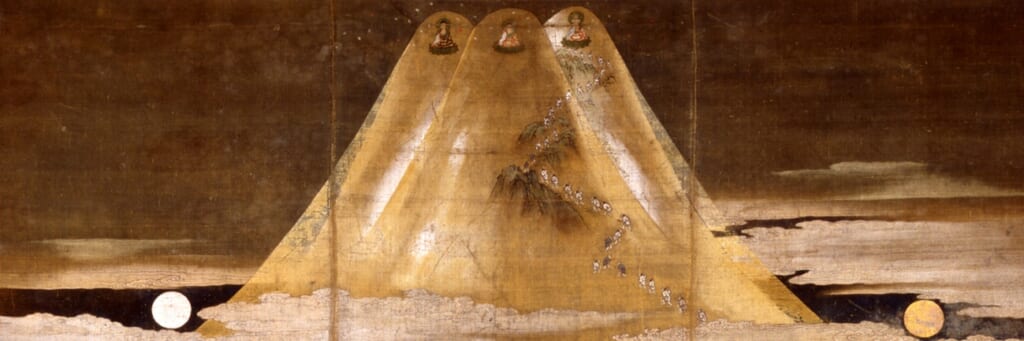
The illustration shown here is part of the Fuji Pilgrimage Mandala. It depicts a long procession of pilgrims climbing Mt. Fuji at night in order to worship the Buddha on the summit. Looking closely, however, one notices that all the climbers are men dressed in white pilgrimage robes. In those days, women and children were not permitted to make the pilgrimage to Mt. Fuji.
The men climbing the mountain were members of organizations known as Fuji-ko—religious associations devoted to Mt. Fuji worship. It is said that Edo had as many as “808 Fuji-ko groups.” The number 808 was not meant literally; it simply meant “countless.”
Each year, members pooled their money and selected several young representatives to climb Mt. Fuji on behalf of the group. Upon returning home, they carried back pieces of volcanic lava from the mountain. Using these stones, they constructed miniature versions of Mt. Fuji in their own neighborhoods. Several of these miniature mountains, known as Fujizuka (Fuji mounds), still survive today.One of the teachings of the Fuji-ko movement was the idea that “all people are equal.” Since women and children could not climb the real Mt. Fuji, the faithful created smaller versions that anyone could climb. It was believed that climbing one of these miniature mountains would bring the same spiritual benefits as climbing the real Mt. Fuji.
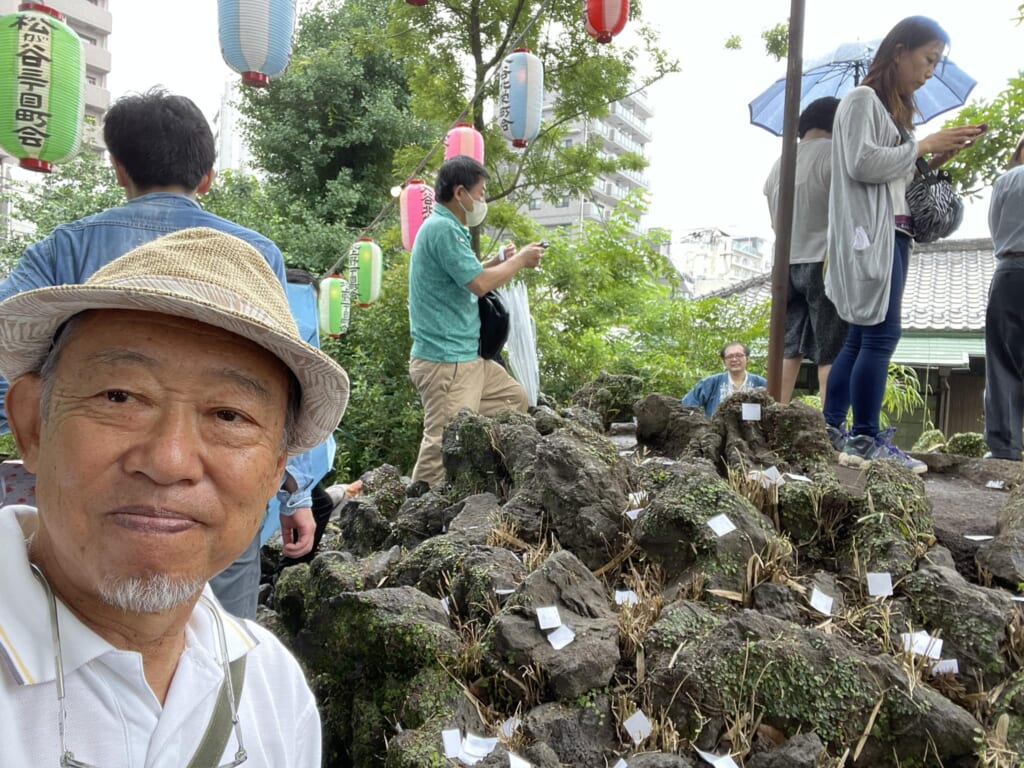
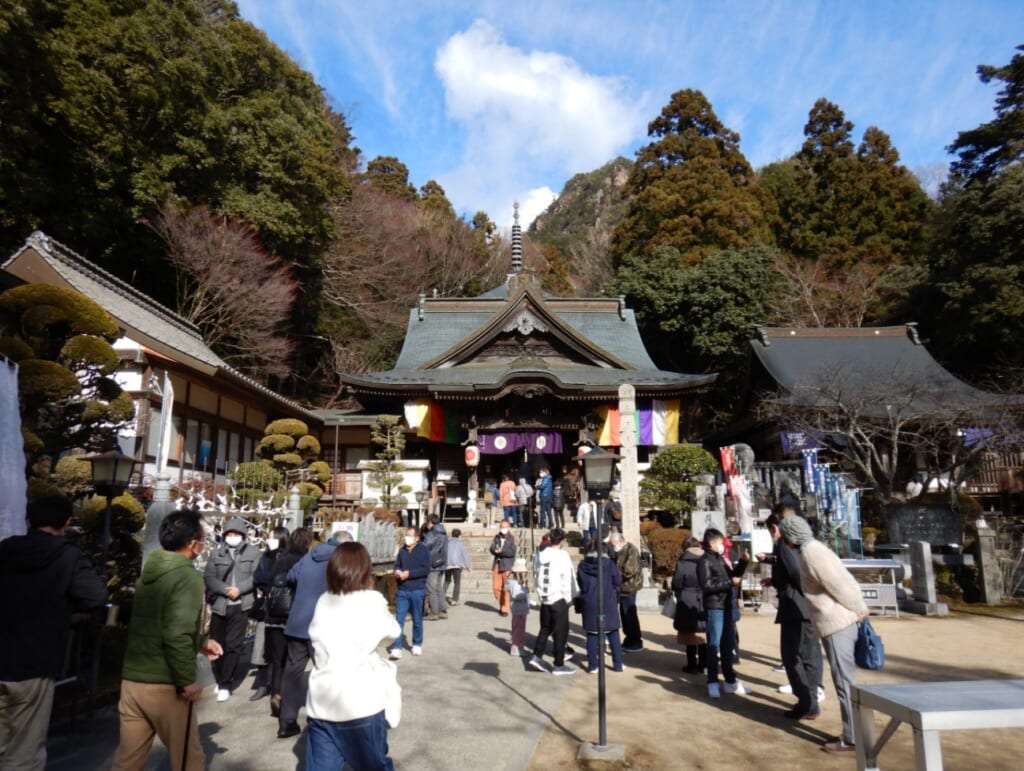
The photograph shows a Fujizuka in Shitaya, Tokyo, on July 1, the traditional opening day of the climbing season. Although this miniature Mt. Fuji is only about five meters high, the crowds are as dense as those found on a rush-hour train. I make a point of climbing it every year on this day.This particular mound, known as Shitaya Sakamoto Fuji, has preserved much of its original appearance and has therefore been designated an Important Cultural Property of Japan.
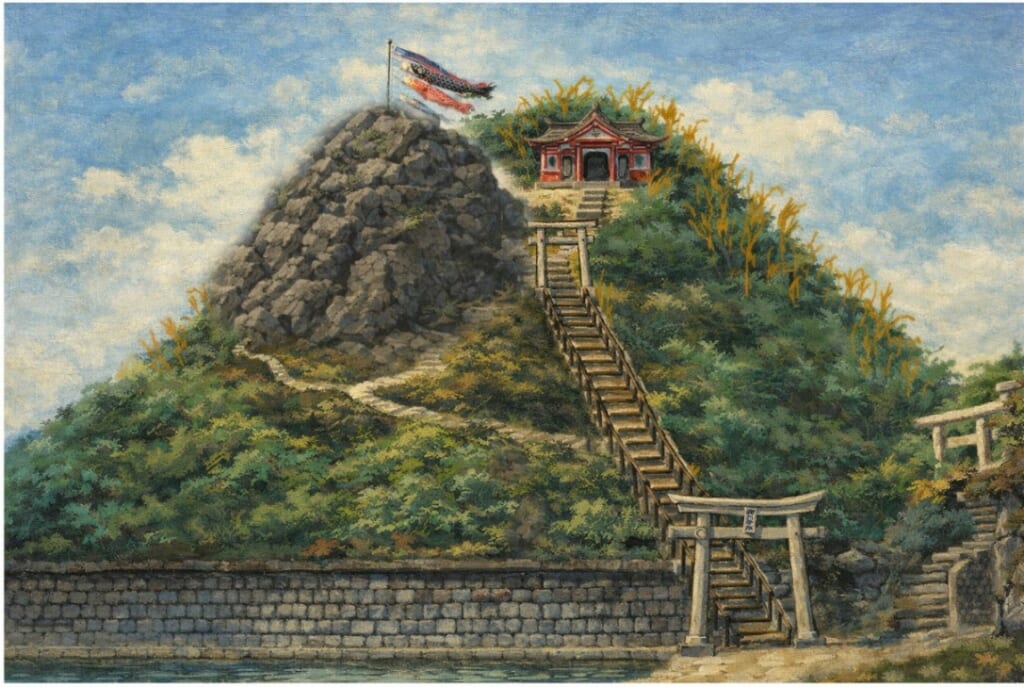
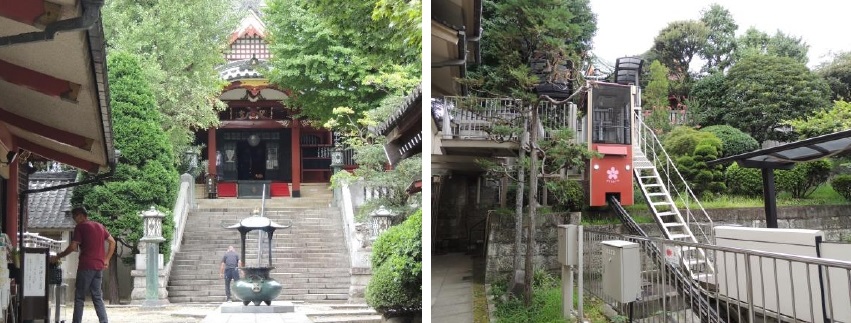
A few stations south of Shinagawa on the Keikyu Railway, near Shin-Bamba Station, stands another mountain that looks as though it has stepped out of an old picture scroll. It is located within the grounds of Shinagawa Shrine.Beside the shrine’s stone staircase rises a rugged artificial hill. A closer look reveals that it is constructed from genuine lava brought from Mt. Fuji. From the shrine grounds the mound appears to be only about three meters high, but the shrine itself stands on a terrace approximately ten meters above sea level. Seen from the road below, the Fujizuka reaches a height of about thirteen meters.
Because the Keikyu railway runs on an elevated track, passengers are rewarded with an excellent view of this miniature Mt. Fuji as the train passes by.
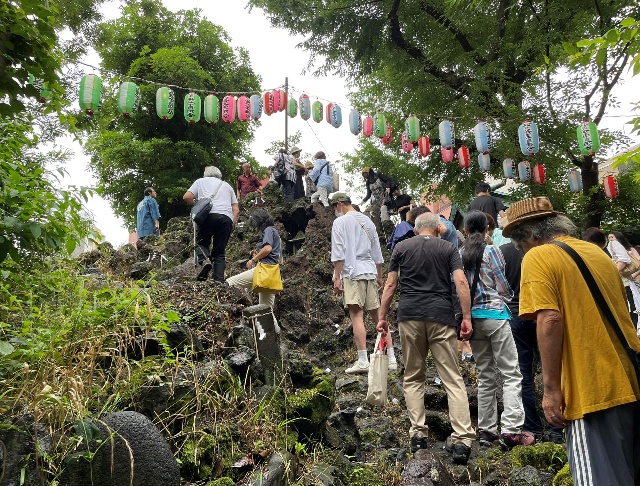
Visitors may climb the mound at any time. Approaching from the front, the climbing route is surprisingly narrow and steep, making it feel like a real mountain trail. One has to watch one’s footing carefully.
In the Edo period, climbers would have enjoyed a distant view of the real Mt. Fuji from the summit. Today, however, the view is blocked by countless buildings.
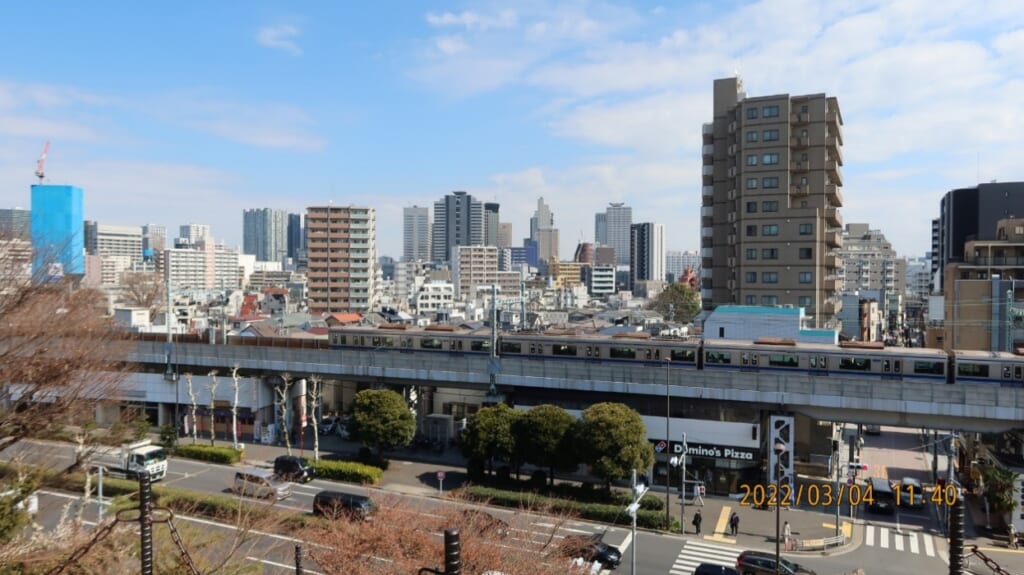
Looking toward the sea, one can see the modern highway and the old Tokaido route below. Beyond them stretch residential neighborhoods and, farther still, clusters of high-rise buildings.
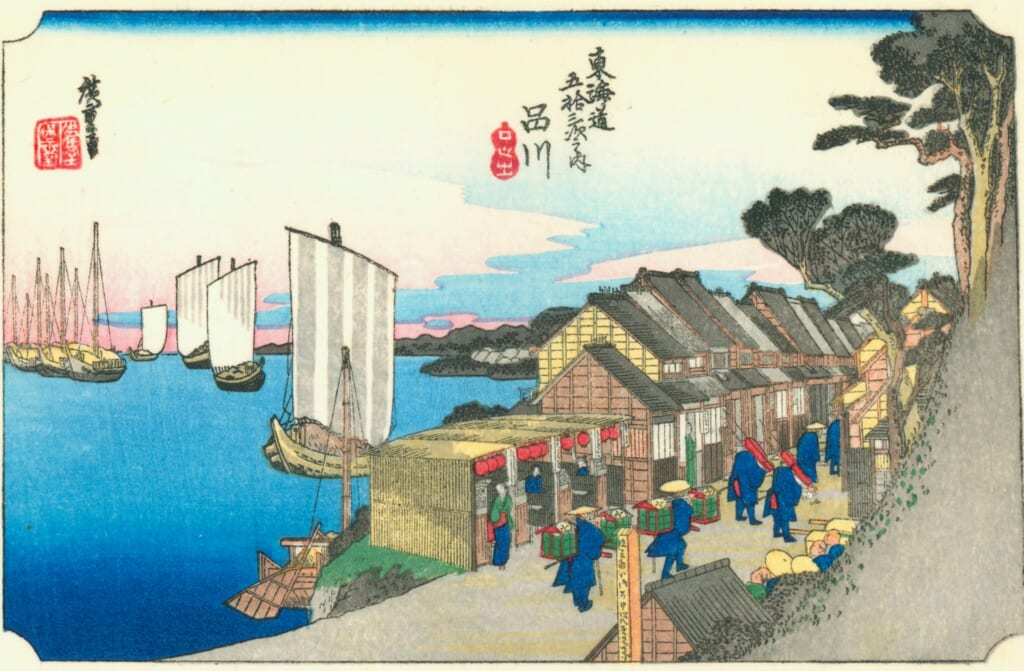
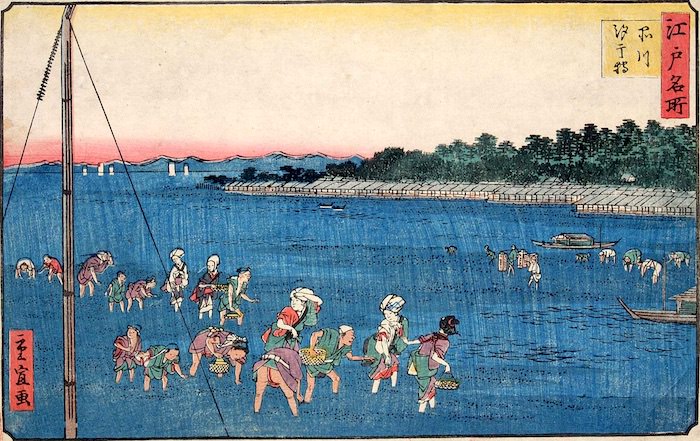
The two ukiyo-e prints shown below depict the Shinagawa area during the Edo period. One shows the Tokaido Road with sailing ships floating on the sea beyond. Today, houses fill the landscape east of the old Tokaido, but in those days the area consisted of shallow tidal flats where people gathered shellfish.
In the Edo period, five major highways radiated outward from the city. The most important of them was the Tokaido, which connected Edo with Kyoto through fifty-three post towns. Shinagawa-juku, the first of these post stations, stood here.
Shinagawa Shrine was one of the principal shrines serving the people of Shinagawa-juku. This miniature Mt. Fuji was undoubtedly one of the area’s famous landmarks as well.Today, visitors can still climb it and experience, in a small way, the spirit of a pilgrimage that once connected the people of Edo to Japan’s most sacred mountain.
In 2027, the National Mountain Day Convention will be held in Kagawa Prefecture. To mark the occasion, we introduce the Shikoku Henro, a culture of walking that has been handed down on Shikoku for more than 1,200 years.
Over this 12-part series, Takahiro Katagiri, Director of the Sanuki City Henro Museum, who has spent many years collecting and researching materials related to the Shikoku Henro, will guide us through its history, culture, and present-day significance.
Episode 1: What Is the Shikoku Henro?
— Walking through Mountains, Satoyama, Towns, and the Seashore —
Kagawa Prefecture announced on February 9, 2026, that the 11th National Mountain Day Convention is scheduled to be held in the prefecture in August 2027.
The website of the Japan Mountain Day Foundation explains the purpose of the convention as follows: “The National Mountain Day Convention has been held every year on August 11, Mountain Day, since 2016. Its purpose is to deepen public interest in Mountain Day, which became a national holiday in 2016, to encourage people to enjoy mountains and nature, and to foster a greater sense of gratitude for the benefits they provide.”
Recently, Masahiko Kaji, President of the Japan Mountain Day Foundation, visited the museum and asked me whether I would write a series on the Shikoku Henro as an introduction leading up to the 11th National Mountain Day Convention, to be held in Kagawa Prefecture next year.
When I first received the request, my immediate reaction was: “What does the Shikoku Henro have to do with Mountain Day?”
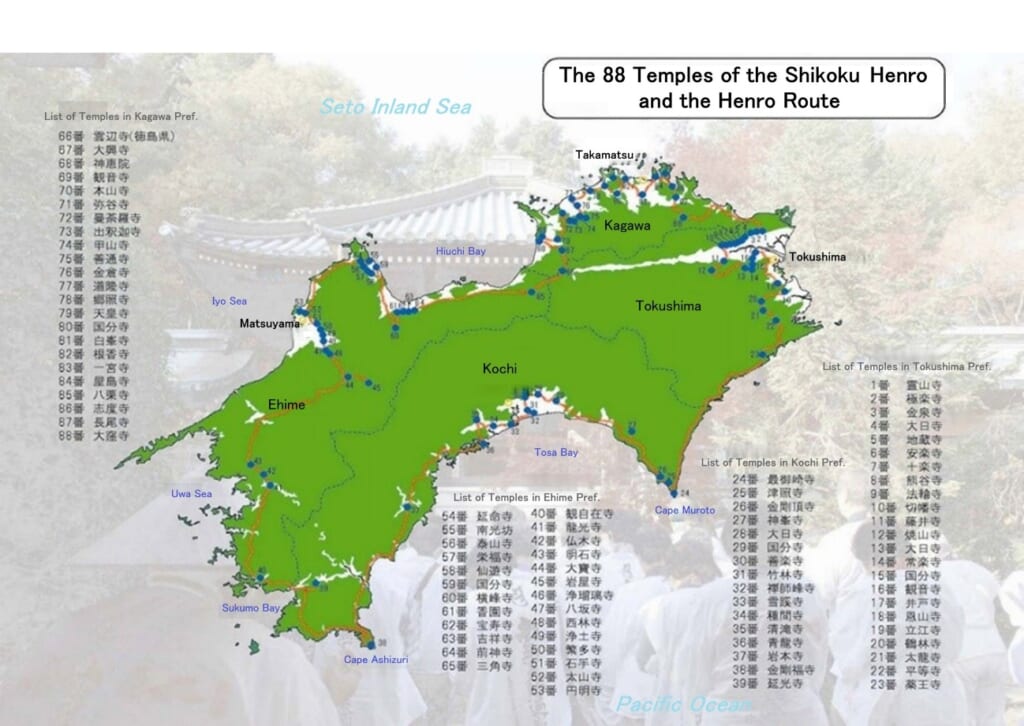
On reflection, however, the connection becomes clearer. In simple terms, the Shikoku Henro is a vast temple pilgrimage around the island of Shikoku—comprising Tokushima, Kochi, Ehime, and Kagawa prefectures—linking 88 sacred sites associated with Kukai by a network of pilgrimage routes. The entire journey extends for roughly 1,400 kilometers, although it is commonly described as about 1,200 kilometers. Its two essential elements are therefore the 88 sacred sites and the pilgrimage routes that connect them.
The settings of the 88 sacred sites vary greatly. Temple No. 21, Tairyuji, at an elevation of about 618 meters, and Temple No. 66, Unpenji, at about 911 meters, stand near mountain summits, while Temple No. 25, Shinshoji, and Temple No. 38, Kongofukuji, are situated close to the sea.
The 88 Sacred Sites of Shikoku and the Pilgrimage Routes
Looking at western Kagawa, for example, Temple No. 66, Unpenji, stands on Mt. Unpenji at an elevation of about 911 meters. Although administratively located in Tokushima Prefecture, it is counted among the Sanuki temples. Temple No. 67, Daikoji, lies at about 70 meters above sea level in a rural settlement at the foot of the Sanuki Mountains. The pilgrimage route then passes through the town of Kanonji to Temple No. 68, Jinnein, and Temple No. 69, Kannonji, on Mt. Kotohiki near the Seto Inland Sea, also at an elevation of about 70 meters. Following the Saita River upstream brings the pilgrim to Temple No. 70, Motoyamaji, in an urban area. Thus the sacred sites are scattered among mountain heights, satoyama and rural settlements, towns, and places facing the Seto Inland Sea—as though the pilgrimage repeatedly moves through “mountains,” “satoyama,” “towns,” and the “seashore.”
Mountains have long been regarded as realms of enlightenment—the other shore, or the Pure Land—a pure and undefiled world inhabited by Buddhas and bodhisattvas, in contrast to the secular world in which we live. Seen in this light, the Shikoku Henro may be understood as a form of spiritual practice that moves back and forth between the “mountain as sacred realm” and the everyday world. Ascetics and pilgrims approached mountains with reverence, entering into a dialogue with nature and, through their practice, seeking a sense of unity with it.
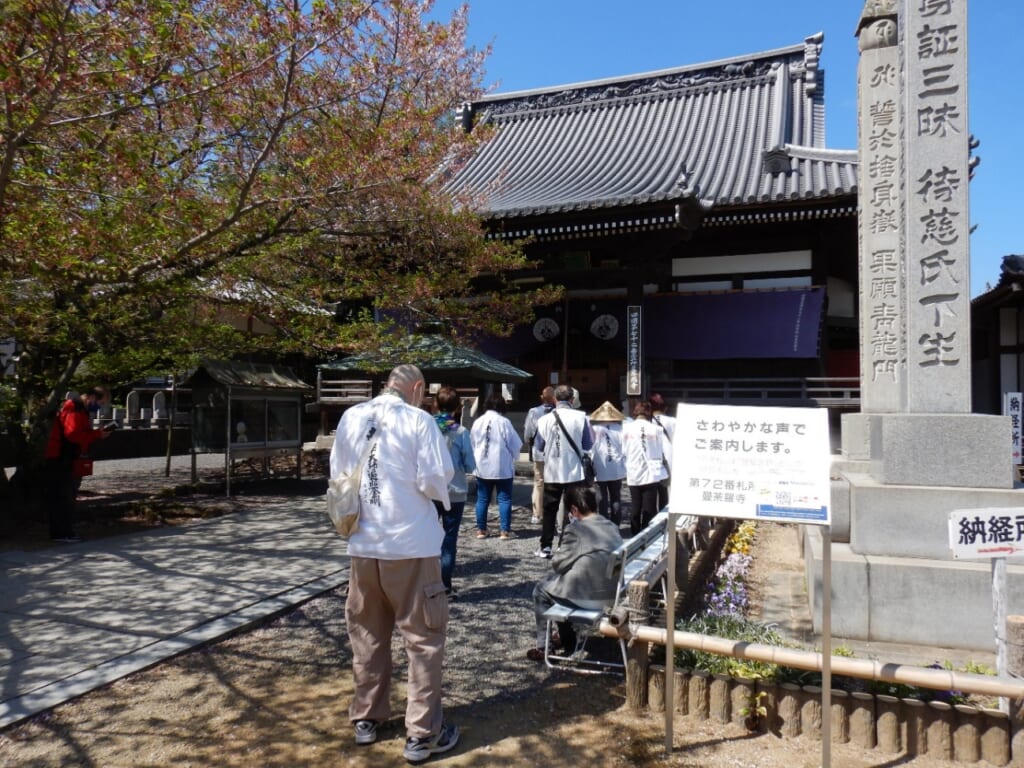
Temple No. 72, Mandaraji
Kukai practiced ascetic disciplines in many parts of Shikoku, both along the coast and in the mountains. In later periods, his disciples and other practitioners traveled to places and historic sites associated with him. This practice developed into a journey around the outer reaches of Shikoku, gradually spread among ordinary people, and eventually incorporated elements of travel and tourism, leading to the Shikoku Henro as we know it today.
In this sense, the Shikoku Henro has continued for roughly 1,200 years since the time of Kukai. Even in the form that took shape during the Edo period, it has a history of about 350 years—and it will surely continue into the future.
We often describe the Shikoku Henro as a pilgrimage to “88 sacred sites associated with Kukai.” Historically, however, the connection between Kukai and some of these temples and shrines is not clear. Likewise, the traditional account that Kukai established the pilgrimage at the age of 42—an age traditionally regarded as inauspicious—cannot readily be accepted as historical fact; This is generally regarded today as the accepted historical view.
As I begin this series, I do not know how fully I will be able to convey the depth and appeal of the Shikoku Henro. I hope, however, to explore its history, the role of this Henro Museum, and the question of how far we can contribute to preserving and passing on the culture of the Shikoku Henro.
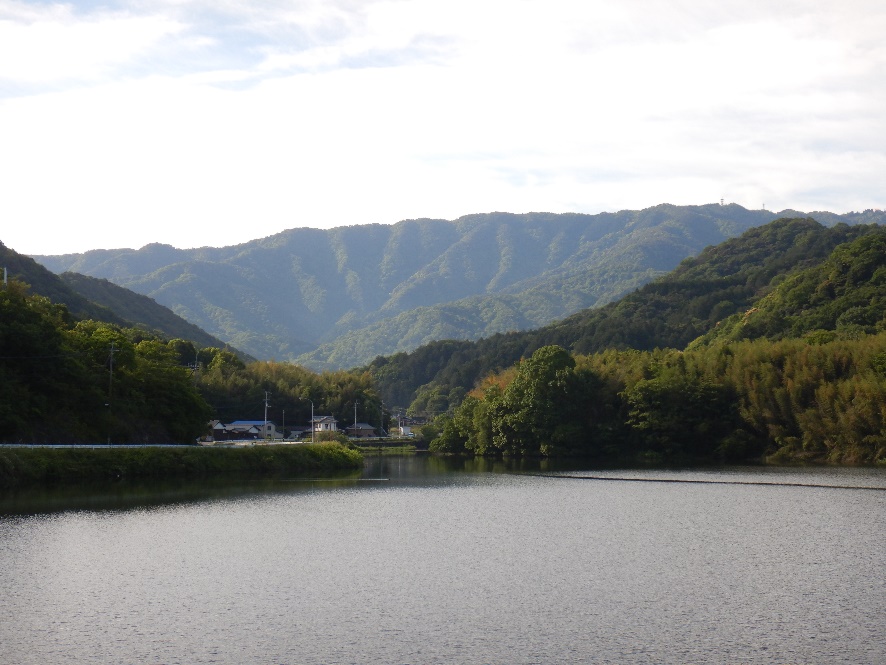
Mt. Unpenji, home to Temple No. 66, Unpenji
Author Profile Takahiro Katagiri
Director, Sanuki Henro Museum. While working for the Kagawa Prefectural Government, Katagiri became involved in efforts to seek World Heritage inscription for the Shikoku Henro in 2007. Through surveys of the pilgrimage temples and routes, he developed a deep interest in the richness and appeal of the tradition. After retiring from the prefectural government, he became Director of the Henro Museum in April 2020. At the Sanuki City Henro Museum, he collects and researches materials related to the Shikoku Henro and communicates its history and culture through exhibitions, explanations of the collection, lectures, and other activities.
Sanuki City Henro Museum
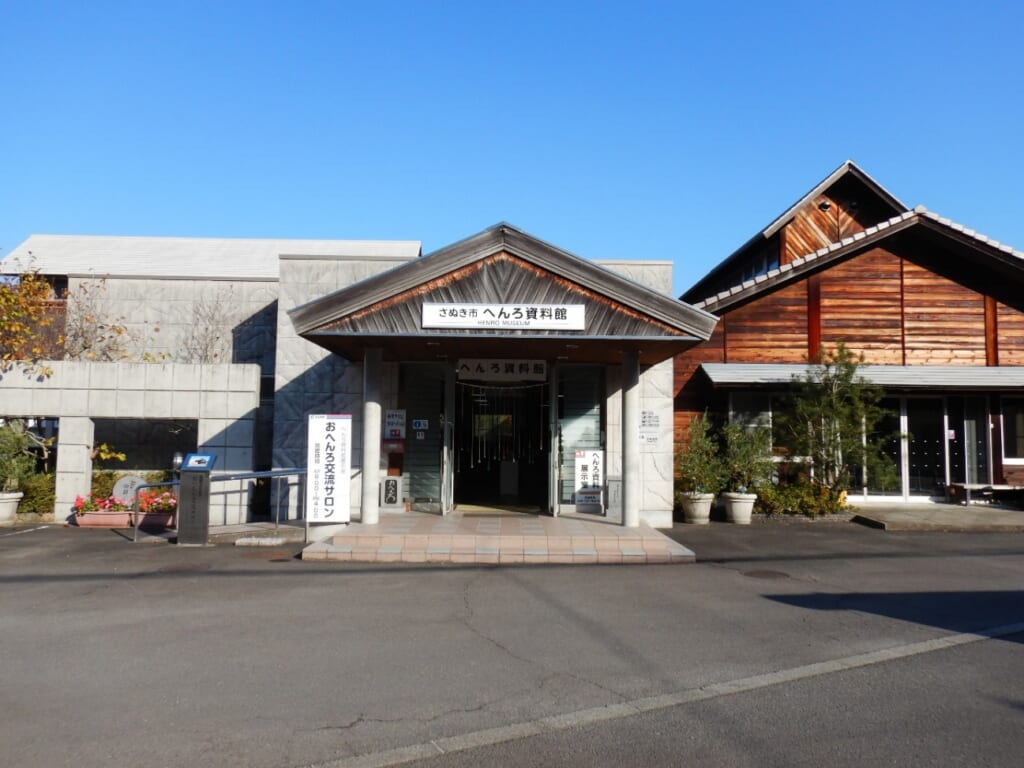
The museum is located in Maeyama, Sanuki City, formerly part of Nagao Town. Because Temple No. 87, Nagaoji, and Temple No. 88, Okuboji, are located in the area, many materials related to the pilgrimage had been preserved by local residents and by the former Nagao Town Board of Education. To display these materials—and taking into account the museum’s location along the pilgrimage route from Nagaoji to Okuboji—the facility opened at its present site in 1999 as the Ohenro Koryu Salon. It was renamed the Henro Museum in 2023. It is the only museum in Japan devoted exclusively to the display of materials related to the Shikoku pilgrimage.
The museum includes a main floor, an exchange room, a permanent Henro exhibition room, and a special exhibition room. Just inside the main entrance is a large diorama of the whole of Shikoku, approximately 5.4 meters wide and 3.2 meters deep. Buttons around the display illuminate the locations of the 88 pilgrimage temples. The exchange room provides a place where local residents and pilgrims—and pilgrims with one another—can meet. The permanent exhibition traces the history of the Shikoku Henro from Kobo Daishi Kukai onward, drawing primarily on materials in the museum’s own collection. Special exhibitions are held during the summer and winter.
The museum collects, preserves, displays, and researches valuable historical materials in order to communicate the history and culture of the Shikoku Henro. It also introduces the pilgrimage routes and temples and serves as a base for travelers who wish to learn about—and walk—the Shikoku Henro.
Exterior of the Sanuki Henro Museum
Next
How did the Shikoku Henro begin?
In Episode 2, we trace the origins of the pilgrimage and its connection with Kobo Daishi Kukai.
Through his work in forestry, Lama Gyalu Sherpa has gradually come to think not only about individual trees, but also about the future of Japan’s forests and how they should be cared for.
Above all, he believes that one of the most important challenges today is giving younger generations—especially children—more opportunities to experience nature firsthand.
Information is easier to obtain than ever before. With a book or a smartphone, almost any fact can be found within seconds.
Yet, Lama Gyalu believes that knowledge alone is not enough.
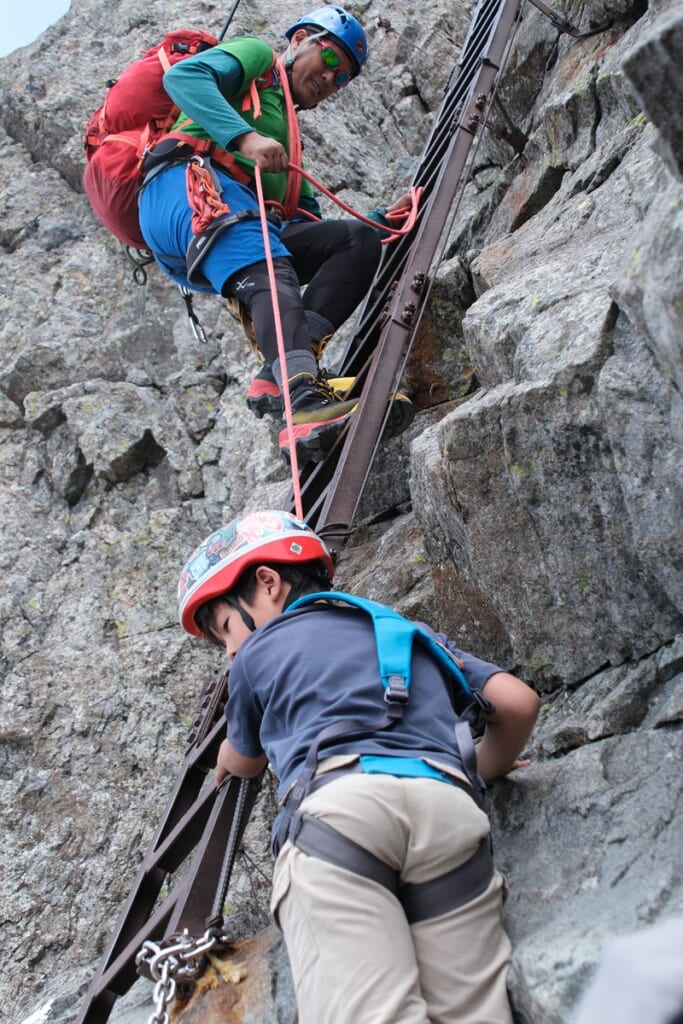
Climbing Mt. Yari, August 2024
Learning Through Experience
Children need opportunities to see, touch, smell, and sometimes even taste the natural world for themselves. They should experience forests with all five senses and, on occasion, even learn from small scratches, insect bites, or other minor hardships that come with being outdoors.
Such experiences, he believes, help children develop both respect for nature and the judgment needed to live safely within it.
Adults therefore have a responsibility to provide places where children can enjoy these experiences in a safe environment.
At the same time, Lama Gyalu worries that many parents in Japan grew up with relatively little direct contact with nature themselves. If adults lack those experiences, it becomes difficult for them to pass them on to the next generation.
A Sherpa’s Mission
“These days my company comes first, so I don’t work as a mountain guide very often anymore.
But I’d still like to organize opportunities—especially for children—to experience nature directly while keeping them safe.
As someone who grew up as a Sherpa guide in the Himalayas, I believe that’s something I can contribute.”
Even after more than twenty years of living in Japan, Lama Gyalu still carries a deep pride in the traditions of the Sherpa people. That heritage continues to shape the way he approaches both mountains and forests.
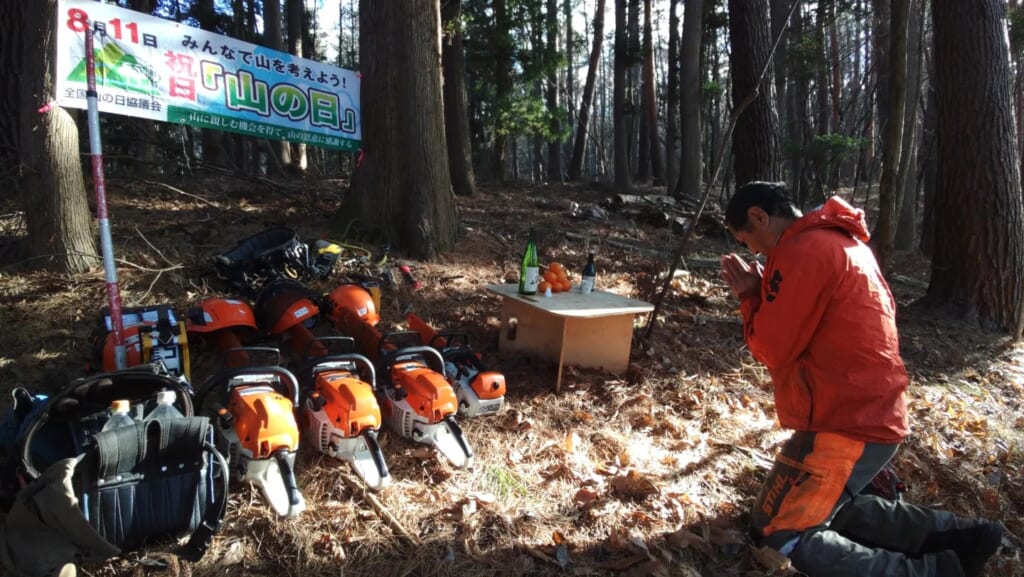
Prayers for the Safe Operation of Forestry Equipment
A Second Home
Lama Gyalu Sherpa’s journey raises an important question for all of us:
Who will care for Japan’s forests and mountain communities in the future?
More than twenty years have passed since he made Japan his home.
Today, the forests of Japan have become his second homeland.
Drawing upon the knowledge, skills, and values he inherited as a mountain man of the Himalayas, he hopes to continue supporting the future of Japan’s forests, its natural environment, and the communities that depend upon them.
That is Lama Gyalu Sherpa’s wish.
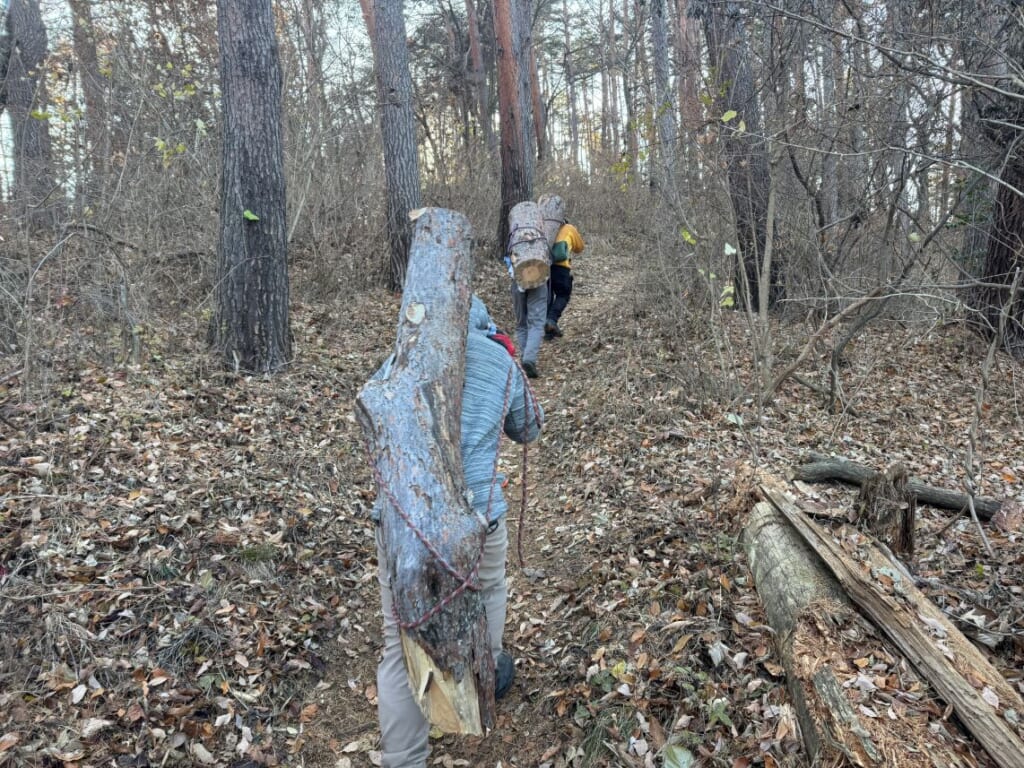
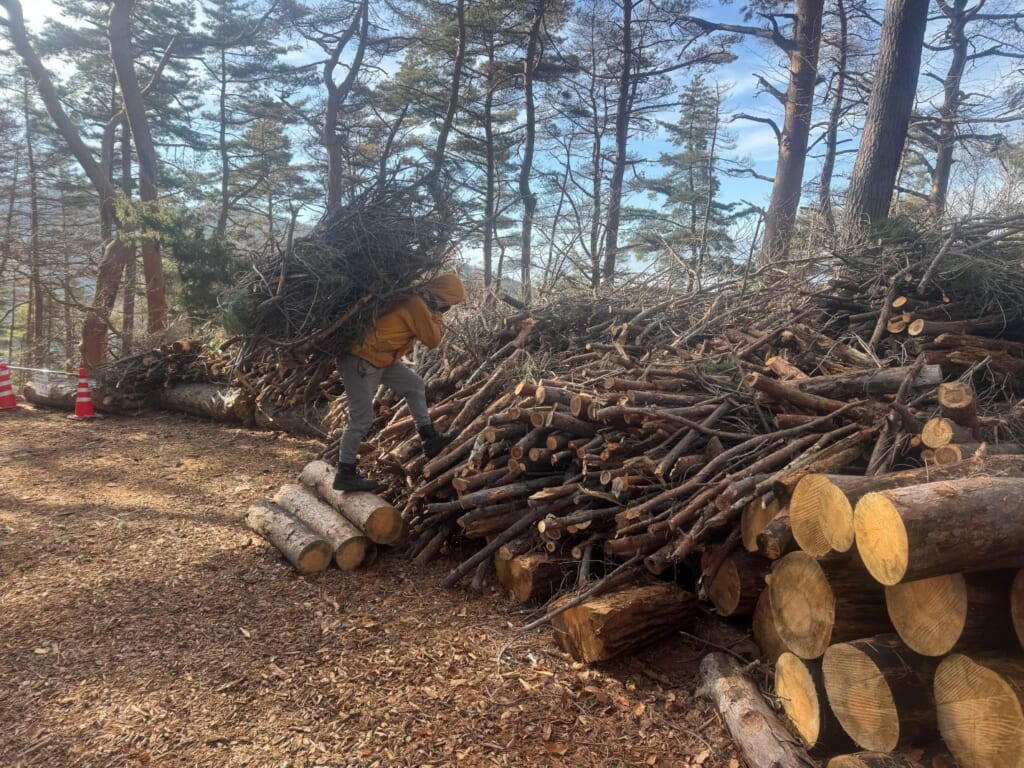
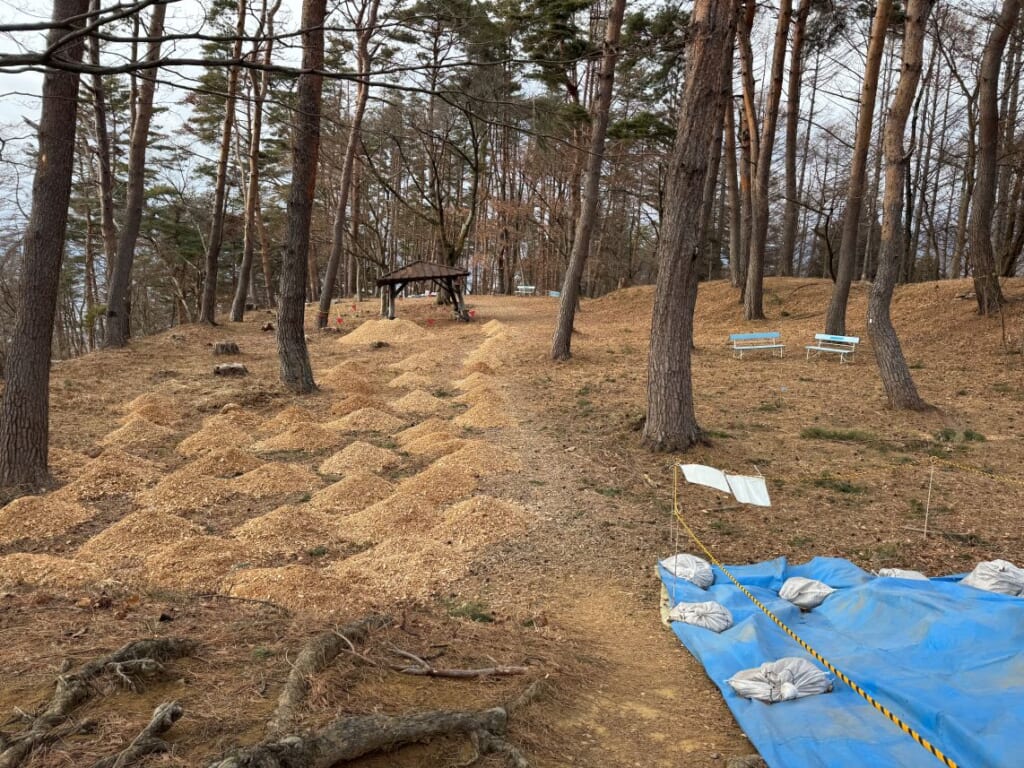
Carrying Timber the Nepali WayStacking Wood for ChippingSpreading Wood Chips to Protect the Forest Floor
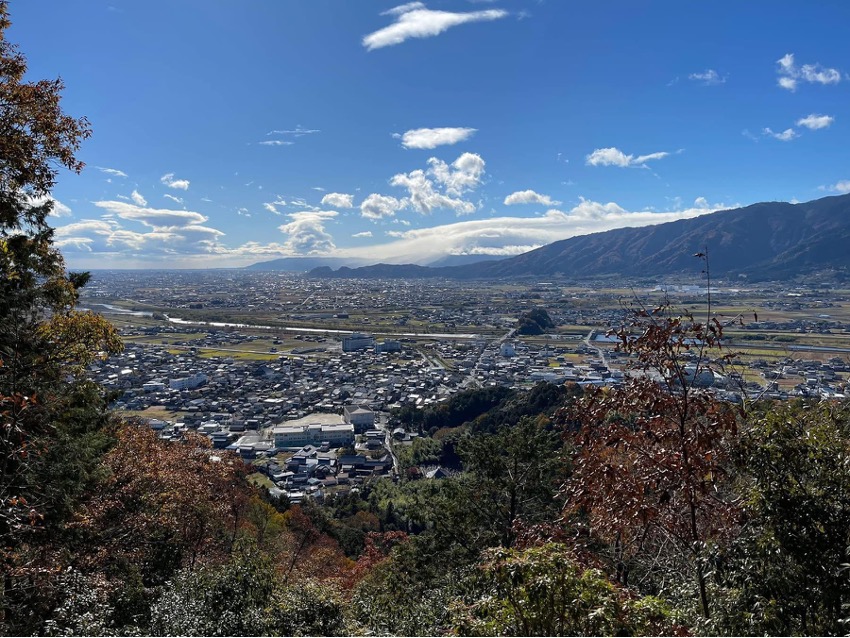
In the Seino region of Gifu Prefecture, central Japan, low mountains rise around the Nobi Plain. Most are between 200 to 400 meters high. They are not the dramatic peaks that usually come to mind when people think of Japan’s mountains.
Yet these modest mountains have a story of their own.
They are part of what the Japanese call satoyama — people have lived, worked, and cared for these landscapes for generations. Here, old paths cross the hills, and the remains of mountain castles and other historic sites can still be found.
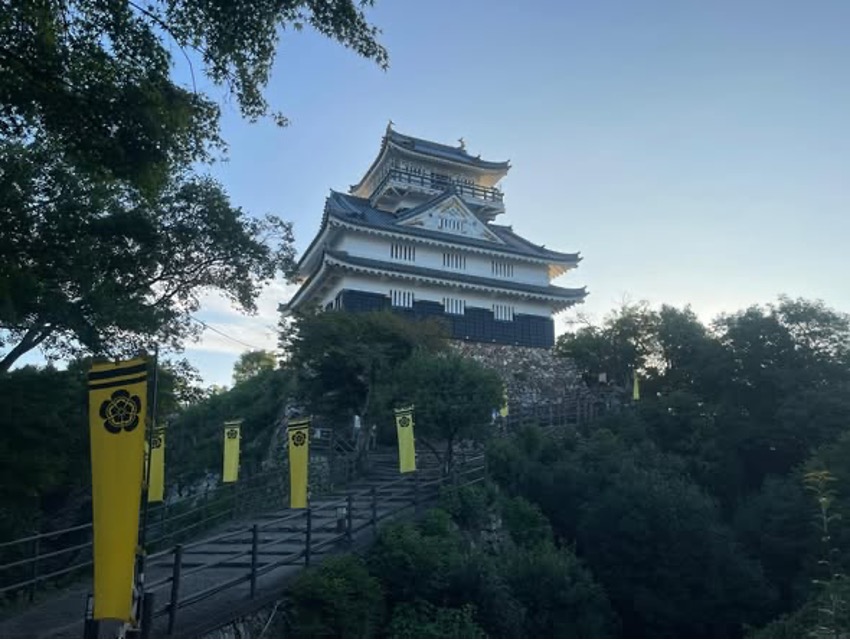
Gifu has particularly strong connections with Japan’s Sengoku, or Warring States, period of the 15th and 16th centuries. Gifu Castle, standing on Mt. Kinka, is closely associated with the powerful warlords Saito Dosan and Oda Nobunaga. Farther west lies Sekigahara, site of the decisive battle of 1600 that helped shape the political unification of Japan.
Today, a local initiative is finding a new way to connect these mountains — not only physically, but also with the people and history around them.
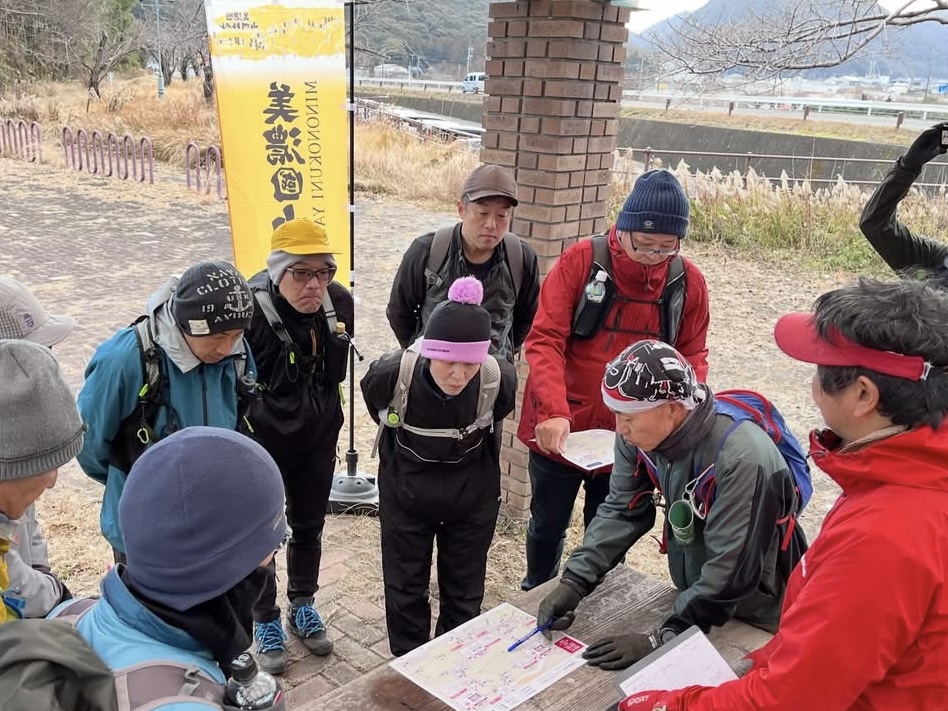
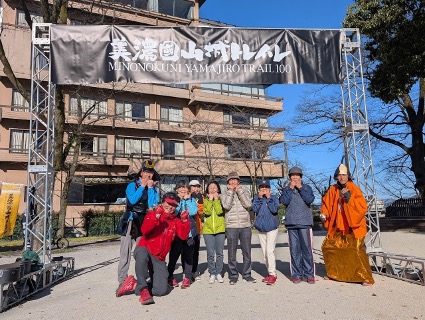
It is called the Mino-no-Kuni Yamajiro Trail.
Gifu Castle on Mt. Kinka
The idea is simple: connect a series of satoyama across the Seino region into a long trail that people can walk or run while discovering the landscape and its history.
One of the people behind the initiative, Shigekazu Tsuboi, had long been exploring ways to bring new energy to his hometown of Ibigawa. He ran from the headwaters of the Ibi River to the sea, traversed local mountain ranges, and walked old mountain passes that had fallen out of use.
His experiences walking historic long-distance routes elsewhere in Japan, including the Kumano Kodo pilgrimage trails, led him to see that a trail could offer more than a route from one place to another.
Walking a long trail can be a way to experience the nature, history and culture of a region.
Could something similar be created in his own community?
That question eventually brought together people who were exploring ways to connect the mountains from Ibi toward Gifu Castle. A route of roughly 100 kilometers began to take shape.
What started with individuals exploring their local mountains gradually attracted volunteers and collaborators from different communities and eventually developed into an organized local initiative.
But what makes the project interesting is not simply the length of the trail or the races held on it.
As people returned to these mountains, they also began rediscovering paths and local history that were in danger of being forgotten.
A View of the Seino Region, Gifu Prefecture
Not Building New Trails, but Keeping Old Ones Alive
When people stop walking a satoyama path, vegetation gradually takes over. Eventually, even the route itself can disappear.
Trail maintenance has therefore become an important part of the Mino-no-Kuni Yamajiro Trail activities.
The approach is deliberately modest.
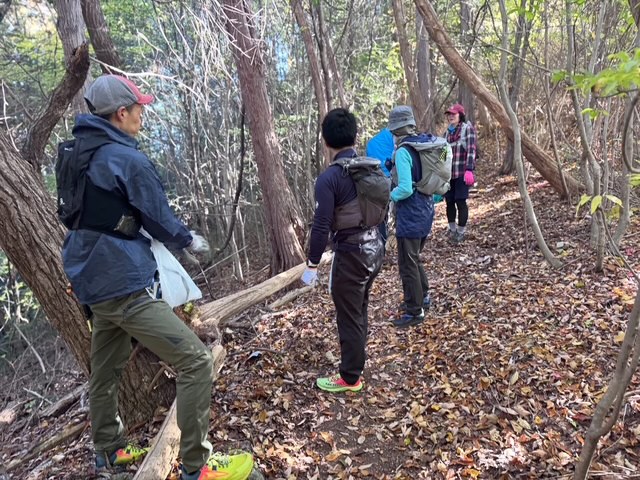
Rather than cutting new trails or constructing large facilities, volunteers remove fallen trees, deal with loose stones and other hazards, and make existing paths safe enough to use again. As a general rule, living trees are not cut, and the natural landscape is altered as little as possible.
Behind this approach is a simple idea: people do not reshape the mountain for their own convenience. They are, in a sense, guests passing through nature.
This also points to one of the particular challenges facing satoyama.
Keeping people away does not necessarily mean that these landscapes will be preserved.
When paths that were once used by local communities are abandoned, they may eventually disappear. Poorly defined routes can also increase the risk of hikers losing their way.
People walk the paths. They notice what is happening to them. And when necessary, they care for them.
In this sense, using the mountains and conserving them do not always have to be opposing ideas.The experience in Gifu offers one example of how the two can work together.
Walking into Local History
The trail has also become a way of reconnecting people with the history of the region.
One initiative, called the Seino Kaitaku Trail Journey, divided part of a planned 100-mile route into eight sections. Participants walked or ran through the mountains while visiting historic sites, including old castle ruins around Sekigahara, battlefields and positions once occupied by samurai commanders.
The events were not designed only for experienced trail runners. Routes were also planned so that beginners and people interested primarily in local history could participate.
Instead of simply passing through the landscape, participants could stop and ask what had happened there centuries before.
The familiar hills then began to look different.
Mountains are part of nature, but they can also be places where people have travelled, worked and lived — and where history has unfolded.
A modern trail can therefore become an entrance into the past.
From Trail Running to Community
Trail running has been one of the forces behind this movement.
In places such as the Kakamigahara Alps, local runners began by simply running in their nearby mountains. Over time, local communities and municipalities became interested, and activities expanded to include trail maintenance and organized events.
The significance, however, lies beyond trail running as a sport.
Running can lead someone to discover a mountain they had never really noticed before.
Knowing the mountain can lead to an interest in its paths, nature and history.
And that, in turn, can bring runners into contact with people who maintain trails, people who know local history, and people who live in the surrounding communities.Sport can become an entry point for creating a new relationship between mountains, people and place.
Looking Again at the Mountains Close to Home
Japan has countless satoyama like those of Gifu — mountains that may never become nationally famous, but that have their own landscapes, paths, histories and relationships with local communities.
The activities described here did not begin with a large government program or a grand plan.
Someone walked a local mountain.
Someone began connecting paths.
Others helped keep those paths open.
People who knew the region’s history joined in.
Runners, walkers and local residents gradually became connected.
As a result, mountains that had once seemed separate became linked by a trail — and people became connected as well.
Gifu’s experience is not a model that every community should simply copy. The relationship between people and mountains is different from one region to another.
That is precisely why there is value in asking a simple question:
What do the mountains close to us mean to our own community?
Running. Walking. Caring for a path. Discovering history.
The ways of entering the mountains may differ. But when people continue to engage with them, the value of these familiar landscapes has a better chance of being passed on to the next generation.The people reconnecting the satoyama of Gifu offer one example of how that can happen.
Based on a seven-part Japanese series by Masaru Shiohara, this article was adapted and edited by the Japan Mountain Day Foundation for its English-language website.
# Japan Mountain Day Foundation # FAO Mountain Partnership # Gifu Prefecture # Satoyama # Trail Running
Since August 2025, the Japan Mountain Day website has carried a twelve-part series on “Tateyama Faith.” The series reached its final installment on July 2026.
How have the Japanese people related to mountains through the centuries? And how deeply have mountain worship and mountain religion shaped Japanese views of nature, spiritual culture, and even the development of society itself?
These questions had long made me want to explore mountain religion on the Mountain Day website. For some time, however, I could not find the right way to begin.
Then, through Masanori Aoyagi, former Commissioner for Cultural Affairs and a councilor of the Japan Mountain Day Foundation, and Ryuichi Ishii, former Governor of Toyama Prefecture, I was introduced to Yasuhiko Takano, Director of the Tateyama Museum of Toyama. That encounter made this series possible.
Statue of Uba, Episode 9
Over the twelve installments, I learned a great deal about Tateyama faith.
More than that, however, the series made me realize how little I myself had known about Japan’s mountains, and about the relationship between the Japanese people and mountains.
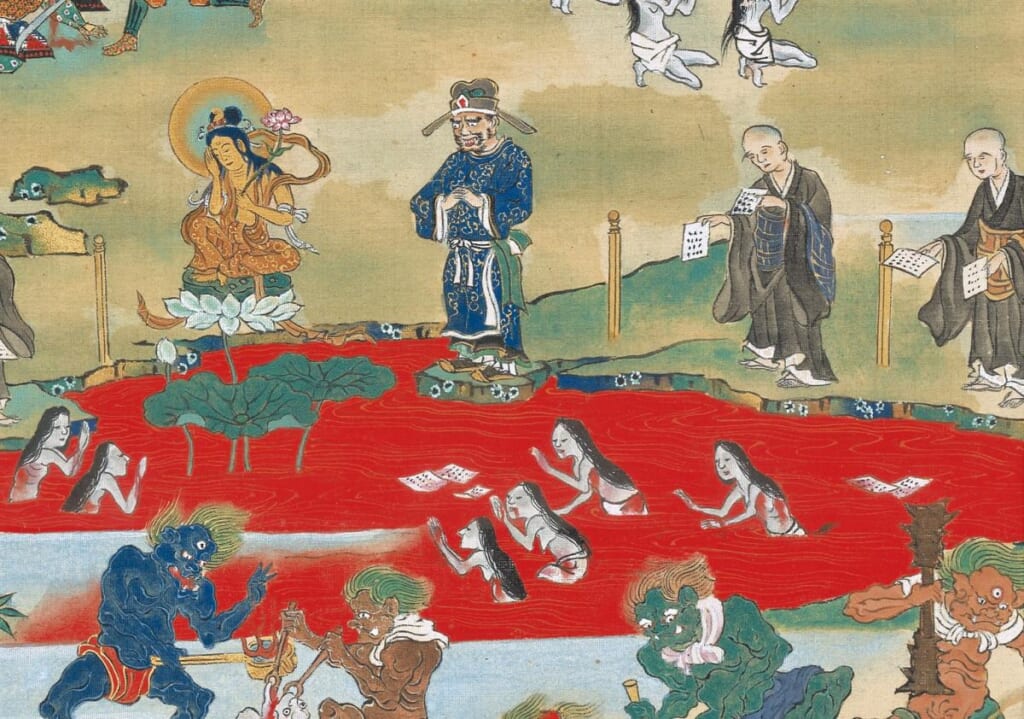
Tateyama Mandala: the Blood Pond Hell, Episode 10
And to my great pleasure, “Tateyama Faith” did not end as a single, self-contained series.
It led naturally to Katsuhiro Shimizu’s “The Adventures of Enku,” and now to “The Shikoku Pilgrimage,” a new series by Takahiro Katagiri, Director of the Sanuki City Henro Museum, scheduled to begin next month.
From Tateyama to Enku, and then to the Shikoku pilgrimage.
At first glance, these may seem to be quite different subjects. Yet a common thread runs through them: mountains and faith, nature and people, and the culture that the Japanese have nurtured over many centuries.
What this series revealed was not only Tateyama. Across Japan, every region has its own culture—formed through people’s relationship with mountains and handed down from one generation to the next.
Looking ahead, we hope to explore not only widely known mountain traditions such as Dewa Sanzan, Mount Koya, and the worship of Mount Fuji, but also the smaller, less visible relationships between local communities and mountains that still survive throughout Japan.
Prayers to mountain deities, festivals and kagura, livelihoods shaped by forestry and water, and local knowledge nurtured together with forests—each of these deserves to be rediscovered, recorded, and shared, not only within Japan but with people overseas as well. I believe this, too, is one of the roles that Mountain Day can play.
For our English-language website, this is also an opportunity to make our editorial direction clearer. Rather than simply translating everything published in Japanese, we want to draw on the depth and continuity of the Japanese-language website, select stories that offer a distinctive perspective on mountains and people, and present them in a form that can speak to readers beyond Japan. The Tateyama Faith series is one example of how a local story can open a window onto broader questions of culture, nature, and the human relationship with mountains.We would be delighted to hear about traditions and stories from your own region that express the relationship between mountains and people.
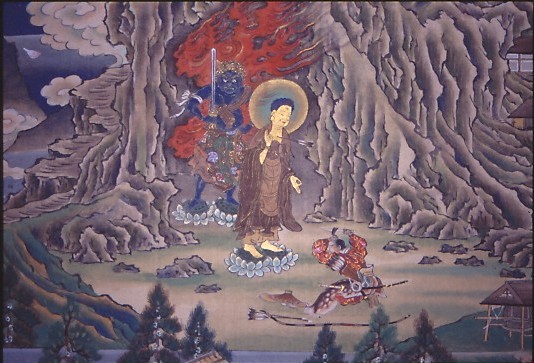
Tateyama Mandala: the Tamadono Cave scene, Episode 1
My sincere thanks to Director Takano and everyone at the Tateyama Museum of Toyama for sharing this journey with us over the past year.
Masahiko Kaji
Representative Director, President
Japan Mountain Day Foundation
#Tateyama Faith #Mountain Faith #Tateyama Museum #Japan Mountain Day Foundation #National Holiday Mountain Day # FAO Mountain Partnership
– Rediscovering the City Through Its Hidden Mountains By Kazuhiko Miwa
Episode 3: Matsuchiyama – The Hidden Sacred Hill of Asakusa
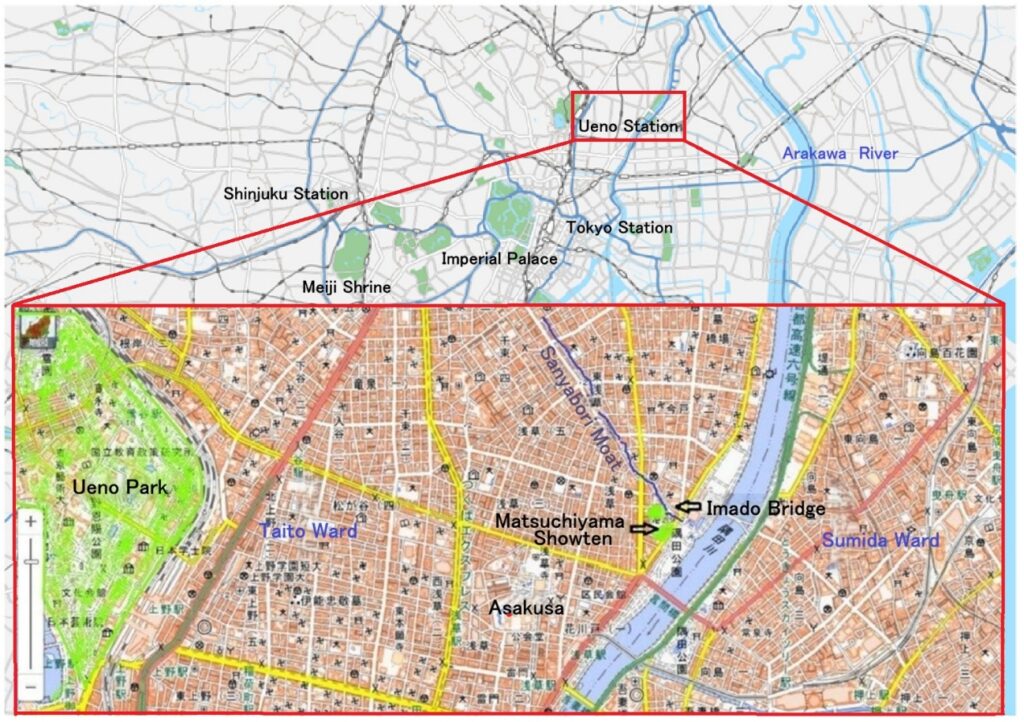
Behind Sensoji Temple in Asakusa, near Imado Bridge, stands a small shrine dedicated to Shoten, the deity of Matsuchiyama.
Asakusa is famous as one of Tokyo’s traditional downtown districts, and there are no prominent hills in the area. Yet Matsuchiyama rises some ten meters above the surrounding landscape.
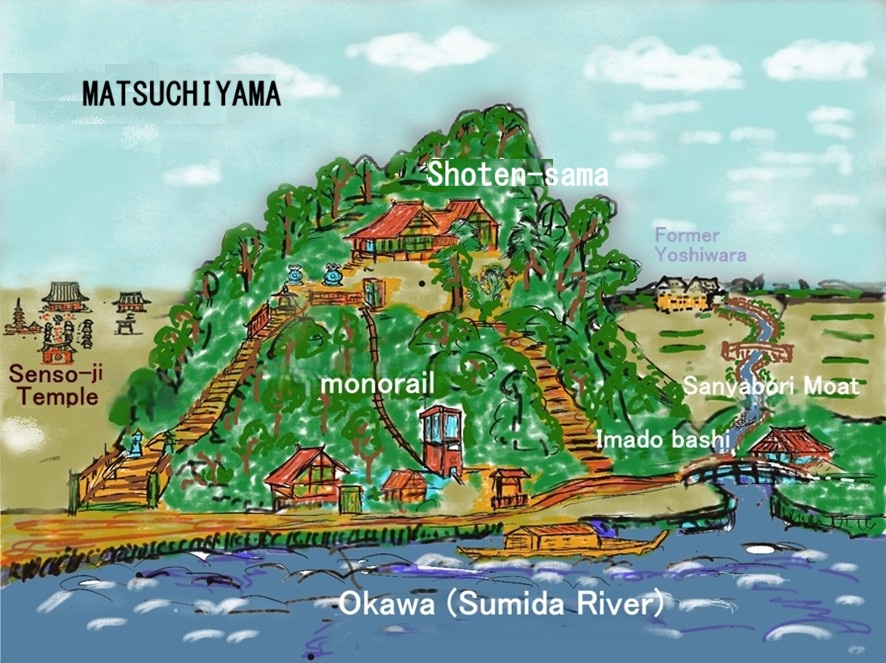
Today, its appearance is largely hidden by modern buildings. However, in Hiroshige’s ukiyo-e prints, the hill is depicted as a prominent landmark overlooking the great river, the Sumida River.The illustration below is my own attempt to recreate the scene in the style of Hiroshige.
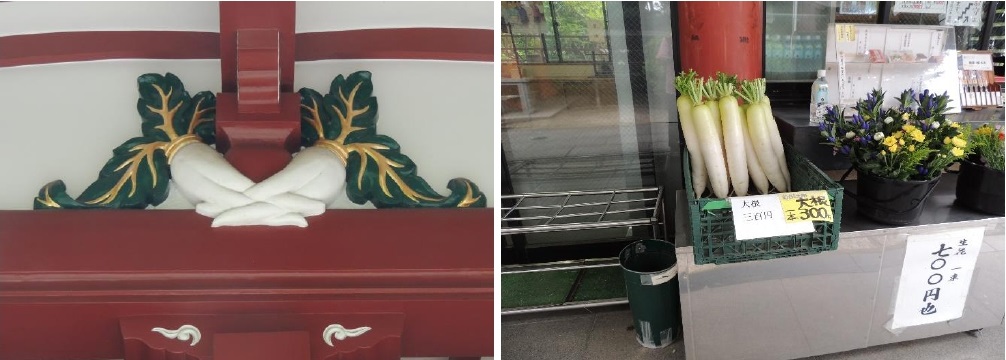
When I visited, many worshippers were offering daikon radishes at the shrine.
This immediately caught my attention.
Carved into the shrine building itself are two crossed radishes. Offering daikon may seem unusual, but apparently it is the proper way to pay respects here.
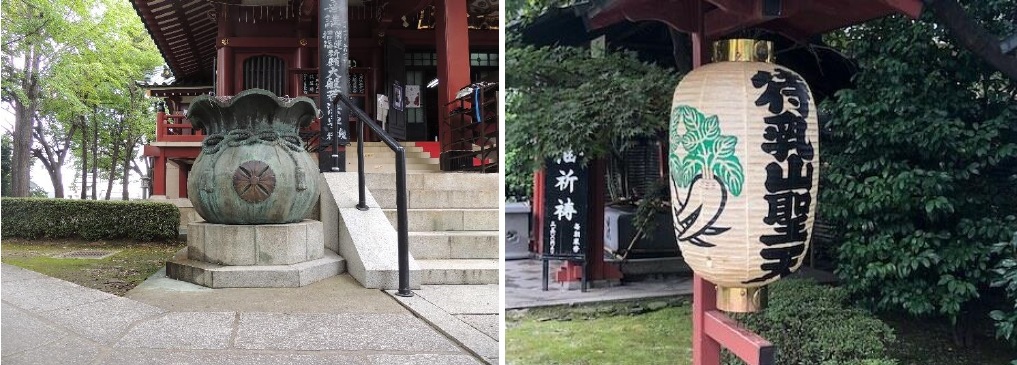
Another curious feature stands in front of the shrine—a giant drawstring money bag.
The symbolism is straightforward: may prosperity flow in abundantly and never flow out again. The symbolism is straightforward enough: may wealth flow in abundantly, and once it arrives, may it never leave.
The shrine is said to grant many blessings, but one in particular is emphasized: harmony between husband and wife.
The forked radishes are officially associated with health and longevity, yet they also seem to symbolize marital harmony.
My own interest, however, lay elsewhere.
I wanted to know whether Matsuchiyama is a natural hill.When I first visited, I confidently concluded that it could not possibly be natural. How could a genuine hill survive in the middle of Tokyo’s low-lying downtown district? I assumed it had been artificially created from soil excavated during the construction of nearby waterways and proudly announced this theory on Facebook.
Later, however, I discovered a problem.
Historical records suggest that Matsuchiyama already existed when Tokugawa Ieyasu entered Edo in the late sixteenth century.
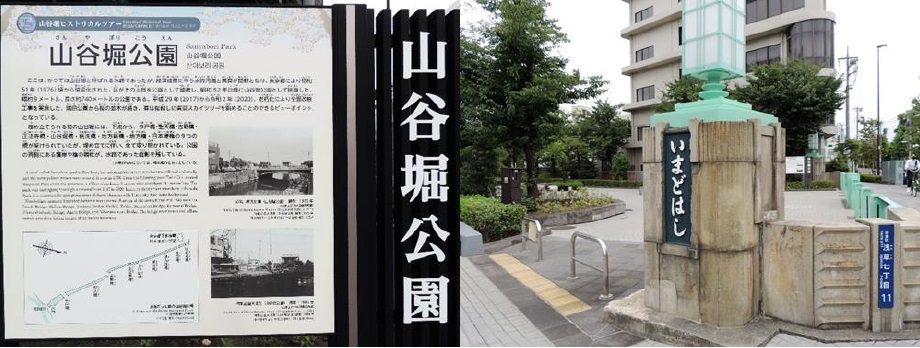
The nearby Sanyabori Canal was constructed during the Edo period, meaning that the hill must have predated the excavation. My neat theory suddenly became much less convincing.
Matsuchiyama was also once known as “Majiyama”—literally, “the hill of real earth.”
Could this name indicate that it was indeed a natural hill?Another clue intrigued me.
Although Matsuchiyama rises only about ten meters, a small monorail has been installed to carry visitors from the riverside entrance to the top.
As far as I know, only two ultra-low hills in Tokyo have monorails designed specifically to help visitors reach the summit: Matsuchiyama and Asukayama in northern Tokyo.
Perhaps the monorail reflects the aging population among the shrine’s devoted worshippers.
Near the monorail and within the garden, a small portion of the hill’s exposed ground can be seen.If I could find the reddish volcanic soil or dark volcanic ash layers typical of the Musashino Plateau, I might be able to prove that the hill is natural. Unfortunately, the slopes are covered with vegetation, and the geological evidence remains hidden.
Eventually, I turned to geological maps available on the internet.
There I found a possible clue.
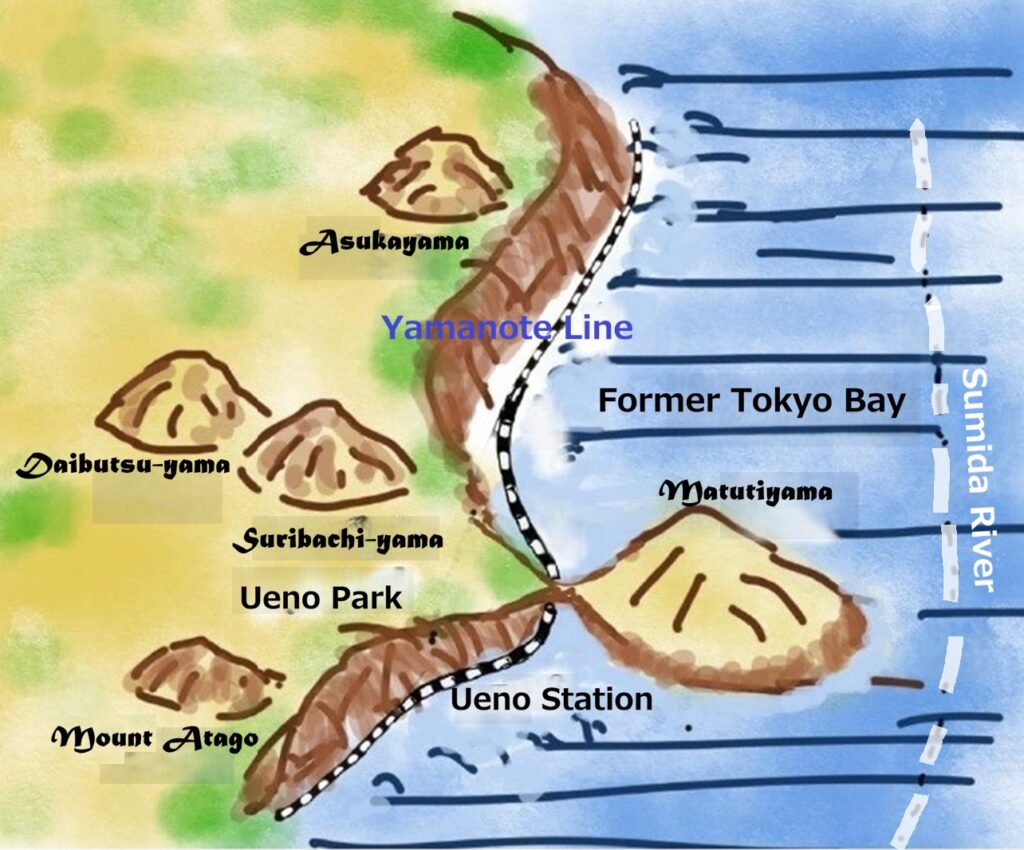
The subsurface layers beneath Matsuchiyama appear similar to those found beneath Ueno Hill. Most of the Asakusa area is covered by thick alluvial deposits of mud and clay, but the area around Matsuchiyama seems to contain older terrace deposits associated with higher ground.
From this evidence, I arrived at a rather speculative conclusion.
Long ago, a ridge extending from the Ueno Plateau may have stretched toward the edge of what was then Tokyo Bay. Over thousands of years, waves and erosion gradually removed most of that ridge.Matsuchiyama may simply be the last surviving fragment.
At least, that is the picture I have chosen to believe.
Whether it is actually true, however, I am still not entirely sure.
“As I gained experience, I realized that technical skills alone weren’t enough. I also needed to learn the names of trees and plants, when flowers bloom, when leaves change color or fall, and how each species changes throughout the seasons.
The more I learned, the more I could imagine how a tree would grow in the years ahead and how it would fit into the surrounding landscape. That also meant I could offer better suggestions to my clients instead of simply following instructions.
Most of all, the work itself became much more enjoyable.”
Seeing Beyond a Single Tree
Lama Gyalu studied in many ways. He read books, searched online, and learned from experienced foresters.
“If I ask questions, people are always willing to teach me. Japan’s forests are similar to Nepal’s in some ways, but there are also many trees and plants I’d never seen before. At first it was difficult, but little by little I’ve come to understand them.”
As the years passed, his knowledge expanded beyond trees alone. He became familiar with the forests of Nagano, their plants and wildlife, and the natural environment as a whole.
Yet the more he learned, the more questions arose.
Proper tree care is not simply about deciding how to prune or remove a tree today. A forester must also think about what that tree—and the surrounding landscape—will look like years or even decades into the future.
To make good decisions, he believes it is necessary to understand not only the tree itself, but also the region’s climate, soil, plants, wildlife, and ultimately the lives of the people who live there and how their communities may change in the future.”Of course, that’s incredibly difficult. It’s not something you can figure out overnight. But once you settle here, raise a family, and watch your children grow up, you naturally begin thinking about these things.”
A Small Yellow Flower
“That doesn’t mean I always succeed.
The other day, there were some Japanese kerria shrubs growing beneath a tree. They were supposed to be cleared away, but I thought they weren’t causing any problems, and that their yellow flowers would be beautiful in spring, so I decided to leave them.
I was working high up in the tree when another contractor came along and started cutting them down. I noticed and shouted, ‘Hey, don’t cut those!’ But I was too late.”The story may seem like a small incident, yet it reflects how Lama Gyalu has come to see the forest—not simply as a workplace, but as a living landscape whose beauty deserves to be protected whenever possible.
Leaving nature what it can keep.
Living with Wildlife
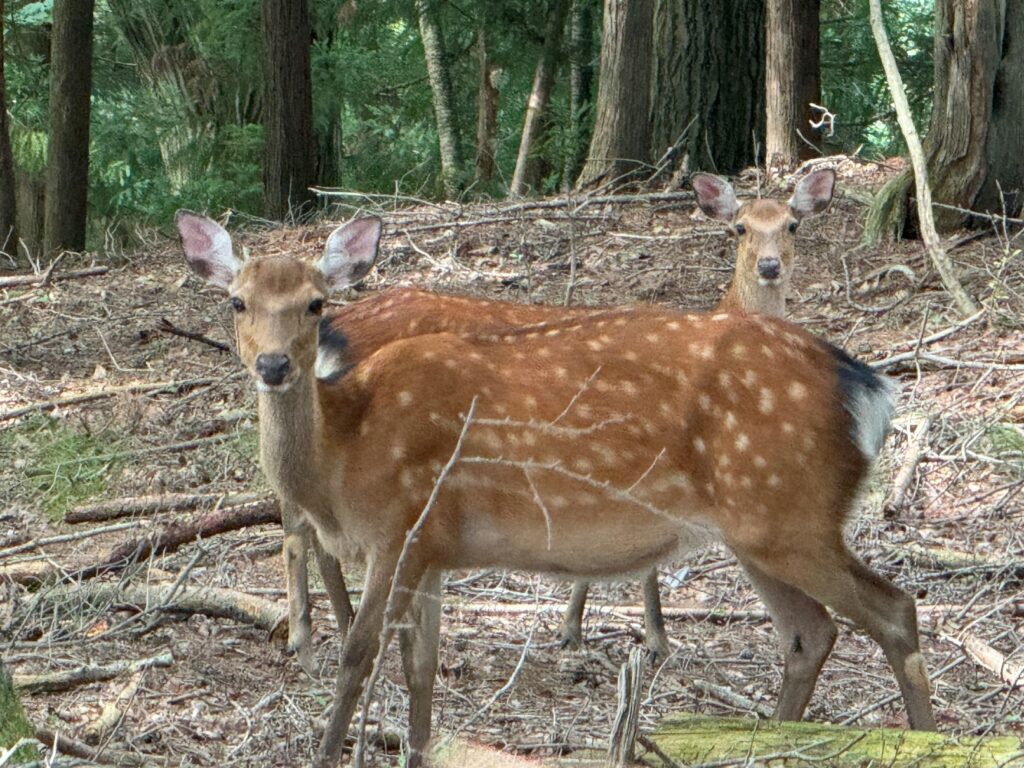
Another issue that has increasingly concerned him is the rapid growth of wild animal populations, especially deer, whose feeding has caused serious damage to forests.
“I am a Sherpa, and according to the Tibetan Buddhist faith that many Sherpas follow, taking the life of an animal is forbidden. But when I think about the future of the forests, I sometimes wonder whether it can really be that simple.It’s a very difficult question.”
– Rediscovering the City Through Its Hidden Mountains By Kazuhiko Miwa
Tokyo’s Ultra-Low Mountains Episode 2
Atagoyama-Stairway to Success
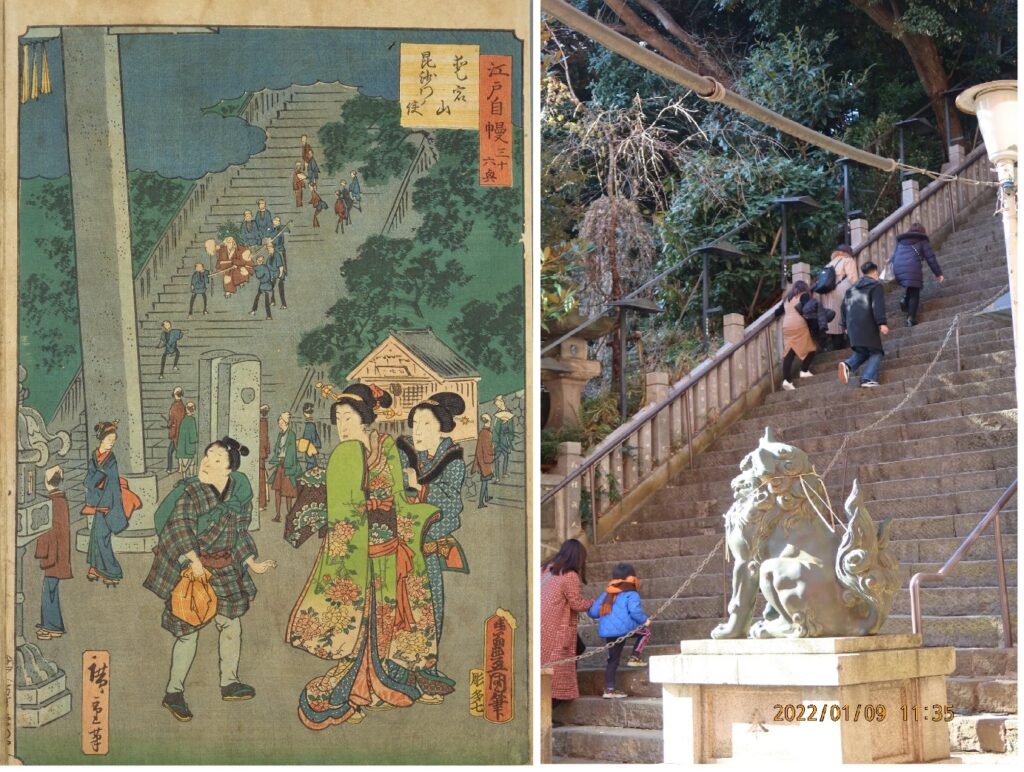
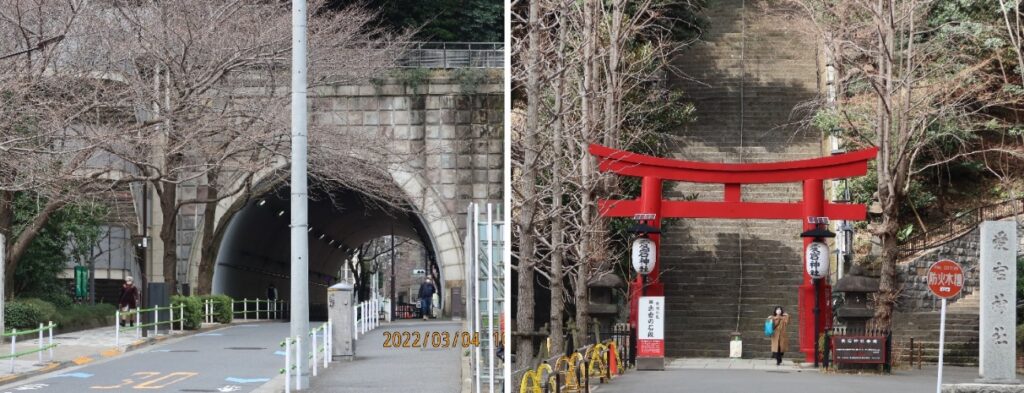
The number of visitors to Atago Jinja Shrine for the New Year is nowhere near that of Meiji Jinja Shrine or Kanda Myojin Shrine, yet it still attracts a remarkable crowd. One reason is the shrine’s steep stone staircase, popularly known as the “Stairway to Sucess,” which has long been favored by office workers hoping for good fortune in their careers.
The staircase consists of 86 steps with an incline of about 40 degrees. That is roughly the angle of a ski-jump ramp. Standing at the top can make your legs tremble. Without the handrails, many elderly visitors would find it difficult to go up or down. It may well be the steepest staircase in Tokyo.
The story behind the “Stairs to Success” dates back to the Edo period. One day, Tokugawa Iemitsu – the third shogun of the Tokugawa Shogunate, was passing below the staircase on his way back from Zojoji Temple. Looking up, he noticed plum blossoms blooming at the top of the hill and reportedly said, “Who will bring me one of those blossoms?”
Everyone hesitated when they saw the steep slope. However, Magaki Heikuro, a samurai from the Marugame Domain in Shikoku, boldly rode his horse straight up the stone steps, plucked a branch of blossoms, and presented it to the shogun. Whether Iemitsu actually exclaimed, “Well done, Heikuro!” is unknown, but the story goes that Heikuro’s feat made him famous throughout Japan and greatly advanced his career.
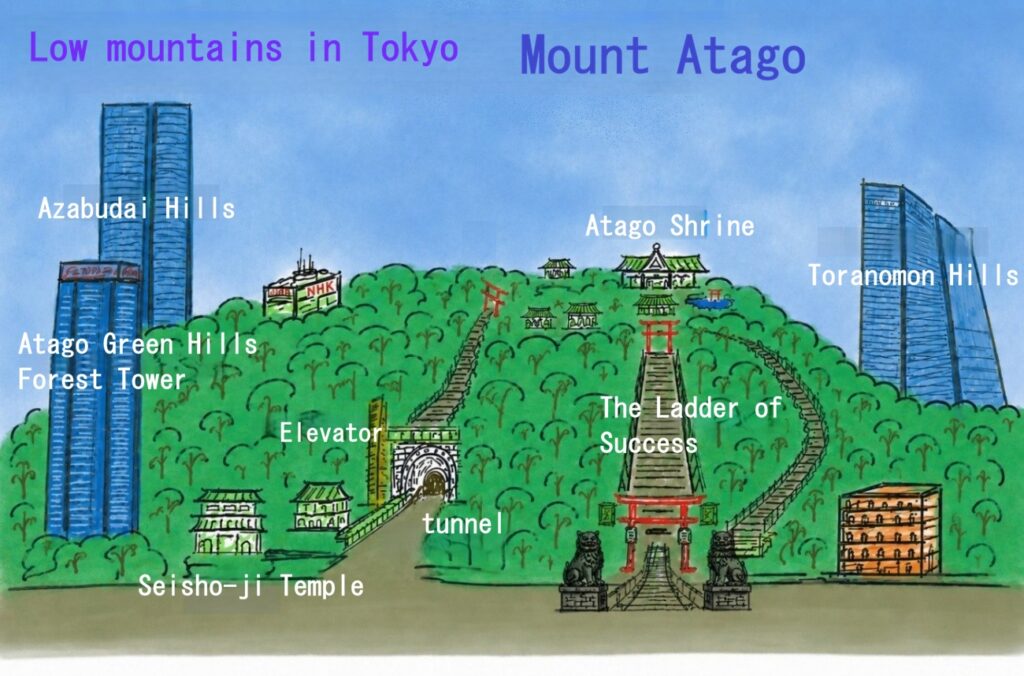
The road in front of the shrine, marked by the red torii gate, now connects Toranomon Hills and Zojoji Temple. Passing through the tunnel beneath Atagoyama leads toward National Route 1, Tokyo Tower, and the recently developed Azabudai Hills district.
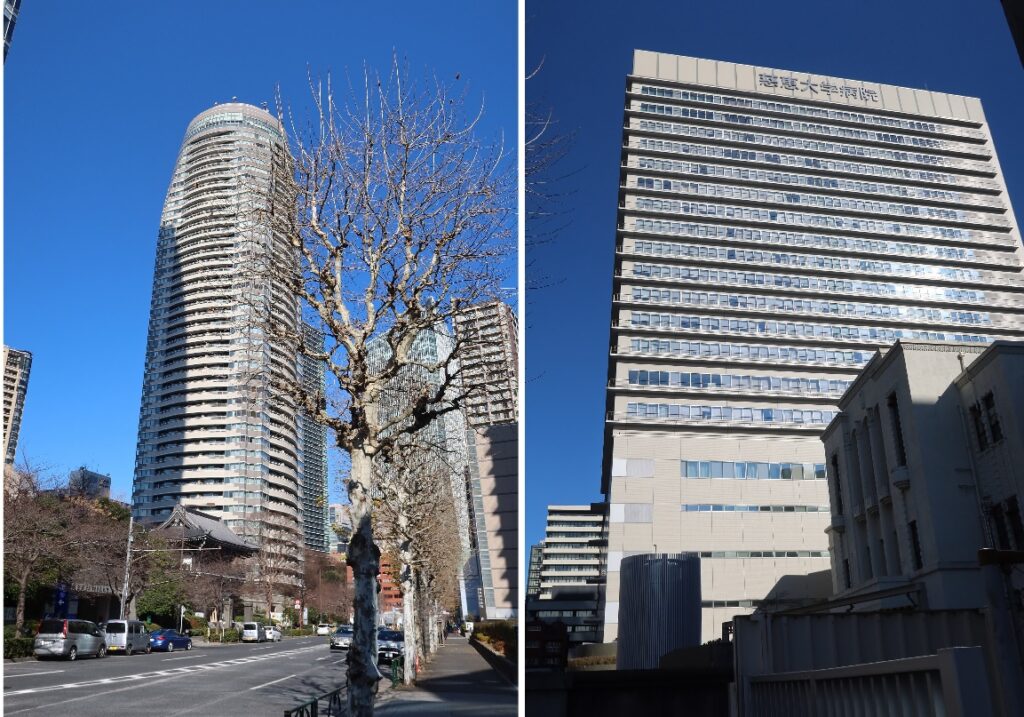
Although my old illustration shows only three skyscrapers, the area today is one of Japan’s leading business districts, filled with government offices and corporate headquarters. It is truly a town of office workers.
Many years ago, I ran up all 86 steps in just over a minute.
Unfortunately, it did absolutely nothing for my career.
Later, I learned that climbing the stairs brings good fortune, but descending the same staircase is said to diminish it. Apparently, one should use a different route on the way down.
I ran down the stairs as well.That must have been my mistake.
There are several ways to descend from the summit of Atagoyama. One can take the gentler Onna-zaka (“Women’s Slope”), walk through the shrine grounds to the NHK Museum of Broadcasting and use the elevator, or descend the steep slope toward Kamiyacho. Even if you take the elevator, it is easy to reach Kamiyacho by passing through the tunnel beneath the hill.Incidentally, this tunnel may be unique in Tokyo. As far as I know, it is the city’s only road tunnel that passes beneath a natural hill rather than an artificial structure. If any readers know of other examples, I would be delighted to hear about them.
The gate visible beneath the high-rise buildings in the photograph belongs to Seishoji Temple. Although it appears to stand on low ground, the temple itself occupies an elevated area connected to Atagoyama. In earlier times, visitors could enjoy views all the way to the sea. Today, one must climb much higher buildings to look out over Tokyo. During the Edo period, however, the Atagoyama area was among the highest points in the city.
It is said that during the negotiations for the peaceful surrender of Edo Castle, Katsu Kaishu who negotiated the peaceful surrender of Edo Castle, invited Saigo Takamori,one of the leaders of the Meiji Restoration to Atagoyama and showed him the vast city spread below.
“Are you really going to turn all of this into a sea of fire?” Katsu reportedly asked.
Seeing Edo from this commanding viewpoint for the first time, Saigo is said to have accepted the proposal for a bloodless surrender.
Another historic event took place atop Atagoyama.
“JOAK, JOAK, this is the Tokyo Broadcasting Station.”
These words marked the beginning of Japan’s first radio broadcast in July 1925. Because radio signals were still weak at the time, a 45-meter transmission tower was erected on top of the 26-meter hill to extend the broadcast range.
The site is now home to the NHK Museum of Broadcasting and is affectionately known as the birthplace of Japanese broadcasting.
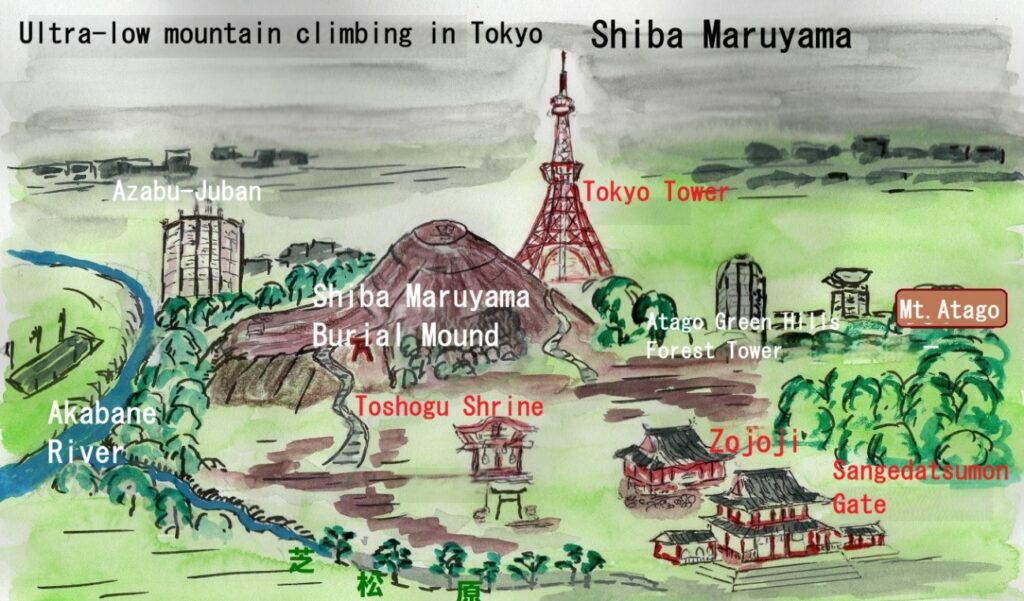
After visiting Atagoyama, I often walk past Zojoji Temple with Tokyo Tower rising in the background and continue on to Shibamaruyama Kofun, the largest keyhole-shaped burial mound in central Tokyo.
The grounds of Zojoji Temple were once enormous. Until 1873, both Shiba Maruyama Kofun and the land where Tokyo Tower now stands were part of the temple precincts.
Few people realize that such an ancient burial mound exists in the very heart of Tokyo.In future episodes, I hope to introduce several kofun hills located along the Tama River.
Episode 1: The Characteristics of Japan’s Natural Environment and Mountain Worship
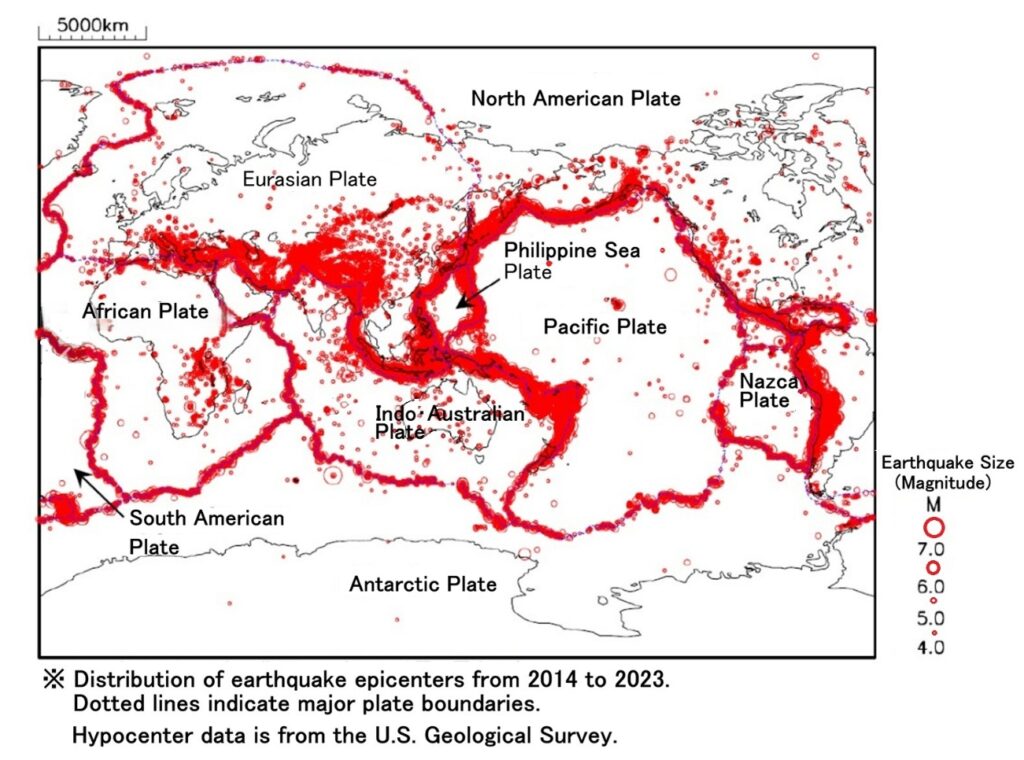
Japan is a country of both mountains and sea. Situated to the east of the Asian continent, the Japanese archipelago stretches in an arc into the Pacific Ocean. It lies at one of the world’s most geologically complex locations, where four of the Earth’s tectonic plates converge. The archipelago straddles two continental plates—the North American Plate and the Eurasian Plate—and is strongly compressed from two directions by the subduction of the Pacific Plate and the Philippine Sea Plate. There is no other place in the world where as many as four tectonic plates collide and interact in such a manner.
Because of this geological setting, earthquakes occur frequently in Japan. Approximately ten percent of all earthquakes of magnitude 7 or greater worldwide occur in Japan. Moreover, the active subduction of the Pacific Plate beneath the Japanese archipelago has made Japan one of the world’s most volcanically active regions. Although Japan accounts for only about 0.25 percent of the Earth’s land area, it contains 111 active volcanoes—approximately seven percent of the world’s total.
About 75 percent of Japan’s land consists of mountainous terrain. In central Japan, numerous peaks exceeding 3,000 meters rise in close succession, creating magnificent mountain landscapes. At the same time, however, the country has long been exposed to natural disasters such as earthquakes, tsunamis, and volcanic eruptions.
Distribution of the world’s major tectonic plates and earthquakes (Japan Meteorological Agency)
According to the Köppen climate classification, most of Japan belongs to either the humid subtropical or humid continental climate zones. The country is characterized by four distinct seasons, wide annual temperature variations, abundant precipitation, and significant seasonal fluctuations in rainfall.
Thanks to its plentiful rainfall, Japan possesses rich forests and supports more than 90,000 species of living organisms, including some 6,000 endemic species. Mountain resources—such as timber, wildlife, hot springs, and minerals—have been indispensable to Japanese life. Abundant water has also sustained rice cultivation and supported a relatively large population within Japan’s limited land area.
Before modern flood-control and irrigation technologies were introduced from the West, however, floods occurred frequently, while severe famines caused by drought repeatedly struck the country.
Japan’s frequent earthquakes, combined with its abundant forest resources, encouraged the development of wooden architecture. As a result, Hōryū-ji Temple, the world’s oldest surviving wooden building, still stands today. Yet wooden construction also made communities highly vulnerable to fire. Edo, present-day Tokyo, was repeatedly devastated by great fires, making fire another major threat to people’s lives.
Thus, while Japan has received immense blessings from nature, its people have also had to live with the many disasters that nature can bring. Japanese culture and religion have evolved under the influence of both aspects of nature.
Japan is known for Shinto, which developed from ancient folk beliefs, nature worship, and ancestor worship, as well as Buddhism, which was introduced from India via China in the sixth century. In Japan, perhaps more than in many other countries, natural threats have been closely associated with death, suffering, and anxiety. Consequently, the forms of spiritual salvation sought through religion became deeply intertwined with nature itself.
Against this background, religion in Japan developed in distinctive ways. Shinto, with its strong emphasis on nature worship, and Buddhism, which stresses salvation, gradually merged. This syncretic tradition, known as shinbutsu-shūgō(the fusion of Shinto and Buddhism), became widely accepted. For example, Amaterasu Ōmikami—the central sun goddess of Shinto and the mythical ancestress of the Imperial Family—came to be regarded as identical to Dainichi Nyorai (Mahāvairocana), the principal Buddha of Esoteric Buddhism.
Mountains in Japan had long been revered as sacred places possessing spiritual power and as dwelling places of ancestral spirits. Influenced by Buddhism and Daoism, these indigenous mountain beliefs eventually gave rise to Shugendō, Japan’s unique tradition of mountain asceticism.
At the heart of Shugendō are ascetics known as yamabushi, who seek to acquire supernatural powers through rigorous mountain training and employ those powers in religious and ritual practices.
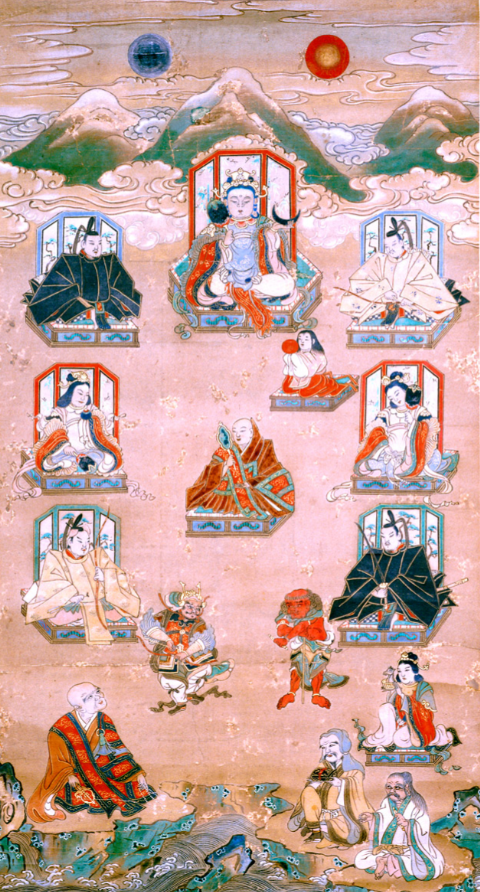
Hakusan Mandala (1559), Ishikawa Prefectural Museum of History Collection
This mandala depicts Mount Hakusan, one of Japan’s most revered sacred mountains, and reflects the syncretic tradition of Shinto and Buddhism. At the top are the sun and moon, with Hakusan’s three peaks below. It also depicts the deities associated with each of the three peaks, as well as Taichō, the Buddhist monk traditionally credited with opening Mount Hakusan as a sacred mountain.
However, in the latter half of the nineteenth century, Japan underwent the Meiji Restoration, a period of modernization during which the nation sought to establish a centralized modern state modeled on Western countries.
The Japanese government regarded traditional forms of religious belief as overly ambiguous and therefore premodern, particularly in contrast to religions such as Christianity, with their clearly defined doctrines. Consequently, it enacted policies to separate Shinto shrines, where deities (kami) are worshipped, from Buddhist temples, where Buddhas are enshrined. Shugendō, regarded as excessively magical and superstitious, was officially abolished.
During this period, the radical anti-Buddhist movement known as Haibutsu Kishaku (“abolish Buddhism and destroy Śākyamuni”) also spread throughout the country. Many sacred mountains were stripped of their Buddhist elements. Even on Mount Fuji, Japan’s highest peak, the Dainichi Hall at the summit was removed and replaced by the Okumiya Shrine of Sengen Taisha. The summit was thus transformed into the distinctly Shinto appearance that visitors see today.
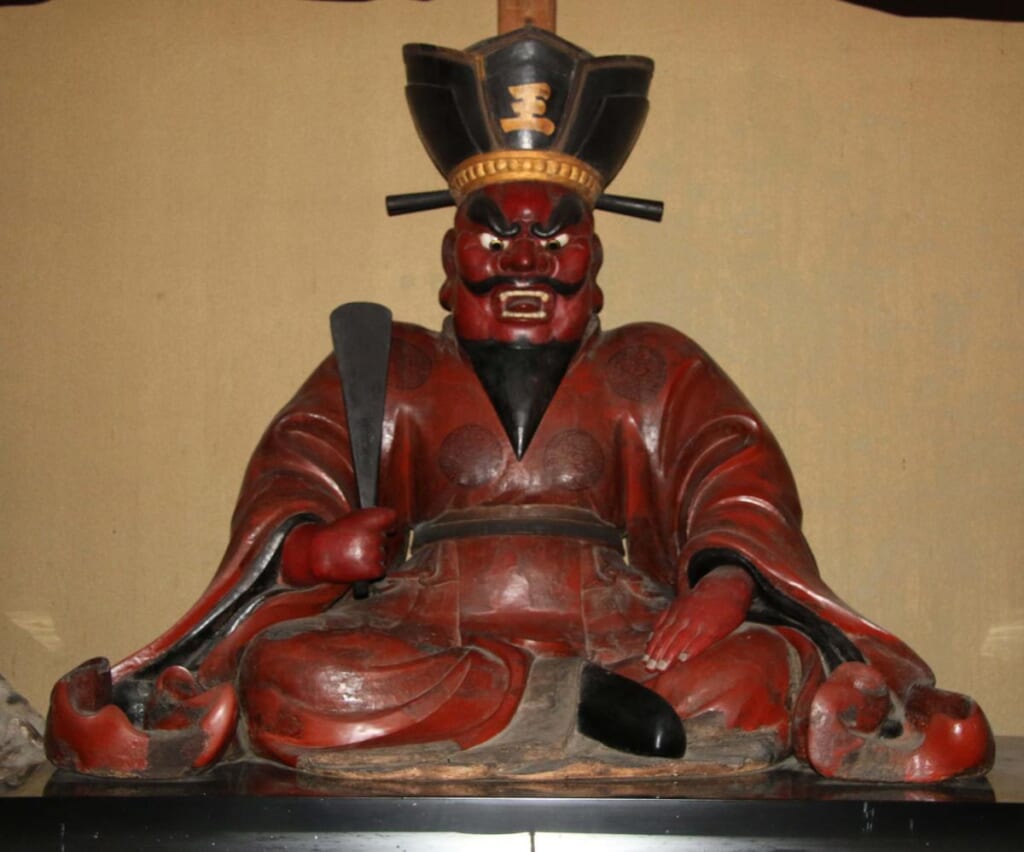
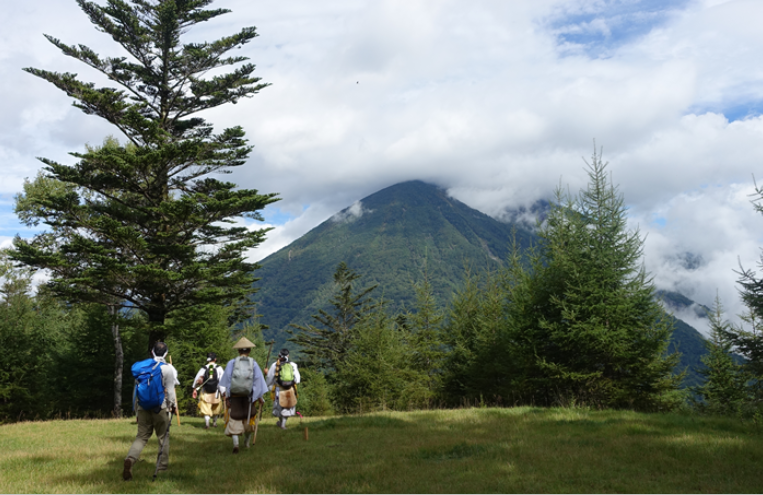
Although Shugendō was once abolished, it was later revived, and its traditions continue to this day. In memory of Enkū, I participated in the autumn ascetic training of the Nikko Shugendō tradition. The mountain in the center is Mt. Nantai, formerly known as Mt. Futarasan.
Despite the turbulent currents of history, the Japanese people’s reverence and affection for mountains have remained unchanged.
While embracing the ideas and techniques of Western alpinism, Japanese people continue to maintain deep relationships with mountains through mountaineering and many other activities.
Japan is said to have one of the world’s largest communities of mountain enthusiasts.
Behind this lies a long and continuous history of intimate engagement with mountains, extending back far beyond the birth of modern alpinism in the nineteenth century.
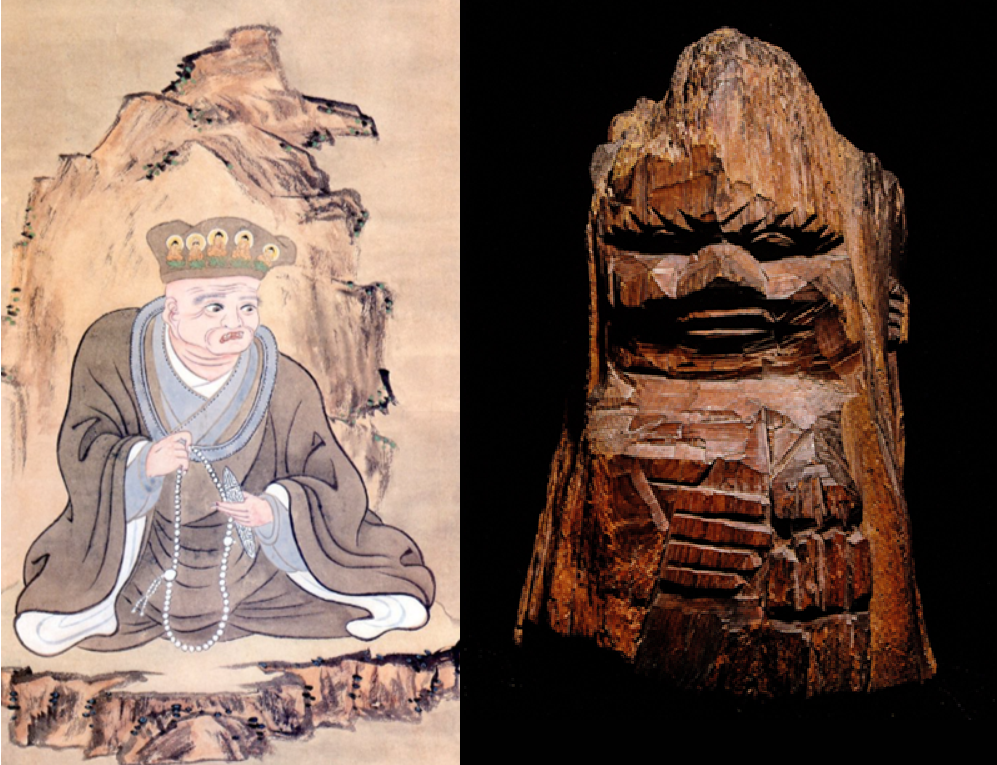
One figure who embodies this profound relationship between the Japanese people and mountains is Enkū (1632–1695).
Enkū, who lived during the early Edo period, was an outstanding mountain ascetic. He made solitary ascents of several 3,000-meter-class peaks in the Hida Mountains and even explored Hokkaido at a time when these regions had not yet been geographically understood.
As a young man, Enkū left the temple where he had been ordained. Until he formally received Buddhist precepts at the age of nearly fifty at Onjō-ji Temple—the head temple of the Jimon branch of Tendai Buddhism, unique in Japan for integrating exoteric Buddhism, esoteric Buddhism, and Shugendō—he traveled throughout the country as “a man belonging to nothing”: neither monk nor mountain ascetic. In this sense, he was an extraordinarily free spirit for his age, devoting himself to rigorous mountain training.
During his lifetime, Enkū is said to have created as many as 120,000 Buddhist and Shinto images, an almost superhuman achievement. Art historians have highly praised his works, noting that, while Europe was experiencing the Baroque era, Enkū had already achieved forms of expression remarkable for their abstraction and spirituality—qualities that resonate strongly with modern sculpture.
However, as a consequence of the Meiji government’s efforts to modernize religion, Enkū—whose activities were deeply rooted in the syncretic traditions of Shinto and Buddhism and closely connected with Shugendō—was largely forgotten.
It was not until the 1950s that Enkū began to attract renewed attention, primarily through the rediscovery of his religious sculptures, now commonly known as Enkū-butsu. These images were reappraised as precursors of modern sculpture, triggering a nationwide “Enkū boom.” Enkū exhibitions have since been held almost every year, nearly 5,400 surviving statues have been identified, and scholarly research has progressed significantly.
In contrast, Enkū’s achievements in the mountains — well known during the Edo period — have received remarkably little attention.
I was born in the Mino region of Gifu Prefecture, the same region as Enkū. Over the years, I have visited nearly one thousand mountains throughout Japan. I was astonished to discover that traces of Enkū seemed to appear ahead of me wherever I went. Fascinated by this mysterious presence, I have spent the past five years following his footsteps and tracing the course of his life.
In particular, regarding his mountain ascetic practices—which had previously received little scholarly attention — I conducted extensive preliminary research and attempted, whenever possible, to follow Enkū’s journeys in chronological order, during the same seasons, and along the same routes. By retracing his footsteps and experiencing the hardships of his training firsthand, I gradually began to see the outlines of Enkū’s extraordinary mountain adventures, in which he repeatedly risked his life.
Through this process, I also came to realize that Enkū, who had been overwhelmed by the destructive power of nature in his childhood, deepened his faith through mountain asceticism and eventually transcended those experiences. This spiritual journey, I believe, found expression in the powerful forms of his sculptures.In the episodes to come, I invite you to join me in following “The Adventures of Enkū.”
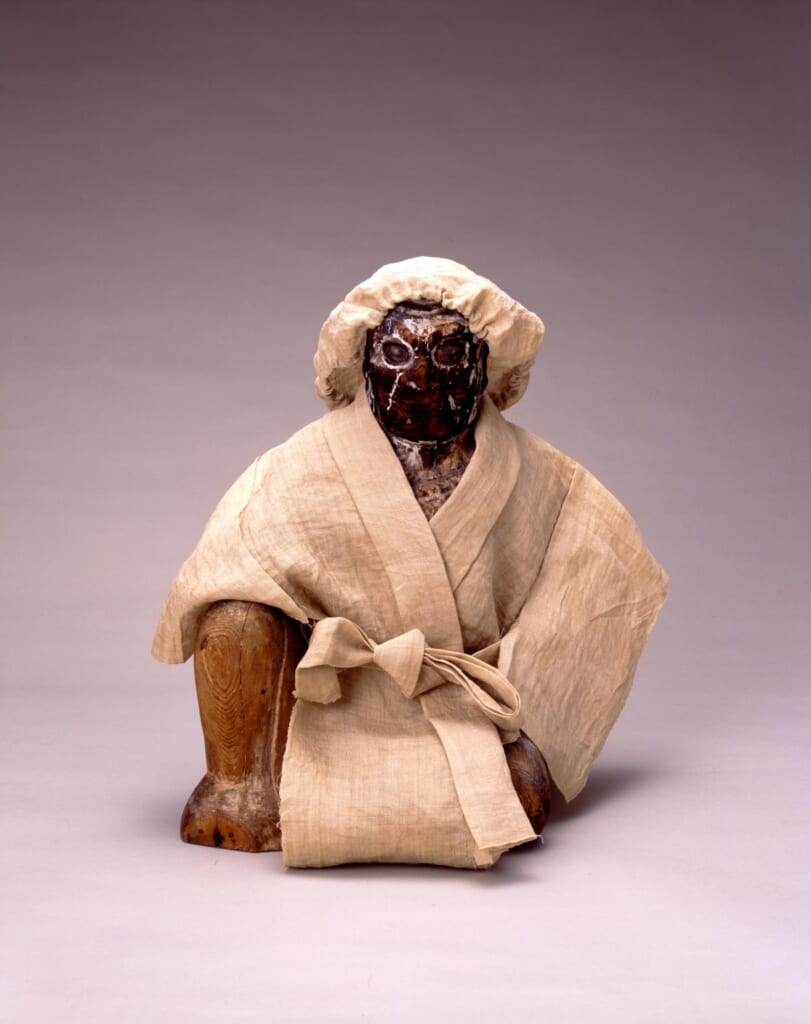
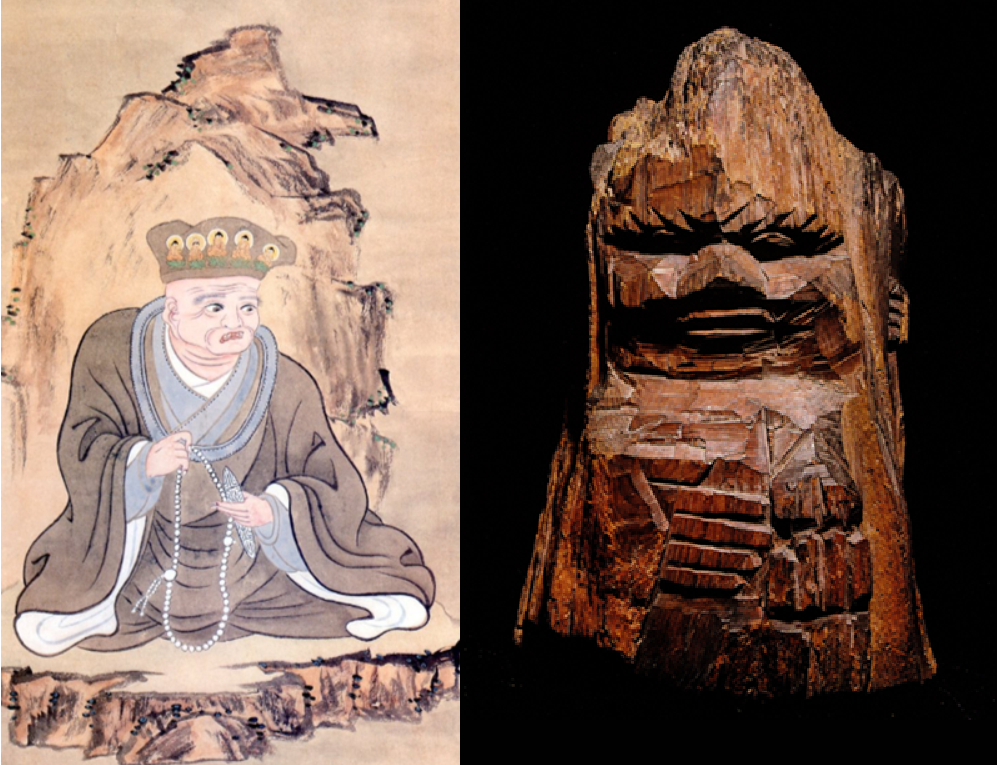
(Left): Portrait of Enkū, Senkōji Temple Collection (Right): Statue of a Guardian Deity, Ongakuji Temple Collection. Photo by Masashige Hasegawa
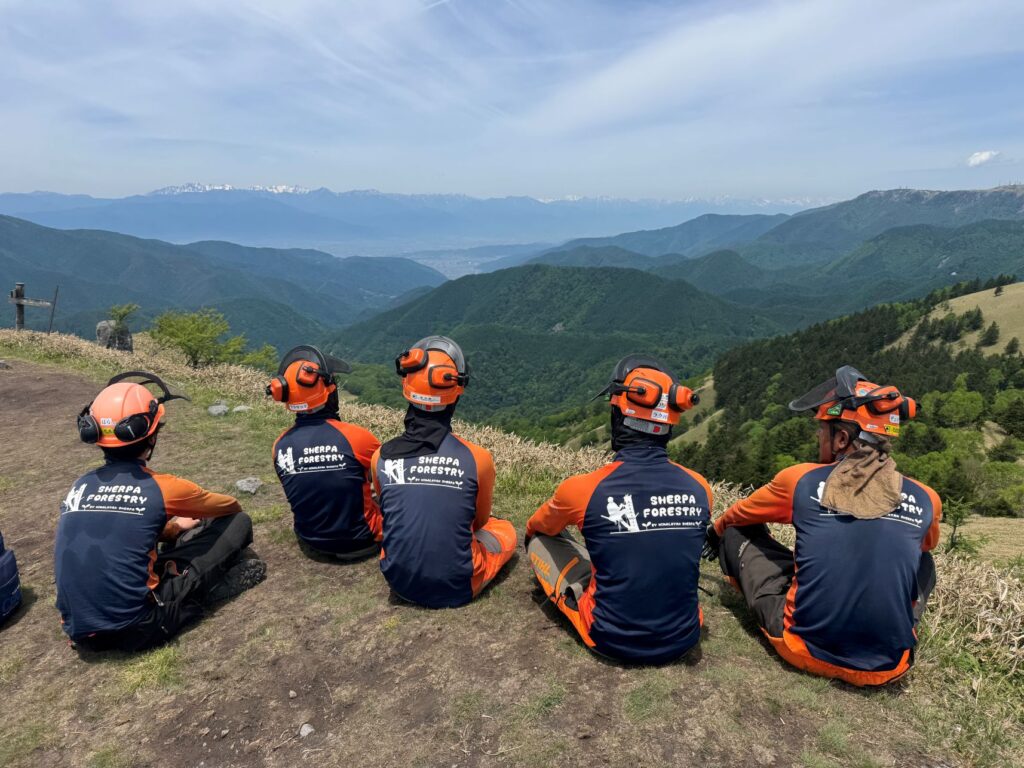
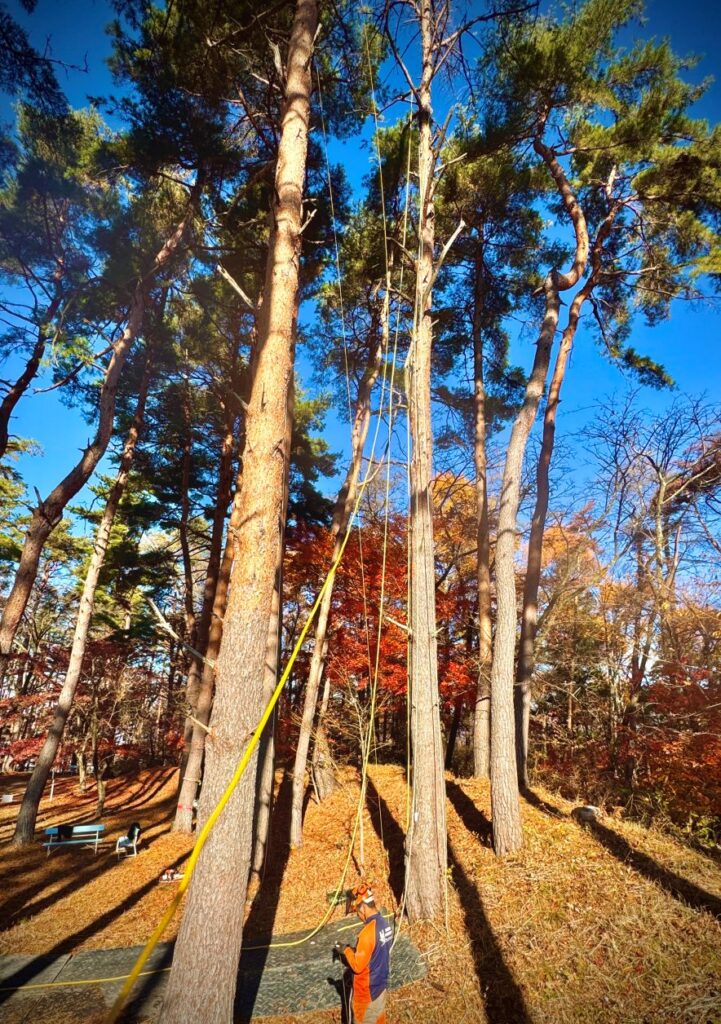
In 2012, Lama Gyalu Sherpa founded Sherpa Forestry Co., Ltd. As of 2026, the company has ten employees—half Japanese and half Nepalese. His wife, Mariko, manages the office, accounting, and public relations, while Lama Gyalu oversees field operations.
Working with Colleagues
“At first, I simply worked as an employee, doing whatever I was told. But gradually I began thinking, ‘If it were me, I’d do it this way.’ Sometimes I felt a tree should be treated differently, or that another tree should be left standing instead of being cut down. I’ve always loved nature, and I wanted to be the one proposing ideas and planning how the work should be done. That’s why I decided to become independent and establish Sherpa Forestry.”
The company’s work covers a wide range of forestry and tree-care services. From pruning trees in private gardens to planting and maintaining street trees, parks, and green spaces, they handle almost any job requested by their clients.
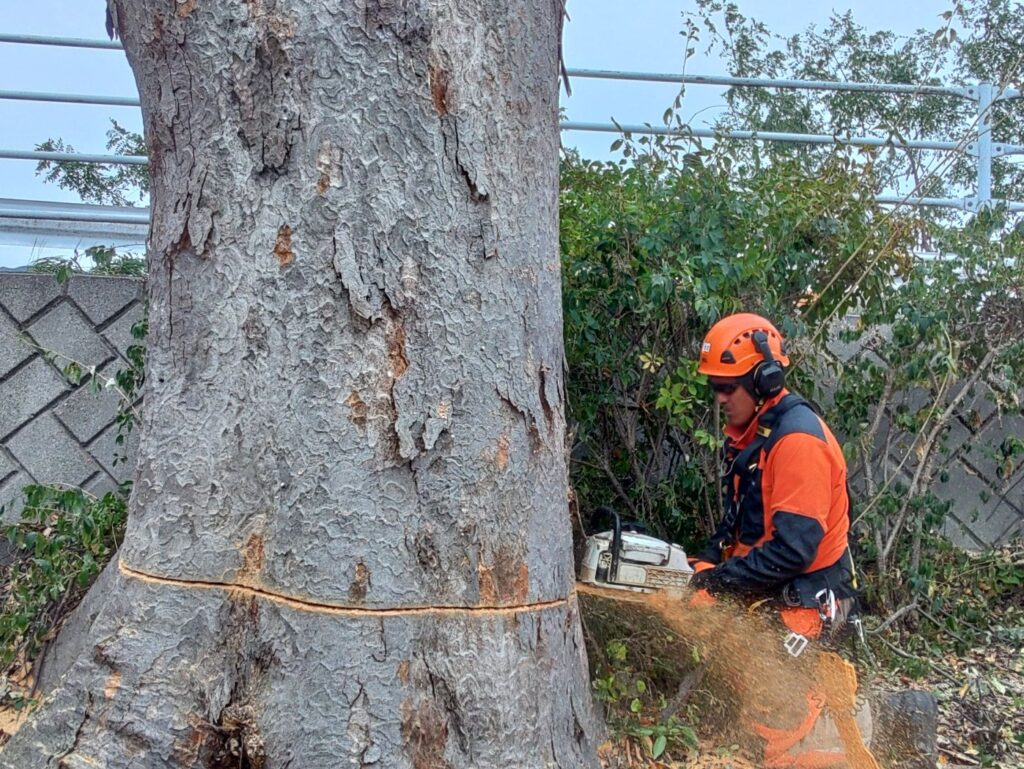
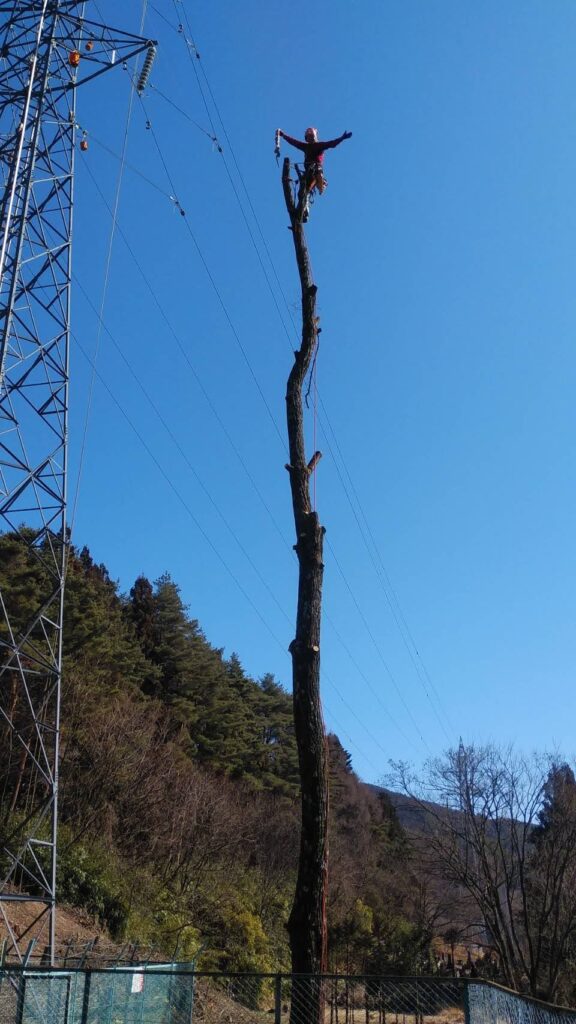
Their particular specialty, however, is dealing with hazardous trees—trees that have grown too tall, whose trunks or branches have begun to decay, or whose size poses a danger to pedestrians or nearby buildings and power lines. These jobs often involve highly technical tree removal and precision pruning.
To perform this work, Lama Gyalu completed numerous professional training courses and earned certification as a Specialist Forestry Technician. Although this is an industry qualification rather than a government license, it recognizes advanced skills required for working high in large trees.
“There aren’t many people who can safely prune or remove tall trees while suspended high above the ground. In Japan, specialists like us are often called Sorashi. Nowadays, even when other contractors win a project, if it includes particularly difficult high-tree work, they’ll often say, ‘Let’s ask Lama to handle that part.’
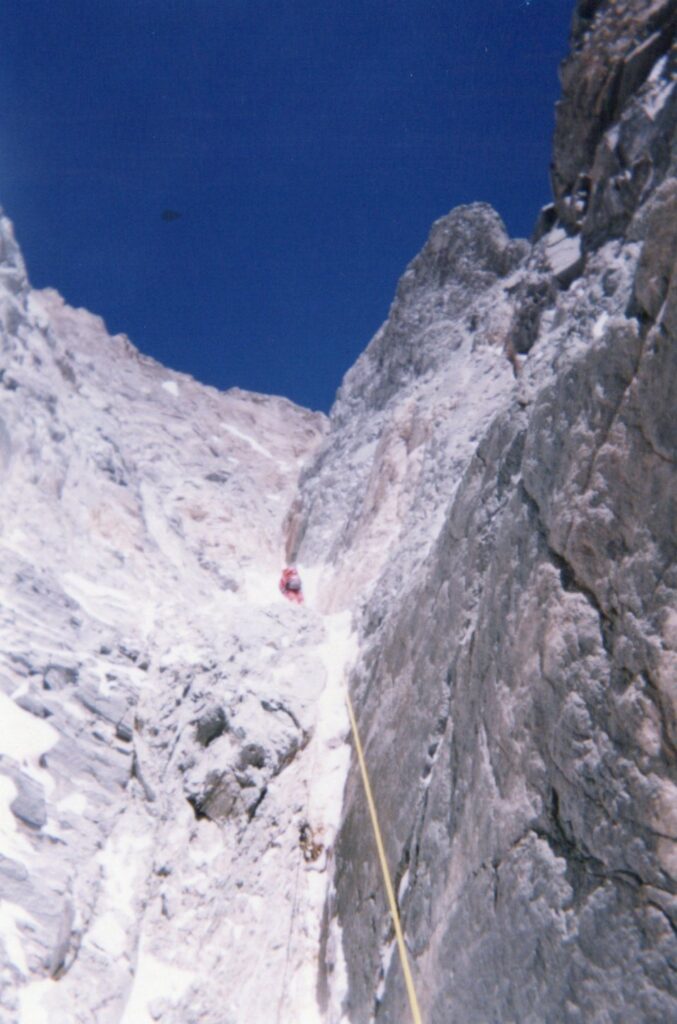
The climbing skills I developed in mountaineering have been incredibly useful—not just the rope techniques, but also judgment and decision-making. Safety always comes first, of course. But if you’re afraid all the time, you simply can’t do this job.”
From the South Face of Lhotse to the Forests of Japan
This kind of work requires specialized equipment, much of which has to be rented together with experienced machine operators. In the early days, Lama Gyalu often didn’t know where to find the equipment he needed, and sometimes rental companies even refused his requests.
Today, however, he has built a solid reputation. Equipment is no longer difficult to obtain, and relationships with other forestry companies have also changed.
“Companies in the same business are competitors, of course. But I’ve come to realize they’re also partners who help one another. That makes me very happy.”
Yet as the years passed, Lama Gyalu also came to realize something important.
Simply becoming skilled at cutting trees was not enough.