
— Nature Notes by Mouzuika (Yuukou Saito) —
Episode 2
Spring Ephemerals — The Vanishing Flower Gardens of Early Spring
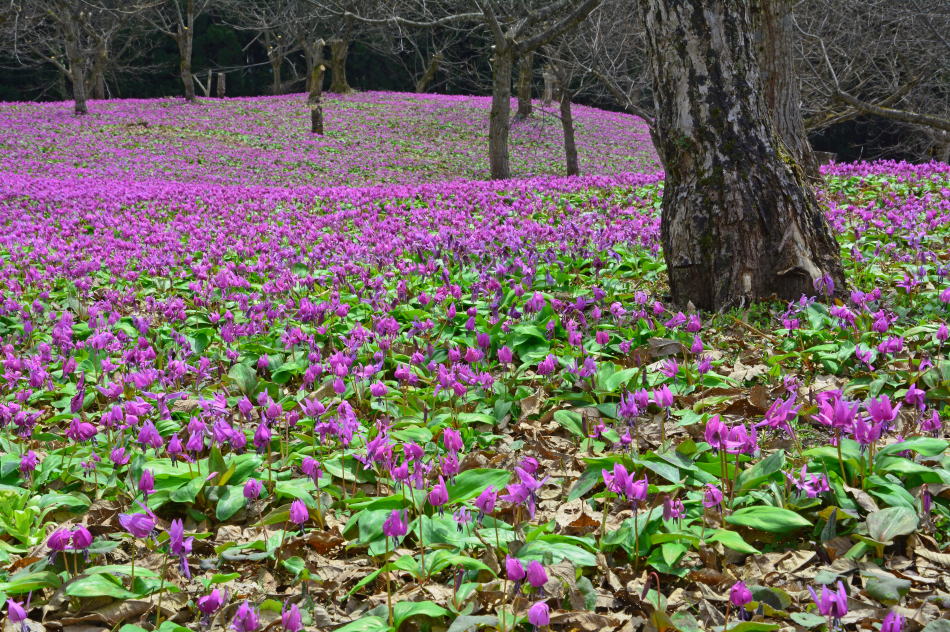
In forests where the snow has just melted, flower gardens suddenly appear.
And yet, they exist for barely two weeks.
In the mountains of spring, one occasionally encounters such dreamlike scenes.
Surprisingly, these flower gardens are often found not in remote alpine regions, but in low mountains close to human settlements — beneath deciduous woodlands and along small mountain streams.
The farther north one travels, especially into snowy regions, the larger these colonies become, and the more vigorously the flowers bloom.
Their brief season begins only a few days after the snow melts and lasts until the cherry blossoms begin to flower.
During this narrow window of time, the plants rapidly send up shoots and bloom all at once — even before fully spreading their leaves — creating the illusion that entire flower gardens have suddenly emerged from the forest floor.
But once flowering ends, taller grasses and newly leafed trees quickly overtake them, and the forest returns to an ordinary thicket of green.
Many of these flowers produce seeds almost immediately after blooming, and within only one or two months, their leaves and stems disappear completely underground.This remarkable group of plants is known as “Spring Ephemerals ”— the “fairies of spring.”
The Hidden Lives of Spring Ephemerals
Although they are often called “spring fairies,” these plants are, in reality, astonishingly patient forms of life.
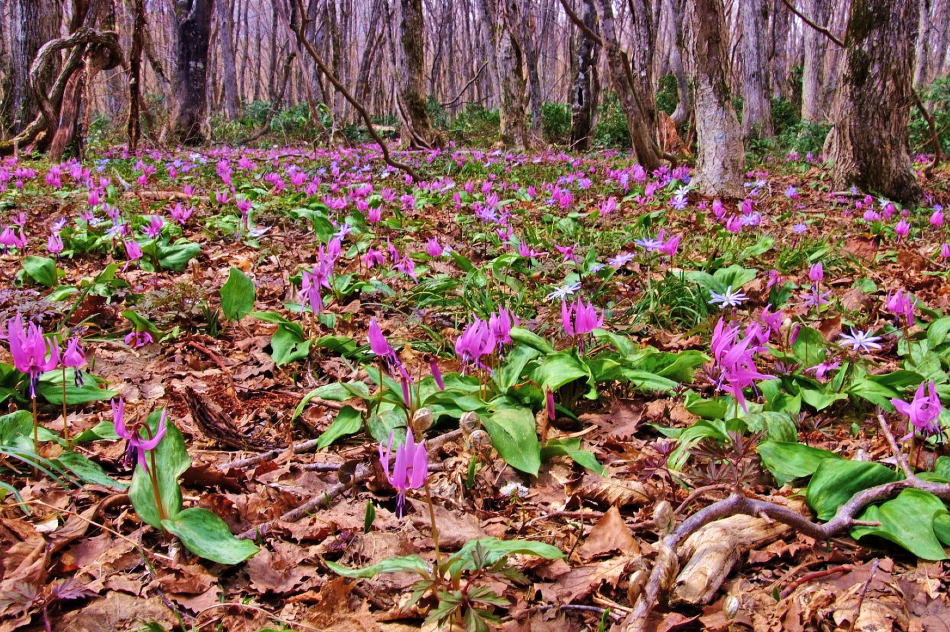
The katakuri (Erythronium japonicum), perhaps the best-known spring ephemeral in Japan, may require nearly ten years to bloom from seed.
After that, it can continue flowering for decades.
In other words, we merely witness a fleeting two-week appearance in a lifespan that may span generations.
Spring ephemerals include plants such as katakuri, anemones (Ichige species), adonis (Fukujusō), corydalis (Engosaku), amana lilies, and kobaimo species.
They emerge only during the brief early-spring period when sunlight still reaches the forest floor before the canopy closes.
They appear suddenly, bloom quickly, set seed, and vanish just as fast.
Yet they are not annuals.
Even after their above-ground parts wither away, their underground rhizomes and bulbs remain alive, quietly waiting for the following spring.
Their lives are not truly fragile at all.Rather, they are masters of patience and timing.
Kikuzaki Ichige and Katakuri
When speaking of spring ephemerals, most people immediately think of katakuri.
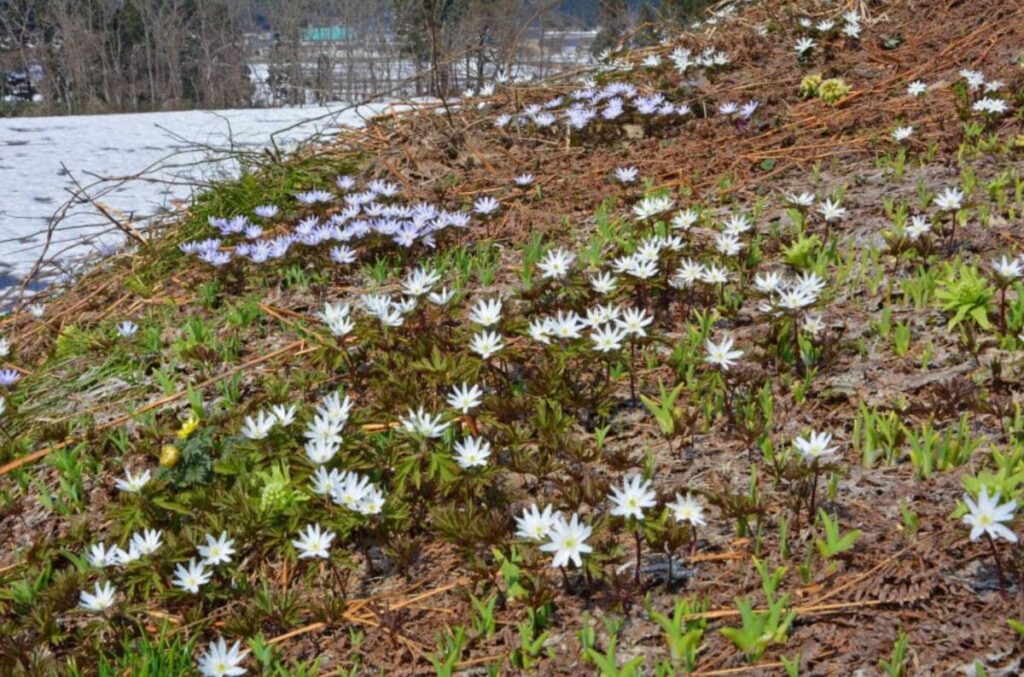
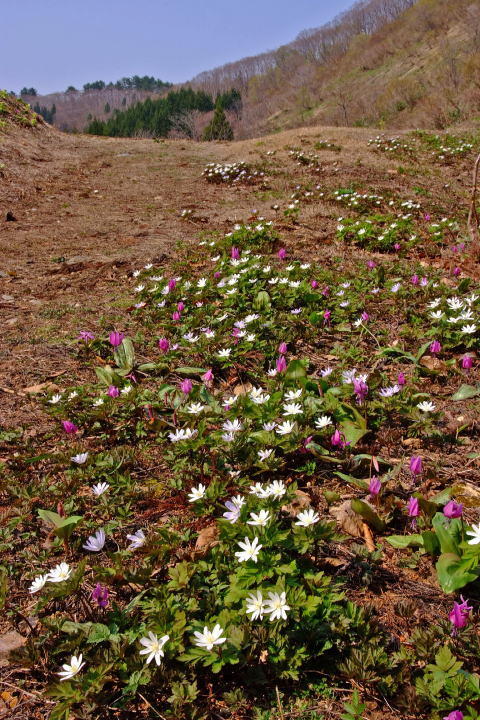
But in northern regions such as Akita and Iwate, one encounters Kikuzaki Ichige (Anemone pseudoaltaica) just as frequently — perhaps even more so.
Its flowers appear in two forms: pure white and pale bluish violet.
In some places they intermingle with katakuri, while in others they spread across the forest floor like a floral carpet of extraordinary beauty.
Azuma Ichige, Fukujusō, and Engosaku
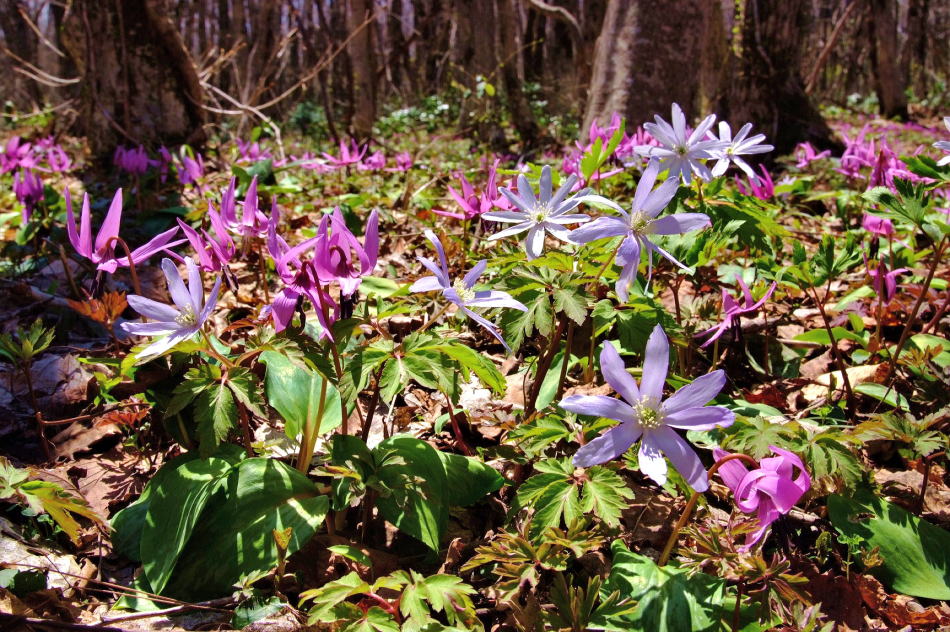
Azuma Ichige closely resembles Kikuzaki Ichige and is often mistaken for it.
However, it can be distinguished by the shape of its involucral leaves, which are more elongated and softly textured, and by the faint reddish tint on the reverse side of its white sepals.
There are even mountains where Azuma Ichige covers the forest floor almost entirely.In such places, Fukujusō and katakuri bloom together in quiet harmony.
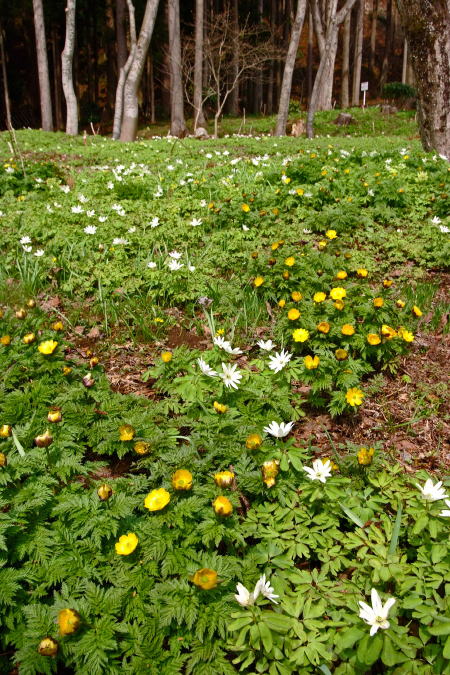
Flower Gardens Sustained by Human Hands
Yet these flower gardens do not exist entirely untouched by human influence.
By cutting back dwarf bamboo, tending the woodland, and continuing to care for the forest, people have helped preserve these spring landscapes for generations.
In this woodland, volunteers regularly clear the undergrowth.
Without such efforts, maintaining large colonies of katakuri would likely be impossible.
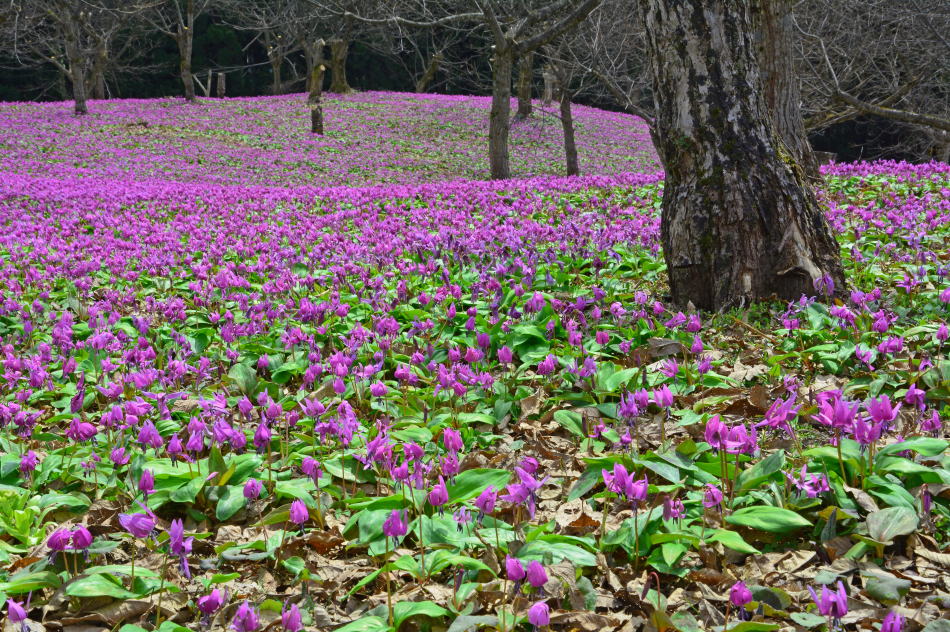
The Katakuri Gardens of Nishiki, Semboku City
This famous katakuri colony was originally a chestnut-growing area.
Local people say that while clearing bamboo grass and undergrowth to cultivate better chestnuts — and enriching the soil with compost — katakuri gradually increased on its own until the forest floor became covered in flowers.In that sense, this magnificent colony may be described as an entirely human-shaped landscape.
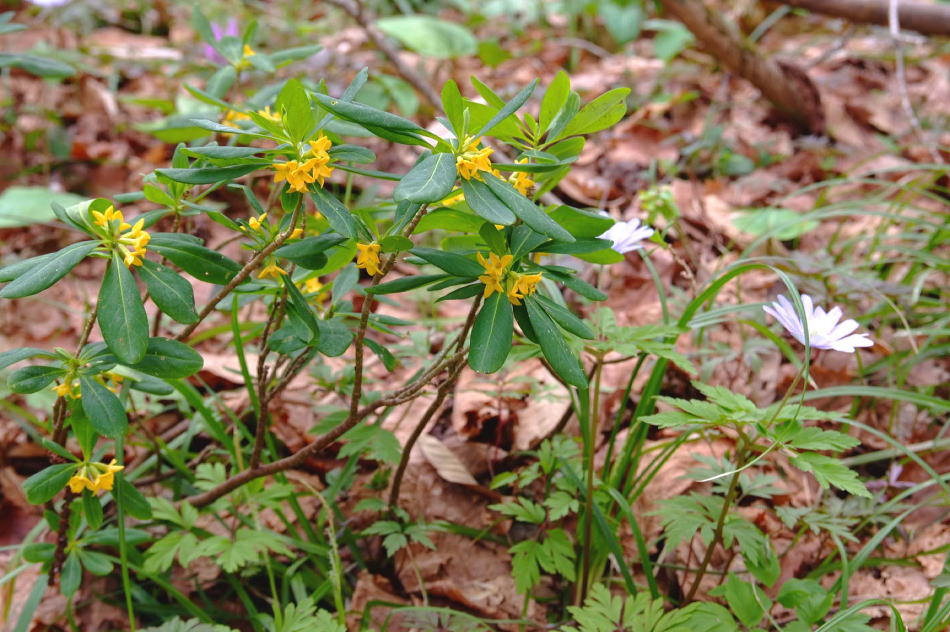
Other Companions of the Spring Forest
1. Naniwazu
Naniwazu (Daphne pseudo-mezereum subsp. jezoensis) is a deciduous shrub of the daphne family.
It is closely related to Onishibari (Daphne pseudo-mezereum), which is more common in western Japan.Its vivid yellow flowers stand out brilliantly against the still-bare forest of early spring.
2. Violets
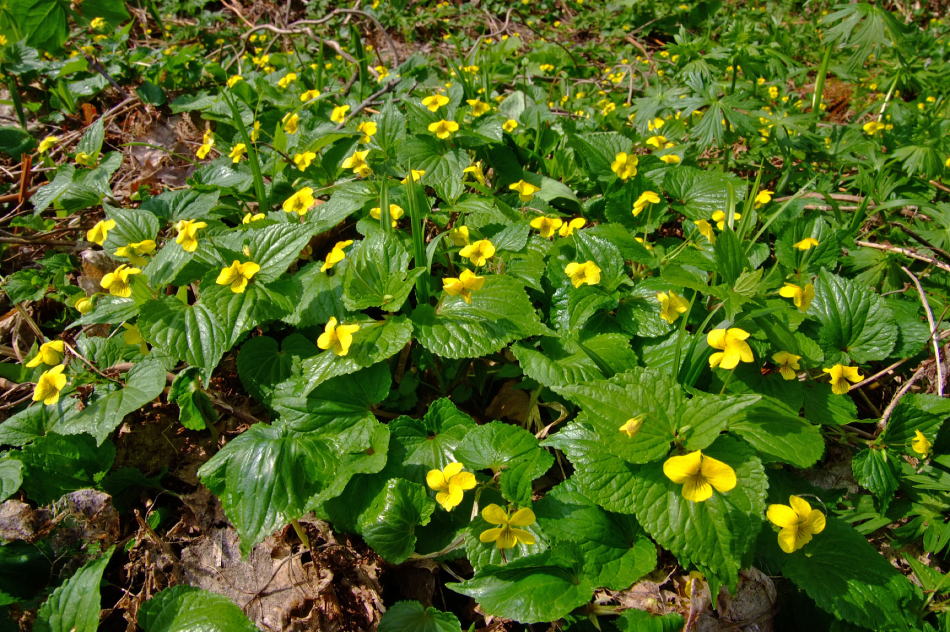
The large yellow violet (Ōbakisumire) sometimes forms enormous colonies on avalanche slopes in regions of heavy snowfall.
3. Nirinsō
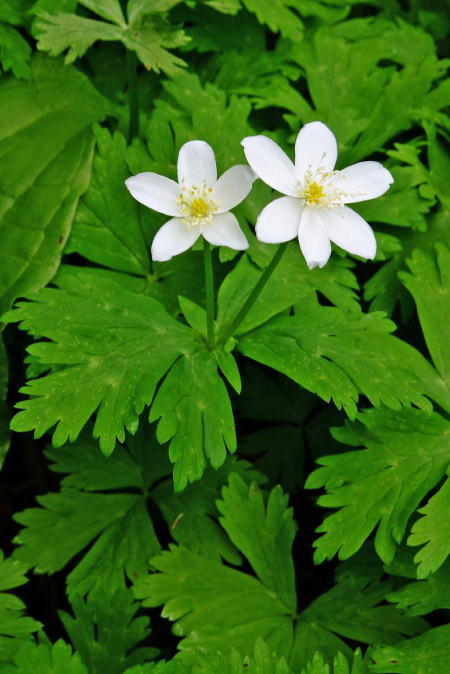
Nirinsō (Anemone flaccida), celebrated in Japanese songs as flowers “leaning close together,” bloom slightly later than most spring ephemerals.
Rather than mixing with other species, they often form pure colonies along streams and moist woodland floors.
Epilogue
By around Golden Week in early May, the deciduous woodlands that nurtured these spring flowers begin to fill with fresh green leaves.
As the canopy closes, the forest floor grows dim.
Other plants rise quickly in the warming season, and the spring ephemerals quietly retreat from view.
In haste, they finish setting seed and withdraw their leaves and stems underground, disappearing once more beneath the forest floor.
Until the forest awakens again the following spring.
