MENU CLOSE

JAPAN’S NATIONAL HOLIDAY MOUNTAIN Day

05.01.2026
Mountain Life & Culture

Welcome to the World of Tateyama Faith
Part 3: Heian-Period Ritual Objects Discovered on Mt. Dainichi and Mt. Tsurugi

Bronze ritual staff finial with twin-dragon decoration, discovered on Mt. Dainichi, Toyama Prefecture (Collection of the Toyama Prefectural Tateyama Museum)

Hello everyone,
I am Yasuhiko Takano, Director of the Toyama Prefectural Tateyama Museum.In the previous installment, we explored how Tateyama was revered from afar as a sacred mountain during the Nara period. This time, we turn to the Heian period to see how Tateyama’s religious character further evolved.

The Emergence of Oyama Deity

During the Heian period, the deity of Tateyama was gradually incorporated into the state religious system as a guardian of the nation. In the historical chronicle Nihon Sandai Jitsuroku, an entry dated 863 (Jōgan 5) records that Oyama Deity was granted the court rank of Junior Fifth Rank, marking the first appearance of Tateyama’s god in official documents.Later, the Engishiki—completed in 927—lists seven shrines in Niikawa District, including Oyama Shrine. These records indicate that, by the Heian period, the deity of Tateyama had been formally recognized and worshipped as a state deity.
However, it remains unclear whether the Oyama Shrine of that era stood in the same location as the present shrine.

A Ritual Staff Finial Discovered on Mt. Dainichi

The Heian period is also thought to be the time when Buddhist practices became closely associated with Tateyama, transforming it into a site of ascetic training.

In July 1893, a ritual staff finial (shakujōtō) dating to the late Heian period was discovered on Mt. Dainichi. The artifact was found by Isotarō Kawai during a mountain expedition undertaken in search of hot springs, together with three guides. A shakujō is a ritual staff used by mountain ascetics who practiced in remote and rugged terrain. It functioned as a walking aid and as a tool to make sound to ward off wild animals, but it also held important religious significance.The metal fitting attached to the top of the staff is known as a shakujōtō. The example discovered on Mt. Dainichi—decorated with twin dragons—was designated an Important Cultural Property of Japan in 1963. Its distinctive features include a slightly swollen ring and dragon heads crowned with sacred jewels, connected by softly curling vine-like forms.

A mountain ascetic (figure) and a ritual staff (shakujō)
Mt. Dainichi seen from Midagahara Plateau

Ritual Objects Discovered on Mt. Tsurugi

In July 1907, Yoshitarō Shibasaki of the Army General Staff Office’s Land Survey Department reached the summit of Mt. Tsurugi, which was then believed to be unclimbed. During this ascent, he discovered another ritual staff finial along with an iron sword.

This episode later became widely known through Jirō Nitta’s novel Tsurugidake: Ten no Ki and its film adaptation directed by Daisaku Kimura.
The ritual staff finial with iron sword found on Mt. Tsurugi is believed to date to the early Heian period and was designated an Important Cultural Property in 1959. The finial features a fan-shaped ring with fern-scroll motifs curling inward at the base, giving it a powerful and robust impression. In 1982, the artifacts were donated to Toyama Prefecture through the generosity of the Shibasaki family.The ritual staff finials discovered on Mt. Dainichi and Mt. Tsurugi are among the most important archaeological remains for understanding the development of sacred mountain worship in Japan.

Mt. Tsurugi seen from the summit of Mt. Bessan
Bronze ritual staff finial with iron sword, discovered on Mt. Tsurugi (Collection of the Toyama Prefectural Tateyama Museum)
Bronze ritual staff finial with iron sword, discovered on Mt. Tsurugi (Collection of the Toyama Prefectural Tateyama Museum) 

What Do These Heian-Period Ritual Objects Tell Us?

The presence of these ritual staff finials suggests that Mt. Dainichi and Mt. Tsurugi lay within the sphere of activity of mountain ascetics. If large-scale rituals had been conducted on the summits, other ritual-related artifacts would likely have been found. However, only the ritual staff finials—and in one case, an iron sword—have been discovered.

Why might this be?

The shakujō was not only a ritual implement but also a tool used to establish a sacred boundary (kekkai)—a division between the sacred and the profane. Mountains, in themselves, were not automatically regarded as suitable sites for Buddhist practice. They became places of ascetic training only after being ritually sanctified by mountain practitioners.

From this perspective, the ritual staff finials and iron sword discovered on Mt. Dainichi and Mt. Tsurugi were likely offerings placed to sanctify these peaks as sacred mountains where deities and buddhas could descend.

In the next installment, we will introduce the Legend of the Founding of Tateyama, a key narrative in the history of Tateyama faith. I hope you will continue to follow this series.

Written by Yasuhiko Takano
Director, Toyama Prefectural Tateyama Museum

The Dainichi mountain range seen from the trail on Mt. Oyama
The Dainichi mountain range seen from the trail on Mt. Oyama 

Editorial Note

At the Toyama Prefectural Tateyama Museum, the actual ritual staff finials discovered on Mt. Dainichi and Mt. Tsurugi—both designated Important Cultural Properties—are on permanent display. These rare artifacts, dating back approximately 1,300 years, vividly convey the origins of mountain worship in Tateyama.

#https://www.yamanohi.net
#Toyama Prefectural Tateyama Museum
#Mountain Faith
# Mt Dainichi 

05.01.2026
Mountain Life & Culture

Welcome to the World of Tateyama Faith
Part 2: Ancient Tateyama through the Manyōshū

The Tateyama Mountain Range seen from the coast of Takaoka City

Hello everyone,
I am Yasuhiko Takano, Director of the Toyama Prefectural Tateyama Museum.Mount Tateyama, rising majestically along the Japan Sea coast, has inspired people for centuries. From Mt. Kureha in Toyama City, one can enjoy a sweeping view of the Tateyama Mountain Range—an outlook beloved by generations of local residents. But how did people in ancient times perceive this magnificent landscape?
One important clue can be found in Japan’s oldest anthology of poetry, the Manyōshū.

The Tateyama Mountain Range viewed from Mt. Kureha, Toyama City

Tateyama in the Manyōshū

The earliest written references to Tateyama appear in the Manyōshū, a collection of more than 4,500 poems compiled in the late Nara period (8th century). At that time, the provincial capital of Etchū (present-day Toyama Prefecture) was located around what is now the area of Shōkō-ji Temple in Fushiki, Takao­ka City—a place from which the Tateyama Range can still be seen.In 746, at the age of twenty-nine, Ōtomo no Yakamochi was appointed governor of Etchū Province. Deeply impressed by the grandeur of the mountains, he composed a long poem known as the Tateyama-fu before returning to the capital the following year. In this poem, he praises Tateyama as a mountain set apart from all others—one possessed by the gods, and worthy of being remembered and spoken of by those who had never seen it.

Shōkō-ji Temple, a National Treasure, in Fushiki, Takaoka City

One of the accompanying short poems expresses this sentiment vividly: even in summer, the snow resting on Tateyama never grows tiresome to behold, for it is truly a divine mountain.

Yakamochi’s subordinate, Ōtomo no Ikenushi, responded with an even longer poem the next day, praising Tateyama bathed in the morning sun and describing it as a mountain bearing a sacred name bestowed by the gods. These poems, preserved in Volume 17 of the Manyōshū, represent not only the oldest literary depictions of Tateyama, but also some of the earliest literature of the Northern Japan Alps.

From “Tachiyama” to “Tateyama”

The Manyōshū also preserves an important linguistic clue. In the Nara period, Tateyama was pronounced Tachiyama, not Tateyama as it is today.
Scholars suggest that this shift in pronunciation likely occurred during the Muromachi period (14th–16th centuries). Earlier documents from the Heian and Kamakura periods consistently use Tachiyama, while later travel accounts clearly record the name as Tateyama.

Ancient Mountain Worship and Tateyama

The meaning of Tachiyama has been interpreted in various ways: as a mountain that “stands tall toward the heavens,” or as one shaped like a sharp blade (tachi). The folklorist Kunio Yanagita proposed another view, noting that the ancient word tatsu referred to the manifestation of a deity. In this sense, Tachiyama may mean “the mountain where the gods appear.”

Both Yakamochi and Ikenushi describe Tateyama as a mountain possessed by the gods, revealing an early form of mountain worship. In ancient Japan, high mountains were often regarded as the dwelling places of deities and were revered from afar rather than climbed. Such distant veneration, combined with elements of sun worship suggested by references to the morning light, characterizes the ancient faith surrounding Tateyama.

When we gaze upon the Tateyama Range from afar today, the sense of awe it inspires may not be so different from what people felt more than a thousand years ago.In the next installment, we will travel forward in time to explore Tateyama during the Heian period. I hope you will continue this journey with me.

The Tateyama Mountain Range seen from the coast of Himi City

Written by Yasuhiko Takano
Director, Toyama Prefectural Tateyama Museum

#https://www.yamanohi.net
#Toyama Prefectural Tateyama Museum
#Mountain Faith
#Manyoshu

22.10.2025
News

About the International Year of Mountains and International Mountain Day and related activities in Japan

The International Year of Mountains was proposed at the Earth Summit held in Rio de Janeiro in 1992 and was officially designated by the United Nations in 2002. The UN resolution called for the implementation of events and activities worldwide to raise awareness of the importance of sustainable mountain development.

In Japan, a symposium commemorating the International Year of Mountains was held in 2002, where a proposal was made to establish a national holiday celebrating mountain.

On January 30, 2023, UN passed a resolution to declare December 11 as International Mountain Day.

Later, at the International Year of Mountains +10 event in 2012, a declaration was issued advocating for the creation of a national holiday dedication to mountains, leading to the establishment of Mountain Day as a national holiday in 2016. Thus, Mountain Day and the International Year of Mountains are deeply interconnected.

In 2022, the Japan Mountain Day Foundation hosted a symposium in Kurobe City, Toyama Prefecture, to commemorate the International Year of Mountains +20.

Looking ahead, we will continue to actively promote international mountain conservation and awareness activities, particularly around the International Year of Mountains and International Mountain Day (December 11).

Notably, our organization is the third Japanese entity to join the Mountain Partnership, following the United Nations University and the Hokkaido Intellect Tank.

Official Report of the International Year of Mountain Symposium 2002
Official Report of the International Year of Mountain Symposium 2012
Official Report of the International Year of Mountain Symposium 2022
Global Environmental Research carried an 83-page special issue of 2022 Symposium

# https://www. yamanohi.net

# FAO Mountain Partnership

# International Year of Mountain

# International Mountain Day

22.10.2025
Natural History

Report and photo by Yuko Saito October 4, 2025 – Autumn Colors and Late Blossoms on the Northern Slopes of Mt. Chōkai

On this day I explored the Akita side of Mt. Chōkai, walking from the mid-slopes down toward the foothills, including the Ryūgahara Marsh at Harai River and the Nikaho Highlands. At these lower elevations the autumn foliage is only just beginning. To my delight, I also came across a gentian-like flower, Swertia japonica (commonly known as Senburi), blooming late in the season.

Late-blooming Japanese Gentian
Sanguisorba tenuifolia var. alba
A view of Mount Chōkai from Haraigawa
the autumn foliage of maples
Autumn leaves of Viburnum
Silver grass swaying with Mount Chōkai beyond
Ryūgahara Marsh
Swertia japonica (commonly known as Senburi)

Mount Chokai :Rising above the Sea of Japan coast, Mount Chōkai (2,236 m), lying on the border of Akita and Yamagata Prefectures, is a sacred volcano admired for its graceful, Fuji-like shape. The mountain is home to a rich ecosystem, from alpine flowers to colorful forests in autumn, and offers seasonal landscapes along with a cultural heritage that continues to inspire visitors.

#Mount Chokai

#Akita Prefecture

#Yuri Honjyo Municipality

21.10.2025
Mountain Life & Culture

Tateyama: A Sacred Mountain with 1,300 Years of Faith

Towering over Toyama Prefecture, Mount Tateyama is more than just a breathtaking natural wonder—it is the heart of a unique spiritual tradition known as Tateyama Shinkō, or the Faith of Tateyama. This ancient belief, deeply entwined with the mountain’s dramatic landscapes, is said to have been passed down for over 1,300 years.

We are delighted to announce that Mr. Yasuhiko Takano, Director of the Toyama Prefectural Tateyama Museum, will be sharing his insights into Tateyama Shinkō in a special 12-part series. Through his writings, readers will discover the rich history, fascinating legends, and enduring cultural significance of this sacred peak.

A Greeting from the Author
Hello, everyone. I’m Yasuhiko Takano, Director of the Toyama Prefectural Tateyama Museum.

Tateyama, together with Mount Fuji and Mount Hakusan, is known as one of Japan’s “Three Sacred Mountains.” For over a thousand years, people have looked up to this peak with awe and devotion. Its name even appears in the Konjaku Monogatari-shū, a famous collection of tales from the Heian period (794–1185), showing how widely it was known at the time.In this series, I’d like to share the story of Tateyama’s spiritual traditions—where they began, how they grew, and why they remain such a unique part of Japan’s culture today.
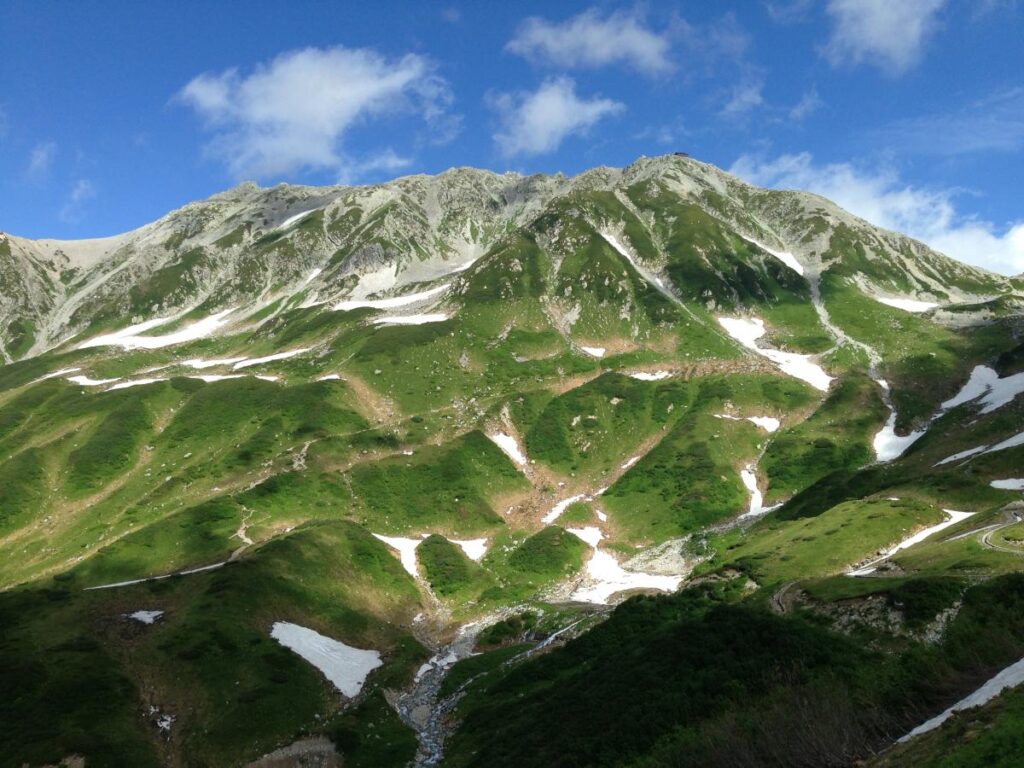
Mt. Tateyama
Mt. Tateyama

What Exactly Is a Tateyama Mandala?

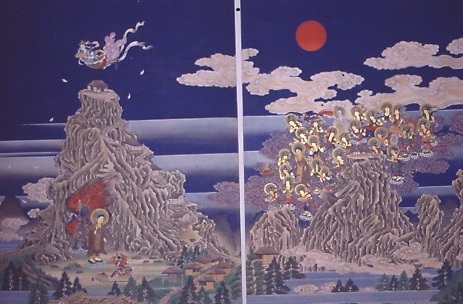
The Tateyama Mandala is a religious painting created to spread faith in Mount Tateyama and encourage pilgrimage to the sacred peak. About 54 are known today, most from the Edo period (1603–1868), with 11 designated as Important Tangible Folk Cultural Properties.

In the past, priests from Ashikuraji and Iwakuraji carried these paintings to villages during the farming off-season. They hung them in homes or temples and used etoki—storytelling through pictures—to share the teachings and wonders of Tateyama.

Originally made as large foldable paper panels, the mandalas later evolved into scroll paintings, easier to carry and display. Many surviving examples are sets of four scrolls forming one grand scene, though others vary in number and design.

No two mandalas are exactly alike. Each has its own subtle differences—an enduring mystery that continues to fascinate scholars and viewers alike.
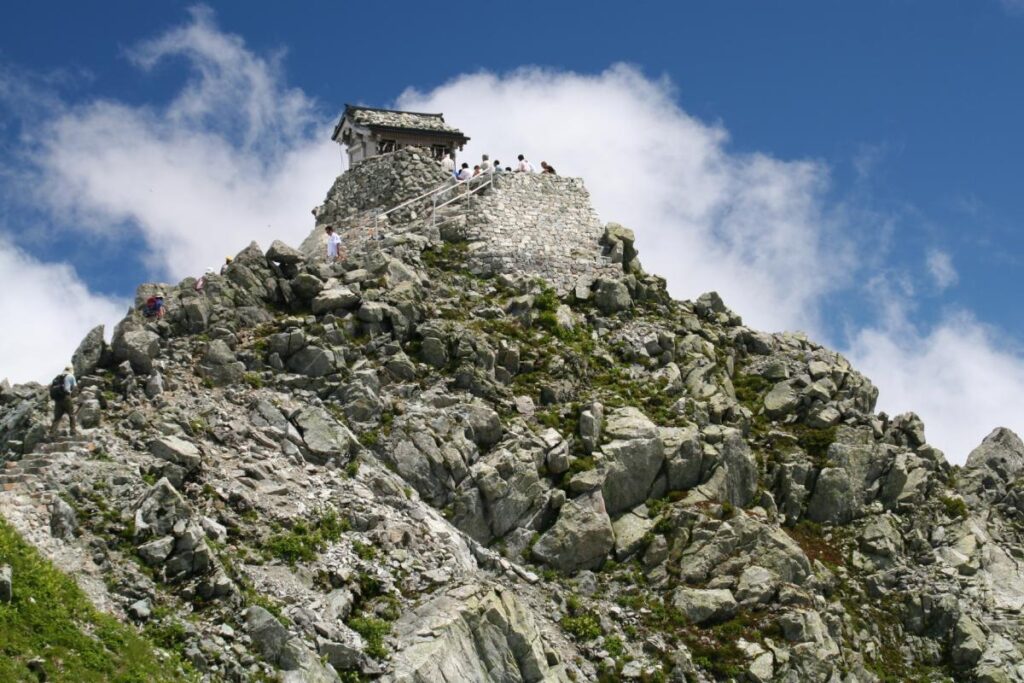
The Main Shrine of Oyama Shrine, located at the summit of Mount Oyama, the main peak of Mount Tateyama

The Tateyama Mandalas bring the sacred mountain range vividly to life. Blending legend, Buddhist cosmology, and local ritual, they portray Tateyama as both a place of fearsome trials and a gateway to salvation. Through five central motifs—from the opening legend of the mountain to visions of hell and paradise, pilgrimage landmarks, and the dramatic Nunobashi ritual—the mandalas invite viewers into a spiritual landscape where the earthly and the divine meet.

The Five Motifs of the Tateyama Mandala

1. The Opening Legend
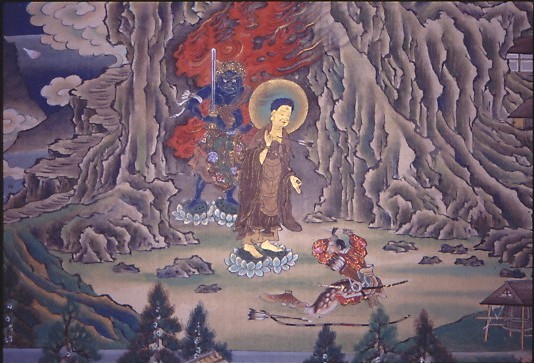
A boy chasing his father’s white hawk met a bear in the mountains. The bear revealed itself as Amida Buddha, inspiring him to become a monk and open Tateyama as a sacred site.

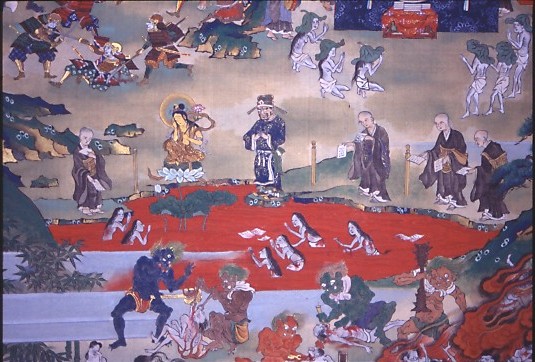
2. The Hells of Tateyama
Fiery valleys and the palace of King Enma illustrate the terrifying underworld said to lie within Tateyama’s depths.

3. The Pure Land
From Mt. Jōdo, Amida Buddha and a host of bodhisattvas descend in a radiant vision of salvation.

4. Pilgrimage Landmarks
Famous sites along Tateyama’s ancient pilgrimage route, where monks and worshippers sought spiritual awakening.

5. The Nunobashi Ritual
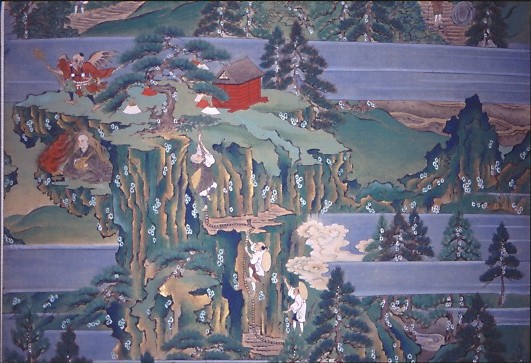
Held each autumn at Ashikuraji village, women crossed the “Cloth Bridge” in a powerful rite of rebirth and salvation.
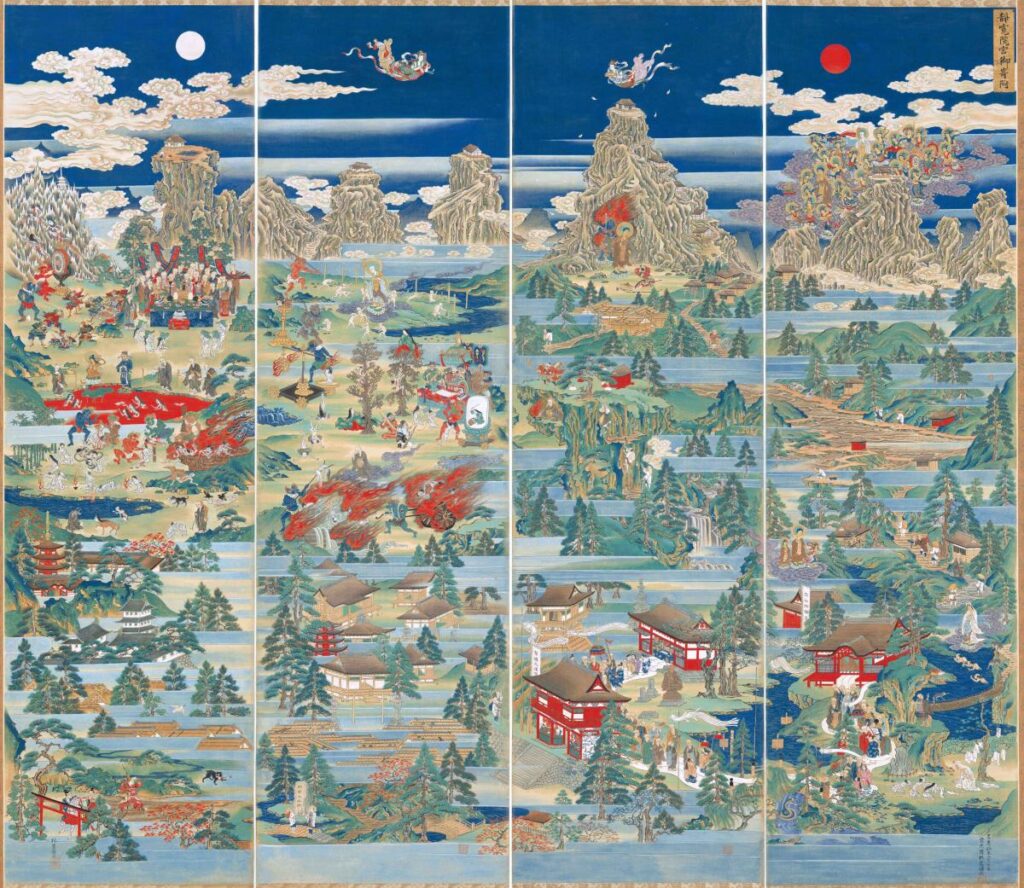
Tateyama Mandala-Kichijobo version: Collection of the Tateyama Museum, designated as a National Important Tangible Folk Cultural Property

The Distinctive Nature of Tateyama Faith in Etoki

Priests of Tateyama used mandalas in a storytelling performance called etoki (“pictorial explanation”). At their preaching sites, they narrated tales such as the Legend of Tateyama’s Opening, the Hells and Pure Land of Tateyama, famous pilgrimage landmarks (told mainly by Iwakuraji priests), and the Nunobashi ritual (told mainly by Ashikuraji priests). Through these vivid performances, people across Japan were inspired to make pilgrimages to Tateyama.

By the late Edo period, however, the content of etoki varied widely from one temple lodge to another. Concerned that this caused confusion, a monk named Gensei of Enmei-in at Iwakuraji compiled a script in 1854 to standardize the practice.This suggests that differences in etoki traditions were reflected in the imagery of the mandalas themselves. In this way, the Tateyama Mandalas serve today as invaluable records of the rich spiritual culture of Edo-period Tateyama faith.
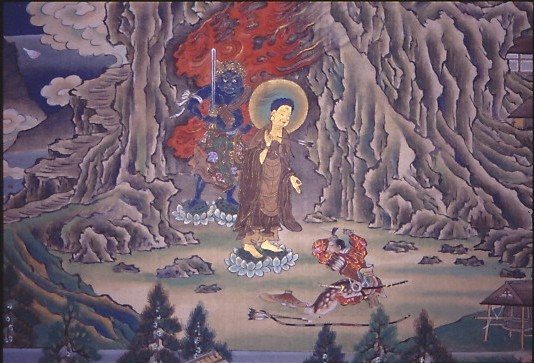
The Opening Legend
The Hells of Tateyama
The Pure Land
Pilgrimage Landmarks

In our next installment, we will take a time-traveling journey back to the Nara period (710-794)to explore the early world of Tateyama faith. I hope you’ll continue to follow along.

Written by Yasuhiko Takano, Director of the Toyama Prefectural Tateyama Museum◎ If you’d like to learn more about Tateyama Mandalas, we recommend the illustrated catalog New Comprehensive Guide to Tateyama Mandalas (144 pages, full color, Yen1,800 plus shipping). For purchase details, please contact the Tateyama Museum.
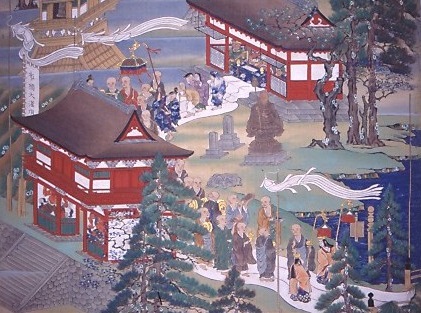
The Nunobashi Ritual

#https://www.yamanohi.net
#Toyama Prefectural Tateyama Museum
# Mandala#Mountain Faith

17.10.2025
News

Announcement:Approval of Membership in the Mountain Partnership

We are pleased to announce that the Japan Mountain Day Foundation has been officially approved as a member of the Mountain Partnership, a United Nations Food and Agriculture Organization (FAO) initiative dedicated to promoting sustainable mountain development worldwide.

Through this membership, we will actively share Japan’s mountain-related natural, social, and cultural initiatives with the international community, and strengthen collaboration with organizations and institutions around the world working for the well-being of mountain regions. We are committed to contributing to the United Nations’ goal of achieving Sustainable Mountain Development.

This achievement would not have been possible without the understanding and support of all those who have upheld the vision of Mountain Day. We extend our heartfelt gratitude to everyone who has supported us.

Moving forward, we will continue working together with diverse partners both in Japan and overseas to help shape a sustainable future for mountains. 

We sincerely appreciate your continued support.

April 2025

Masahiko Kaji
Representative Director, Japan Mountain Day Foundation

PageTop