MENU CLOSE

JAPAN’S NATIONAL HOLIDAY MOUNTAIN Day

25.05.2026
Natural History

Walking Through the Forests of Tohoku

— Nature Notes by Mouzuika (Yuukou Saito) —
Episode 1

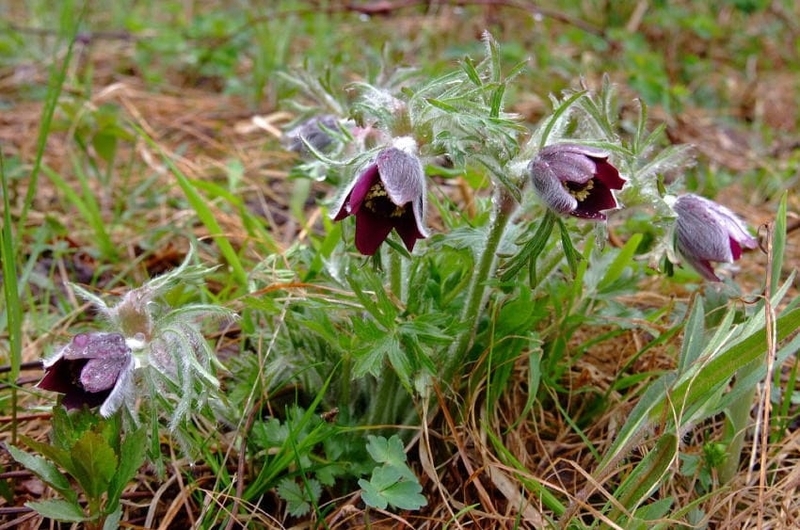
Enchanted by Okina-gusa (Japanese pasqueflower)

I believe I was in the second or third grade of elementary school.

Near my family home in Yokote City, Akita Prefecture, I found several wild okina-gusa flowers blooming along a farm road.
That encounter was what first drew me toward plants.

But by the following year, the flowers had disappeared.

Sixty years ago, okina-gusa could still be found growing casually along roadsides in rural Akita.
Afterward, however, farmland consolidation and the concrete lining of irrigation channels rapidly transformed the landscape.

The contributor known as Mouzuika reflects, over the course of five essays, on a life shaped by plants — from childhood encounters with wildflowers to the years after retirement devoted to observing nature.

Mouzuika (Yuukou Saito)

Lives in Akita City.

He studied plant ecology at university.
After graduation, he worked in a field unrelated to his academic specialty, yet his habit of observing flowers never faded.

Today, he walks through the mountains and fields of the Tohoku region, recording plants and landscapes on his blog under the name “Mouzuika.”
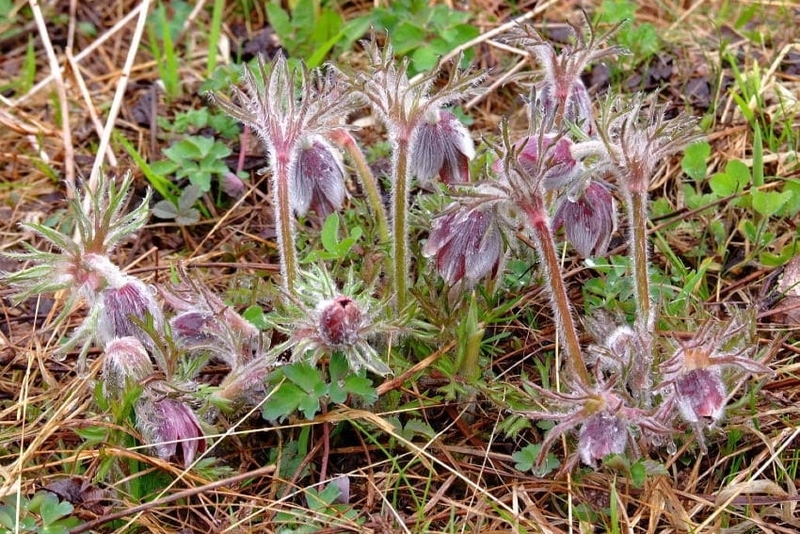
Wild Okina-gusa (Japanese pasqueflower)
Wild Okina-gusa (Japanese pasqueflower)

Drawn to Spring Ephemerals

I was probably in the fifth or sixth grade of elementary school, around the mid-1960s.

Once I became old enough to ride a bicycle farther from home, I often visited relatives living near the foothills of Mt. Kurikoma and other mountains.

Walking through those mountain valleys in spring, I encountered flowers unlike anything I had seen near my home.

They bloomed in rich shades of crimson-purple, blue-violet, yellow, and white.
Many spread across the forest floor in dense carpets of color.

These were the plants now known as spring ephemerals — flowers such as katakuri lilies, wild anemones, and corydalis.I was completely captivated by those hidden spring gardens.
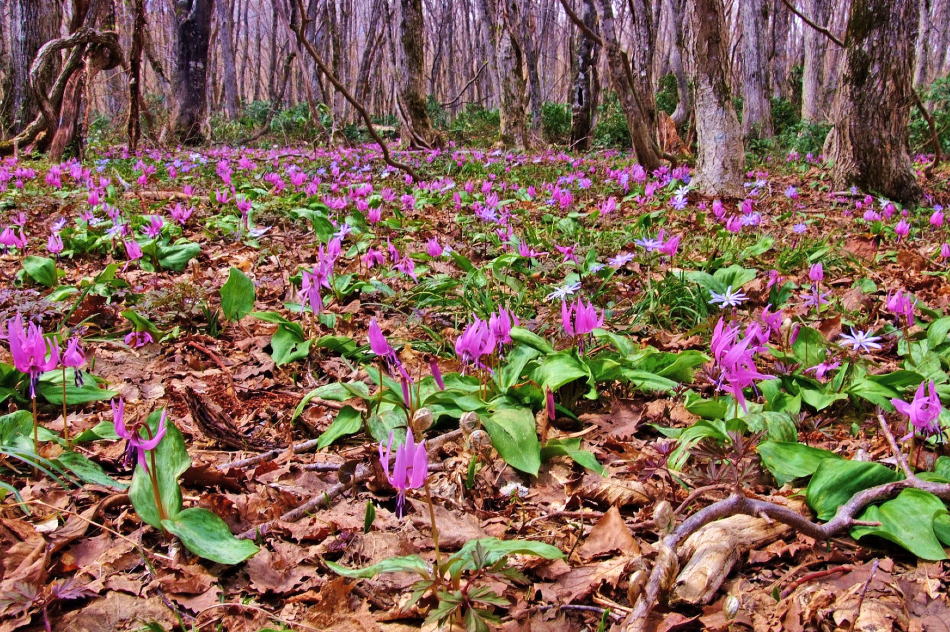
A carpet of blooming katakuri lilies

Much of my botanical knowledge had already been acquired through self-study before entering university.

Wanting to study plants more deeply, I enrolled in the Department of Biology at Yamagata University and specialized in plant ecology.

After graduation, however, I found work in a field unrelated to my academic training.
At most, I occasionally enjoyed hiking with colleagues from work.

After retirement, I hoped to travel widely in search of alpine landscapes and mountain flowers. Yet family caregiving responsibilities and the COVID pandemic gradually led me to focus instead on the mountains of northern Tohoku — Akita, Aomori, Iwate, and Yamagata.

As a result, I began returning repeatedly to places that could be reached on day trips from Akita City.Today, I concentrate on searching for little-known landscapes and seasonal flower scenery hidden within that range.

Returning to the Same Places

I often revisit the same places again and again.

The way flowers bloom changes greatly depending on the year and the progression of the seasons.

I do not believe a flower can truly be understood through a single encounter — or a single photograph.

Even the same flowers and mountain landscapes reveal new discoveries every year.

Among the places I continue returning to, some views have become especially dear to me.

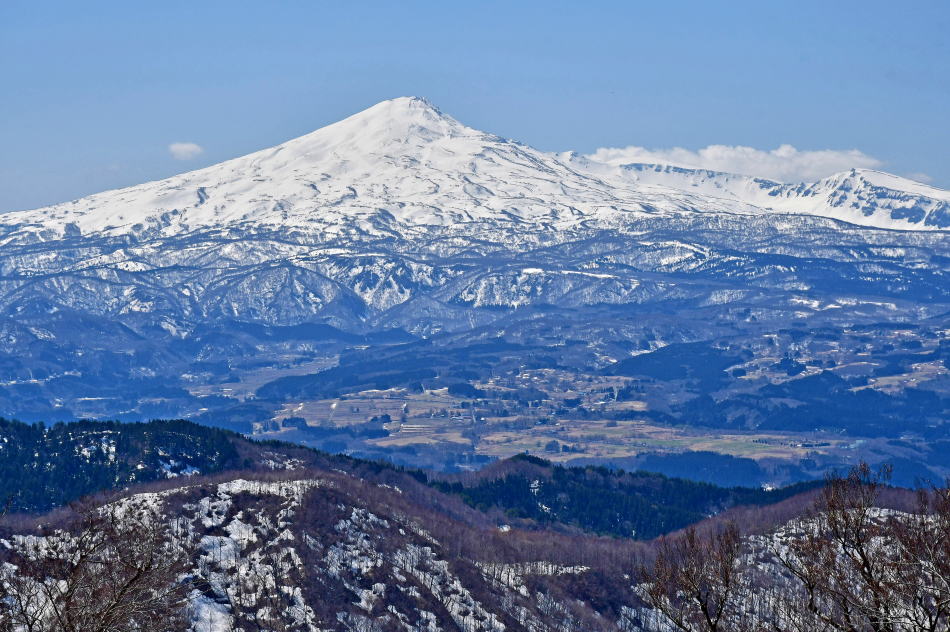
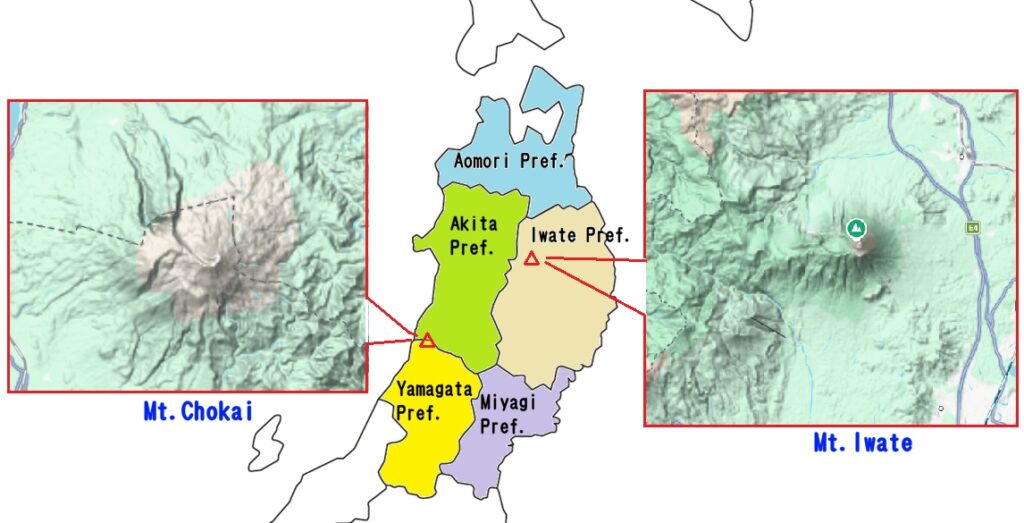
One of them is Mt. Chokai, particularly the view from Mt. Yashio, which remains one of my favorites.
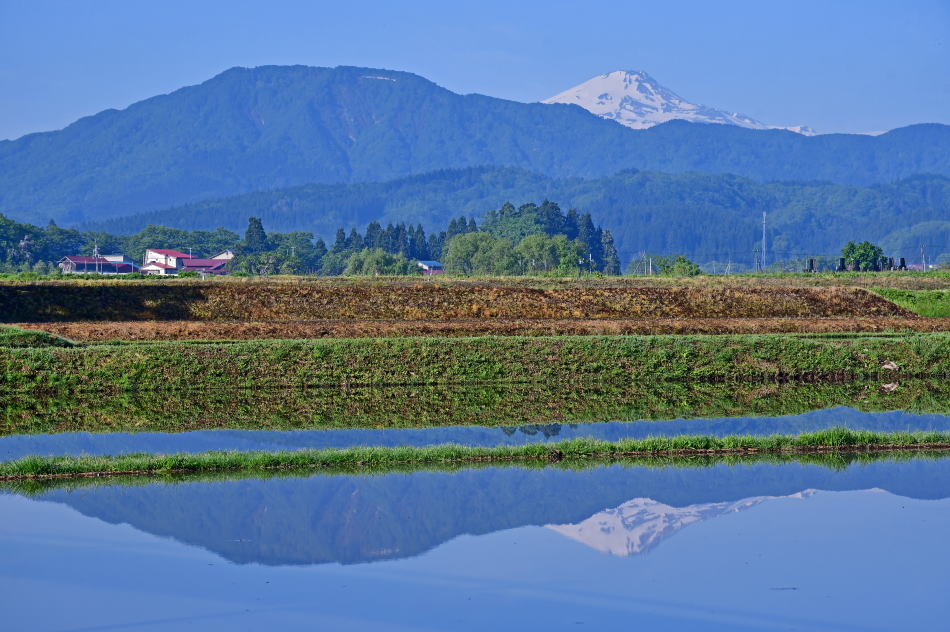
Mt. Yashio (731 m, left) and Mt. Chokai (2,236 m, right)
Viewed from Yurihonjo City
Mt. Yashio (731 m, left) and Mt. Chokai (2,236 m, right)
Viewed from Yurihonjo City
View of Mt. Chokai from Mt. Yashio

I am also fond of lesser-known views of Mt.Iwate.
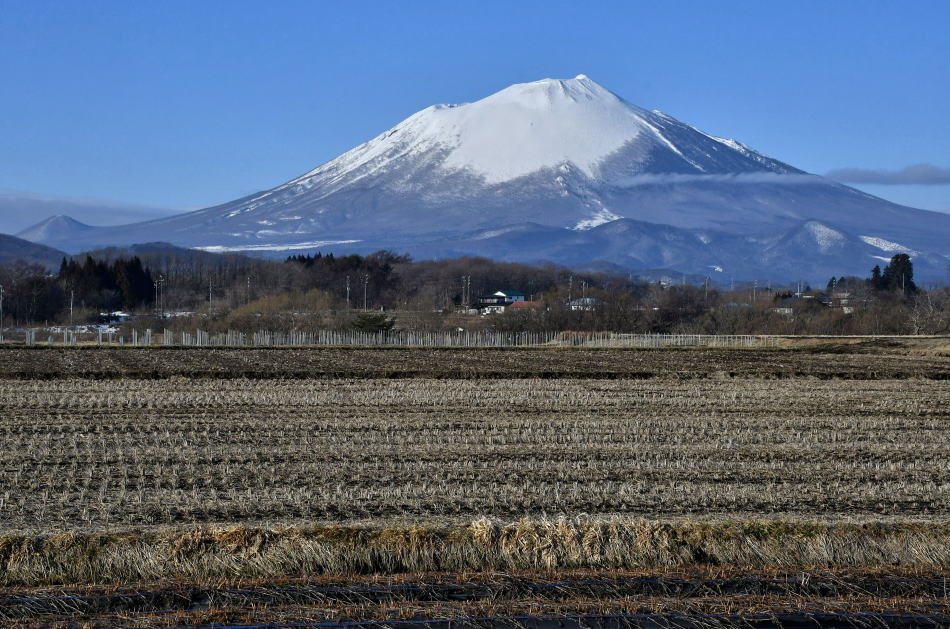
Mt. Iwate(2,038m)
Mt. Iwate(2,038m)

Perhaps leaving these records behind is a kind of proof that I lived.

Still, blogs and websites will probably vanish into digital debris once their creators are gone.And since around 2024, the increasing presence of bears and the rapid decline of my own physical strength have made serious mountain climbing more difficult than before. 
#Japan Mountain Foundation
#Spring Ephemerals
#Akita Prefecture
#Mt.Chokai
#Mt.Iwate
20.05.2026
Mountain Life & Culture

Mountains Without Borders

Foreign-born Leaders Revitalizing Japan’s Rural Mountain Communities

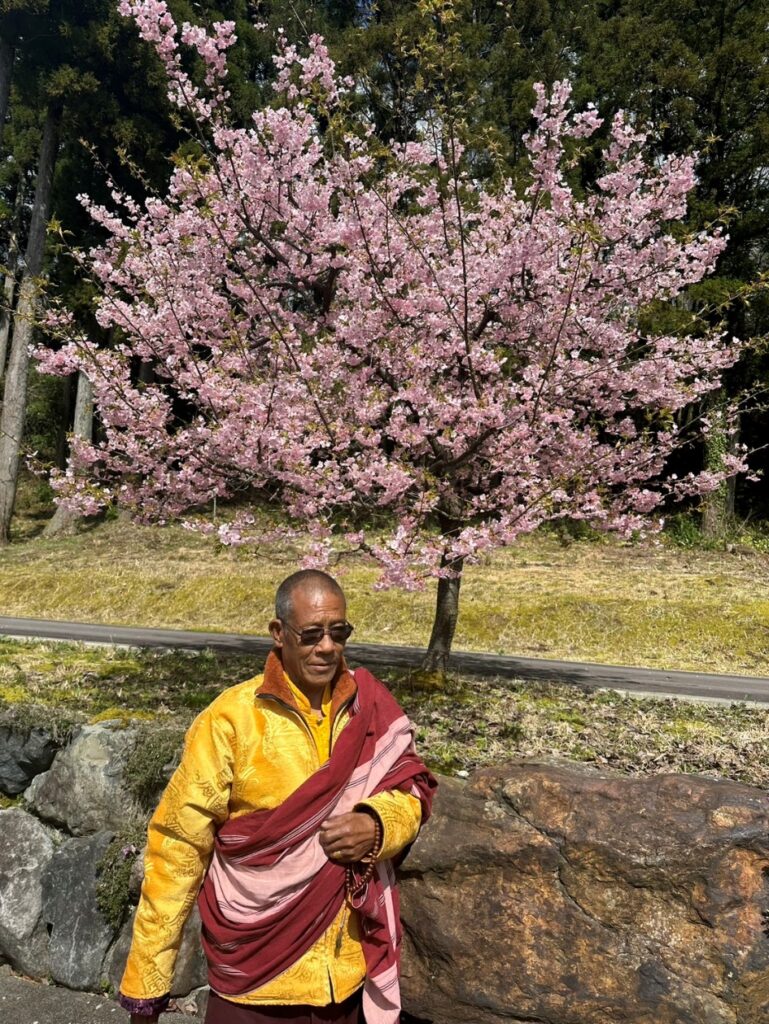
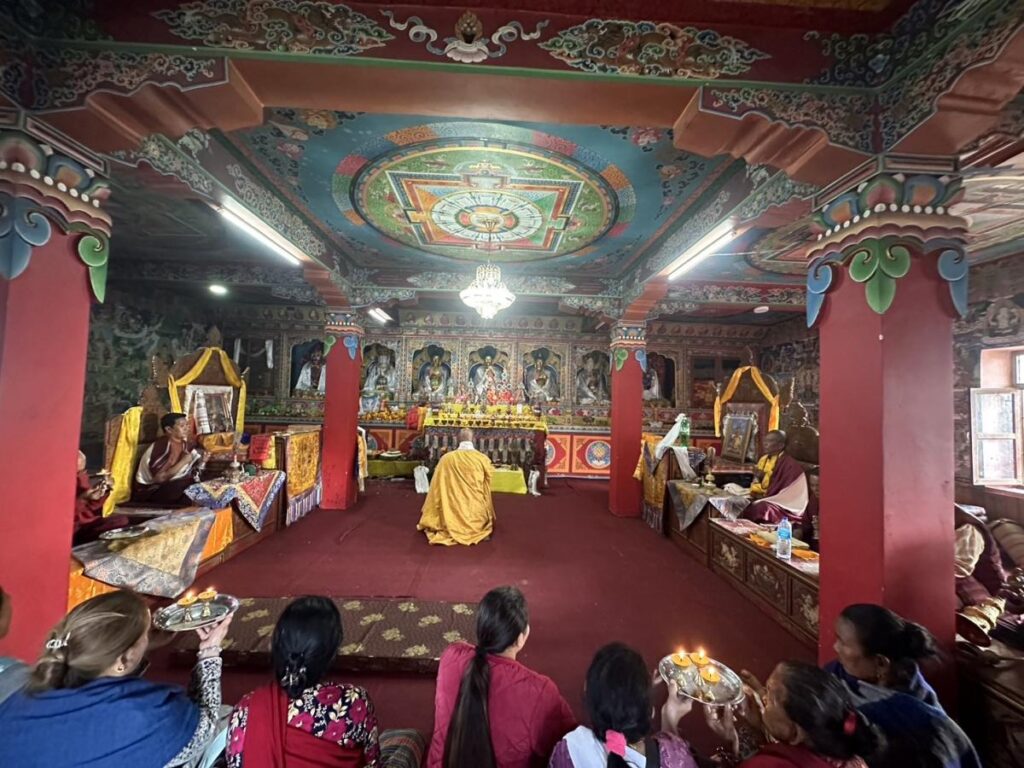
A Japanese monk conducting a Buddhist prayer ceremony at the Tibetan Buddhist temple in Lisank

Episode 5:  Cultural Mediation Through Faith

Religious Practices as Bridges Between Communities

As interactions between Nepalese residents and local Japanese communities in Toyama gradually increased through various cultural exchange activities, Dhalma began to introduce elements of Nepalese religious traditions into these exchanges.

In Nepal, where daily life is deeply intertwined with religious practices, rituals are not confined to temples or sacred sites but are often conducted within households and local communities. Dhalma believed that sharing these practices could provide a meaningful way to deepen mutual understanding between Nepalese residents and their Japanese neighbors.One such initiative involved organizing Buddhist memorial services and prayer ceremonies led by Nepalese monks. These events were held in collaboration with local communities and offered Japanese participants a rare opportunity to observe and take part in traditional Tibetan Buddhist rituals.

Venerable Nima Lama in Toyama (Father of Dhalma Lama)

For many Japanese participants, it was their first time witnessing prayer ceremonies involving chanting, incense offerings, and the application of tika — a red blessing mark traditionally placed on the forehead.

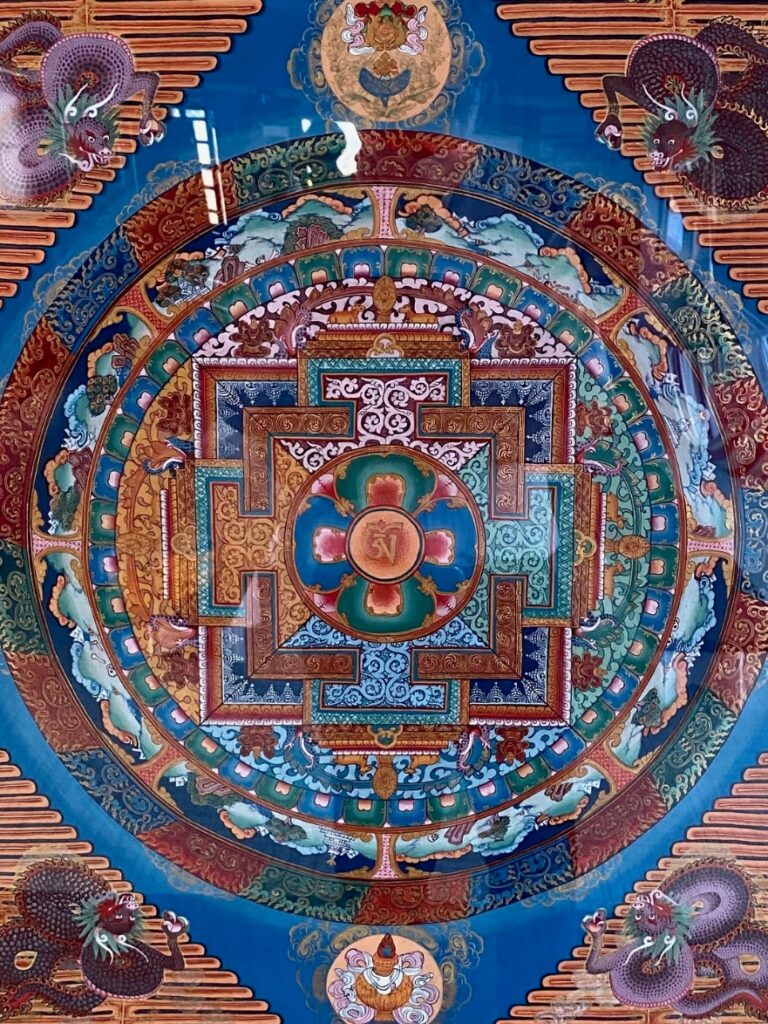
Dhalma also introduced workshops on traditional Tibetan Buddhist painting, drawing on his own experience as a Thangka artist. Participants were invited to learn about the symbolism and techniques involved in mandala painting, as well as the philosophical ideas embedded within these visual traditions.

“These activities are not intended to promote any particular religion,” Dhalma explains. “Rather, they provide opportunities for people to learn about each other’s cultural backgrounds and values.”Through such initiatives, religious practices became a platform for dialogue and trust-building between Nepalese and Japanese residents.

a sacred Thangka mandala created by Dhalma Lama

Participants often commented that the shared experience of preparing offerings, listening to chants, or engaging in artistic expression helped to create a sense of familiarity that transcended linguistic and cultural differences.
These events also allowed Nepalese residents living in Toyama to reconnect with their own cultural heritage, which they might otherwise find difficult to maintain in their daily lives abroad.As these exchanges continued, Dhalma began to recognize the potential of faith-based practices as informal yet powerful tools for fostering intercultural understanding within rural communities.

Related Topics

• Cultural Mediation in Rural Communities
• Faith-based Community Exchange
• People-to-People Diplomacy
• Intercultural Dialogue in Mountain Regions
• Community Leadership Across Cultures

Learn More

This episode highlights how cultural and faith-based exchanges can foster trust and mutual understanding between communities, creating informal yet meaningful pathways for cross-cultural collaboration in rural mountain regions.Related initiatives can be found in:
• Intercultural Community Engagement Programs
• Faith-based Dialogue Initiatives
• People-to-People Exchange Platforms

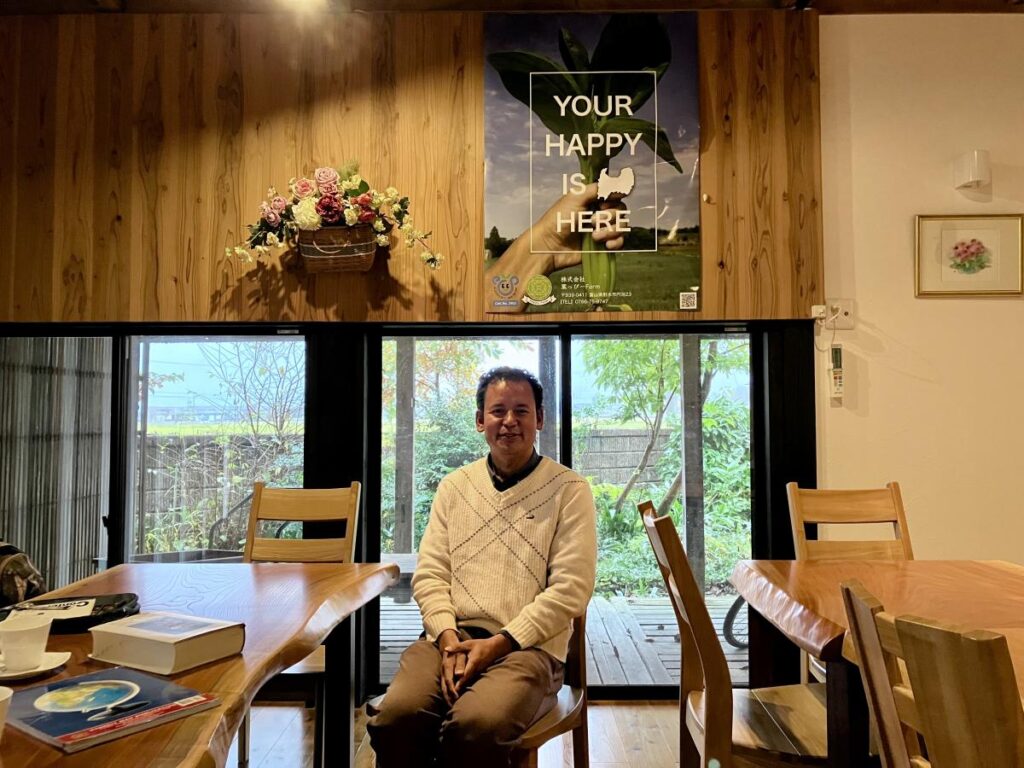
Dhalma Lama at Happy Farm in Toyama
12.05.2026
Mountain Life & Culture

Welcome to the World of Tateyama Faith!

Episode 9: Devotion to “Onbasama”

Hello everyone,
I am Takano, Director of the Tateyama Museum in Toyama Prefecture.

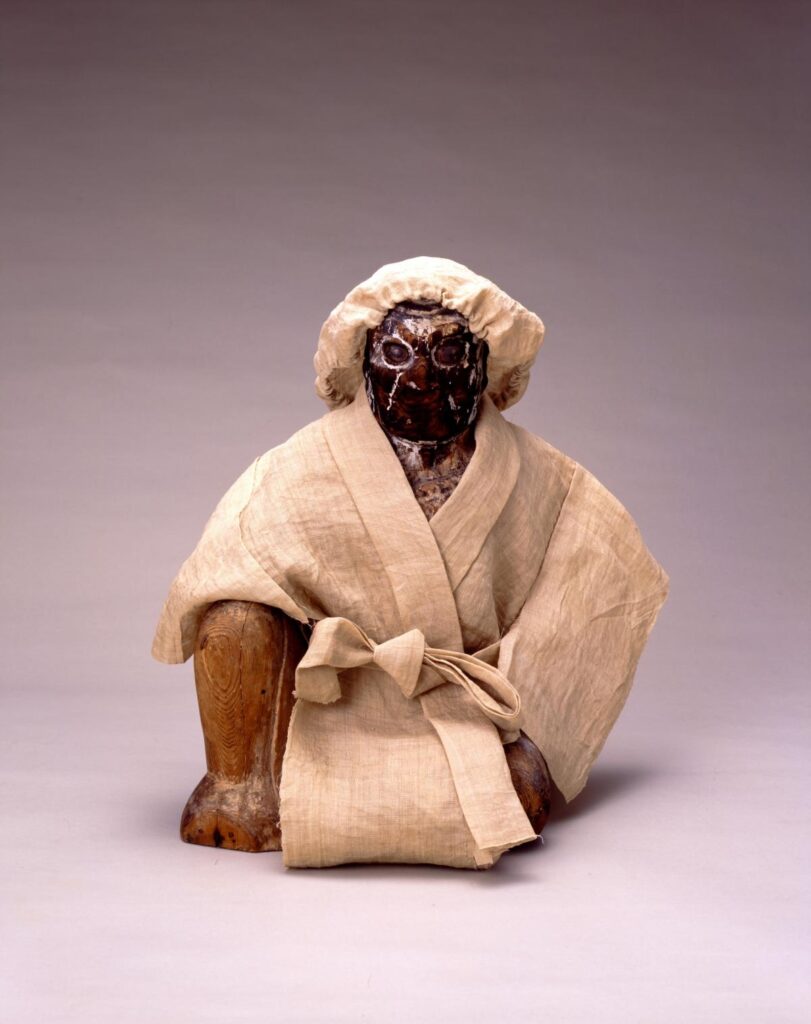
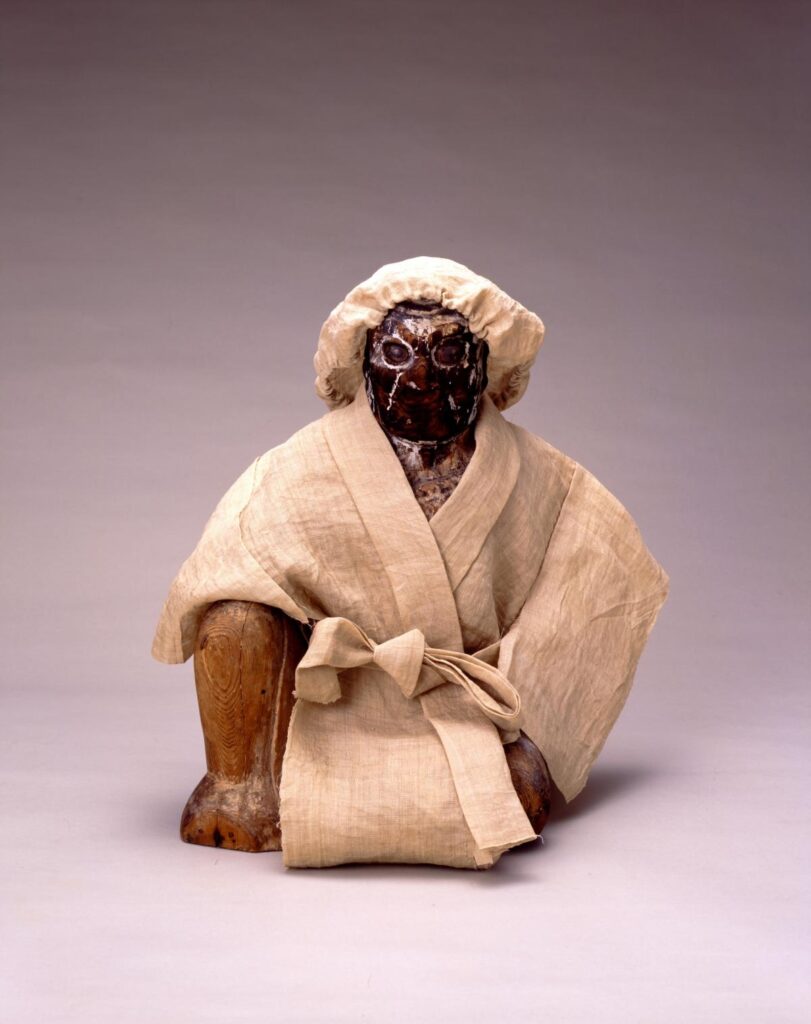
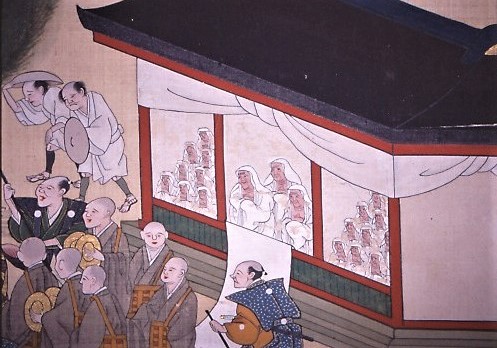
In Ashikuraji at the foot of Mt. Tateyama, a statue of a mountain deity known as Uba-son is enshrined.
Locally, it is affectionately called “Onbasama”, and even today it is deeply revered, especially by women in the community.
In this episode, I will introduce Onbasama and the faith surrounding it.

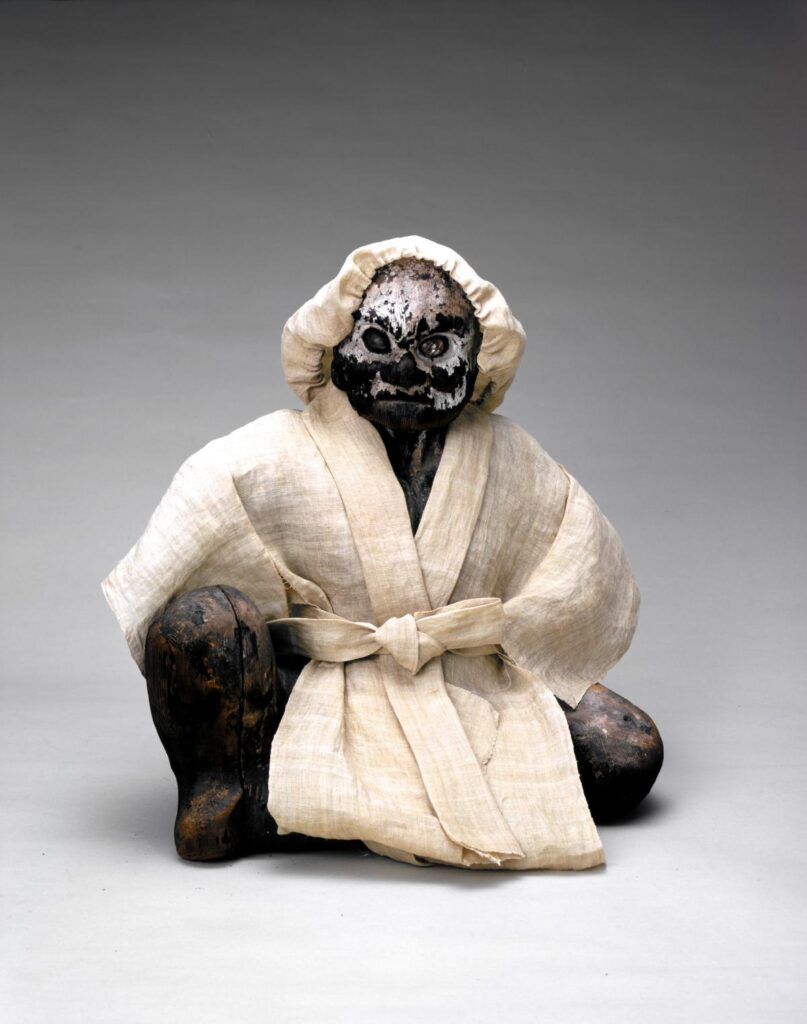
Statue of Uba-son
Bearing an ink inscription dated 1375 (Eiwa 1); Designated Cultural Property of Toyama Prefecture; housed in Enma Hall, Ashikuraji
Statue of Uba-son
Bearing an ink inscription dated 1375 (Eiwa 1); Designated Cultural Property of Toyama Prefecture; housed in Enma Hall, Ashikuraji

(1) Who is Uba-son of Ashikuraji?

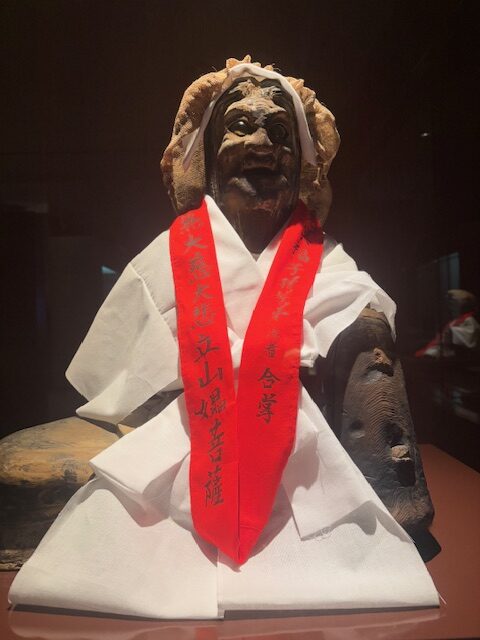
Uba-son is depicted as an elderly woman, with sagging breasts, seated with one knee raised.
Some representations resemble Datsueba, the old woman said to sit by the banks of the Sanzu River in Buddhist cosmology.

It is said that in the past, the Uba Hall housed three principal statues, along with 66 additional figures—matching the number of provinces in Japan during the Edo period. However, in the early Meiji era, the hall was destroyed, and many statues were lost. Today, 24 statues remain, preserved in Enma Hall and the Tateyama Museum.

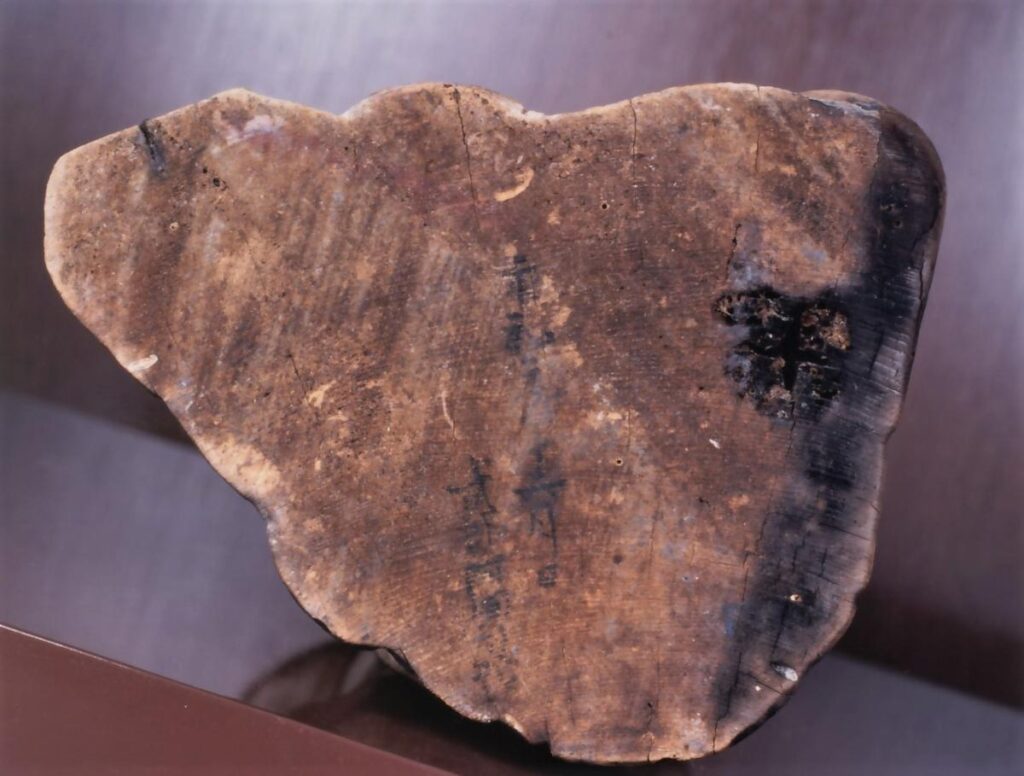
The exact origin of Uba-son worship is unknown, but the oldest surviving statue bears an inscription dated 1375 (Eiwa 1), indicating that the cult existed at least as early as the Nanbokuchō period.

In the Edo-period encyclopedia Wakan Sansai Zue, Uba-son is described as the mother of the founder of Mt. Tateyama, Jikō Shōnin (also known as Saeki no Ariyori or Ariwaka), and is sometimes regarded as the mother of Tateyama Gongen—suggesting her role as a mother deity.

According to the “Origin Story of the Uba Hall” from Nikkōbō in Ashikuraji, she is the mother of all beings, said to have flown down holding grains in her left hand and hemp seeds in her right—symbolizing the blessings of food and clothing.Thus, Uba-son embodies multiple layers of meaning:

• A water deity worshipped by agricultural communities 
• A mountain deity revered by hunters 
• A Buddhist figure, later interpreted as an incarnation of Dainichi Nyorai 

Scholars suggest that over time, the original “Uba deity” evolved into “Uba-son” under Buddhist influence.

Ink inscription dated 1375 (Eiwa 1) visible on the base of the statue
Designated Cultural Property of Toyama Prefecture; preserved at Enma Hall, Ashikuraji

(2) What Was the Uba Hall Like?

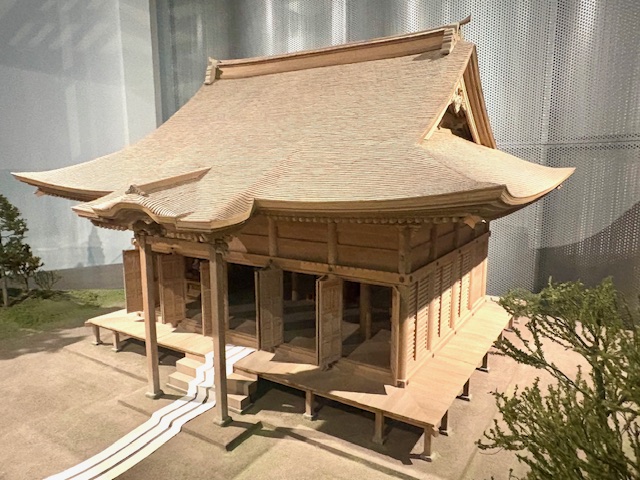
During the Edo period, the Uba Hall stood on the left bank of the Uba Valley River (now Ubadō River).Architectural drawings by Yamagami Zen’emon, an official carpenter of the Kaga Domain, show that the hall measured approximately:

• 9 meters (five bays) wide 
• 7 meters (four bays) deep 

It was built in the irimoya (hip-and-gable) style.

The hall was destroyed by fire in the Tenmei era (1780s). While the three principal statues survived, many accompanying figures and decorations were lost.
As an officially funded construction of the Kaga Domain, it was rebuilt in 1787.

Numerous fundraising records (kanjin-ki) and origin texts (engi) from this period suggest that active donation campaigns supported its reconstruction.

Today, the site is marked by a foundation platform constructed in the 1960s, with a stone water basin donated in 1844 placed in front.
Detail of the Uba Hall in the Tateyama Mandala (Daisenbō A version)
Reconstructed model of the Uba Hall, displayed as a diorama at the Tateyama Museum

(3) Devotion to Onbasama

Faith in Onbasama extended even to feudal lords.

• In 1466, Jinbo Naganobu, deputy governor of Etchū Province, donated tax revenues
• In the Tenshō era, Sassa Narimasa made offerings twice
• Maeda Toshiie of the Kaga Domain donated land equivalent to 100 koku

One of the most important rituals at the Uba Hall is the “Omeshikae” (Changing of the Robes).

This annual ceremony involved:

• Seven women aged 61 or older
• Ritual purification beginning on January 8
• Spinning hemp, weaving cloth, and completing garments by February 5
• Offering prayers on February 9 before dressing the deity

By renewing the garments at the arrival of spring, the ritual symbolized:

• Renewal of the deity’s vitality
• Gratitude toward the mountains

Today, the ritual continues on March 13, with cotton cloth garments prepared by local women’s groups such as the Ashikuraji Women’s Association.

This living tradition offers a rare glimpse into the continuity of Tateyama faith.

In March 2024, this ritual was officially designated as a national intangible folk cultural property requiring documentation and preservation, recognizing its importance for future generations.

Statue of Uba-son dressed in ceremonial robes
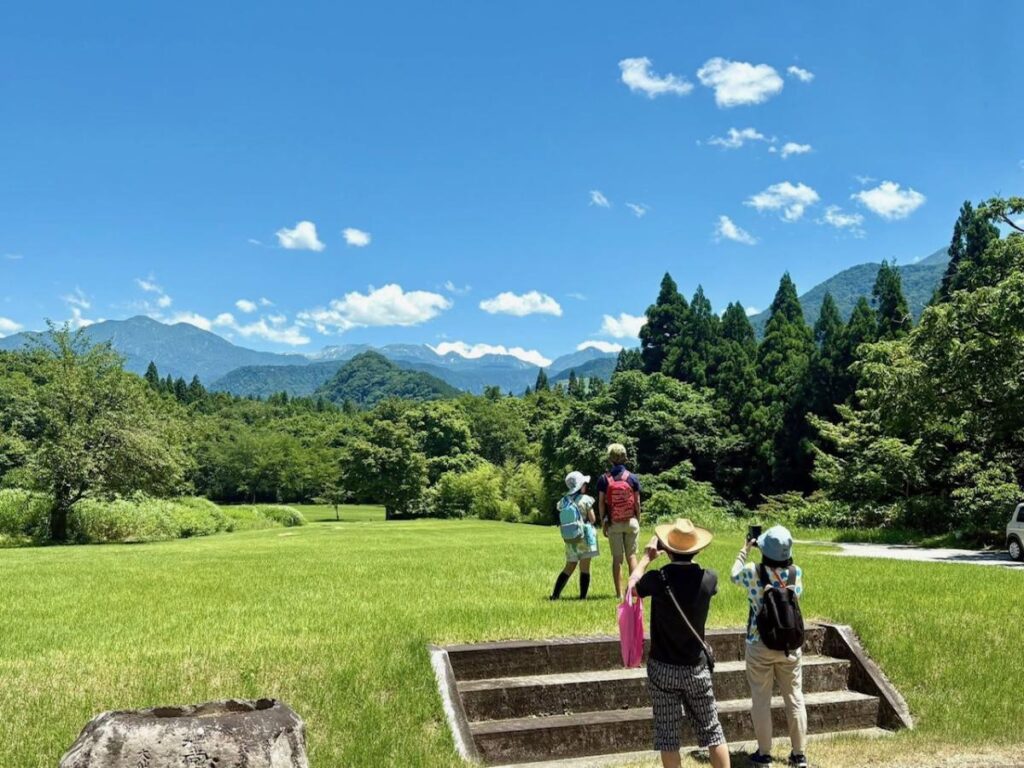
View of Mt. Tateyama from the foundation site of the former Uba Hall

Next time, we will introduce the Nunobashi Kanjo-e, a Buddhist rite for the salvation of women practiced in Ashikuraji.
We hope you will continue to follow this series.

For Further Reading

If you would like to learn more about Onbasama, we recommend:

• The Earth Mother of Tateyama: Onbasama 
• Enshrining Uba-son 

For purchase inquiries, please contact the Tateyama Museum.

30.04.2026
Mountain Life & Culture

A City That Drinks Its Groundwater

Ōno’s 50-Year Journey to Protect Its Water Cycle

Episode 3 – Citizens and Rules
Governing Groundwater as a Shared Civic Resource

In Ono City, groundwater has not been treated merely as a resource to be managed by administrative authority, but as a shared civic asset sustained through collective responsibility.

As early as the 1970s, the city began establishing rules to ensure that groundwater would be protected by the community as a whole.
Regulations requiring prior notification for groundwater extraction and restricting the use of groundwater for snow-melting during winter were introduced—not simply as technical controls, but as social agreements embedded in daily life.A distinctive feature of Ono’s approach lies in citizen participation in groundwater monitoring.
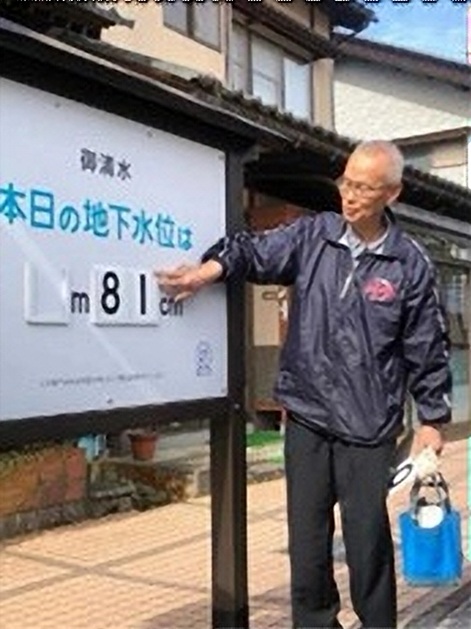
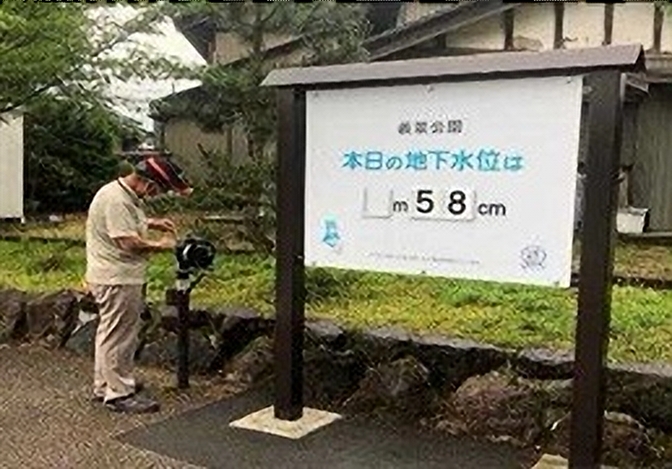
Since 1976, local residents have continuously measured groundwater levels at observation wells distributed across the city. These measurements, conducted daily at multiple locations, are publicly displayed—transforming environmental monitoring into a shared civic practice.

Daily public display of groundwater monitoring data
Citizen-led groundwater monitoring has been continuously conducted since 1976 (16 wells)
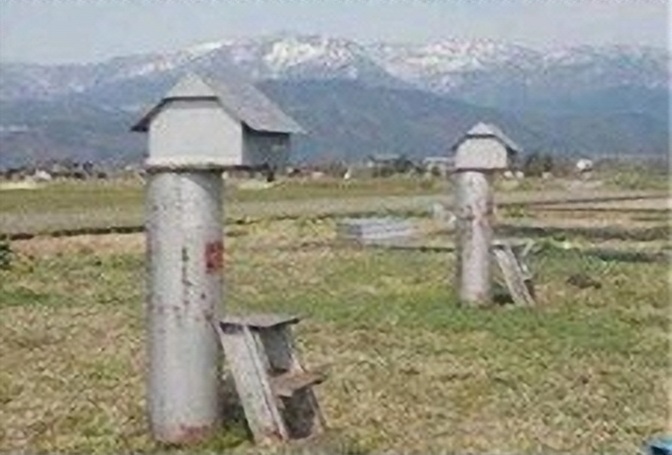
Automated monitoring (18 wells), with measurements taken every hour

Agricultural land has also played a vital role in sustaining groundwater.
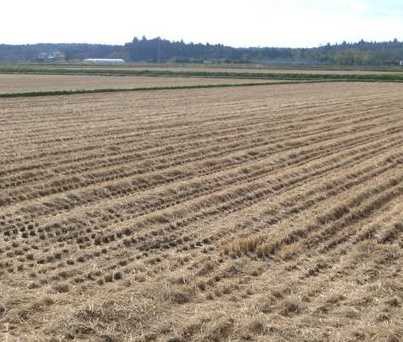
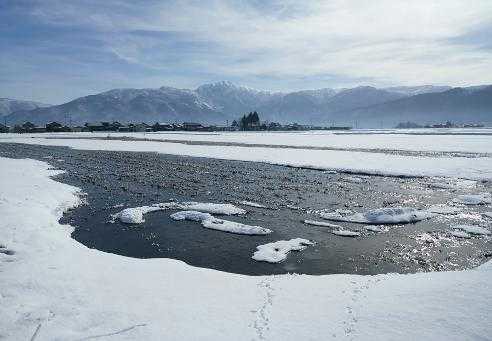
Since 1978, the Winter Paddy Field Flooding Project has utilized rice paddies during the non-growing season to retain water and promote infiltration into underground aquifers.
In this way, farmland functions not only as a site of food production but also as infrastructure for groundwater recharge.Recognizing that groundwater conservation extends beyond hydrology, Ono City has sought to preserve the cultural practices associated with spring water.

Farmland leased from local residents
From October to February, rice paddies are flooded to allow water to infiltrate into the ground

This perspective led to the formulation of the Echizen Ono Spring Water Culture Revitalization Plan in 2011, which integrates environmental protection with the transmission of water-related cultural heritage to future generations.

Institutional measures have also been taken to safeguard the forested headwaters that support the groundwater system.
In 2012, in response to emerging concerns over land acquisitions by external capital, the city enacted the Ono City Forest and Water Conservation Ordinance
This ordinance requires prior notification not only for land transactions but also for the construction of structures within forested areas—an early local policy reflecting public attachment to the forests that sustain the city’s water sources.Citizen engagement has further contributed to spring restoration efforts.
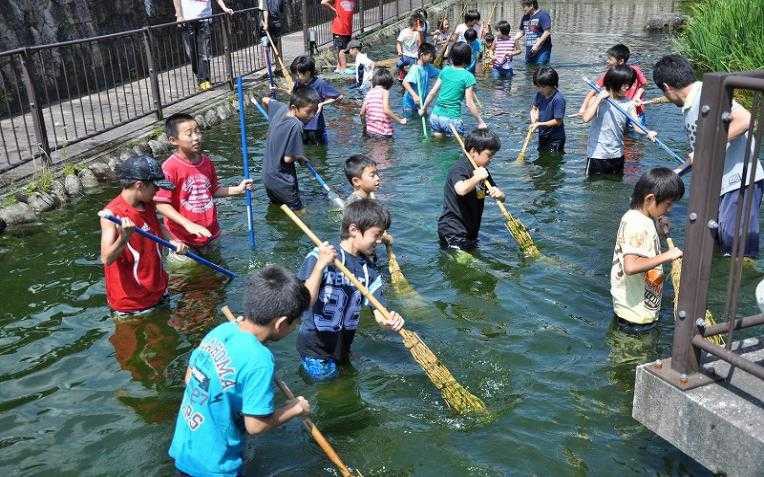
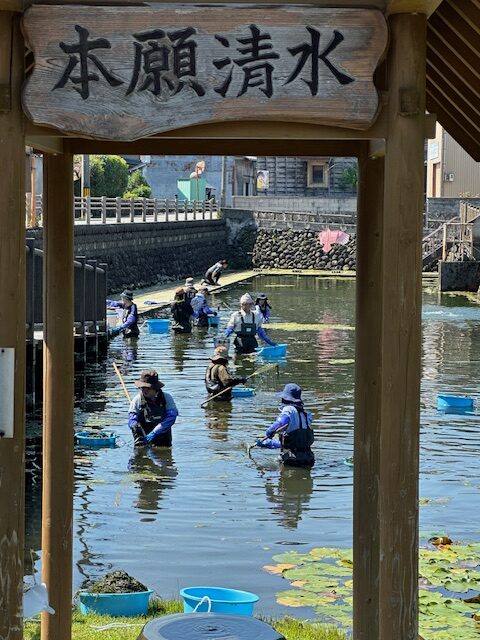
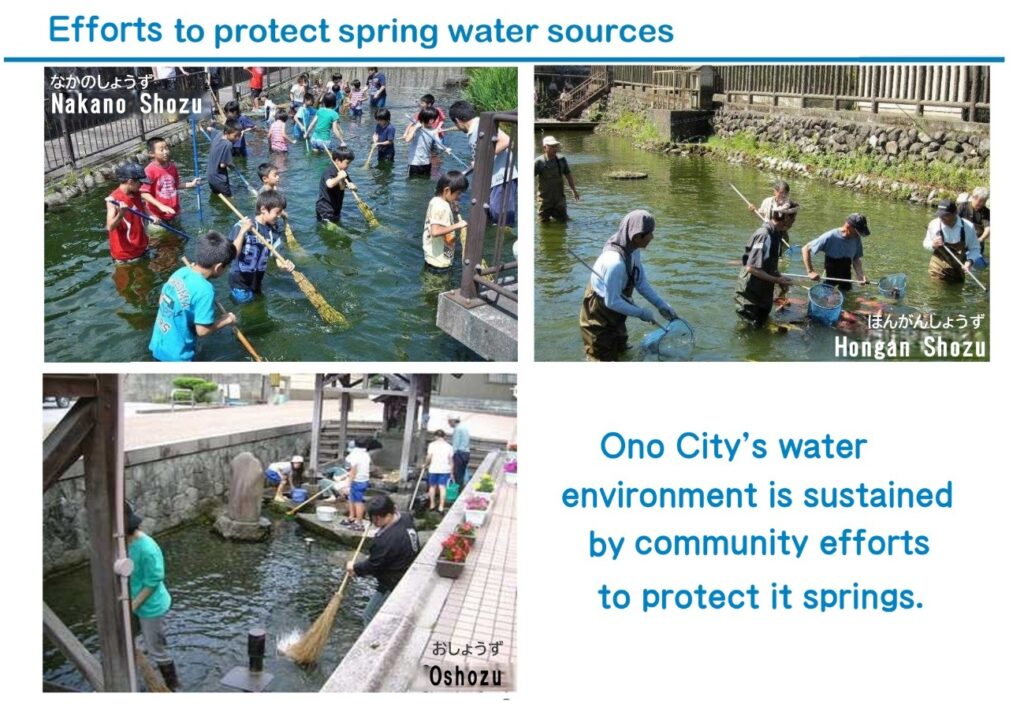
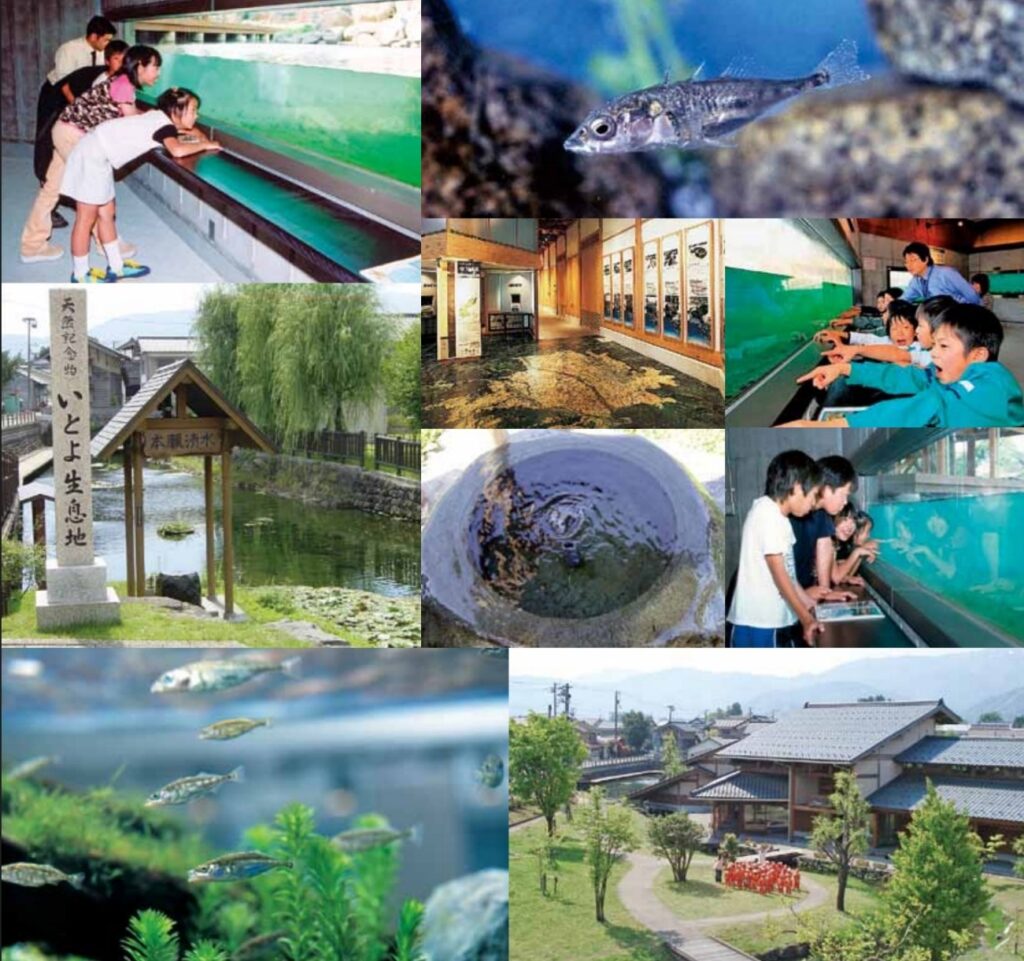
At Honganshimizu, the southernmost habitat of the landlocked Itoyo (three-spined stickleback) and designated National Natural Monument, community-led cleaning and rehabilitation activities began following severe spring depletion in the late 1970s.
Through sustained collaboration between schoolchildren and local residents, some of these spring water sites have since been successfully revived.

Hongan Shozu: Community-led cleaning activities

Taken together, these initiatives illustrate a model in which groundwater is not governed solely through regulation, but through the combined efforts of institutions, agricultural practices, and civic participation.

23.04.2026
Mountain Life & Culture

Mountains Without Borders

Foreign-born Leaders Revitalizing Japan’s Rural Mountain Communities

Episode 4:  Building Connections Through Cultural Exchange

Festivals as Platforms for Mutual Understanding

The primary objective behind establishing the Toyama–Nepal Cultural Exchange Association (hereafter referred to as the Association) was to foster mutual understanding between local residents and the growing Nepalese community in the region through direct interaction.

Unlike major metropolitan areas, rural prefectures such as Toyama had, until recently, relatively few opportunities for everyday contact with foreign residents. While international tourists occasionally visited the area, the number of long-term foreign residents remained limited. As the Nepalese population has increased rapidly in recent years, this demographic shift inevitably generated a degree of uncertainty and, at times, friction within the local community.

Dhalma believed that, as someone positioned between these two groups, it was essential to create opportunities for meaningful engagement in order to build trust and understanding.

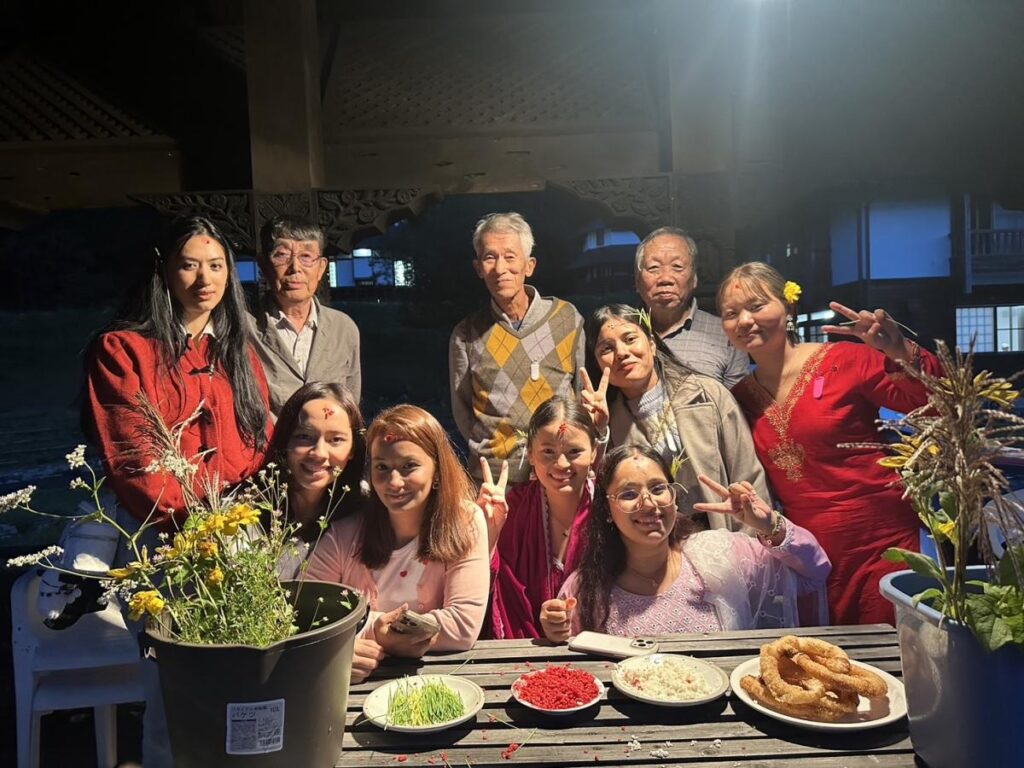
As a first step, the Association began organizing events that introduced Nepalese culture to local communities across the prefecture. Among these initiatives, the annual celebration of Dashain has become particularly significant.

Originally a Hindu festival held in autumn, Dashain is now the largest national celebration in Nepal. Lasting nearly two weeks, it provides an opportunity for family members and relatives who normally live apart to gather and celebrate together.

Since 2016, the Association has hosted a Dashain event each year during a weekend in late October. In 2024, approximately 80 Nepalese residents living in Toyama and neighboring areas participated, joined by around 30 Japanese residents. The two-day event was held at Meditation Village in Nanto City, located in the southern part of the prefecture.

Toyama is one of Japan’s most mountainous regions, and several municipalities have established sister-city relationships with towns in Nepal. Nanto City is among them, which is why it was selected as the venue.

However, the site is located far from the population centers in the northern part of the prefecture, such as Toyama City and Takaoka City, where many Nepalese residents live. Public transportation options are limited, and many Nepalese residents do not own private vehicles.

To address this, Dhalma coordinated with local acquaintances who owned larger vehicles to transport participants from various parts of the prefecture to the venue.

“That journey itself often becomes the starting point for exchange,” he explains. “Not everyone who offers a ride can speak English, and many Nepalese participants are not yet fluent in Japanese. But during the two-hour drive, people often become surprisingly close.”

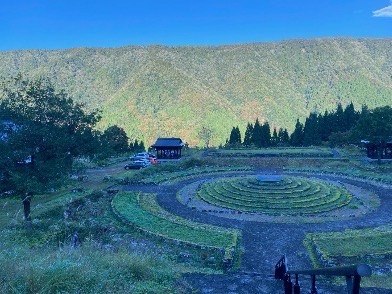
Distant view of Meditation Village in Toga, Nanto City

Upon arrival, participants gathered around cooking equipment, food ingredients, and propane gas cylinders transported by Japanese volunteers using small trucks. Together, Nepalese and Japanese participants began preparing traditional Nepalese dishes for dinner.Japanese, English, and Nepali languages were heard throughout the venue, creating a warm and collaborative atmosphere.

Preparing Nepalese cuisine together

“We don’t insist on perfect authenticity,” Dhalma says with a smile. “Even if the dishes don’t turn out exactly right, it doesn’t matter. The important thing is that we cook together, eat together, and talk together.”

Before attending the event, I had assumed that most Japanese participants were either familiar with Nepal or had previously visited the country. While some had indeed spent time in Nepal as members of the Japan Overseas Cooperation Volunteers and spoke Nepali fluently, the majority of Japanese participants admitted that they had little prior knowledge of Nepal before being invited by Dhalma.

“At first, I joined simply because Dhalma asked me to,” one participant said. “I thought it might help keep my mind active.” However, after participating once, many returned year after year.

For Nepalese participants as well, the event provided an opportunity to discover the presence of fellow Nepalese residents living nearby. Many had not realized how many Nepalese people were residing in the region until they attended.

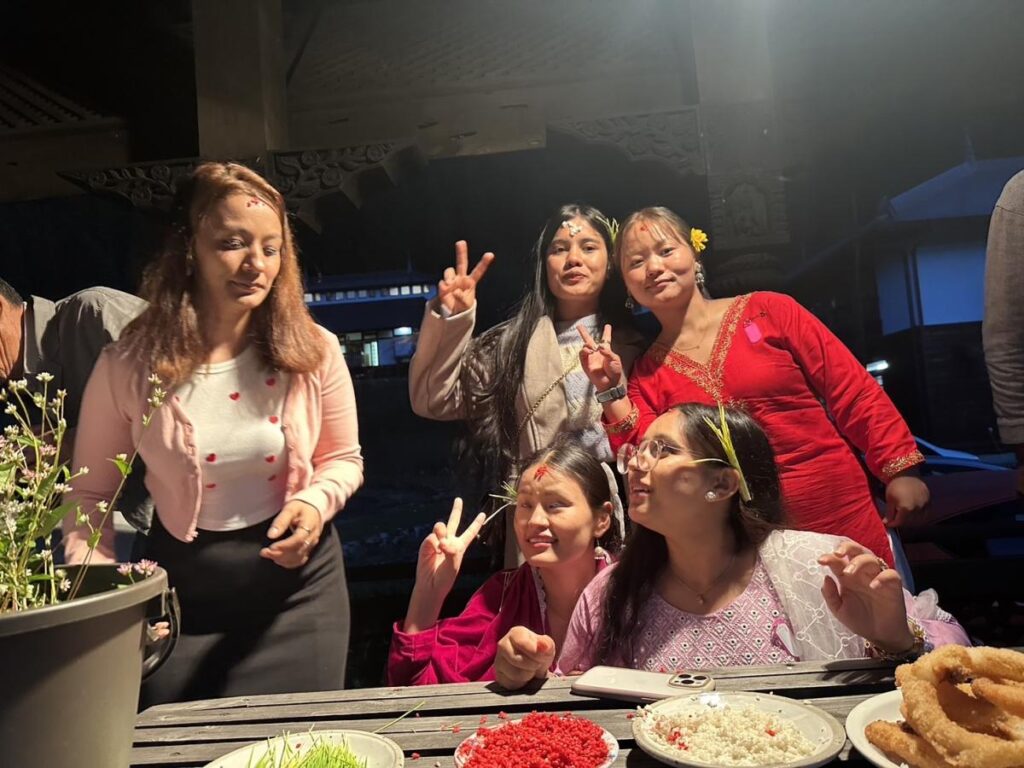
Nepalese participants in traditional attire

Daily life for many Nepalese residents in Toyama typically consists of commuting between their apartments, workplaces, and Japanese language schools, with limited opportunities for social interaction beyond occasional shopping trips.

For them, Dashain has become a rare occasion to speak Nepali freely, share meals, sing traditional songs, and dance together late into the night.

Unlike in Nepal, where differences in regional origin, ethnicity, or caste may shape social relations, here participants reaffirm their shared identity simply as Nepalese people.

New friendships often emerge through these gatherings, not only between Nepalese and Japanese participants, but also among Nepalese residents themselves.

“That wasn’t something I initially anticipated,” Dhalma says with a laugh. “But as the event has grown, it’s becoming increasingly difficult for me to manage everything alone. The Nepalese population here will likely continue to increase. Still, I’m sure we’ll find a way.”Perhaps that optimism is one of Dhalma’s defining strengths.

Related Topics

• Social Integration in Rural Mountain Communities

• Multicultural Community Building

• Cultural Exchange in Aging Societies

• Informal Networks for Local Cohesion

• Everyday Coexistence in Rural Japan

Learn More

This episode highlights how cultural exchange initiatives can foster social integration and trust-building between local residents and foreign-born community members in rural mountain regions.Related initiatives can be found in:

• Community-based Cultural Exchange Programs

• Multicultural Integration in Local Communities

• Participatory Social Inclusion Models

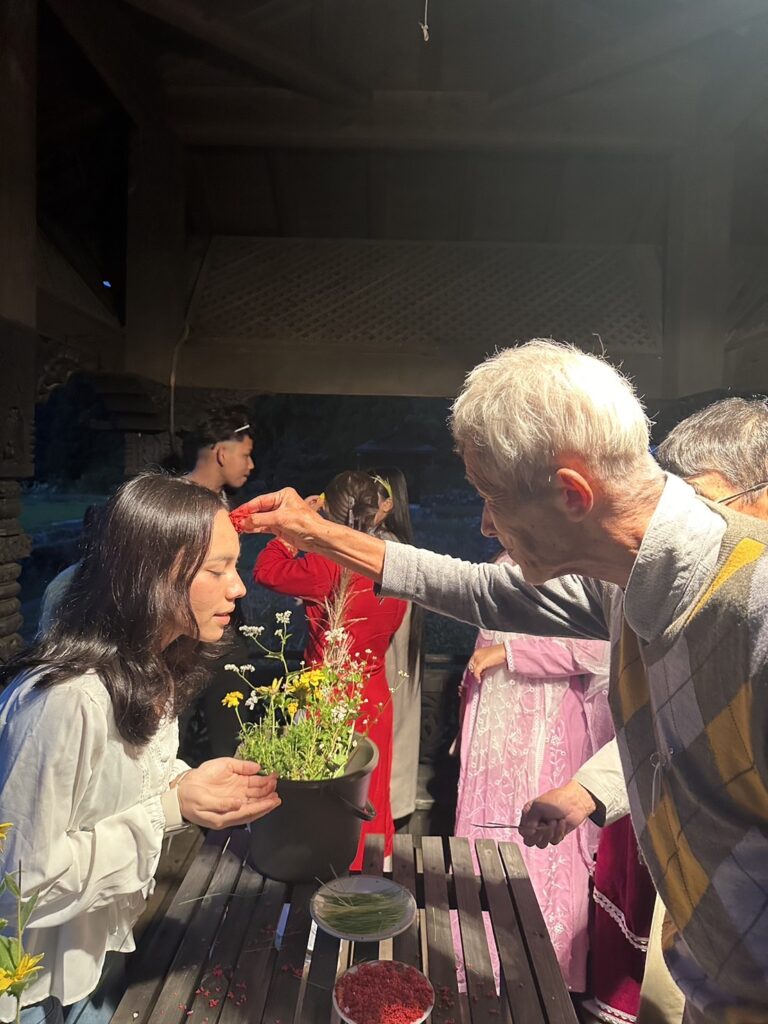
Applying tika, a red blessing mark, during Dashain
23.04.2026
Natural History

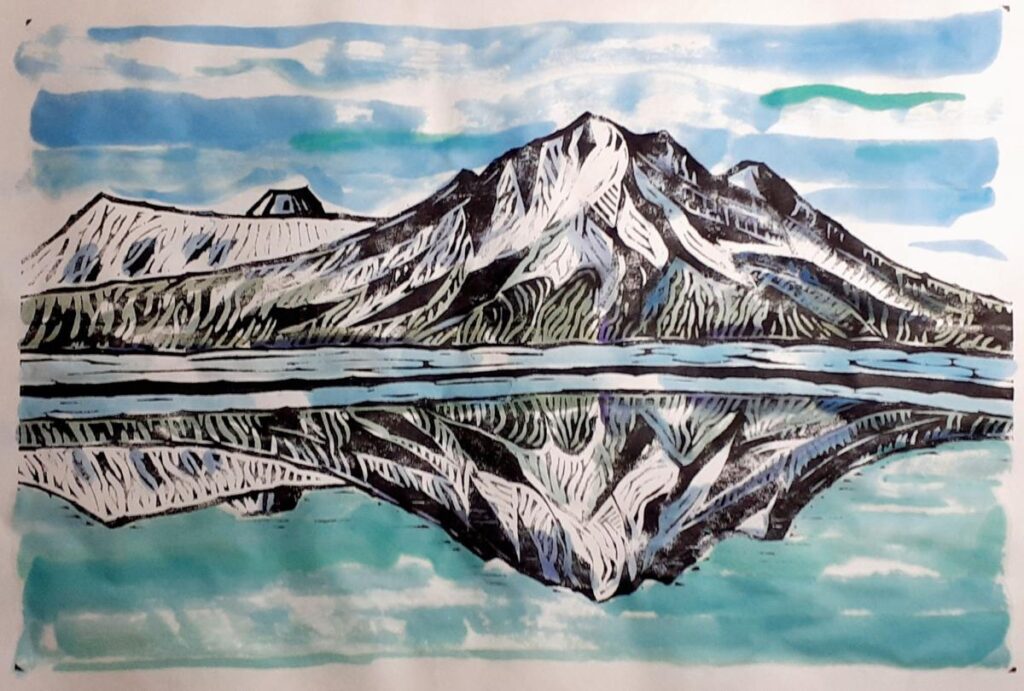
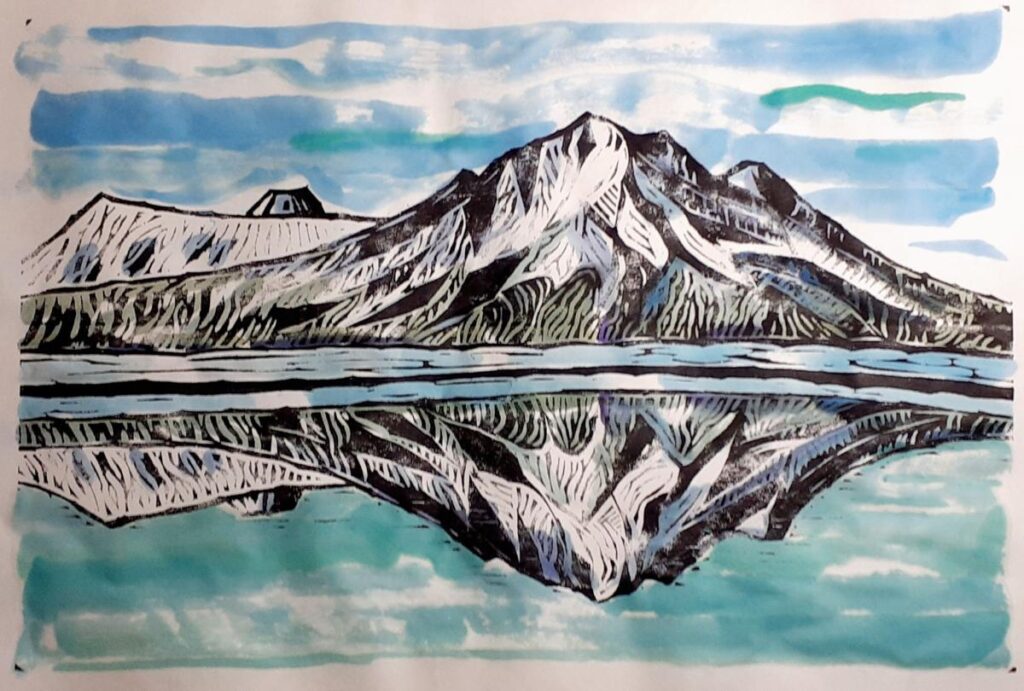
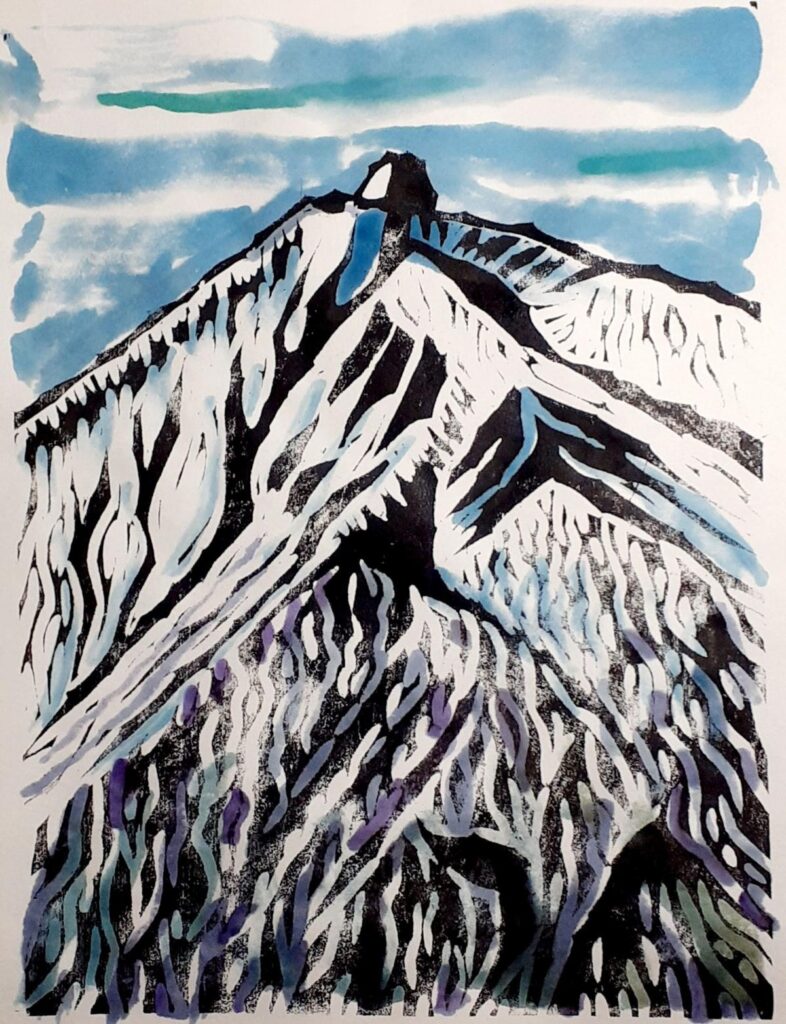
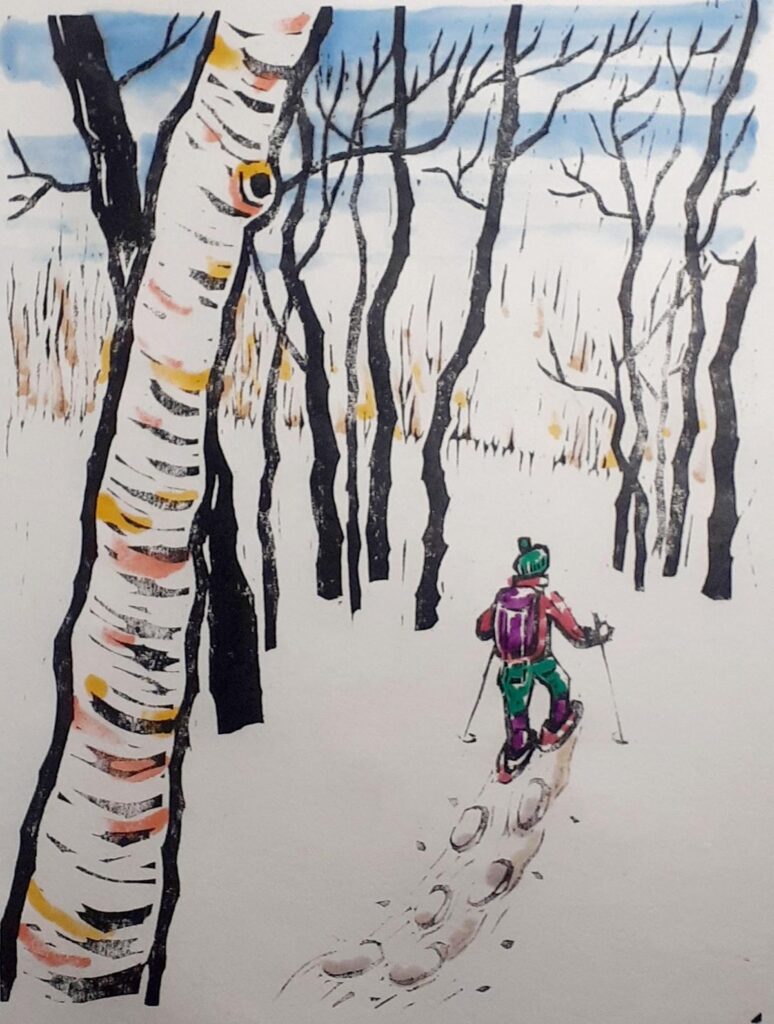
Mountains in Woodblock Prints: The World of Tatsuya Nitta

Part 3 – Inside the Process
Inside the Process of Woodblock Printing

We are pleased to introduce the world of woodblock prints by Tatsuya Nitta, an artist based in Hokkaido.

Nitta spends his days among the mountains of Hokkaido—climbing, descending, and carving woodblock prints inspired by the landscapes around him.

In this third installment, we take a closer look at how he creates his woodblock prints.
Here, we follow him into the mountains, where he begins with sketching in the field.

Sketch

May 2, 2024

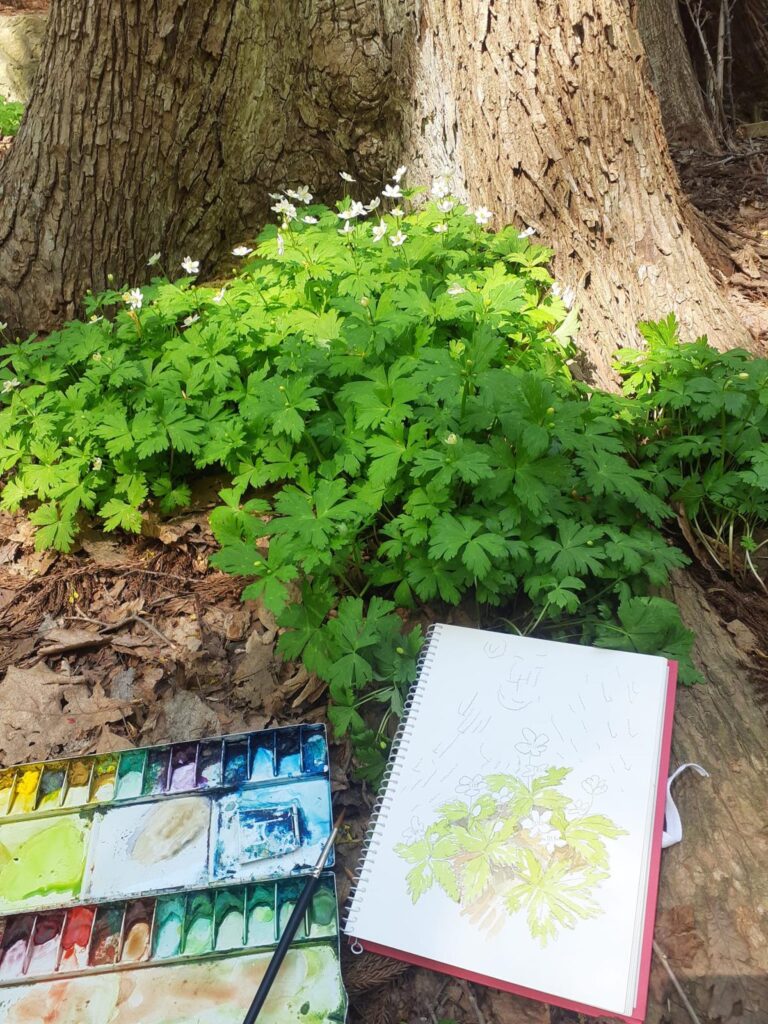
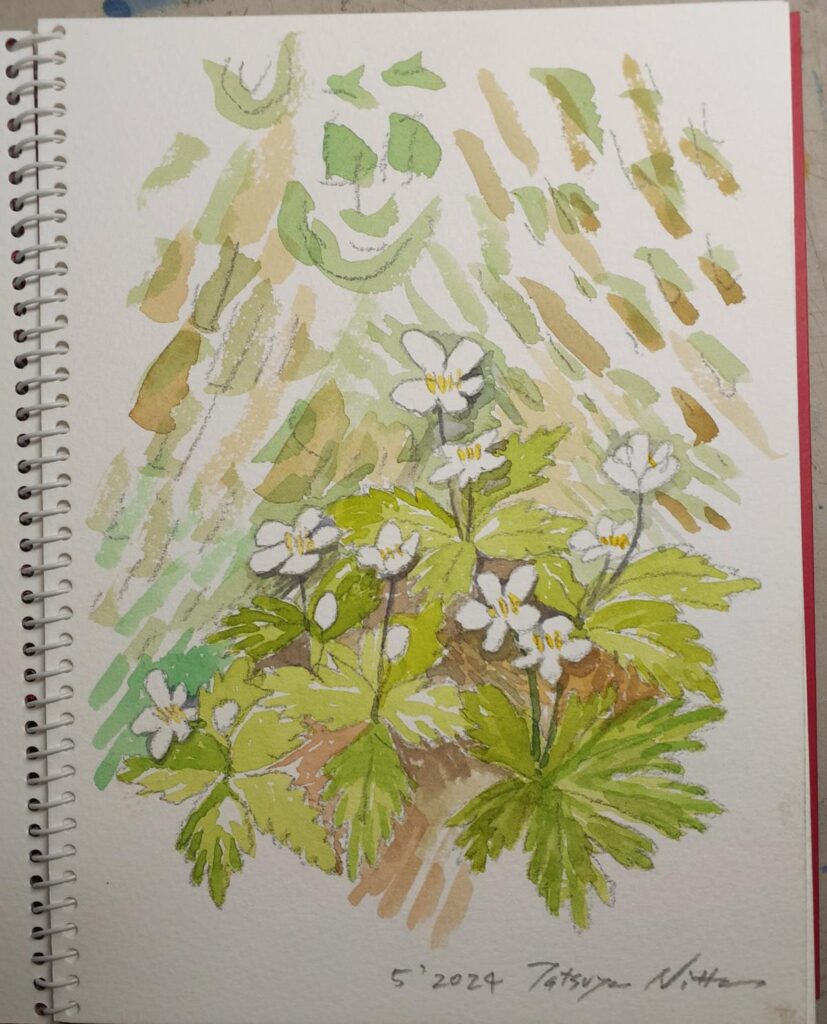
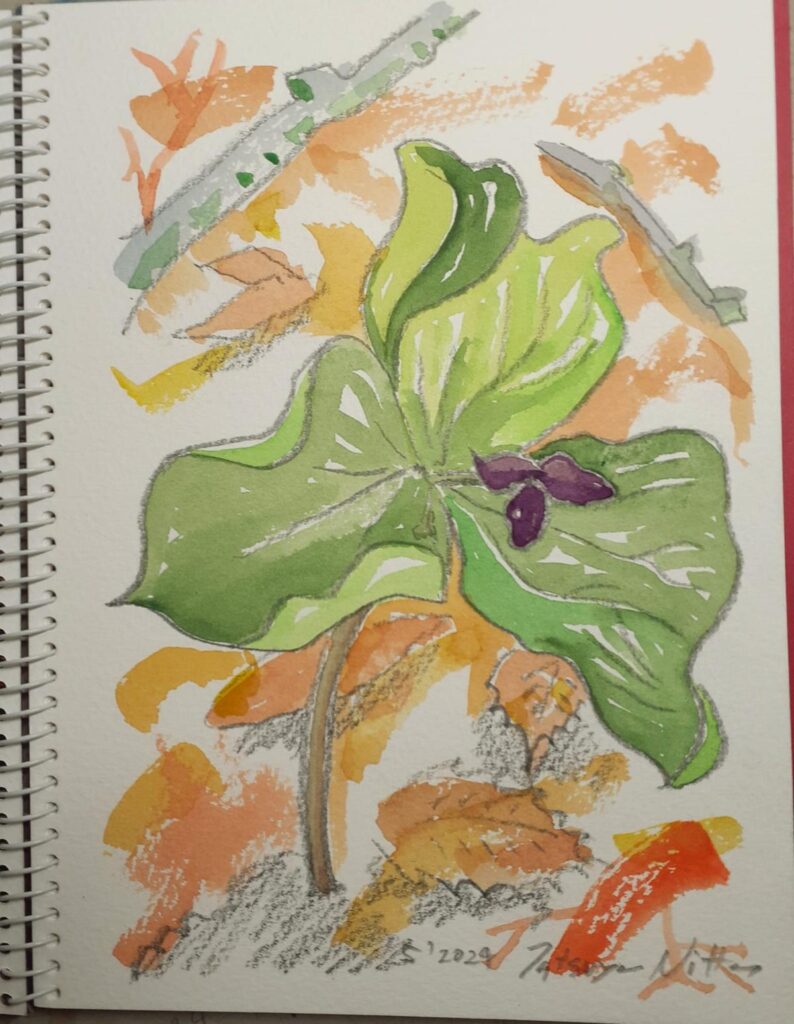
Drawn by the clear weather, I went out to sketch in the foothills near my home.

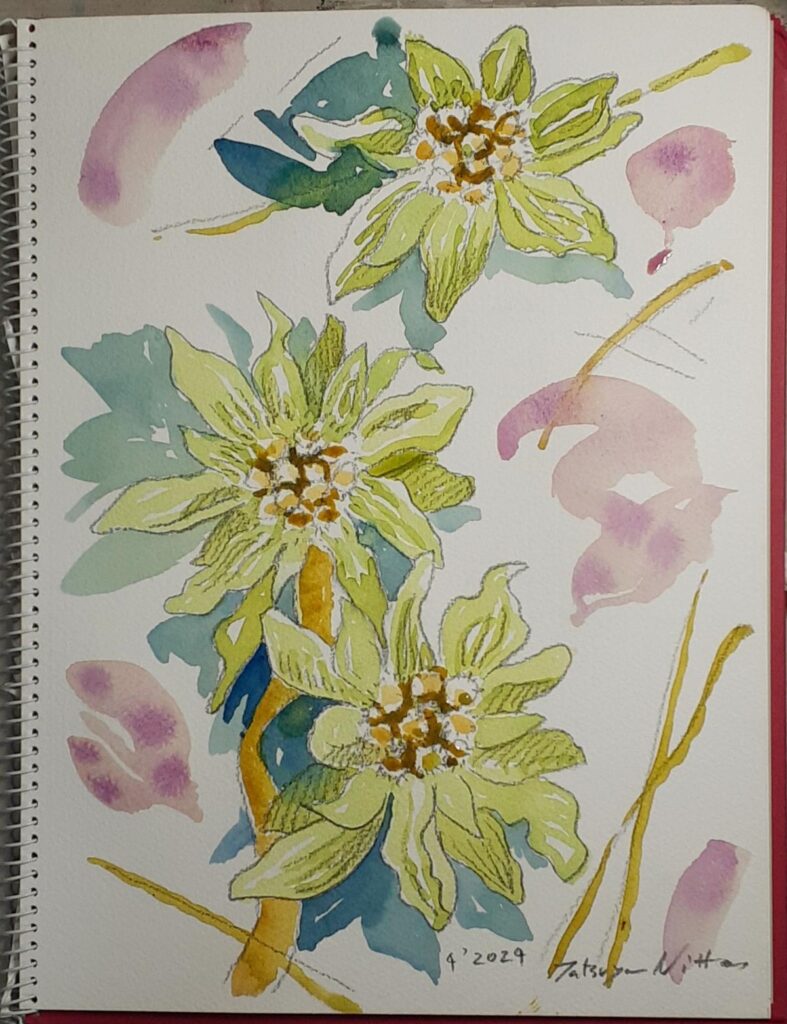
Nirinso (Anemone flaccida)
Enreisou (Trillium)

Pencil (6B), transparent watercolor

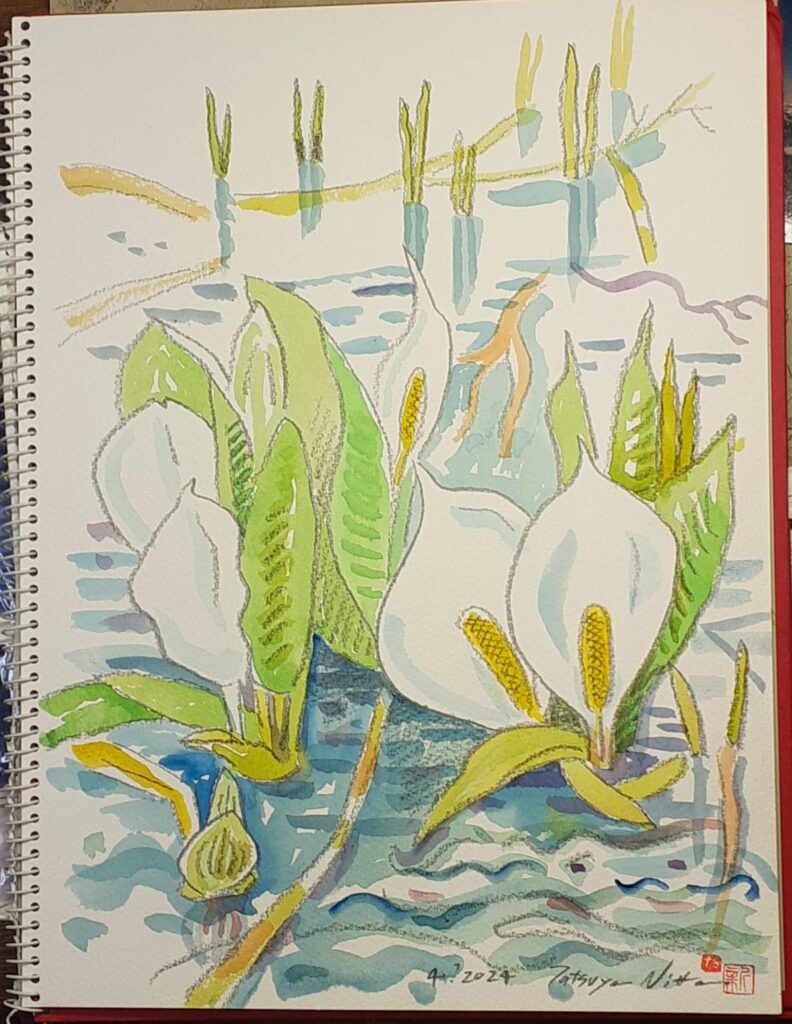
Skunk Cabbage

April 16, 2024

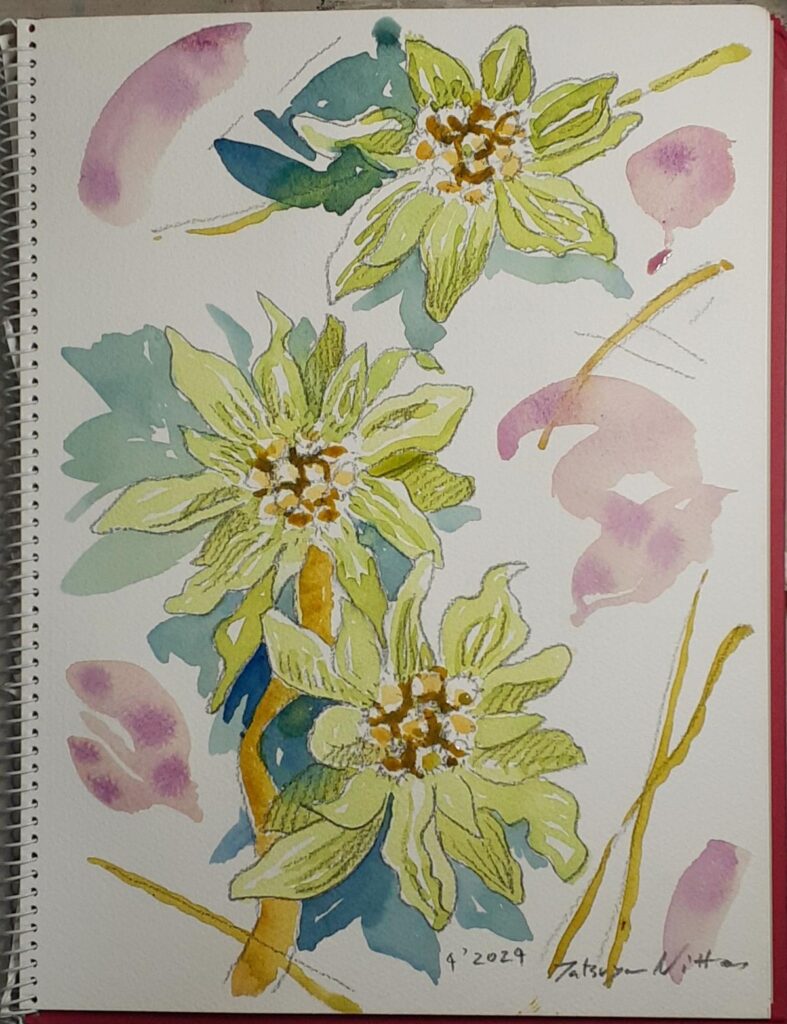
Spring flowers — a sketch

All drawn near my home

Pencil, oil-based conte, transparent watercolor, paper (Avalon)

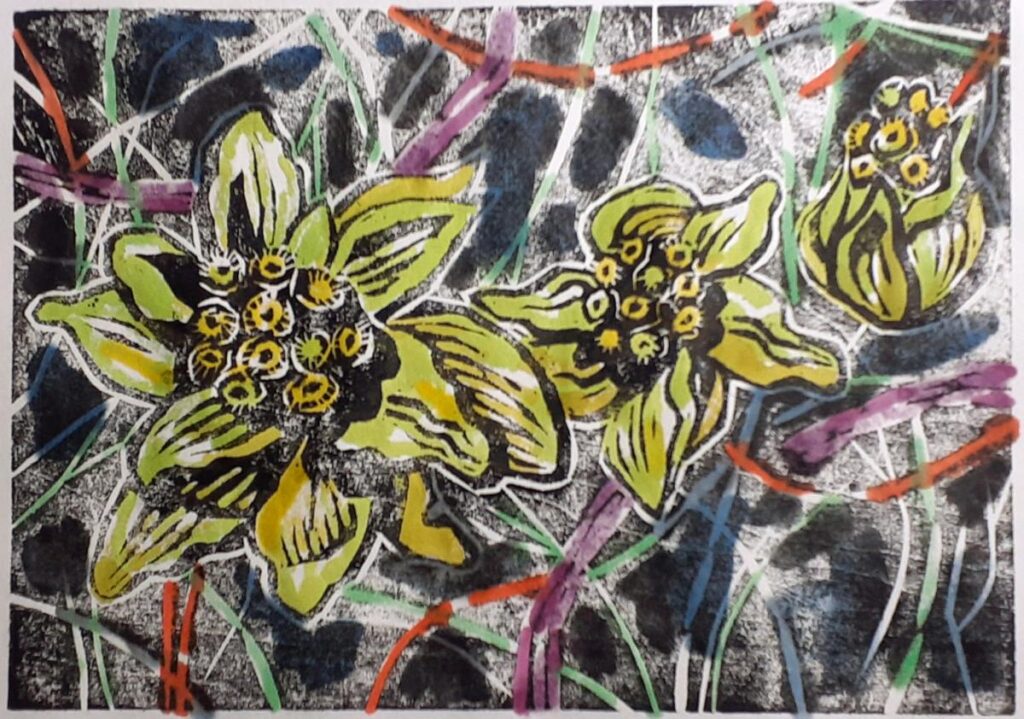
Butterbur Sprouts

April 11, 2024

Today’s featured work

Another butterbur piece—this time, a sketch.

Woodblock Print: Butterbur Sprouts  (23 × 14 cm)

April 5, 2024

Spring has arrived ?
It’s my favorite season.

The vitality of plants seems to shine even more.

Today’s featured work

About the Artist

Tatsuya Nitta was born on December 4, 1957, in Date City, Hokkaido, Japan.

After graduating from high school, he encountered an exhibition of Shiko Munakata in Sapporo. Deeply moved by the power of Munakata’s work, he immediately purchased carving tools and began creating woodblock prints.

In his early twenties, Nitta moved to Tokyo, where he spent about a decade. During this time, he also began mountaineering—an experience that would later become central to his artistic vision.

In 1990, after a period of profound personal difficulty, he returned to his hometown in Hokkaido. This marked a turning point in his life, leading him to reconsider both his creative path and his relationship with nature.

He later resumed his career in Sapporo, working in the field of architecture while continuing his artistic practice.

Around 1995, he held his first solo exhibition at Shūgakuso, a well-known outdoor specialty store in Hokkaido. Since then, he has continued to exhibit his work, holding a total of thirteen solo exhibitions by 2025.

His work reflects a deeply personal dialogue with mountains, shaped by both lived experience and inner transformation.

20.04.2026
Natural History

Mountains in Woodblock Prints: The World of Tatsuya Nitta

Works from the Snow-Free Season

We are pleased to introduce the world of woodblock prints by Tatsuya Nitta, an artist based in Hokkaido.

Nitta spends his days among the mountains of Hokkaido—climbing, descending, and carving woodblock prints inspired by the landscapes around him.Following the winter works presented in Part 1, this second installment features scenes from the snow-free season.

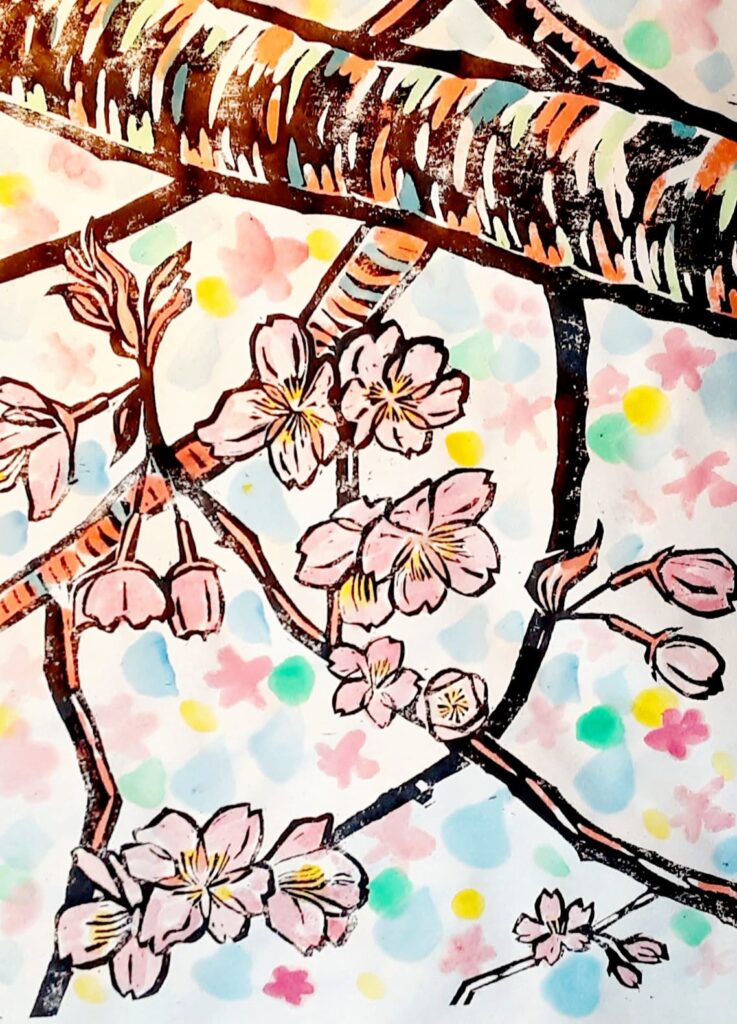
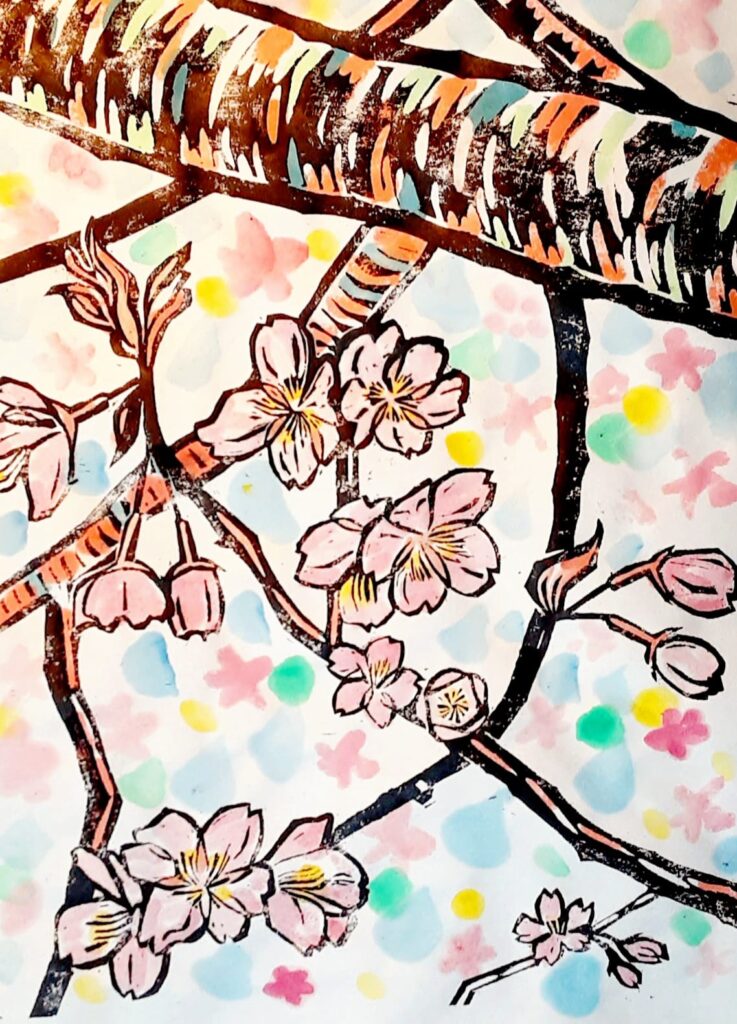
Ezoyamazakura (Hokkaido wild cherry)

A symbol of spring in Hokkaido

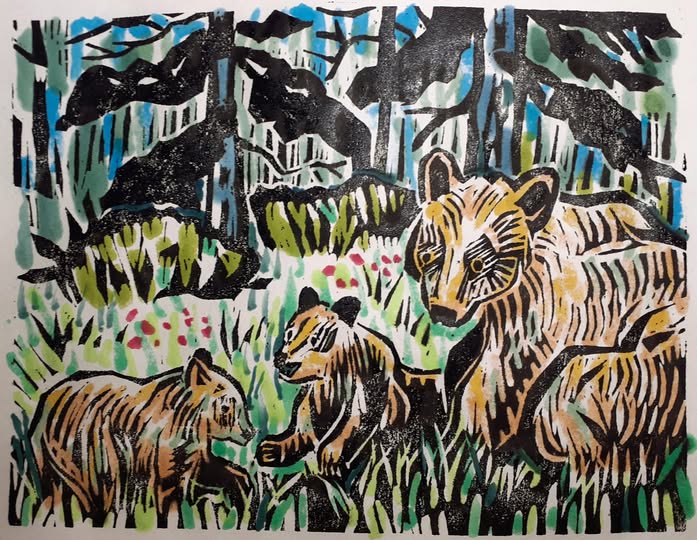
Brown Bear and Cubs — Close Together (24 × 17 cm)

Today’s featured work — August 20, 2024

I tried carving a mother brown bear and her cubs.

The way a parent looks after its young feels the same—whether human or bear.

Numanohara

August 1, 2024

This isn’t about a recent visit, but I have been to Numanohara three times.

I still have my reference materials, so I find myself drawing it almost every year.It has the wide, open, and expansive views that are so characteristic of the Daisetsuzan mountains.

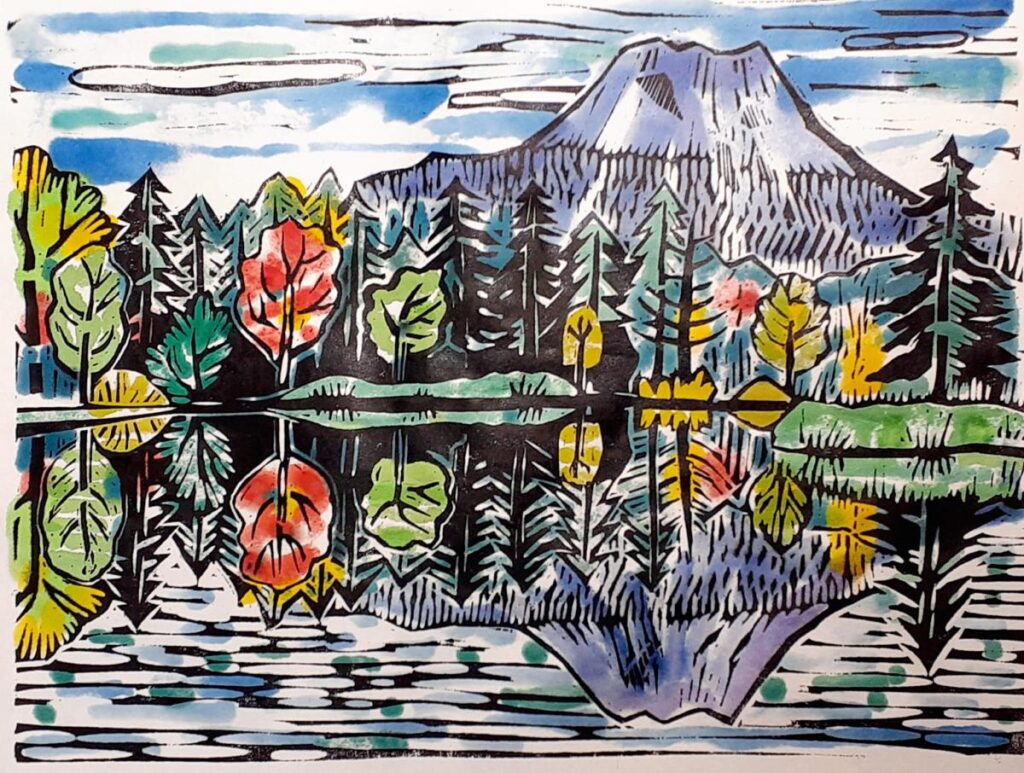
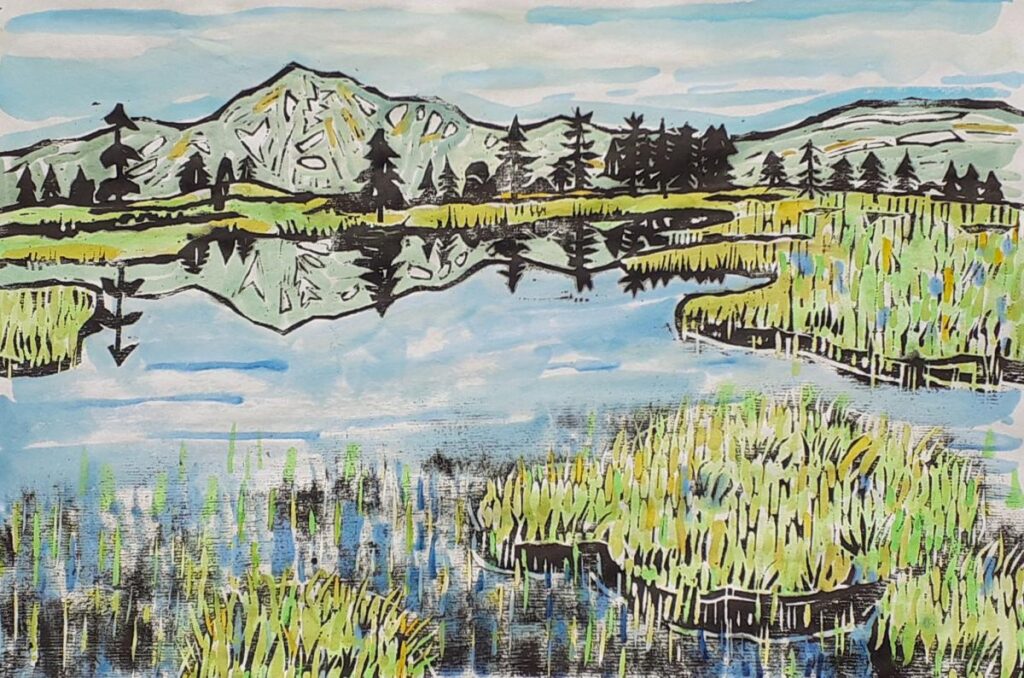
Sky over Mount Kurodake  (60 × 45 cm)

Today’s featured work — August 31, 2024

I tried carving Mount Kurodake as seen from the Hokai-dake side.It somehow feels a bit like an abstract painting.

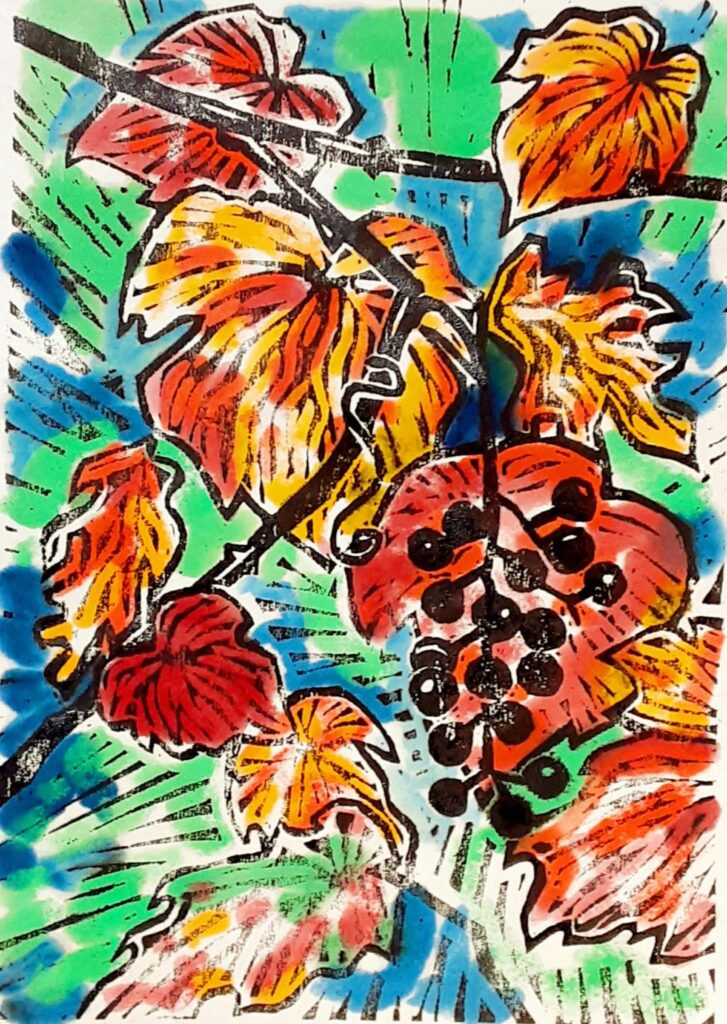
Wild Grapes

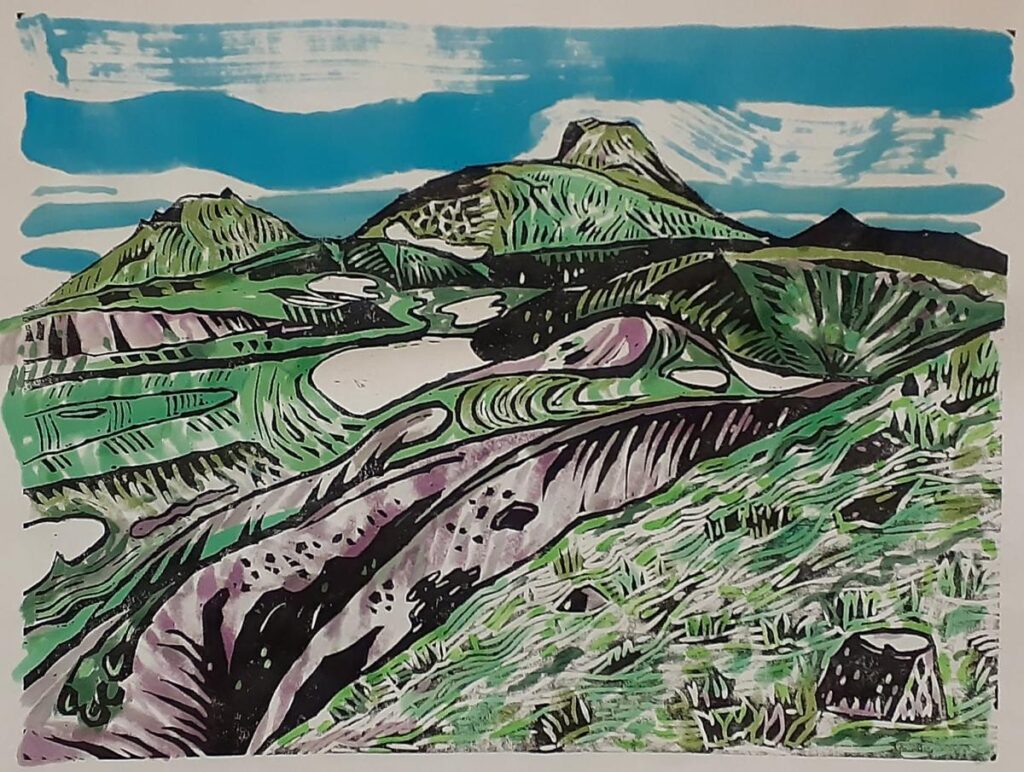
Mount Oakan – one of the Akan volcanic peaks in eastern Hokkaido

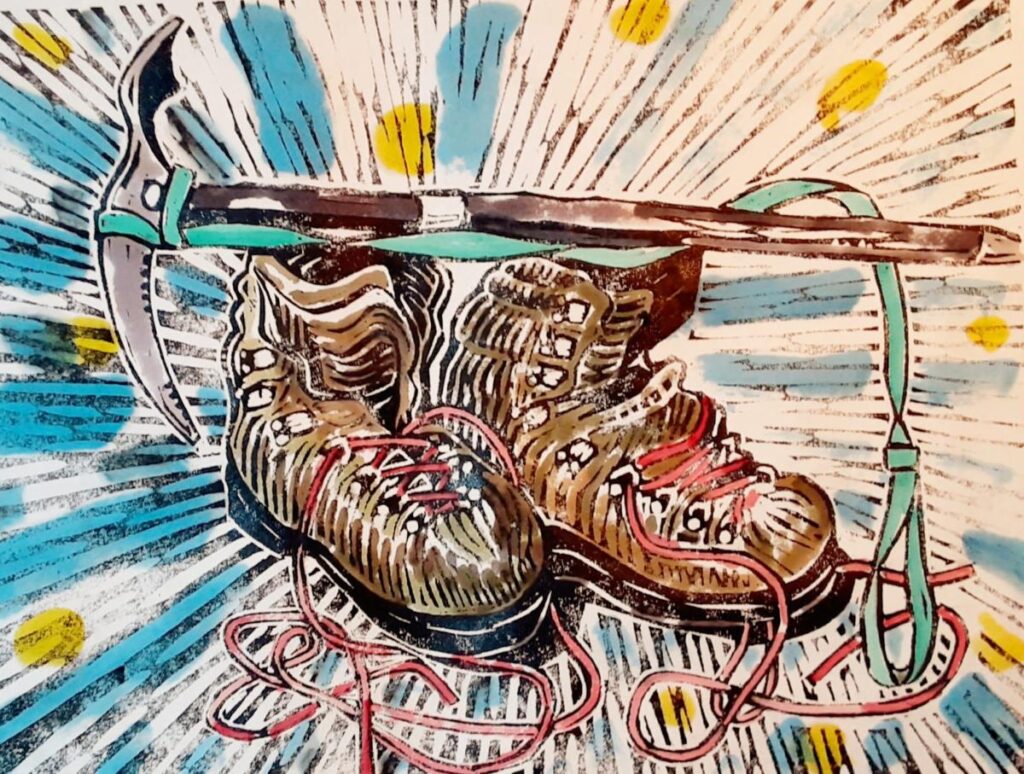
Ice Axe and Mountaineering Boots

15.04.2026
Natural History

Mountains in Woodblock Prints: The World of Tatsuya Nitta

Mountains in Japan are more than landscapes. They are places of memory, belief, and quiet dialogue between humans and nature.

In this context, the woodblock prints of Tatsuya Nitta offer a unique way of seeing mountains—not as objects to be observed, but as presences to be felt.

Drawing from a deeply personal journey shaped by artistic discovery, mountaineering experience, and periods of inner transformation, Nitta’s work reflects an intimate relationship with the natural world. His mountains are not grand spectacles, but quiet, enduring forms that exist alongside human life.

Through the traditional medium of woodblock printing, he captures something that photography often cannot: the emotional and spiritual resonance of mountains in Japan.

This article presents a selection of his works, inviting viewers to experience mountains through the artist’s eyes.

Mount Fuppushi (45 × 30 cm)

Woodblock print with hand-applied color on the reverse side

Today’s featured work — March 3

For various reasons, I had been working mainly on summer scenes.
I plan to share those in the summer.

This is a winter piece, created after some time.

Mount Fuppushi is a volcano in Chitose, Hokkaido, rising to 1,102.5 meters

Mount Eniwa (Upper Section)  (30 × 24 cm)

Woodblock print with hand-applied color on the reverse side

Tracks in the snow

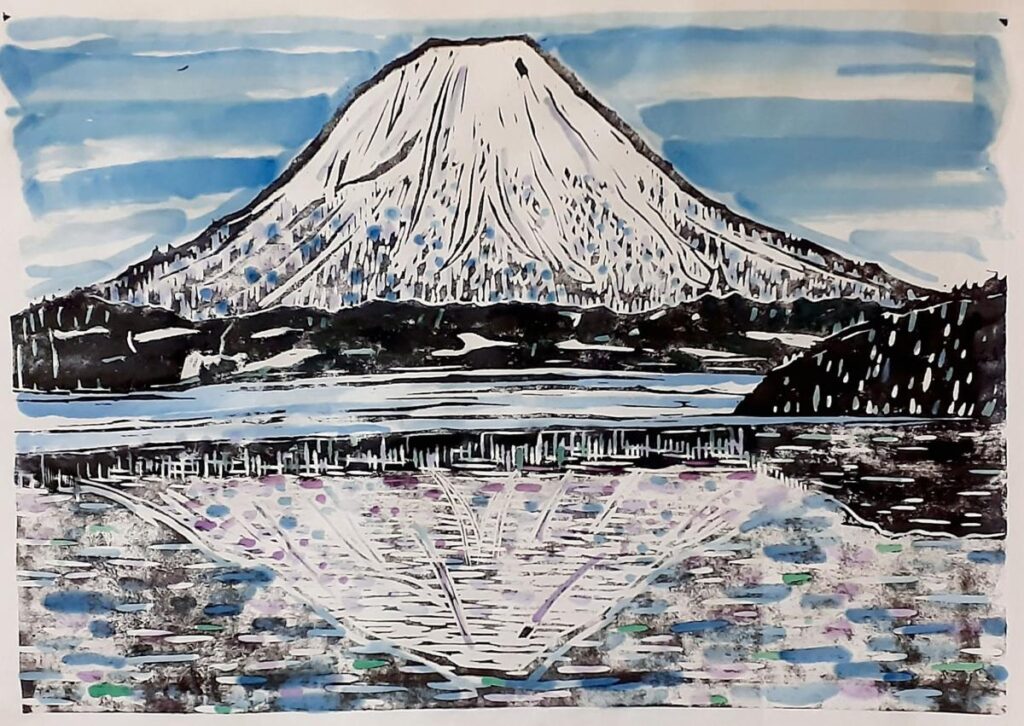
Mount Yotei

often called “Ezo Fuji” for its resemblance to Mount Fuji

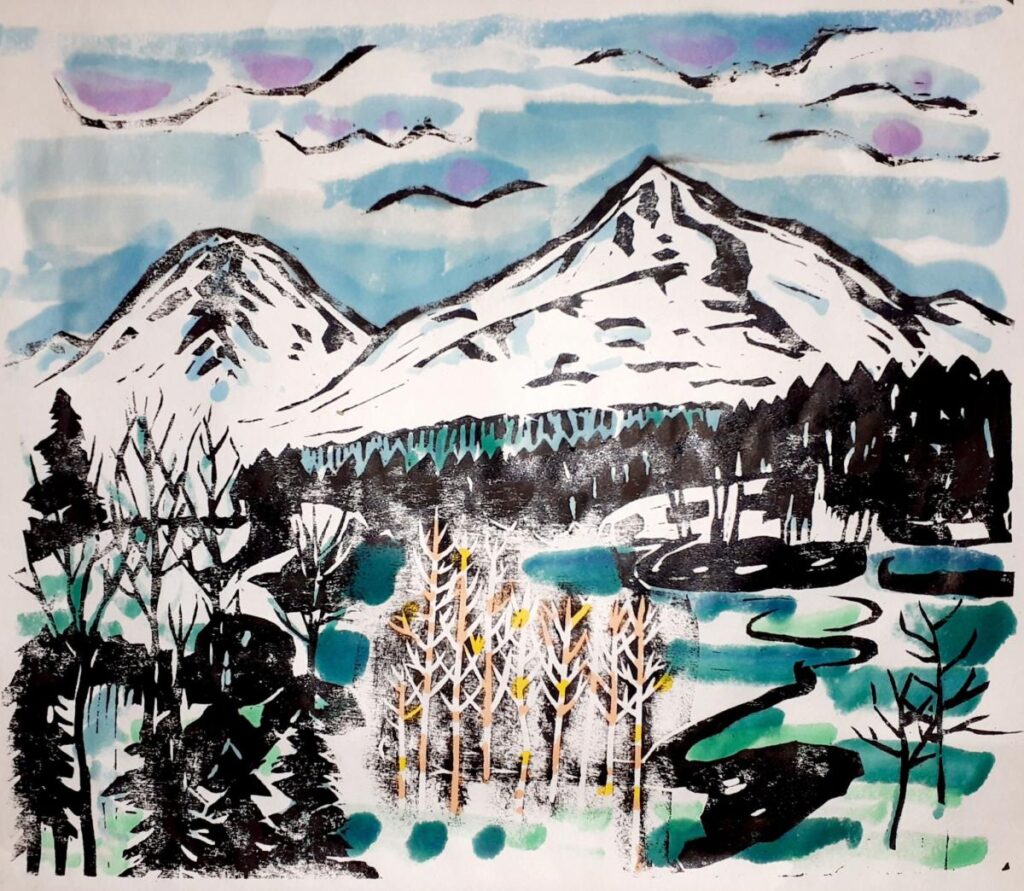
The mountains of Biei

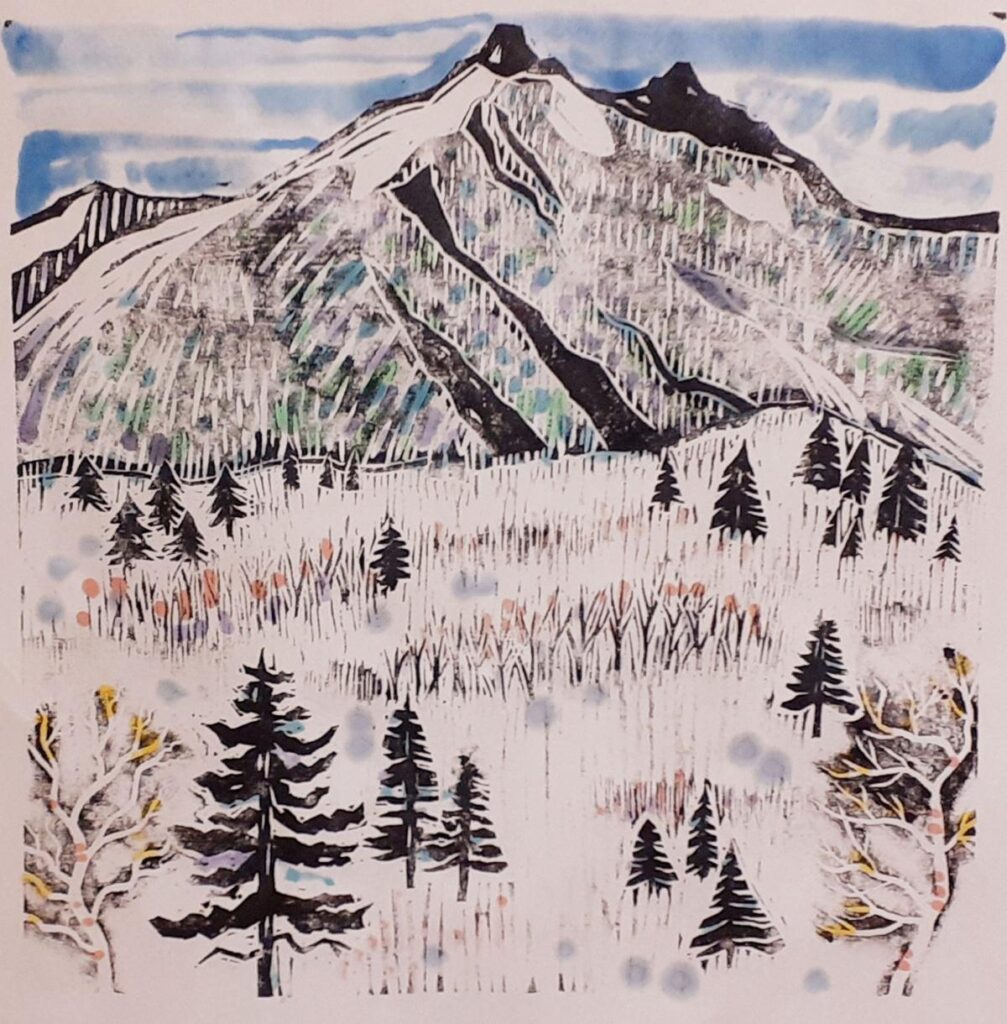
Mount Eniwa

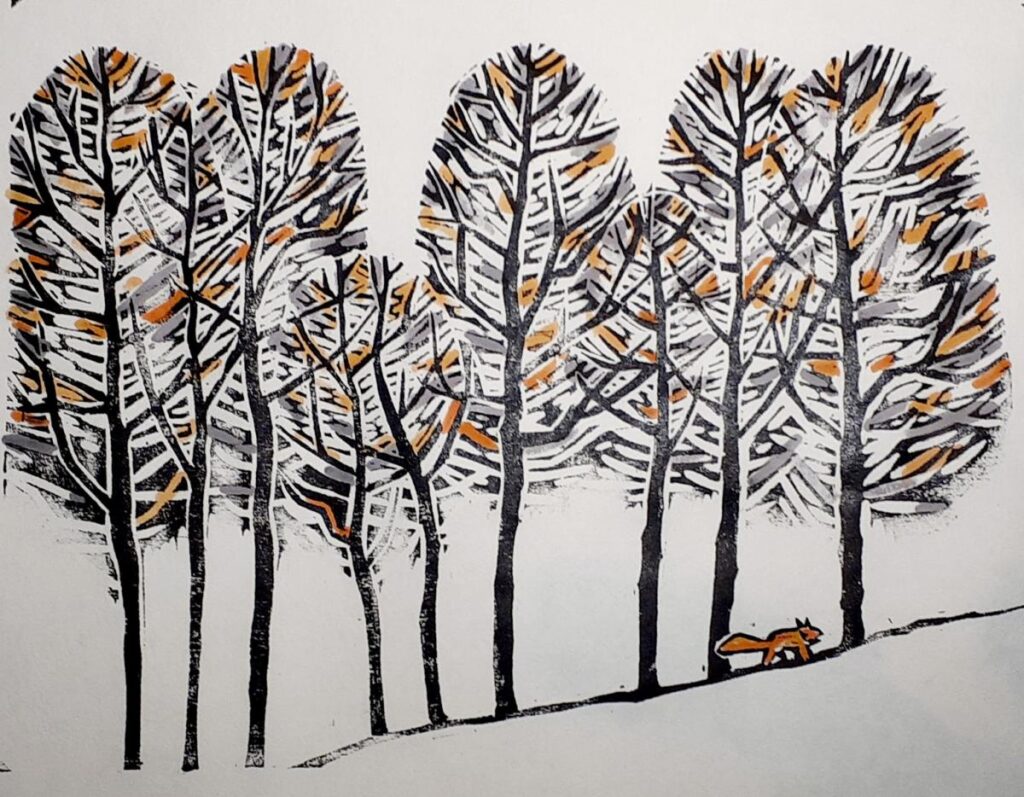
Fox and Forest  (30 × 24 cm)

Today’s featured work — December

I tried carving a winter woodland.

13.04.2026
Mountain Life & Culture

Welcome to the World of Tateyama Faith

Series 8: The Nationwide Spread of Tateyama Faith

Hello everyone, this is Takano, Director of the Toyama Prefectural Tateyama Museum.In the previous article, we introduced Ashikuraji and Iwakuraji, the two temple-settlements that served as major centers of Tateyama faith during the Edo period.
In this installment, we explore how the monks (shuto) of these communities spread Tateyama faith throughout Japan.

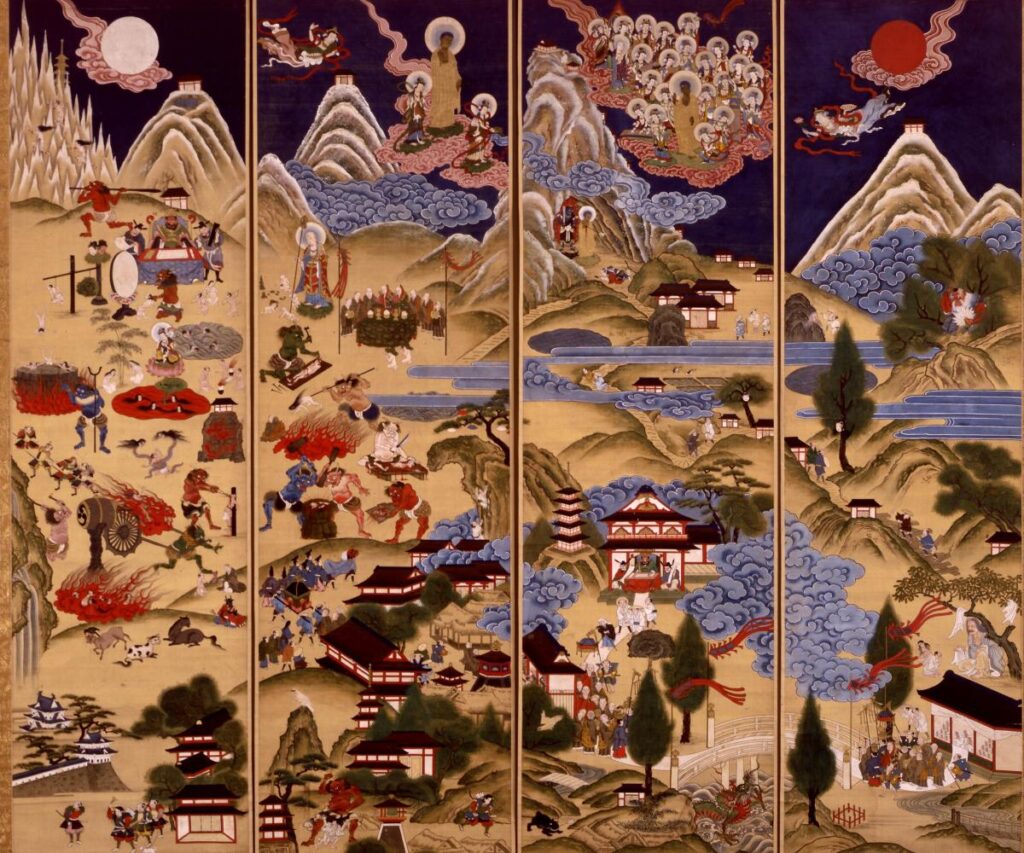
Tateyama Mandala (Daizenbō A Version), preserved at Daizenbō, Ashikuraji

(1) Missionary Activities by the Monks of Ashikuraji

The monks of the 33 lodging temples (shukubō) in Ashikuraji established networks of followers across the country, known as dannaba—regions where believers of Tateyama faith were concentrated.

Every year, during the agricultural off-season from autumn to spring, they traveled to places such as Edo (Tokyo), Osaka, Owari (present-day Aichi), and Shinano (Nagano) to conduct missionary activities.

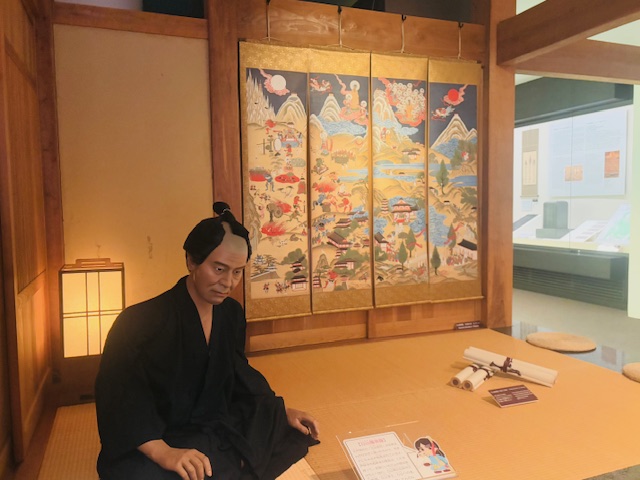
At these destinations, they gathered people in village headmen’s houses or temples and displayed hanging scroll paintings called Tateyama Mandala. Using a storytelling technique known as etoki (picture explanation), they vividly explained the teachings—sometimes with gestures and dramatic narration.

These presentations began with the origin story of Tateyama.
Men were encouraged to undertake the sacred mountain pilgrimage (Tateyama Zenjō), while women were invited to participate in the Nunobashi Kanjochō ritual. At the same time, the monks promoted their own lodging temples, offering guidance and support for pilgrims visiting Tateyama.

They also sold amulets (gofu), sacred medicines, burial garments (kyōkatabira), and texts such as the Ketsubonkyō. Payment was collected the following year—after the promised spiritual benefits had been received—creating a unique system in which faith and trust sustained the relationship.These religious and economic activities were collectively known as kaidan haisatsu (itinerant preaching and distribution of talismans).
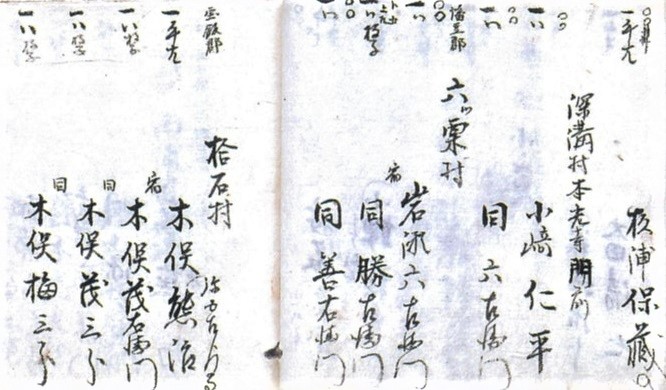
Records called danna-chō (registers of patrons) still exist today, documenting these activities in detail.

Reconstruction of a dannaba (regional network of followers), diorama display
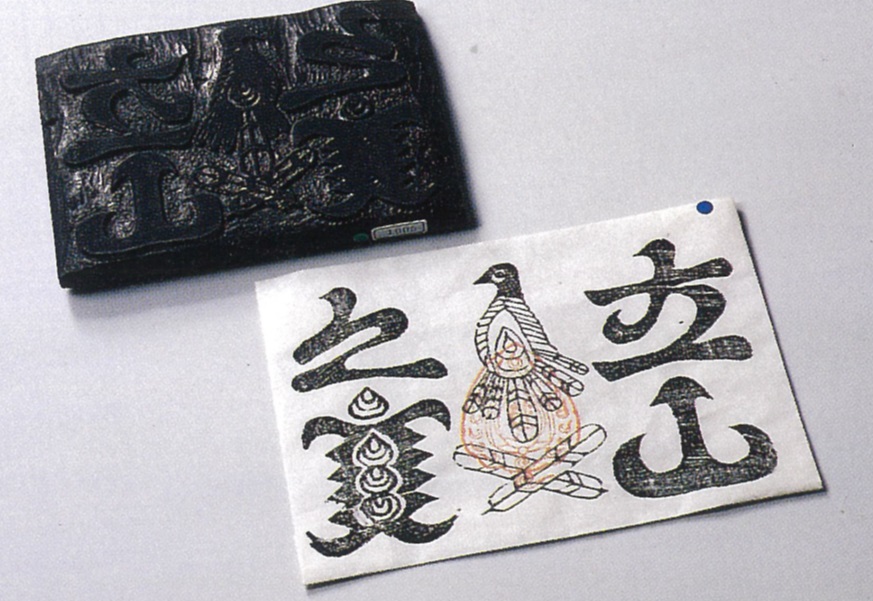
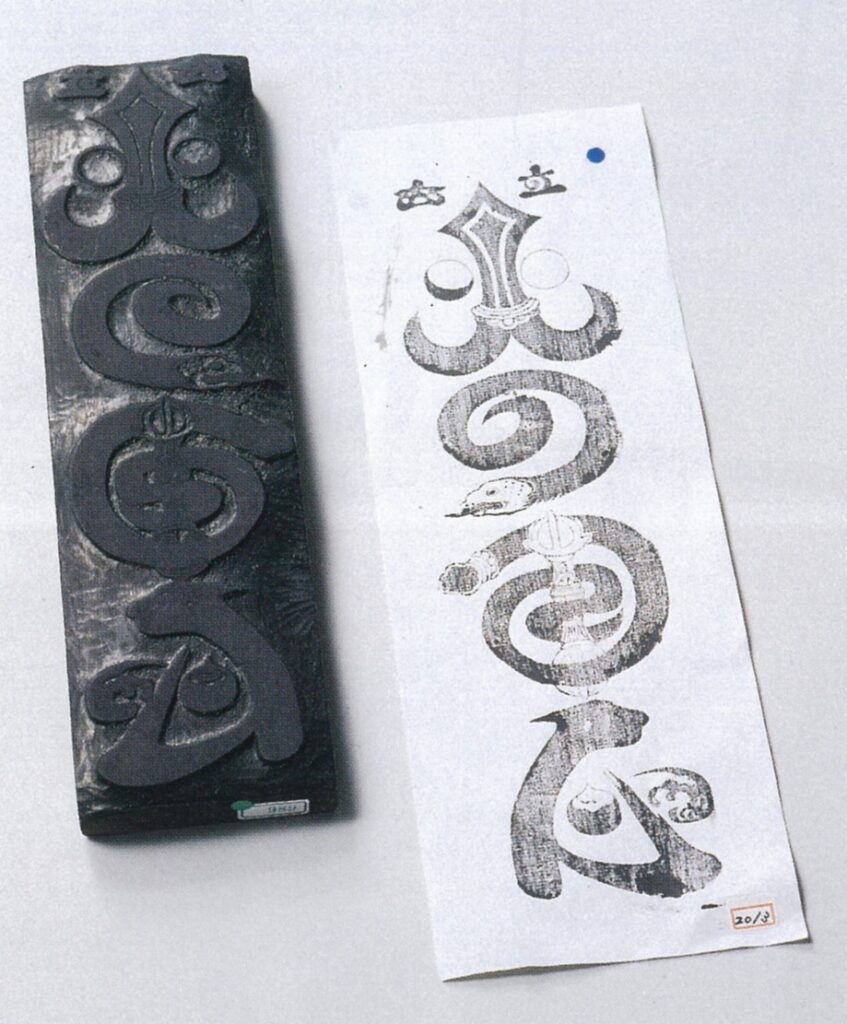
Amulet “Treasure of Tateyama” and its woodblock printing plate
(Collection of the Toyama Prefectural Tateyama Museum; the woodblock is designated as an Important Tangible Folk Cultural Property of Japan)
Amulet “Treasure of Tateyama” and its woodblock printing plate
(Collection of the Toyama Prefectural Tateyama Museum; the woodblock is designated as an Important Tangible Folk Cultural Property of Japan)
Amulet “Fire Protection” and its woodblock printing plate
(Collection of the Toyama Prefectural Tateyama Museum; the woodblock is designated as an Important Tangible Folk Cultural Property of Japan)
Amulet “Fire Protection” and its woodblock printing plate
(Collection of the Toyama Prefectural Tateyama Museum; the woodblock is designated as an Important Tangible Folk Cultural Property of Japan)
Danna-chō (register of patrons), partial view
(Collection of the Toyama Prefectural Tateyama Museum)
Danna-chō (register of patrons), partial view
(Collection of the Toyama Prefectural Tateyama Museum)

(2) Missionary Activities by the Monks of Iwakuraji

Meanwhile, the monks of the 24 lodging temples in Iwakuraji focused their activities mainly within the domain of the Kaga clan—covering Kaga and Noto (present-day Ishikawa) and Echū (Toyama).

The Iwakuraji temple complex was entrusted by the Kaga domain with the management and maintenance of the Tateyama mountains. This required funds for repairing subsidiary shrines and facilities such as Murodō, as well as maintaining pilgrimage routes.

To raise these funds, they obtained official permission to hold dekaichō—special traveling exhibitions of sacred images and temple treasures—circulating through temples across the region.

A central object of worship in these exhibitions was a statue of Amida Nyorai (Amitābha Buddha) from Tateyama.
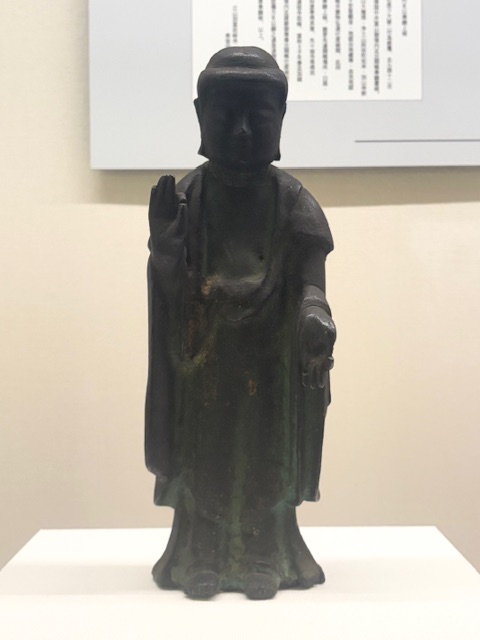
This statue is known for a small hole in its left chest. According to legend, the founder of Tateyama, Saeki no Ariyori (or Ariwaka), shot an arrow into a bear, which was in fact an incarnation of Amida. This gave rise to the name Yakizu Amida Nyorai (“Amida with the arrow wound”).

During these exhibitions, Tateyama Mandala were also displayed, encouraging men to undertake pilgrimages and inviting them to stay at the monks’ lodging temples.

Standing statue of Yakizu Amida Nyorai (Amida with the arrow wound)
(Collection of the Toyama Prefectural Tateyama Museum)
Standing statue of Yakizu Amida Nyorai (Amida with the arrow wound)
(Collection of the Toyama Prefectural Tateyama Museum)

(3) The Devotion Inspired by Tateyama

During the Edo period, Tateyama faith spread widely among the general population.

Numerous offerings were dedicated to the mountain, including stone Buddhas, lanterns, scriptures, and ritual implements.
The Maeda family of the Kaga domain strongly supported Tateyama faith, funding repairs of temple buildings and granting tax exemptions.

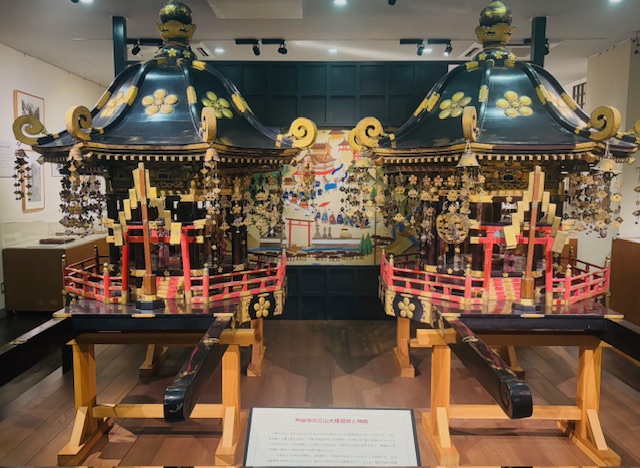
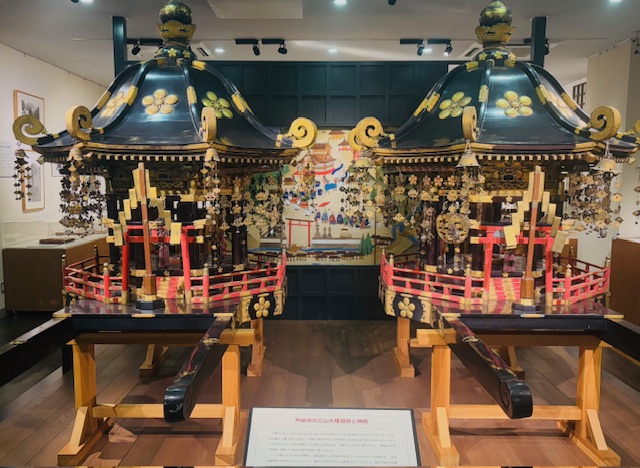
At Iwakuraji, close relationships developed between the monks and the domain lords and their retainers. At Ashikuraji, a portable shrine (mikoshi) for the Tateyama Gongen festival was donated by the Maeda family.

Moreover, high-ranking women—including those in the Ōoku (women’s quarters of Edo Castle) and daimyo households—prayed to the deities of Tateyama for health, peaceful afterlife, and the stability of their families.In this way, the monks of Ashikuraji and Iwakuraji spread Tateyama faith across all levels of society during the Edo period.
It is no exaggeration to say that these efforts laid the foundation for Tateyama’s reputation as a sacred mountain that continues to this day.

Portable shrine (mikoshi) donated by the Maeda family of Kaga, 
preserved at Oyama Shrine (Nakamiya Prayer Hall), Ashikuraji, Tateyama
Portable shrine (mikoshi) donated by the Maeda family of Kaga, 
preserved at Oyama Shrine (Nakamiya Prayer Hall), Ashikuraji, Tateyama

In the next installment, we will explore Onbasama (Uba-son), the mountain deity who continues to attract the devotion of women in Ashikuraji.We hope you will continue following this series.

Note for Visitors

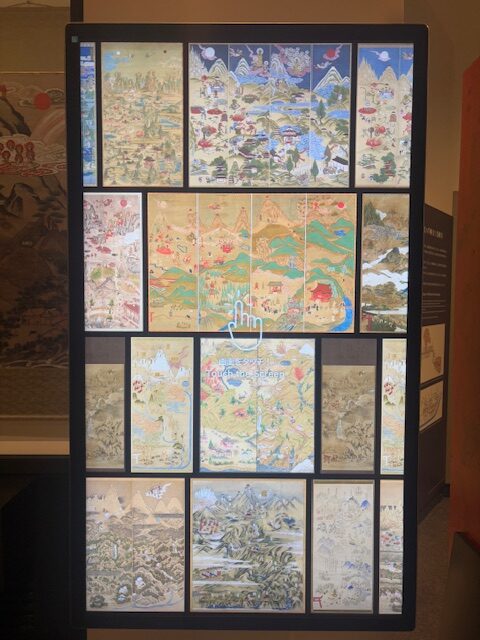
At the Tateyama Museum, visitors can explore the Digital Tateyama Mandala, an interactive display that allows detailed viewing of the mandala imagery.
The nearby Mountain Culture and Future Center exhibits a large mikoshi said to have been donated by the Maeda family, offering a glimpse into the deep devotion people held for Tateyama.

If you have the opportunity to visit Tateyama, we warmly invite you to stop by the museum.

Permanent exhibition: “Digital Tateyama Mandala”
06.04.2026
Mountain Life & Culture

A City That Drinks Its Groundwater

Ōno’s 50-Year Journey to Protect Its Water Cycle

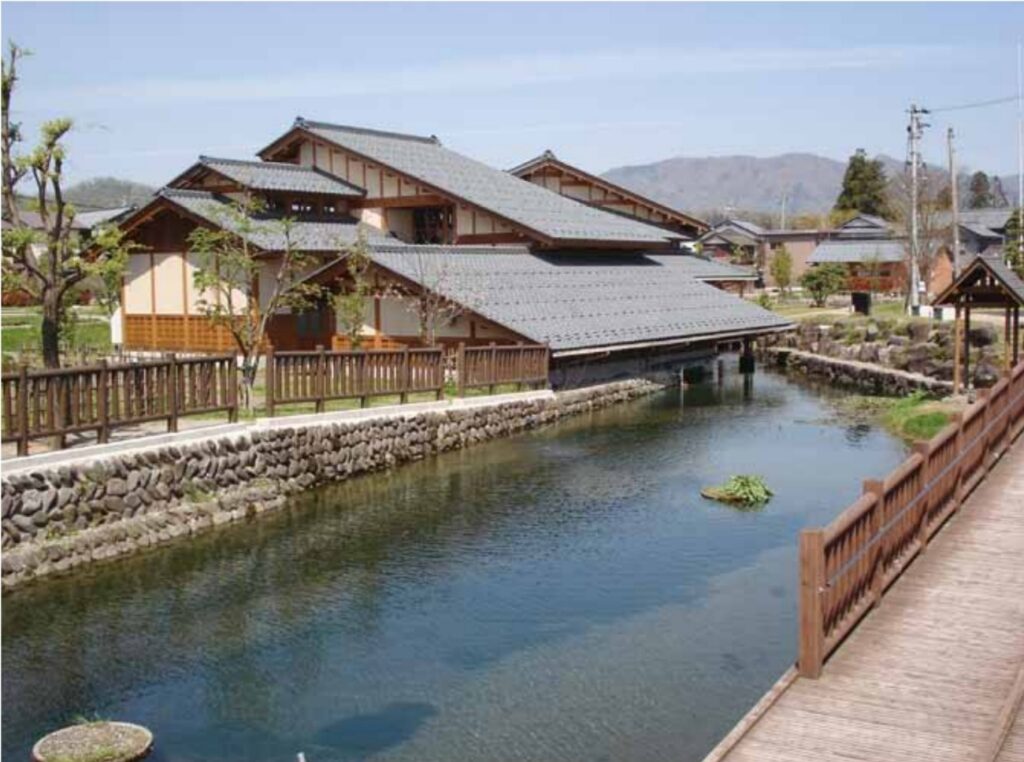
Hongan Shozu
Hongan Shozu

Episode 2: When the Water Disappeared

“We Almost Lost Our Water”Falling Groundwater Levels and the Drying of Springs

Ōno City has long lived in close relationship with its abundant spring water. However, from the late 1960s through the 1970s, groundwater levels began to decline.
At the peak of this crisis, approximately 1,000 households experienced their wells running dry. Renowned spring sources such as Oshozu—selected as one of Japan’s 100 Exquisite Waters—and Hongan 

Shozu—later designated among the Heisei Era’s 100 Exquisite Waters—also ceased to flow.Several factors have been suggested as contributing causes:

1. The construction of dams upstream on the Kuzuryu and Mana Rivers

2. Land improvement projects in upstream urban areas, which reduced natural fields and weakened the land’s water retention capacity, thereby decreasing groundwater recharge

3. The expansion of the textile industry, with approximately 200 factories in the city drawing heavily on groundwater resources.

Changing Conditions in the Water Environment

Changes in land and water use, population decline, and climate change associated with global warming have all altered the natural water cycle.
As a result, challenges such as flooding, water shortages, and impacts on ecosystems have become increasingly apparent.

These developments have heightened awareness of the need to maintain a “sound water cycle.”

Citizen-Led Action: Restoring the Habitat of the Itoyo

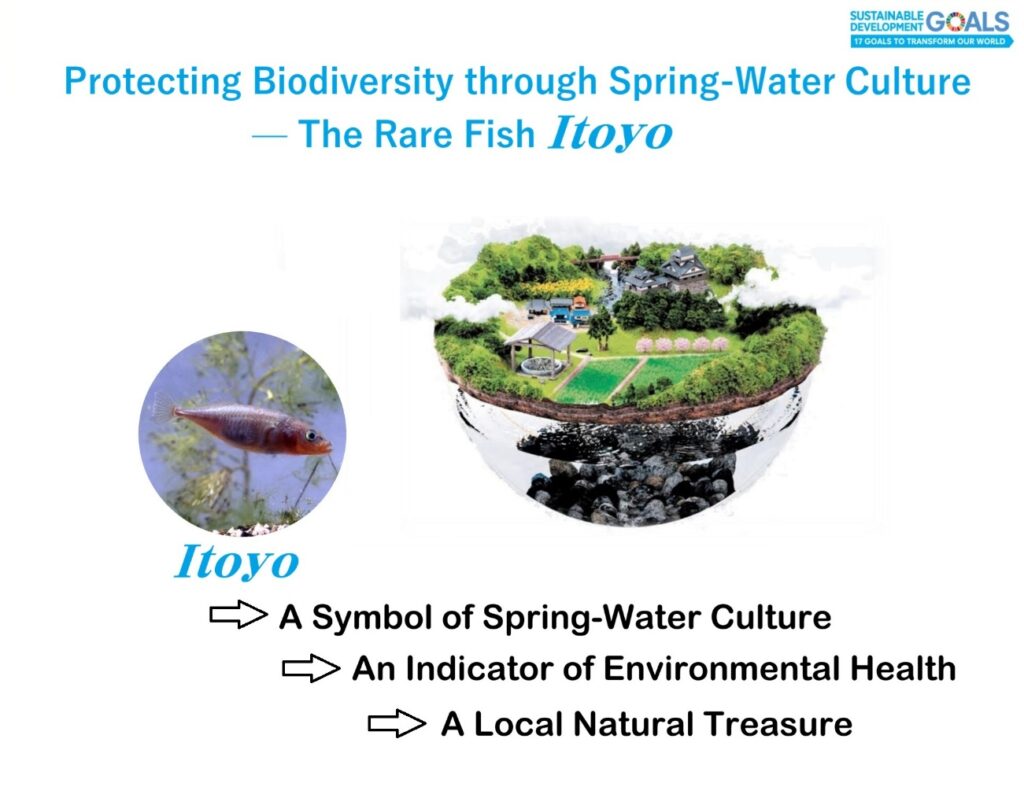
One example of civic engagement is the ongoing conservation effort at Hongan Shozu, a habitat of the Itoyo (freshwater stickleback), designated as a National Natural Monument.

In the past, local children would swim and play alongside these small fish. However, in 1978, the spring ran dry, leaving the habitat in a state of near collapse.
In response, citywide efforts to restore the spring began in the early 1980s.

Through sustained initiatives—including joint cleanup activities involving elementary school children and adults—some of these spring sources have since been revived.

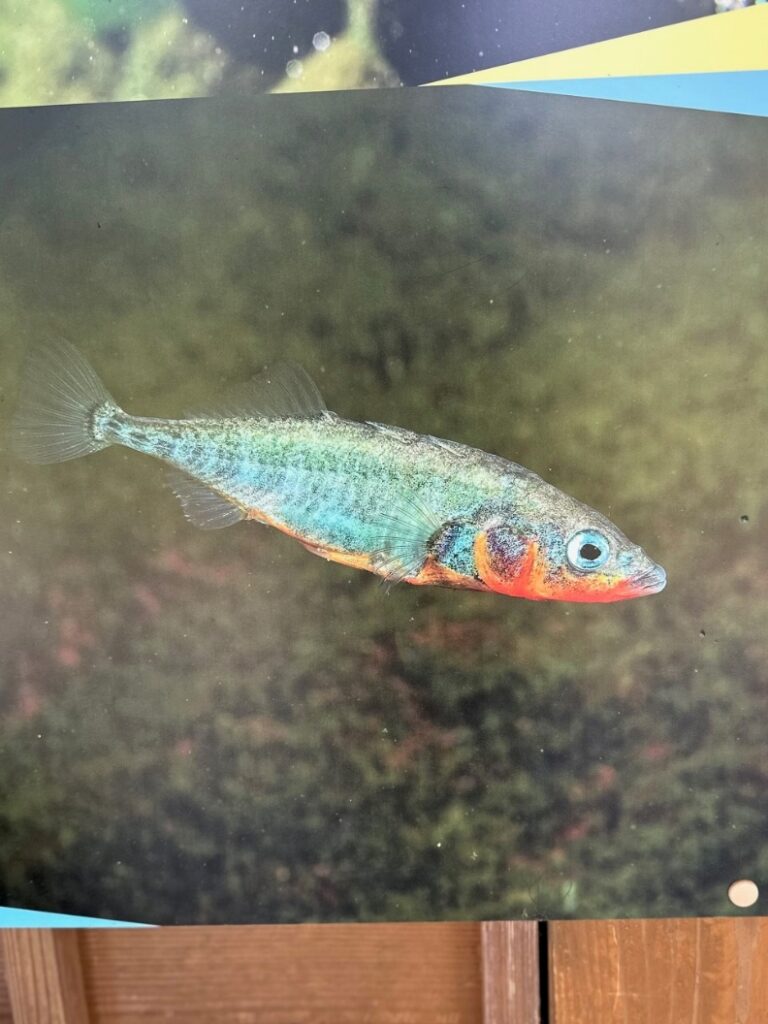
Itoyo Male (Three-spined Stickleback) 
Approximately 5 cm long
Photo: Yasuyuki Hata
Itoyo Male (Three-spined Stickleback) 
Approximately 5 cm long
Photo: Yasuyuki Hata

About the Itoyo

• A small fish that has inhabited the Earth since the Ice Age, surviving only in cold, clean water

• Its population declined sharply in the postwar and high-growth periods

• Now found only in extremely limited locations, and still decreasing

Within Ōno City, the species is present at only a few sites, including Hongan Shozu and Nakano Shozu.

• Ministry of the Environment: Listed as a Threatened Local Population (LP)

• Fukui Prefecture: Classified as Endangered Category I (landlocked type)

As a biological indicator of environmental quality, the Itoyo is an exceptionally valuable species.

PageTop