Ōno’s 50-Year Journey to Protect Its Water Cycle
In Ōno, groundwater is what people drink every day.
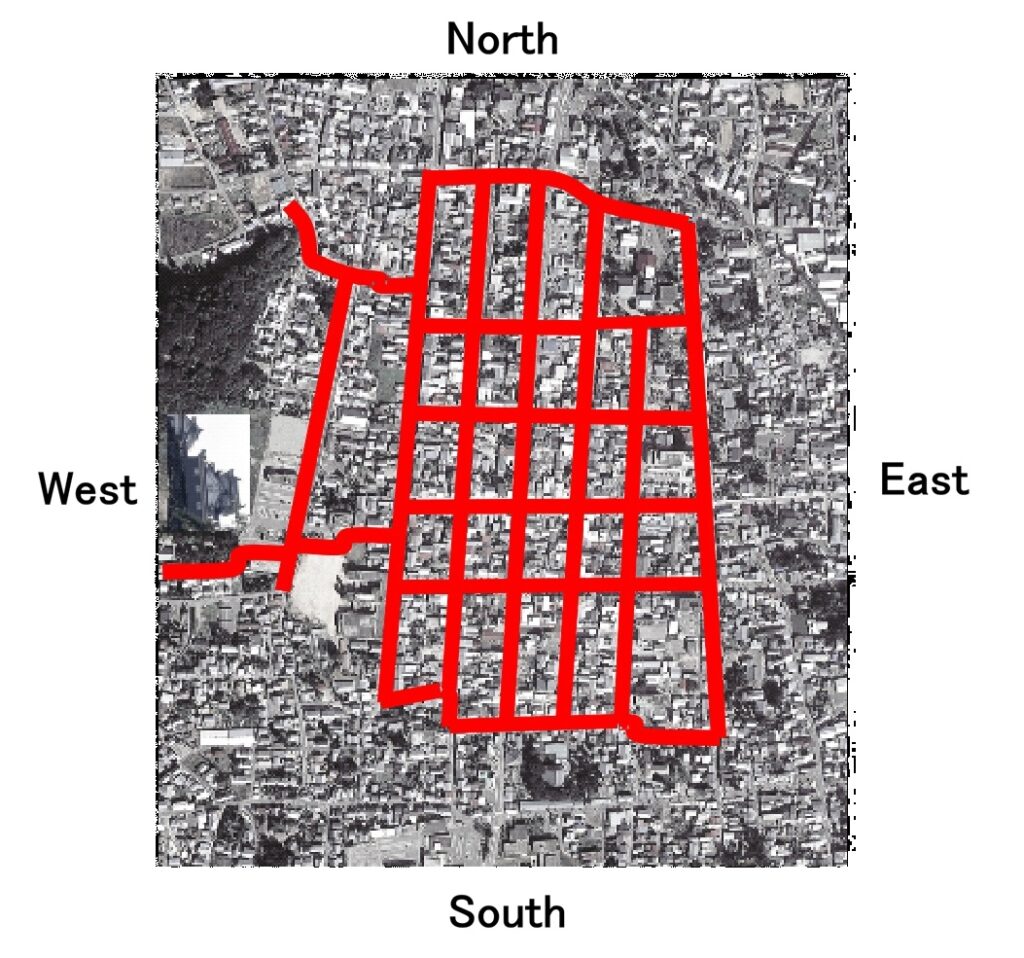
Ōno City in Fukui Prefecture—often called the “Castle in the Sky”—was founded approximately 450 years ago by Nagachika Kanamori, a retainer of Oda Nobunaga. Modeled after Kyoto, he constructed a castle town laid out in a grid pattern, complete with an advanced water supply system for its time.
At the southern edge of the town, a spring known as Hongan Shozu served as the primary water source, supplying water for daily life throughout the settlement. The original town layout—structured around this water system—remains visible today, as shown by the red lines on the map below.
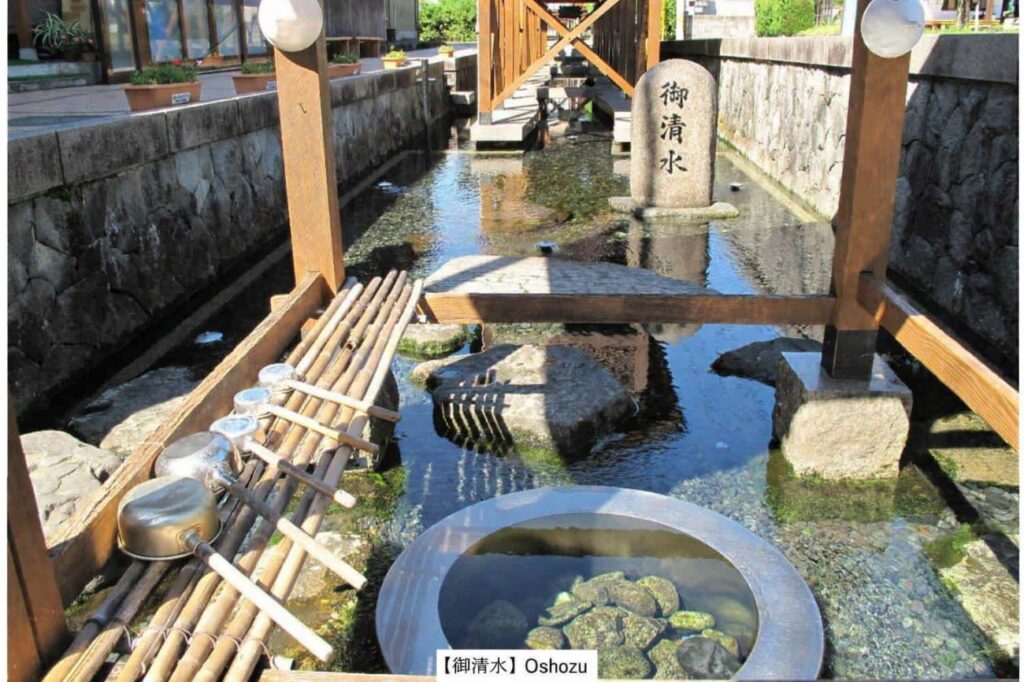
Ōno is also known for its long-standing citizen-led efforts in water conservation. The Ōno Basin has long been blessed with abundant groundwater, which has supported drinking water, agriculture, and industry alike. Numerous spring sites, including Oshozu- selected as one of Japan’s 100 Exquisite Waters- are scattered throughout the city.
Over generations, a unique culture has emerged—one that lives with water and reveres it. Local lifestyles, customs, and oral traditions reflect a deep relationship between the people of Ōno and their groundwater.
However, during Japan’s period of rapid economic growth, groundwater levels began to decline, and springs gradually diminished or dried up. The continuation of Ōno’s distinctive springwater culture was at risk.
In response, the city has undertaken a series of initiatives to conserve and sustain its groundwater resources.This six-part series introduces Ōno City’s efforts to protect and pass on its water heritage.
Episode 1 – The Castle in the Sky, City of Water
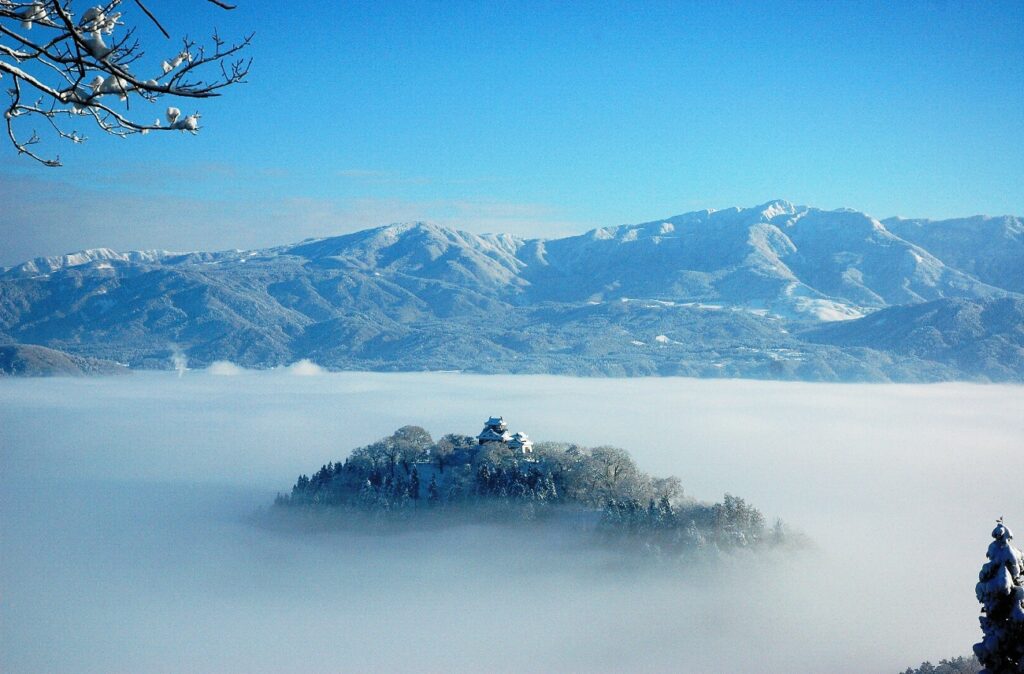
What you see above the clouds is sustained by what lies beneath the ground.
Ōno is not only a city built on water—it is a city that lives by it.
A City Built Inside a Natural Basin
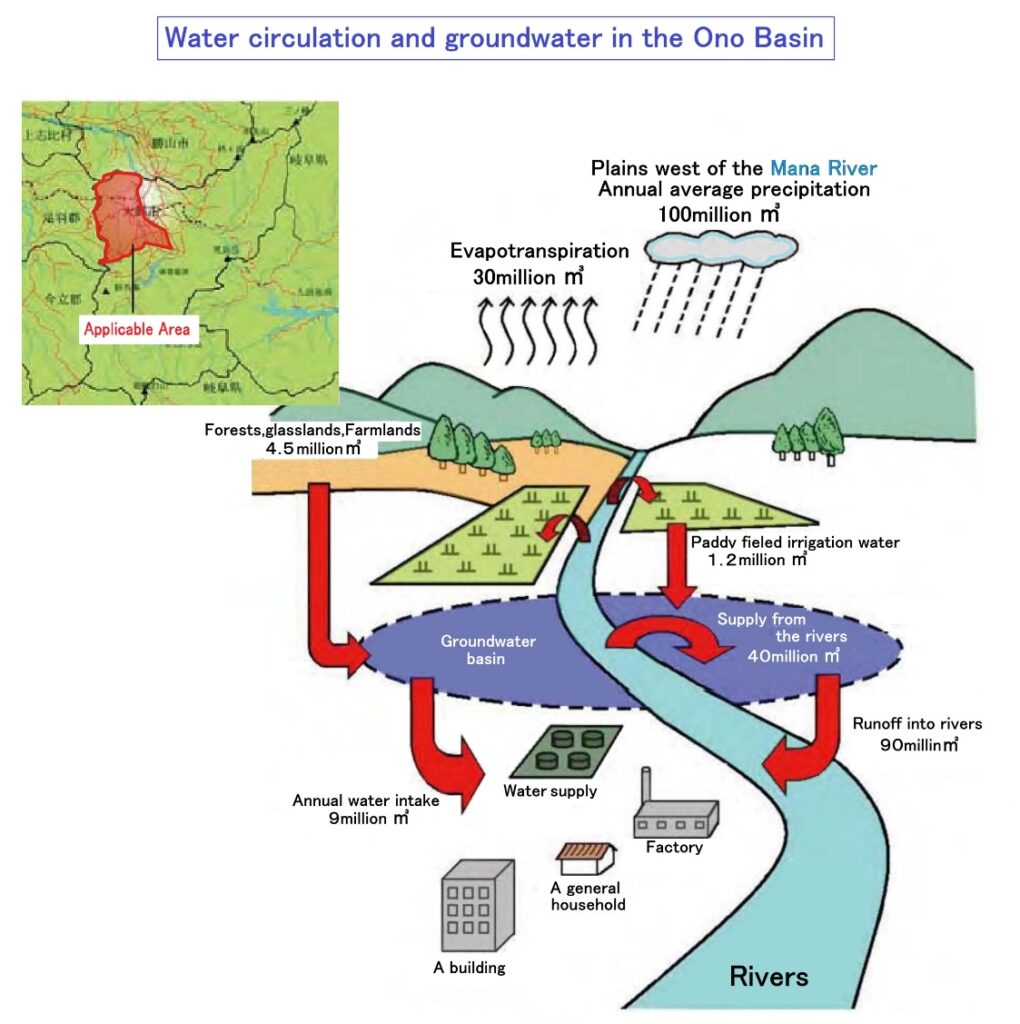
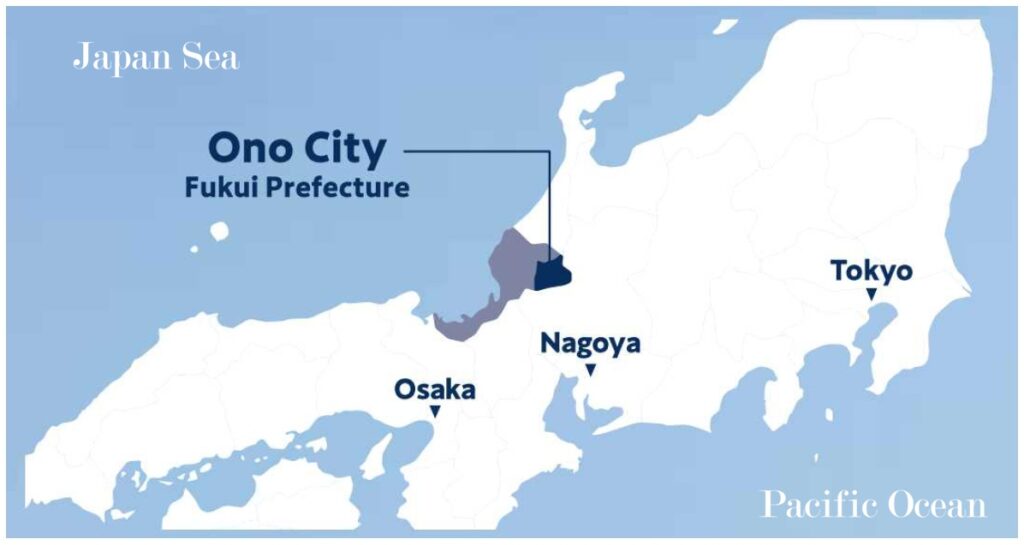
Ōno City is located in eastern Fukui Prefecture, nestled within the Ōno Basin and surrounded by mountains. Of its total area of 872.43 km², approximately 87% is covered by forest, making it a richly natural regional city.The Kuzuryu River, originating from Mt. Hakusan, along with its tributaries—the Mana, Kiyotaki, and Akane Rivers—flow northward through the basin. For centuries, abundant springwater has sustained life here, affectionately known by residents as Shozu.
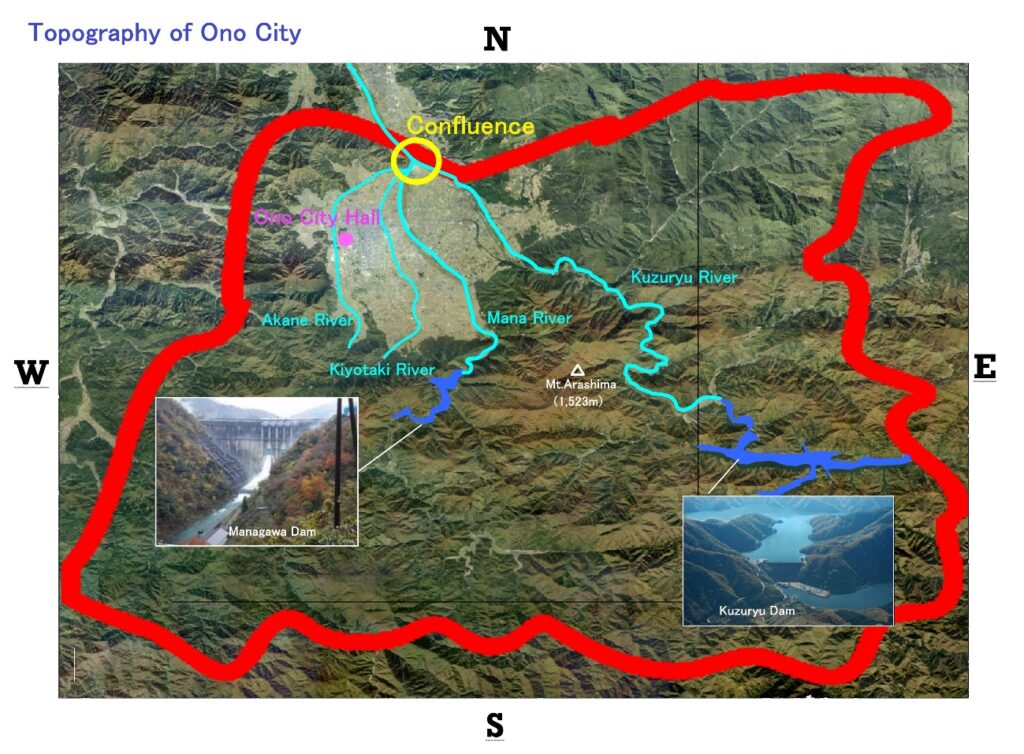
from south to north before joining the Kuzuryu River.
The Ono Basin functions as a natural underground dam, storing abundant groundwater that has sustained the city’s water culture for centuries.
Around 450 years ago, Nagachika Kanamori developed a castle town that utilized these springs. Remarkably, it featured both water supply and drainage systems—an advanced form of urban infrastructure for its time.
Even today, groundwater remains central to daily life in Ōno. Many households in the city center have private pumps installed, drawing groundwater for drinking, cooking, bathing, flushing toilets, laundry, and even car washing. It also continues to be widely used in agriculture and industry.
In 1985, Oshozu was selected as one of Japan’s 100 Exquisite Waters, followed by Hongan Shozu in 2008 under the Heisei-era list. In 1996, Ōno City itself was recognized as one of Japan’s “100 Villages of Water.”These recognitions reflect the exceptionally deep connection between the city’s residents and their water resources—one that has nurtured a distinctive culture of coexistence with groundwater.
Springs That Shaped Everyday Life
Approximately 70% of all households in Ōno own private wells—totaling over 8,000.
New wells continue to be drilled as residential areas expand.For most residents, drawing groundwater and using it directly as drinking water is simply part of everyday life.
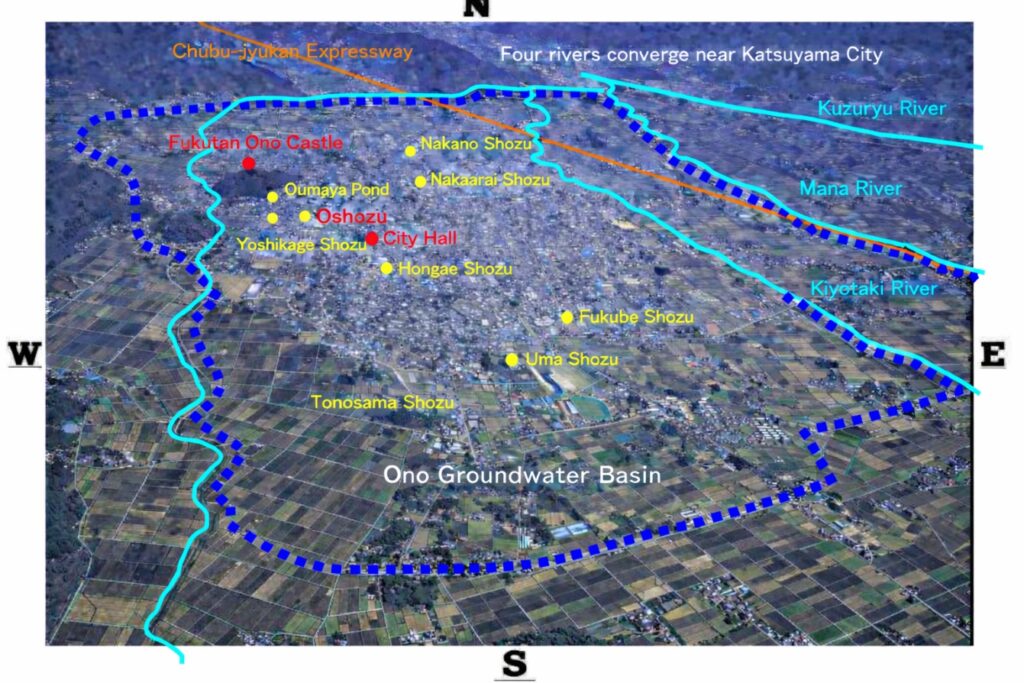
Groundwater That Stays Within the City
Not only does Ōno possess abundant usable groundwater,
but the flow of groundwater is largely contained within a single municipal boundary, creating a unique local water cycle system