
Foreign-born Leaders Revitalizing Japan’s Rural Mountain Communities
Episode 2: Rethinking Agriculture
Innovation in the Face of Structural Challenges
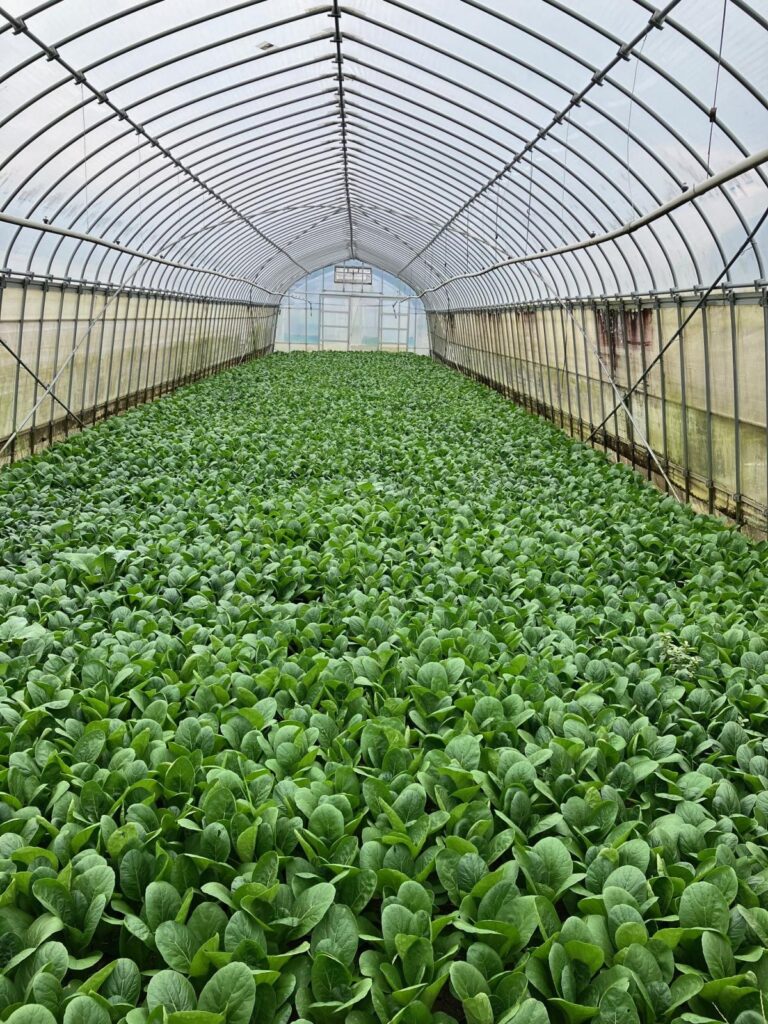
Although Dhalma never expected to become the successor to a Japanese farm, he felt that it would be wrong to let the enterprise disappear simply because there was no one to take over.
“The previous owner had spent decades improving the soil, developing cultivation techniques for komatsuna, and building relationships with buyers,” he recalls. “It didn’t feel right to abandon all of that just because there was no successor.”
In Nepal, when Dhalma was growing up, inheriting farmland was traditionally reserved for the eldest son. While this norm has begun to shift in recent years due to increasing labor migration abroad, Japan appears to have faced similar structural changes much earlier than Nepal. Yet agriculture — the foundation of human livelihood — should not be easily abandoned.
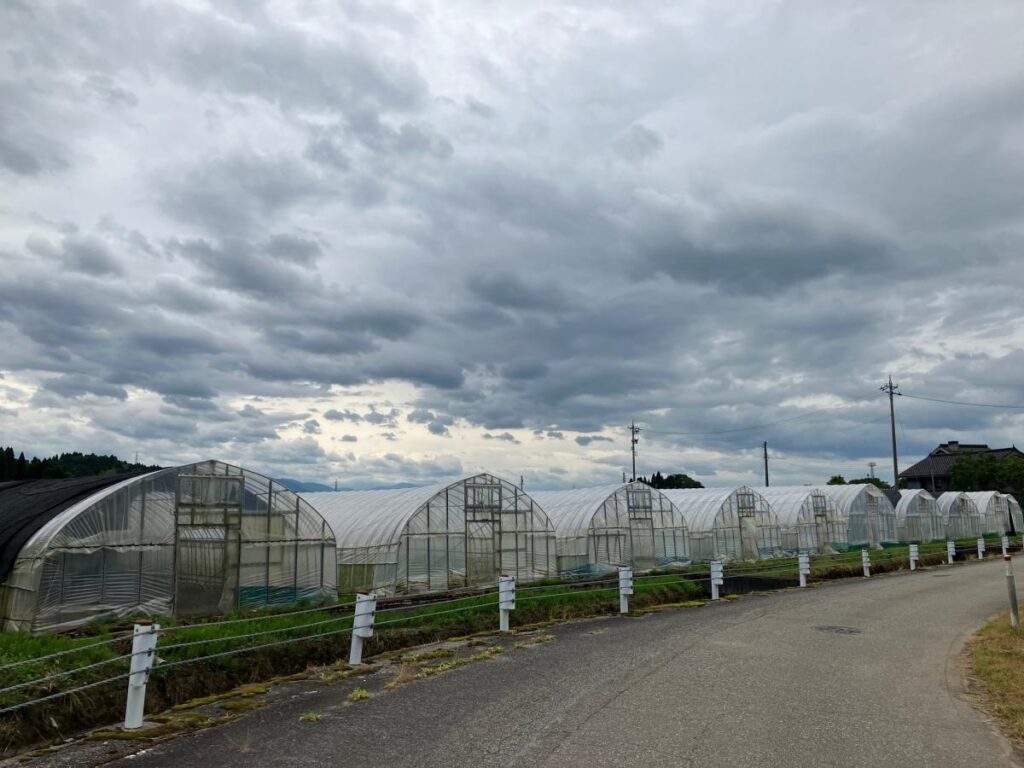
Although Dhalma was taught all the technical aspects of cultivation, there was one practice he found difficult to accept: the disposal of produce that did not meet size standards at the time of shipment.
Of course, vegetables that are wilted or damaged by pests cannot be sold. However, even when seeds are sown on the same day, grown with the same fertilizer, and harvested at the same time in the same greenhouse, variations in size are inevitable in living organisms. Nevertheless, produce that is even a few centimeters too large or too small is rejected by distribution channels such as the Japan Agricultural Cooperatives (JA).
As a result, the farm’s average disposal rate reached nearly 20 percent.“It felt wasteful — and environmentally irresponsible,” Dhalma explains.

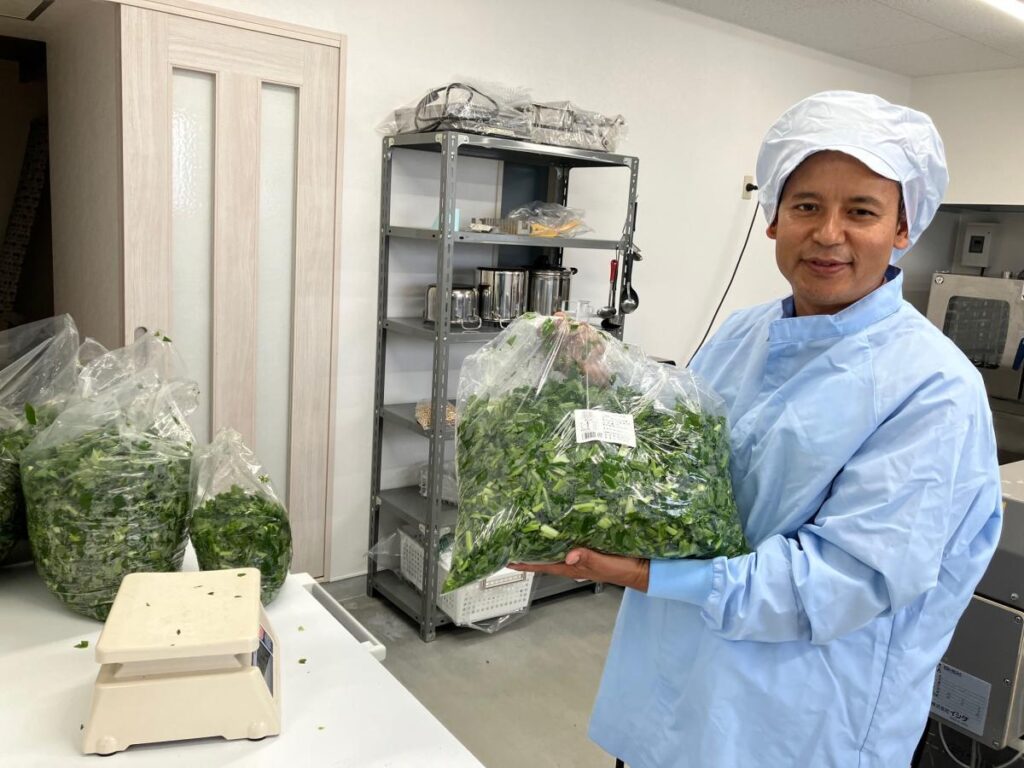
To address this issue, he introduced a new approach: washing, cutting, and packaging out-of-spec produce for direct sales to local schools and eldercare facilities. A small prefabricated building was constructed next to the farm to serve as a processing facility, complete with freezing equipment that allowed the packaged vegetables to be stored for several days without compromising quality.
As demand grew, Dhalma began processing not only komatsuna but also other vegetables such as turnips and green onions on a small scale.
Word of mouth soon spread among local residents, and households began requesting direct purchases as well. While the profits from these sales were modest, Dhalma notes that the relationships built with people who had previously had no connection to the farm became one of the most meaningful outcomes.
Encouraged by advisors, he later established Happy Farm Co., Ltd., formalizing the business.“Throughout the process, I received support from many people,” he says. “Everyday conversation in Japanese wasn’t too difficult, but the language used in official procedures and documentation was entirely different. I was also surprised by the various support systems available in Japan, such as subsidies and tax incentives for starting a business. I wouldn’t have been able to apply for them on my own.”
Happy Farm has since been recognized as a model agricultural enterprise in the region. Looking ahead, Dhalma hopes to establish a café that utilizes produce grown on the farm, creating a space where he can engage directly with customers and explore new ideas.
At the same time, he faces ongoing challenges in securing labor. The core workforce currently consists of more than a dozen part-time employees, most of whom are women in their sixties with farming backgrounds. How long they will be able to continue working remains uncertain.
In addition, several young people from Dhalma’s hometown in Nepal are currently learning agricultural techniques and farm management at Happy Farm, with the aim of returning home in the future. However, the evolving policies governing foreign workers in Japan create an uncertain outlook.
Succession also remains an open question. Dhalma’s eldest son is already enrolled in a university in Tokyo, and his younger son, now in high school, will likely follow a similar path.
“For now, I’ll keep doing my best,” he says. “And after that, we’ll see what the future brings.”
Related Topics
- Japan’s Aging Rural Communities
- Sustainable Agriculture in Mountain Regions
- Reducing Food Waste in Agricultural Supply Chains
- Community-based Food Distribution Models
- Foreign-born Entrepreneurs in Rural Japan
- Japan Mountain Day Foundation – Homepage
Learn More
This story highlights the structural challenges facing mountain agriculture in aging rural communities, including labor shortages, food waste, and succession issues.
Related initiatives can be found in:
- Sustainable Mountain Agriculture
- Community-based Rural Revitalization
- Food Loss Reduction Strategies
