
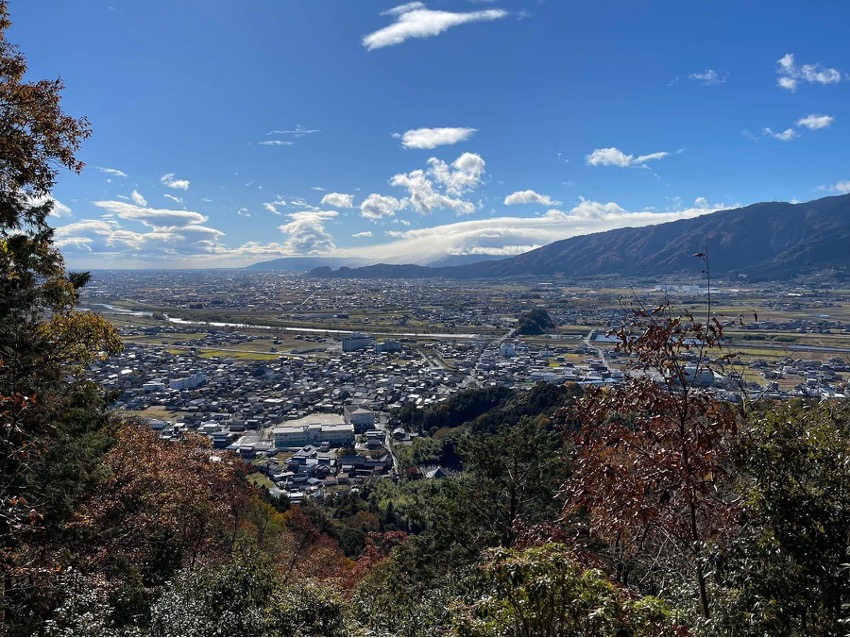
In the Seino region of Gifu Prefecture, central Japan, low mountains rise around the Nobi Plain. Most are between 200 to 400 meters high. They are not the dramatic peaks that usually come to mind when people think of Japan’s mountains.
Yet these modest mountains have a story of their own.
They are part of what the Japanese call satoyama — people have lived, worked, and cared for these landscapes for generations. Here, old paths cross the hills, and the remains of mountain castles and other historic sites can still be found.
Gifu has particularly strong connections with Japan’s Sengoku, or Warring States, period of the 15th and 16th centuries. Gifu Castle, standing on Mt. Kinka, is closely associated with the powerful warlords Saito Dosan and Oda Nobunaga. Farther west lies Sekigahara, site of the decisive battle of 1600 that helped shape the political unification of Japan.
Today, a local initiative is finding a new way to connect these mountains — not only physically, but also with the people and history around them.
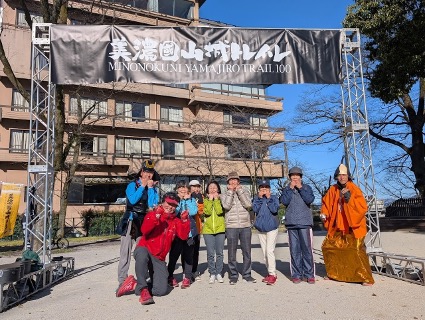
It is called the Mino-no-Kuni Yamajiro Trail.
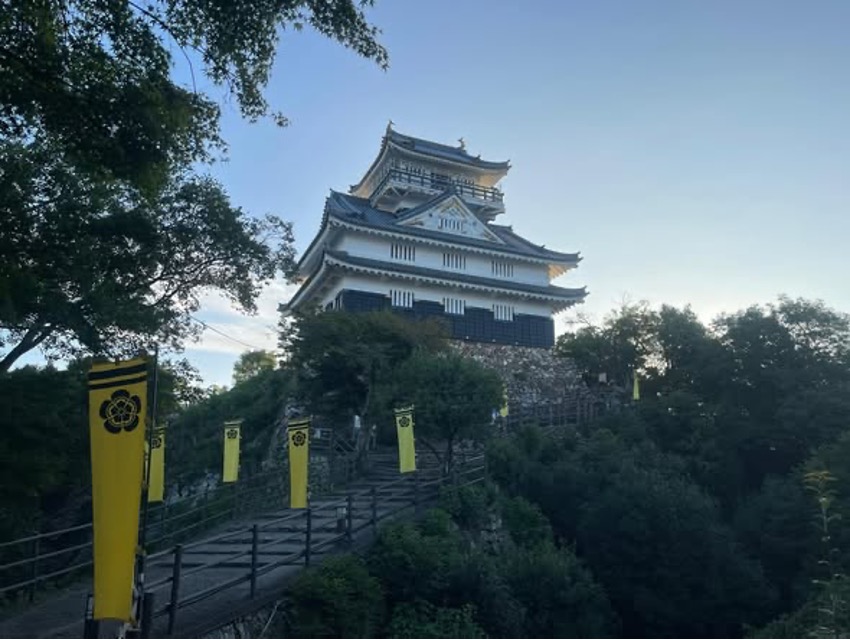
The idea is simple: connect a series of satoyama across the Seino region into a long trail that people can walk or run while discovering the landscape and its history.
One of the people behind the initiative, Shigekazu Tsuboi, had long been exploring ways to bring new energy to his hometown of Ibigawa. He ran from the headwaters of the Ibi River to the sea, traversed local mountain ranges, and walked old mountain passes that had fallen out of use.
His experiences walking historic long-distance routes elsewhere in Japan, including the Kumano Kodo pilgrimage trails, led him to see that a trail could offer more than a route from one place to another.
Walking a long trail can be a way to experience the nature, history and culture of a region.
Could something similar be created in his own community?
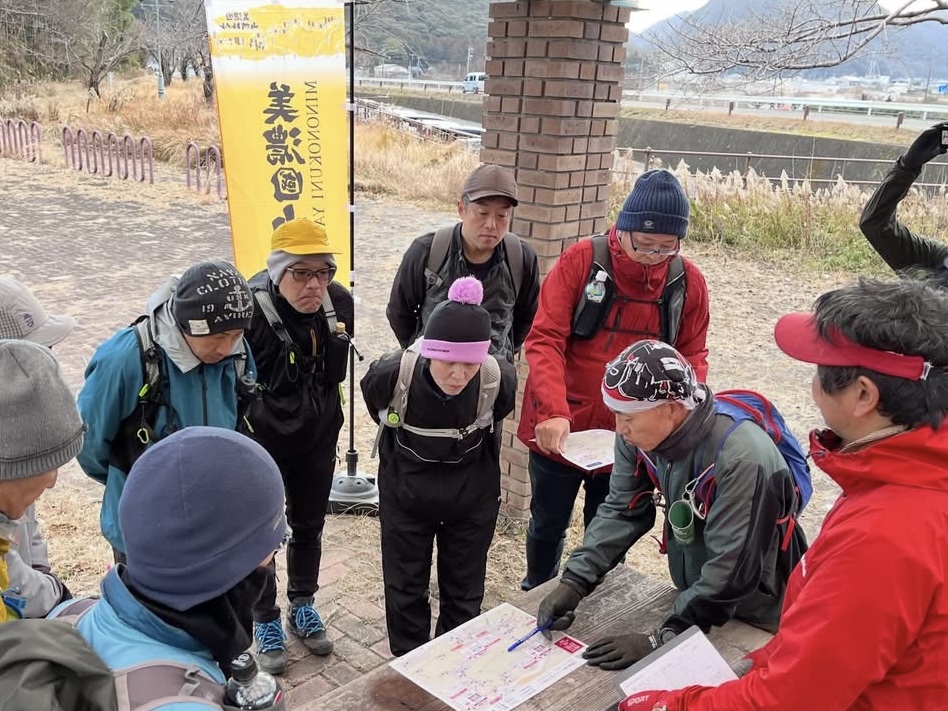
That question eventually brought together people who were exploring ways to connect the mountains from Ibi toward Gifu Castle. A route of roughly 100 kilometers began to take shape.
What started with individuals exploring their local mountains gradually attracted volunteers and collaborators from different communities and eventually developed into an organized local initiative.
But what makes the project interesting is not simply the length of the trail or the races held on it.
As people returned to these mountains, they also began rediscovering paths and local history that were in danger of being forgotten.
Not Building New Trails, but Keeping Old Ones Alive
When people stop walking a satoyama path, vegetation gradually takes over. Eventually, even the route itself can disappear.
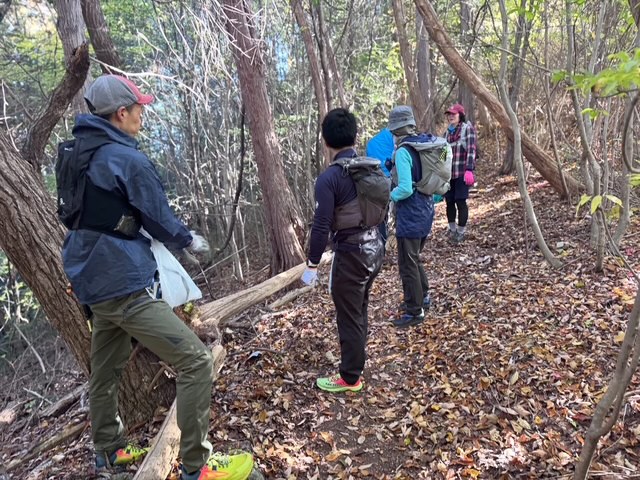
Trail maintenance has therefore become an important part of the Mino-no-Kuni Yamajiro Trail activities.
The approach is deliberately modest.
Rather than cutting new trails or constructing large facilities, volunteers remove fallen trees, deal with loose stones and other hazards, and make existing paths safe enough to use again. As a general rule, living trees are not cut, and the natural landscape is altered as little as possible.
Behind this approach is a simple idea: people do not reshape the mountain for their own convenience. They are, in a sense, guests passing through nature.
This also points to one of the particular challenges facing satoyama.
Keeping people away does not necessarily mean that these landscapes will be preserved.
When paths that were once used by local communities are abandoned, they may eventually disappear. Poorly defined routes can also increase the risk of hikers losing their way.
People walk the paths. They notice what is happening to them. And when necessary, they care for them.
In this sense, using the mountains and conserving them do not always have to be opposing ideas.The experience in Gifu offers one example of how the two can work together.
Walking into Local History
The trail has also become a way of reconnecting people with the history of the region.
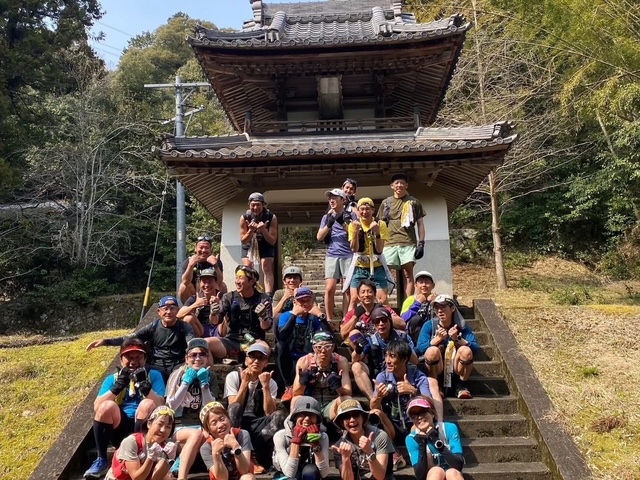
One initiative, called the Seino Kaitaku Trail Journey, divided part of a planned 100-mile route into eight sections. Participants walked or ran through the mountains while visiting historic sites, including old castle ruins around Sekigahara, battlefields and positions once occupied by samurai commanders.
The events were not designed only for experienced trail runners. Routes were also planned so that beginners and people interested primarily in local history could participate.
Instead of simply passing through the landscape, participants could stop and ask what had happened there centuries before.
The familiar hills then began to look different.
Mountains are part of nature, but they can also be places where people have travelled, worked and lived — and where history has unfolded.
A modern trail can therefore become an entrance into the past.
From Trail Running to Community
Trail running has been one of the forces behind this movement.
In places such as the Kakamigahara Alps, local runners began by simply running in their nearby mountains. Over time, local communities and municipalities became interested, and activities expanded to include trail maintenance and organized events.
The significance, however, lies beyond trail running as a sport.
Running can lead someone to discover a mountain they had never really noticed before.
Knowing the mountain can lead to an interest in its paths, nature and history.
And that, in turn, can bring runners into contact with people who maintain trails, people who know local history, and people who live in the surrounding communities.Sport can become an entry point for creating a new relationship between mountains, people and place.
Looking Again at the Mountains Close to Home
Japan has countless satoyama like those of Gifu — mountains that may never become nationally famous, but that have their own landscapes, paths, histories and relationships with local communities.
The activities described here did not begin with a large government program or a grand plan.
Someone walked a local mountain.
Someone began connecting paths.
Others helped keep those paths open.
People who knew the region’s history joined in.
Runners, walkers and local residents gradually became connected.
As a result, mountains that had once seemed separate became linked by a trail — and people became connected as well.
Gifu’s experience is not a model that every community should simply copy. The relationship between people and mountains is different from one region to another.
That is precisely why there is value in asking a simple question:
What do the mountains close to us mean to our own community?
Running. Walking. Caring for a path. Discovering history.
The ways of entering the mountains may differ. But when people continue to engage with them, the value of these familiar landscapes has a better chance of being passed on to the next generation.The people reconnecting the satoyama of Gifu offer one example of how that can happen.
Based on a seven-part Japanese series by Masaru Shiohara, this article was adapted and edited by the Japan Mountain Day Foundation for its English-language website.
# Japan Mountain Day Foundation
# FAO Mountain Partnership
# Gifu Prefecture
# Satoyama
# Trail Running
