
Episode 9: Devotion to “Onbasama”
Hello everyone,
I am Takano, Director of the Tateyama Museum in Toyama Prefecture.
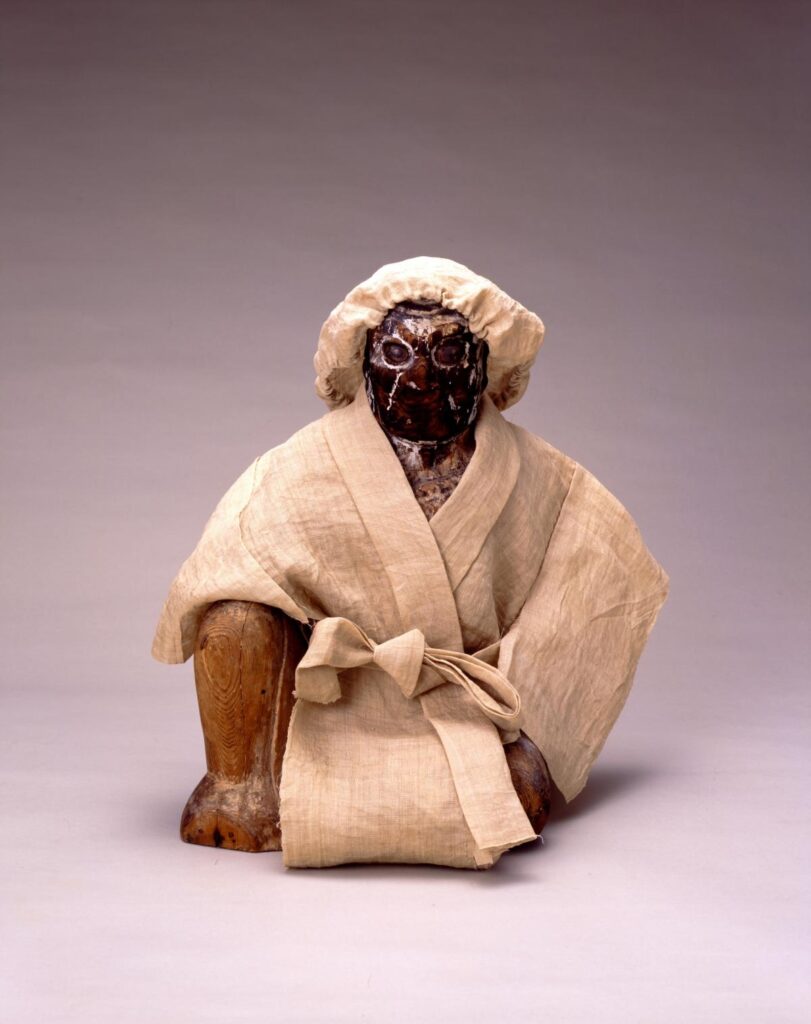
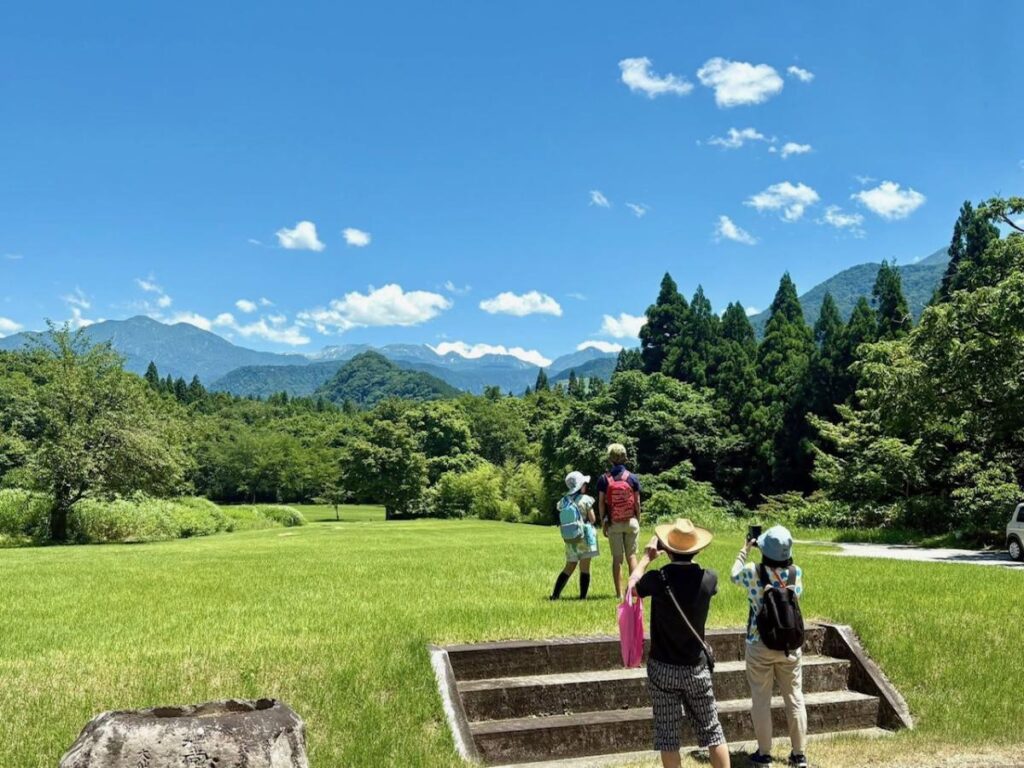
In Ashikuraji at the foot of Mt. Tateyama, a statue of a mountain deity known as Uba-son is enshrined.
Locally, it is affectionately called “Onbasama”, and even today it is deeply revered, especially by women in the community.
In this episode, I will introduce Onbasama and the faith surrounding it.
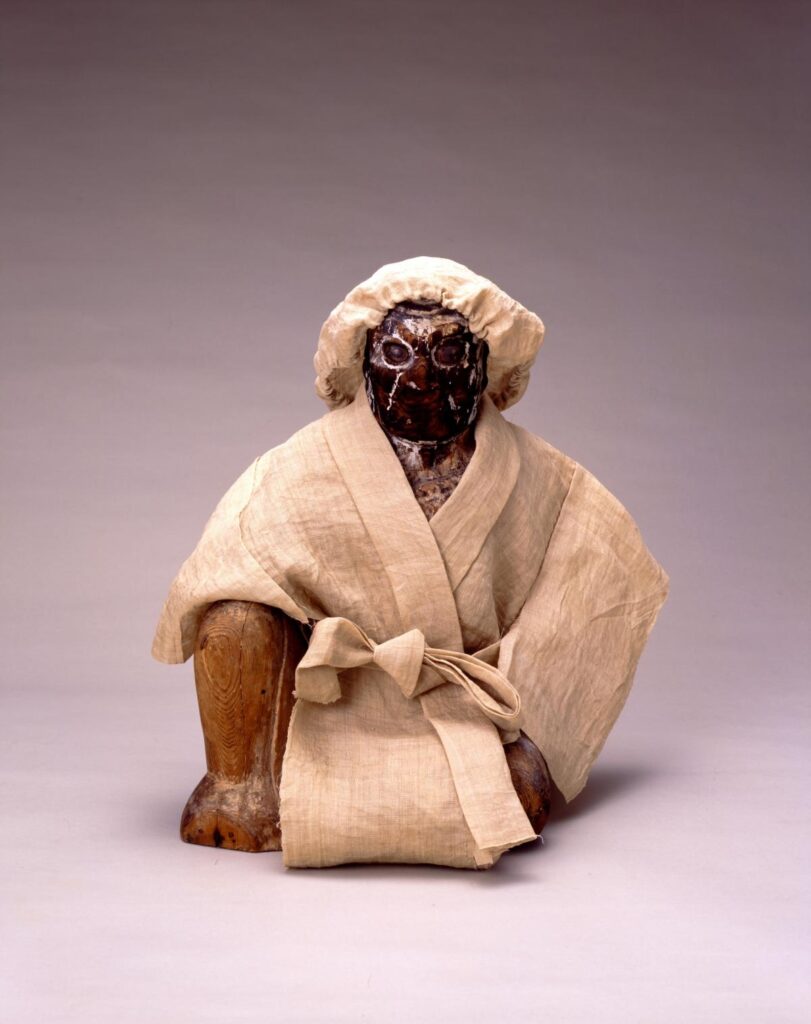
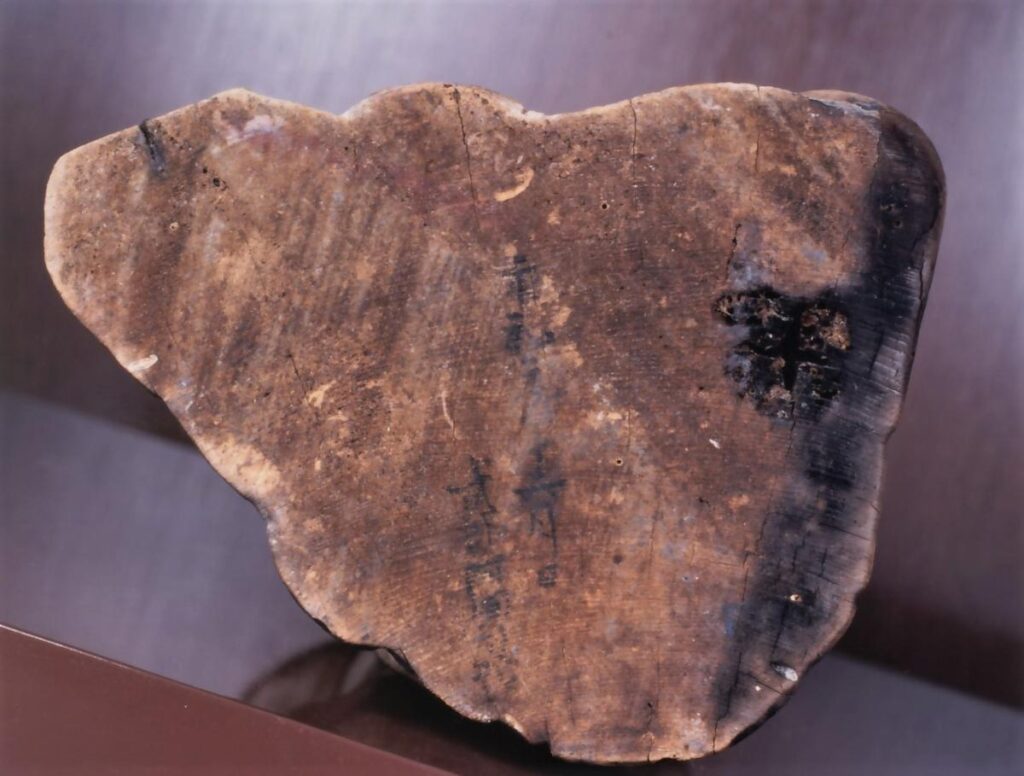
Bearing an ink inscription dated 1375 (Eiwa 1); Designated Cultural Property of Toyama Prefecture; housed in Enma Hall, Ashikuraji
(1) Who is Uba-son of Ashikuraji?
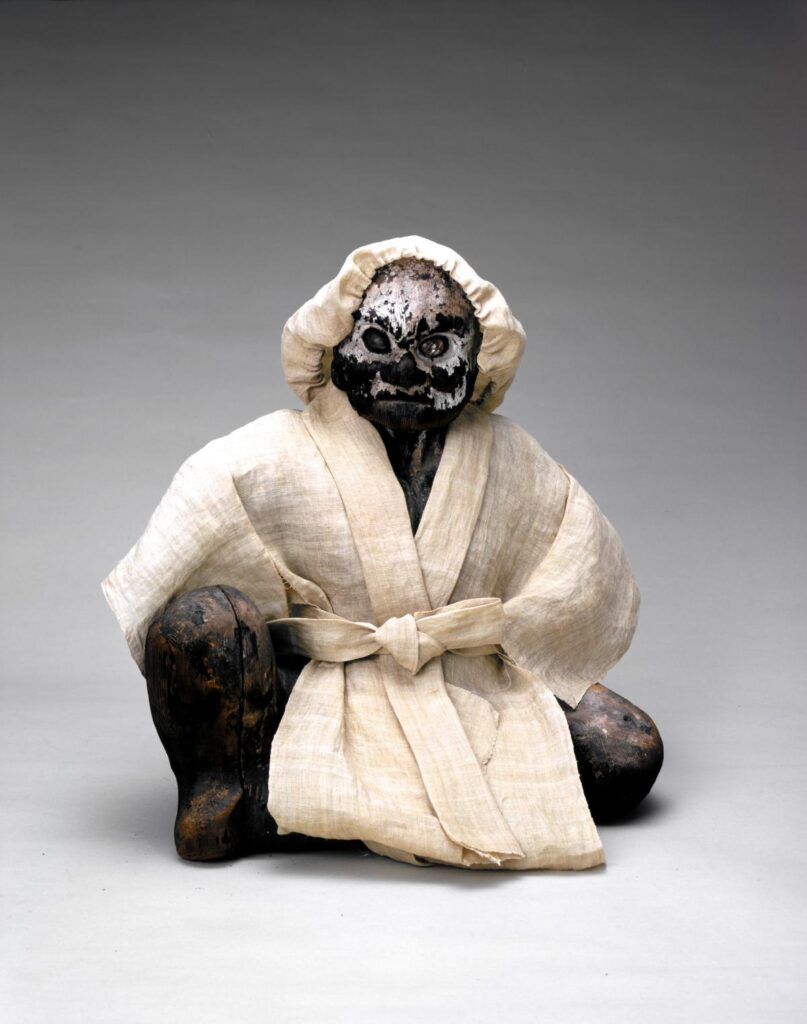
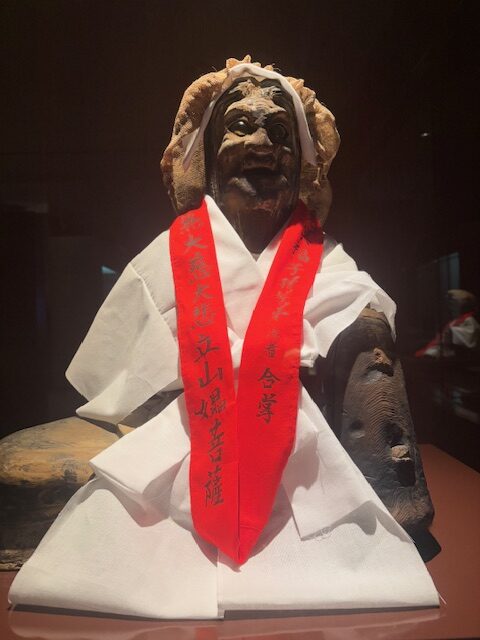
Uba-son is depicted as an elderly woman, with sagging breasts, seated with one knee raised.
Some representations resemble Datsueba, the old woman said to sit by the banks of the Sanzu River in Buddhist cosmology.
It is said that in the past, the Uba Hall housed three principal statues, along with 66 additional figures—matching the number of provinces in Japan during the Edo period. However, in the early Meiji era, the hall was destroyed, and many statues were lost. Today, 24 statues remain, preserved in Enma Hall and the Tateyama Museum.
The exact origin of Uba-son worship is unknown, but the oldest surviving statue bears an inscription dated 1375 (Eiwa 1), indicating that the cult existed at least as early as the Nanbokuchō period.
In the Edo-period encyclopedia Wakan Sansai Zue, Uba-son is described as the mother of the founder of Mt. Tateyama, Jikō Shōnin (also known as Saeki no Ariyori or Ariwaka), and is sometimes regarded as the mother of Tateyama Gongen—suggesting her role as a mother deity.
According to the “Origin Story of the Uba Hall” from Nikkōbō in Ashikuraji, she is the mother of all beings, said to have flown down holding grains in her left hand and hemp seeds in her right—symbolizing the blessings of food and clothing.Thus, Uba-son embodies multiple layers of meaning:
• A water deity worshipped by agricultural communities
• A mountain deity revered by hunters
• A Buddhist figure, later interpreted as an incarnation of Dainichi Nyorai
Scholars suggest that over time, the original “Uba deity” evolved into “Uba-son” under Buddhist influence.
(2) What Was the Uba Hall Like?
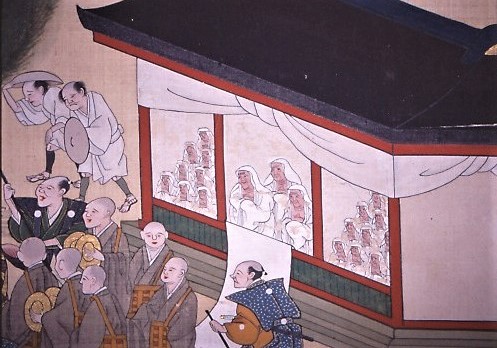
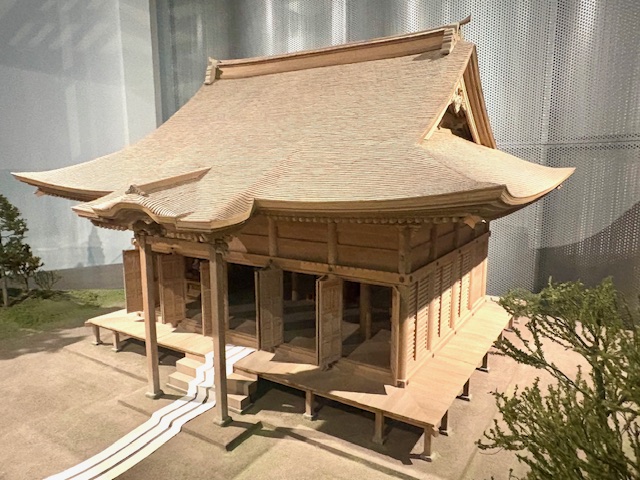
During the Edo period, the Uba Hall stood on the left bank of the Uba Valley River (now Ubadō River).Architectural drawings by Yamagami Zen’emon, an official carpenter of the Kaga Domain, show that the hall measured approximately:
• 9 meters (five bays) wide
• 7 meters (four bays) deep
It was built in the irimoya (hip-and-gable) style.
The hall was destroyed by fire in the Tenmei era (1780s). While the three principal statues survived, many accompanying figures and decorations were lost.
As an officially funded construction of the Kaga Domain, it was rebuilt in 1787.
Numerous fundraising records (kanjin-ki) and origin texts (engi) from this period suggest that active donation campaigns supported its reconstruction.
Today, the site is marked by a foundation platform constructed in the 1960s, with a stone water basin donated in 1844 placed in front.
(3) Devotion to Onbasama
Faith in Onbasama extended even to feudal lords.
• In 1466, Jinbo Naganobu, deputy governor of Etchū Province, donated tax revenues
• In the Tenshō era, Sassa Narimasa made offerings twice
• Maeda Toshiie of the Kaga Domain donated land equivalent to 100 koku
One of the most important rituals at the Uba Hall is the “Omeshikae” (Changing of the Robes).
This annual ceremony involved:
• Seven women aged 61 or older
• Ritual purification beginning on January 8
• Spinning hemp, weaving cloth, and completing garments by February 5
• Offering prayers on February 9 before dressing the deity
By renewing the garments at the arrival of spring, the ritual symbolized:
• Renewal of the deity’s vitality
• Gratitude toward the mountains
Today, the ritual continues on March 13, with cotton cloth garments prepared by local women’s groups such as the Ashikuraji Women’s Association.
This living tradition offers a rare glimpse into the continuity of Tateyama faith.
In March 2024, this ritual was officially designated as a national intangible folk cultural property requiring documentation and preservation, recognizing its importance for future generations.
Next time, we will introduce the Nunobashi Kanjo-e, a Buddhist rite for the salvation of women practiced in Ashikuraji.
We hope you will continue to follow this series.
For Further Reading
If you would like to learn more about Onbasama, we recommend:
• The Earth Mother of Tateyama: Onbasama
• Enshrining Uba-son
For purchase inquiries, please contact the Tateyama Museum.
