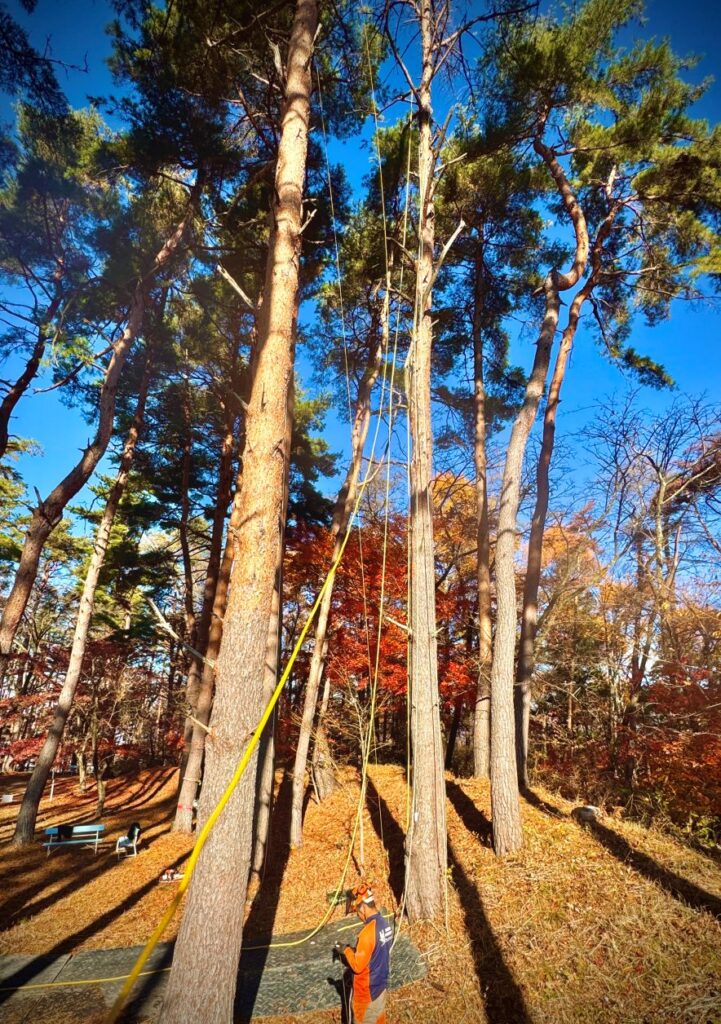
Building a Forestry Company in the Japanese Alps
In 2012, Lama Gyalu Sherpa founded Sherpa Forestry Co., Ltd. As of 2026, the company has ten employees—half Japanese and half Nepalese. His wife, Mariko, manages the office, accounting, and public relations, while Lama Gyalu oversees field operations.
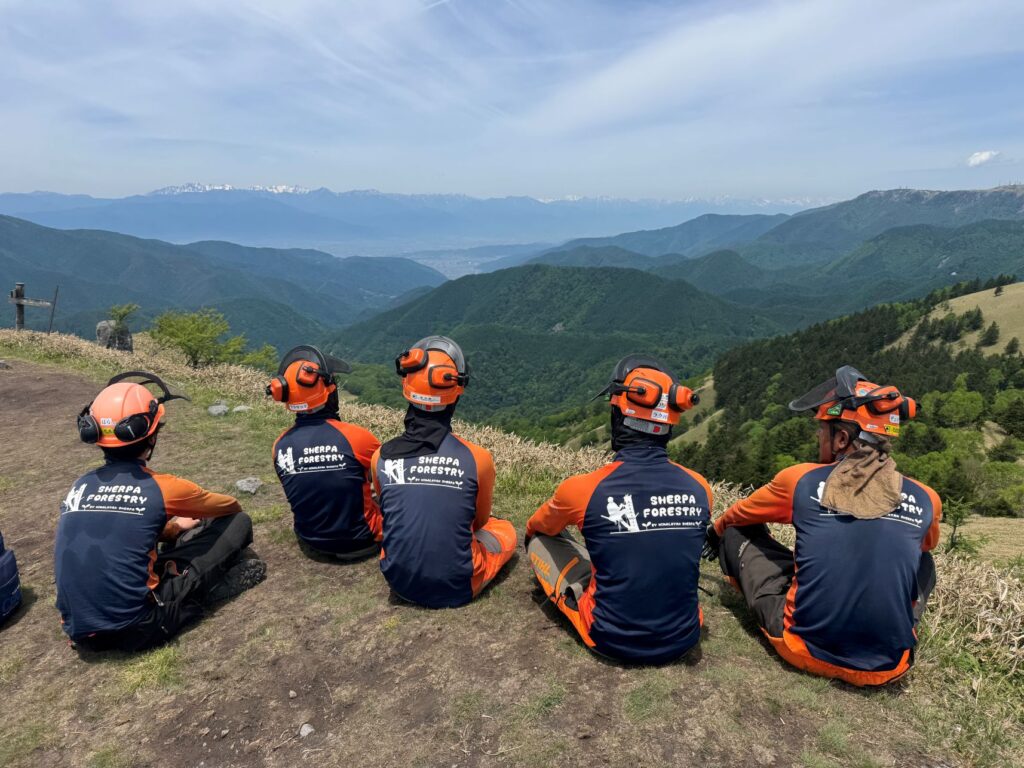
“At first, I simply worked as an employee, doing whatever I was told. But gradually I began thinking, ‘If it were me, I’d do it this way.’ Sometimes I felt a tree should be treated differently, or that another tree should be left standing instead of being cut down. I’ve always loved nature, and I wanted to be the one proposing ideas and planning how the work should be done. That’s why I decided to become independent and establish Sherpa Forestry.”
The company’s work covers a wide range of forestry and tree-care services. From pruning trees in private gardens to planting and maintaining street trees, parks, and green spaces, they handle almost any job requested by their clients.
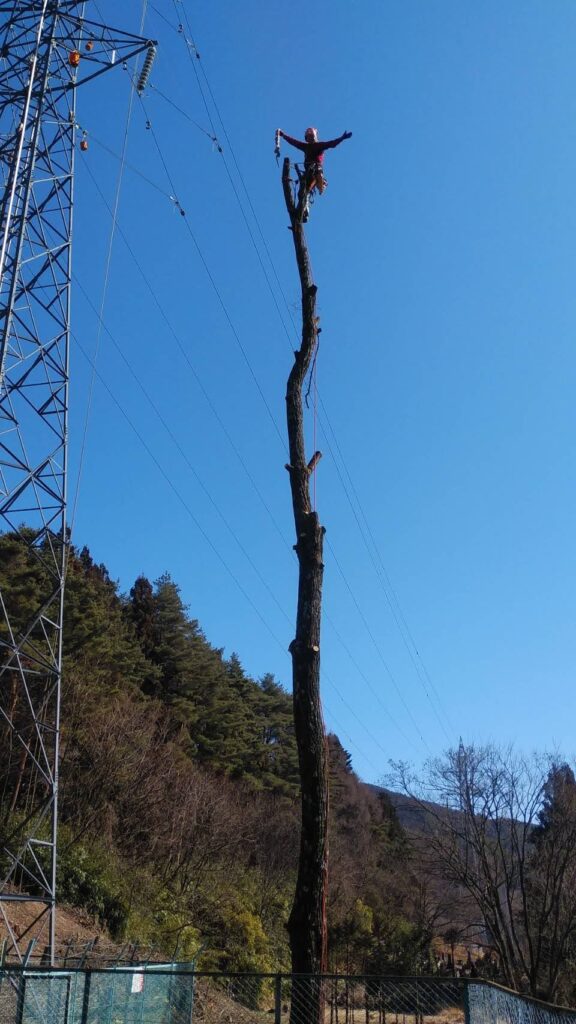
Their particular specialty, however, is dealing with hazardous trees—trees that have grown too tall, whose trunks or branches have begun to decay, or whose size poses a danger to pedestrians or nearby buildings and power lines. These jobs often involve highly technical tree removal and precision pruning.
To perform this work, Lama Gyalu completed numerous professional training courses and earned certification as a Specialist Forestry Technician. Although this is an industry qualification rather than a government license, it recognizes advanced skills required for working high in large trees.
“There aren’t many people who can safely prune or remove tall trees while suspended high above the ground. In Japan, specialists like us are often called Sorashi. Nowadays, even when other contractors win a project, if it includes particularly difficult high-tree work, they’ll often say, ‘Let’s ask Lama to handle that part.’
The climbing skills I developed in mountaineering have been incredibly useful—not just the rope techniques, but also judgment and decision-making. Safety always comes first, of course. But if you’re afraid all the time, you simply can’t do this job.”
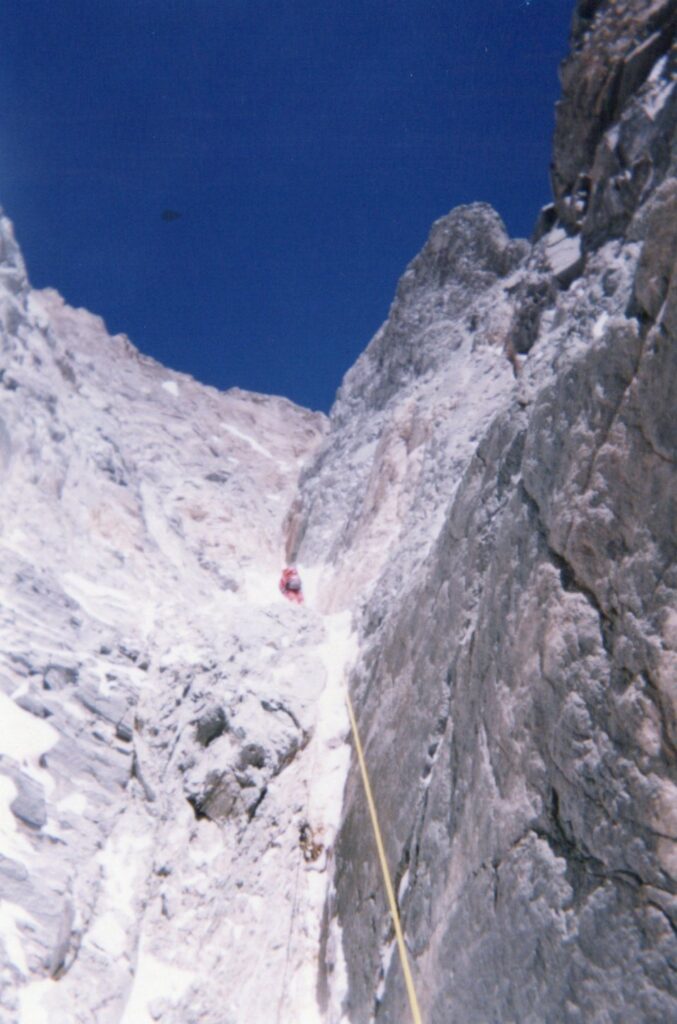
From the South Face of Lhotse to the Forests of Japan
This kind of work requires specialized equipment, much of which has to be rented together with experienced machine operators. In the early days, Lama Gyalu often didn’t know where to find the equipment he needed, and sometimes rental companies even refused his requests.
Today, however, he has built a solid reputation. Equipment is no longer difficult to obtain, and relationships with other forestry companies have also changed.
“Companies in the same business are competitors, of course. But I’ve come to realize they’re also partners who help one another. That makes me very happy.”
Yet as the years passed, Lama Gyalu also came to realize something important.
Simply becoming skilled at cutting trees was not enough.