
— Nature Notes by Mouzuika (Yuukou Saito) —
(6) The Last Edelweiss of Tohoku
Perhaps I am simply old-fashioned,
but whenever I hear the phrase “a flower beyond reach,” I immediately think of Edelweiss.
The true Edelweiss (Leontopodium alpinum) blooms in the high mountains of the European Alps and does not grow in Japan.
Yet Japan has several remarkably similar species belonging to the same genus, Leontopodium.
Curiously, while these plants are largely absent from the Japanese Alps and even Hokkaido’s Daisetsuzan range (with the exception of Mt. Kisokomagatake),
they are unexpectedly abundant in the mountains of Tohoku.
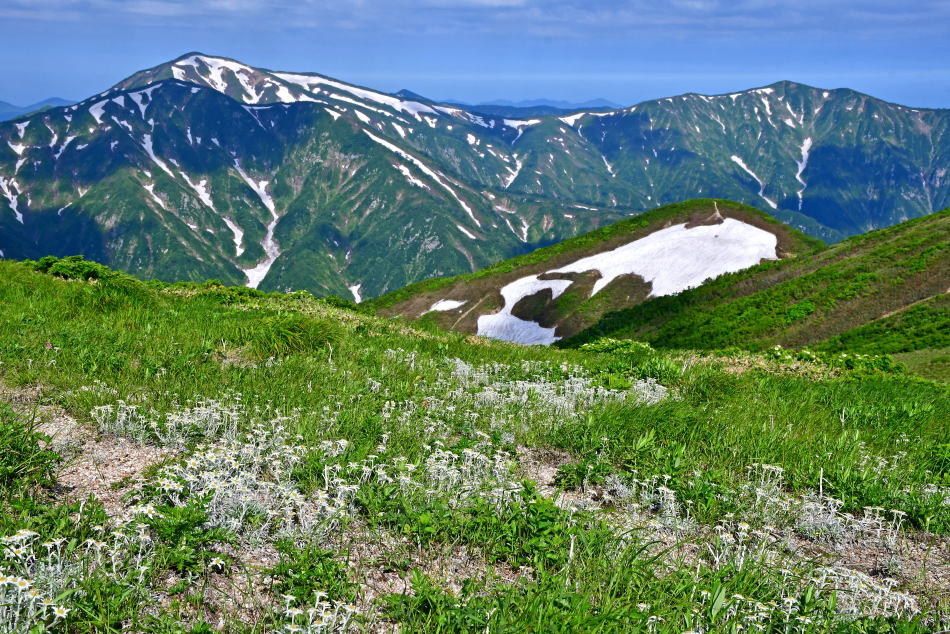
(2019/06/26)
This was the largest colony of Miyama-usuyukisou I had ever seen.
That day, fierce winds swept across the ridge, nearly blowing my hat away.
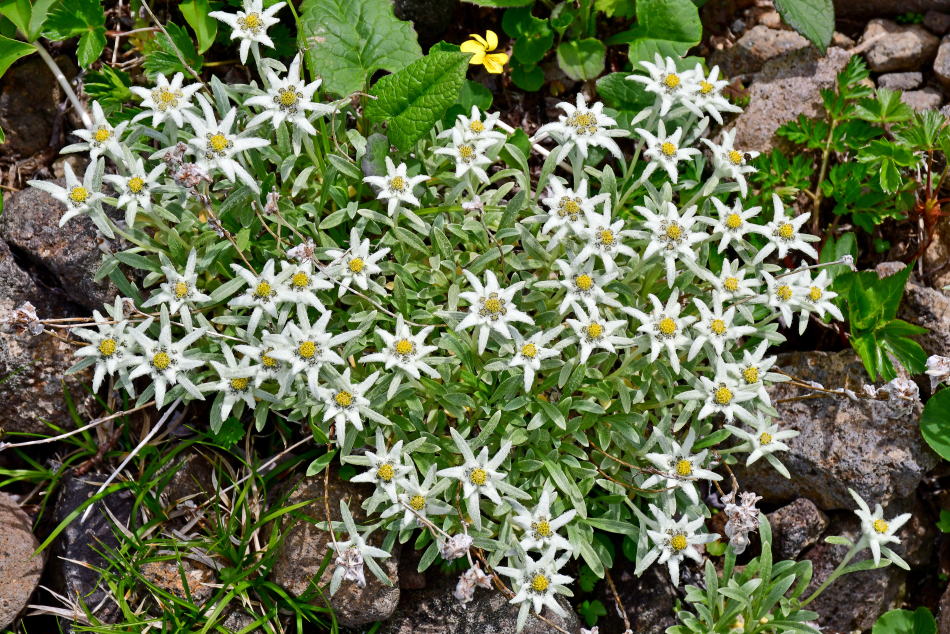
Today, however, Miyama-usuyukisou is no longer abundant on Mt. Chokai.
Its disappearance has become a real concern.
In the Ou Mountains, the species now appears to be very scarce.
It was once said to grow in the Waga Mountains and Mt. Yakeishi as well,
but I have never seen it there myself, nor have I heard recent reports from others.
At present, Mt. Akita-Komagatake may be the only mountain in the Ou Range where it still survives.
Even there, the numbers are small, and plants near hiking trails have almost vanished.
In earlier years, photographers used to line up before a particular clump to take pictures.
In recent years, I have not seen them.
Was it stolen by plant collectors?
If so, it is a deeply saddening thing.
(7) Flowers That Pierce the Heart
Many alpine flowers are beautiful,
but when asked which is the most beautiful, I always hesitate.
Personally, I would nominate the Shiogama flowers — especially Miyama-shiogama and Yotsuba-shiogama.
When I was young, the vivid magenta of Miyama-shiogama blooming on Mt. Gassan in early summer struck me with astonishing force.
Its color pierced not only my eyes, but my heart itself.
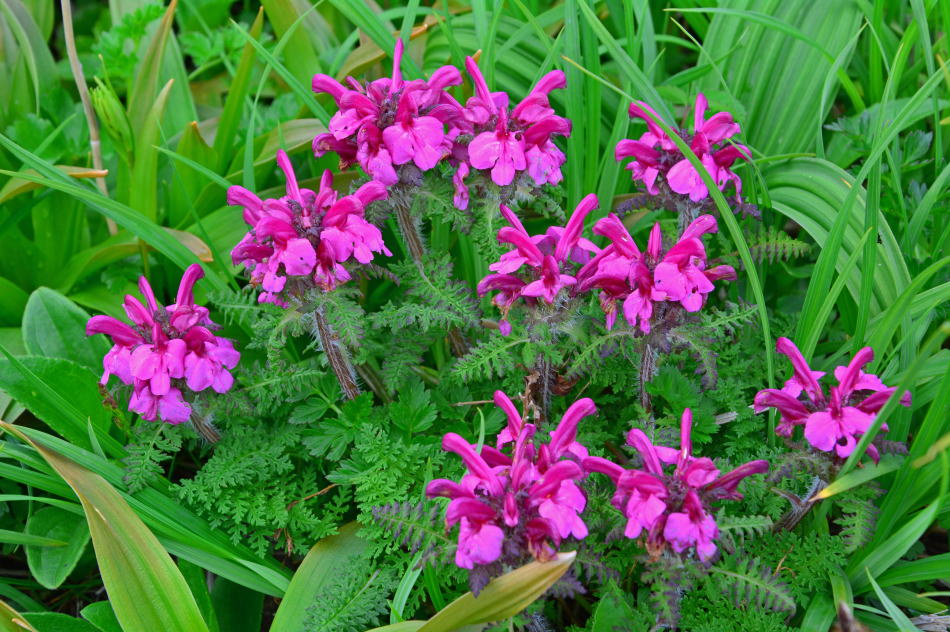
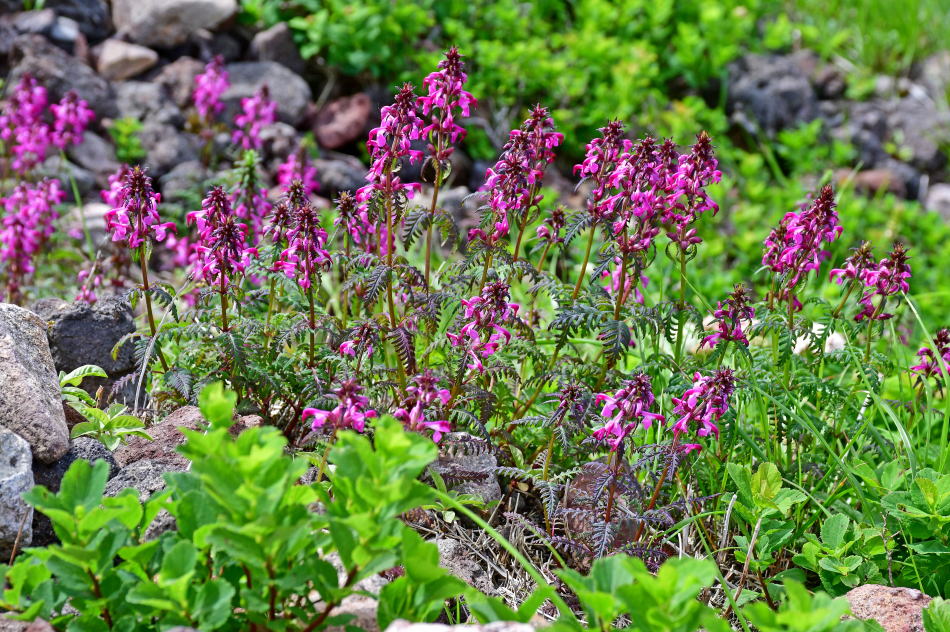
These flowers bloom in alpine meadows and high mountain slopes far removed from the sea.
So why were they given the name Shiogama, which literally evokes a coastal salt kiln?
To be honest, aside from the flowers themselves, the leaves are not especially beautiful — except in a few species such as Miyama-shiogama.
And what about the scientific name Pedicularis?
Looking it up in a Latin dictionary, I found that pediculum means “louse.”
According to Wikipedia, the plant was once used to remove lice.
East or West, the origins of these names strike me as strange and somewhat forced.Yet once a flower has been named “Shiogama,”
I suppose we must continue calling it so, whether we like it or not.
(8) The serpentine Magic of Mt. Hayachine
Among the many famous flower mountains of Tohoku,
Mt. Hayachine in Iwate may be the most extraordinary of all.
This mountain is home to numerous endemic species found nowhere else in the world.
Among them, the most famous and beloved is surely Hayachine-usuyukisou.
Among Japan’s Edelweiss relatives, this species is considered the closest to the true Edelweiss of the European Alps.
It is one of the endemic plants of Mt. Hayachine, a mountain formed of serpentine rock, and grows nowhere else on Earth.
(This story continues from Part 6: “Japanese Edelweiss.”)
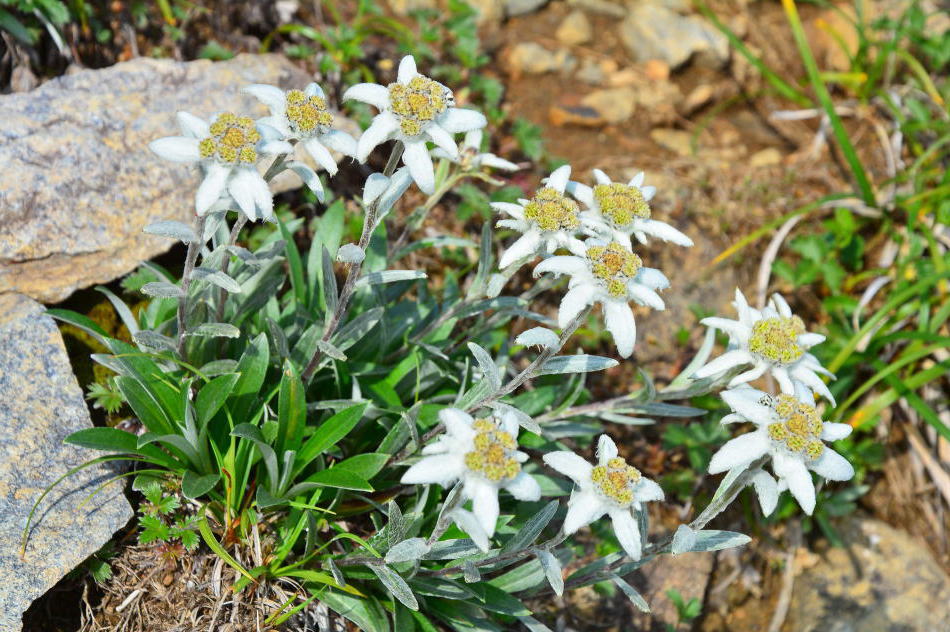
Compared with other Japanese Edelweiss species — such as Miyama-usuyukisou found in the mountains along the Sea of Japan —
this flower is clearly larger both in flower-head size and plant height.
“The Serpentine Magic”
Mt. Hayachine is composed of serpentine rock, a rare metamorphic rock formed from peridotite.
Because of this unusual geology, many plants grow here that are absent or rare on ordinary mountains.The phrase “Serpentine Magic” is my own invention,
describing the unique floral landscapes seen on serpentine mountains such as Mt. Hayachine.
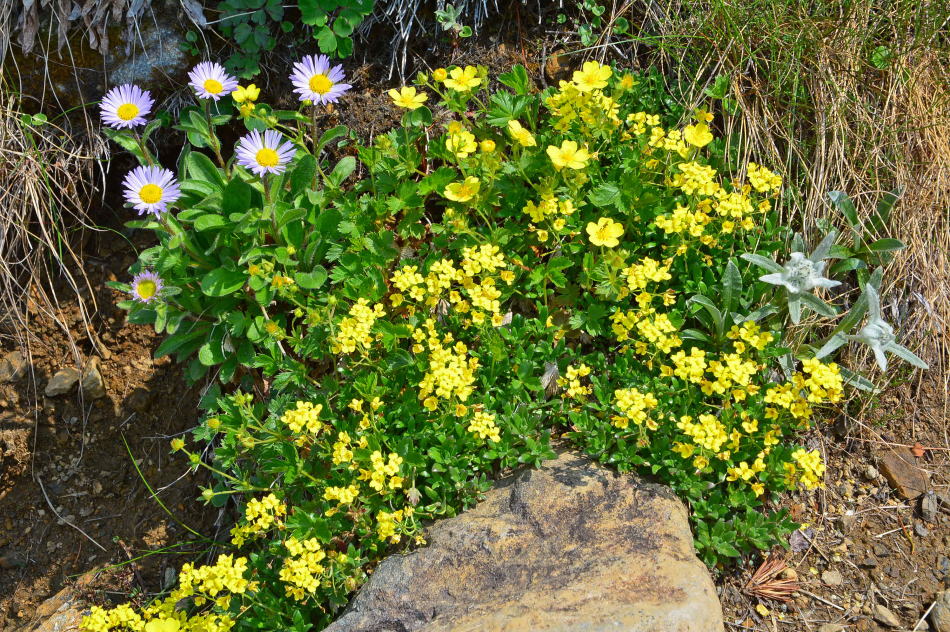
Miyama-azumagiku
This alpine daisy seems particularly well suited to serpentine rock.
Even outside Mt. Hayachine, it often appears on serpentine mountains — for example, in parts of Mt. Shirouma.
(9) The Yellow Garden of Yakeishi
Many alpine plants bear yellow flowers.
Here I would like to introduce two representatives: Miyama-kinpouge and Shinano-kinbai.
Allow me to share an old memory.
On July 8, 2017, I climbed Mt. Yakeishi (1,548m) in Iwate Prefecture.
Usually I approach the mountain from the Iwate side via Nakanuma, but on that day I entered from Higashi-Naruse Village in Akita Prefecture.For most of the climb, the trail passed through dense beech forest with little visibility.
But as I neared Yakeishi Marsh around the eighth station, the landscape suddenly opened into this astonishing scene.
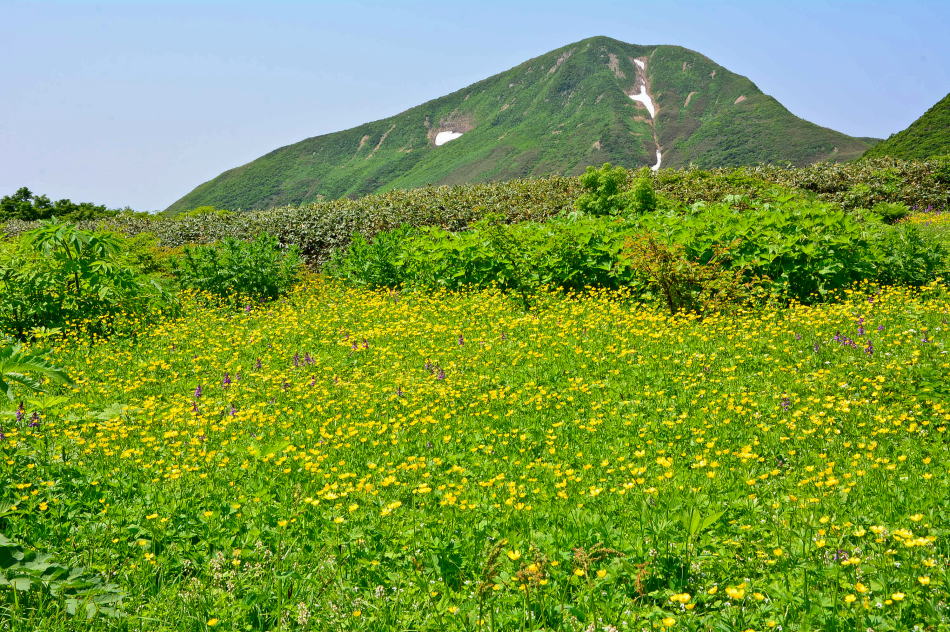
(2017/07/08)
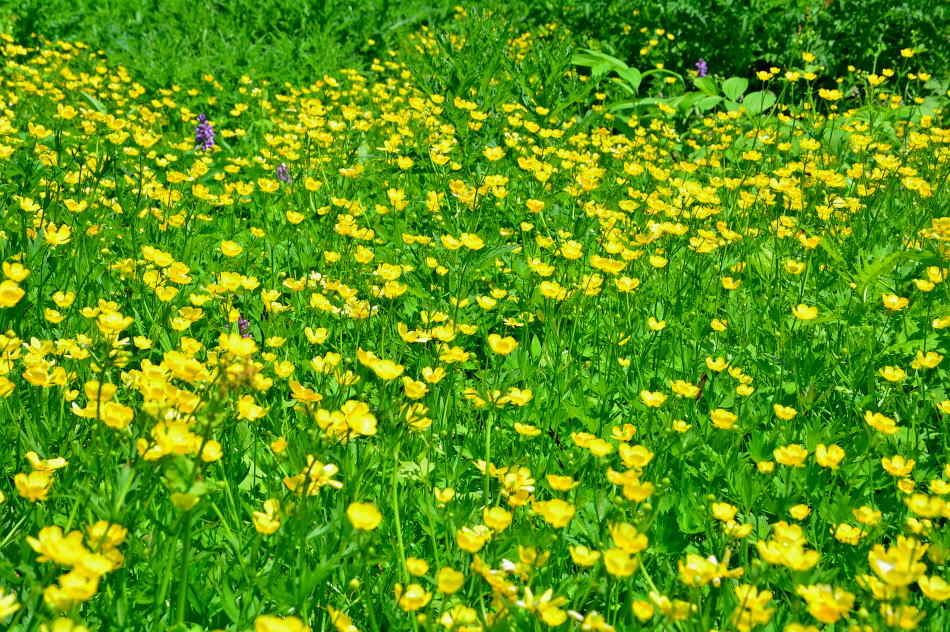
(2017/07/08)
A Sea of Buttercups
I privately named this place “The Yellow Garden of Yakeishi.”
Why did such a vast yellow garden appear here?
Until about twenty-five years ago, this area was used as summer pasture for cattle.
The cattle grazed on the surrounding vegetation, but like humans, they had preferences.
Plants that were poisonous, bitter, or thorny were avoided.
Since Miyama-kinpouge is poisonous, it was left untouched and gradually spread across the meadow.
(10) Messengers from the North
Where did Japan’s alpine flowers come from?
Some species originated in Japan and neighboring East Asia before adapting to life in the mountains.
But many others arrived from the far north.
These northern plants likely spread southward from Siberia and the Kamchatka Peninsula, crossing Sakhalin and the Kuril Islands before reaching Hokkaido.
Some even have relatives growing as far away as Alaska.
During colder ages, these northern species expanded southward into central Honshu.
Yet some stopped halfway and remained in Tohoku.
In other words, these are flowers absent from the Japanese Alps and central Honshu, but still found in both Hokkaido and northeastern Japan.The number of such species turned out to be smaller than I expected,
yet each of them possesses a striking beauty.
Ezo-tsutsuji
This flower is brilliantly colored and immediately catches the eye.
In Tohoku, it grows from Hachimantai to Mt. Iwate, Mt. Akita-Komagatake, and the Waga Mountains.
Curiously, however, it reaches its greatest abundance near the southern edge of its range — on Mt. Akita-Komagatake.
There, among rocky slopes, it forms unique alpine scenery together with Miyama-daikonsou, whose flowers are yellow.In Hokkaido, by contrast, the plants I saw on Mt. Daisetsuzan were extremely low-growing, almost as though the flowers alone were blooming directly from the ground.
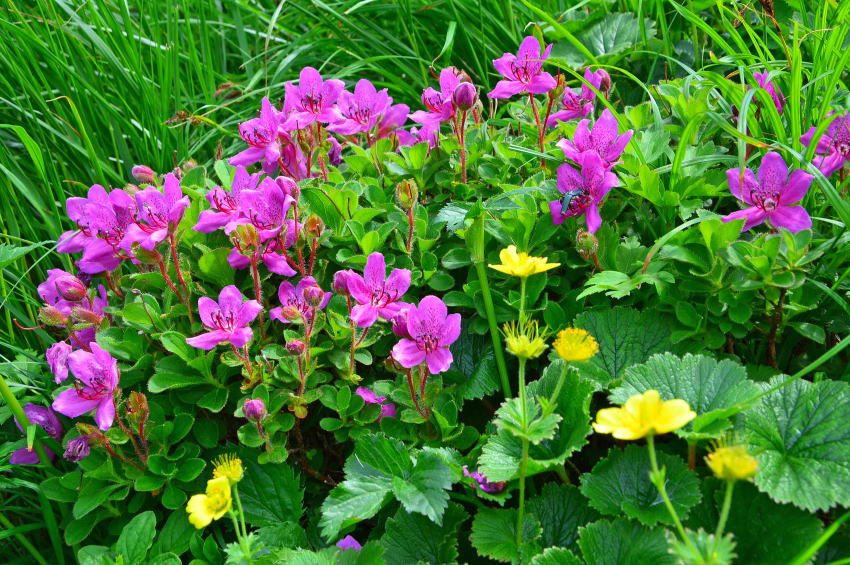
(2017/07/10, Mt. Akita-Komagatake)
Iwabukuro
The second flower is Iwabukuro.
In Tohoku, it grows on the Hakkoda Mountains, Mt. Iwate, Mt. Akita-Komagatake, and Mt. Chokai.
Like Ezo-tsutsuji, it becomes especially abundant near the southern limit of its range — on Mt. Chokai.
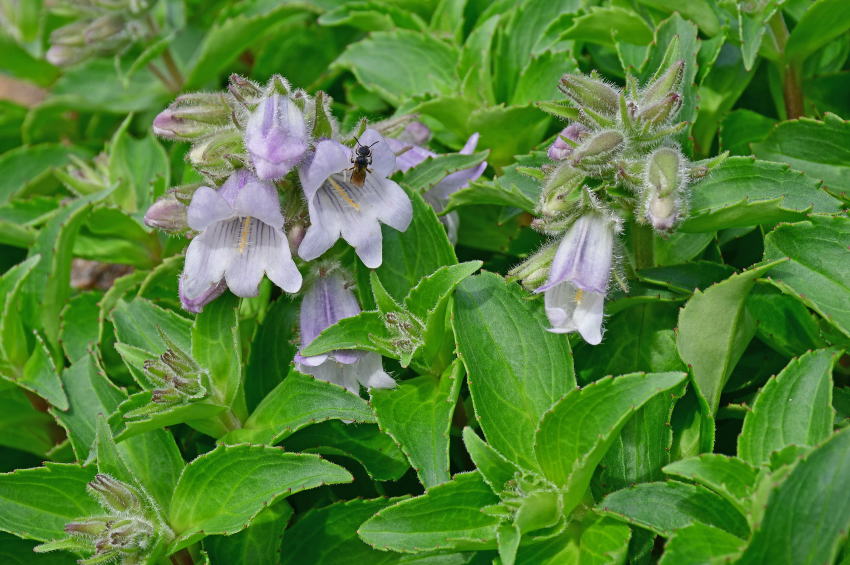
(2020/07/10, Hakkoda Mountains)
Touge-buki
The third is Touge-buki
(Ligularia hodgsonii var. hodgsonii).
It resembles Maruba-dakebuki, commonly seen in the mountains of Honshu,
but is slightly smaller and easily distinguished by the bracts surrounding the flower head.
In Tohoku, it occurs in alpine regions north of Mt. Gassan in Yamagata Prefecture.
Yet on the Oga Peninsula in Akita and in Aomori, it also appears in low mountains and even near the coast.
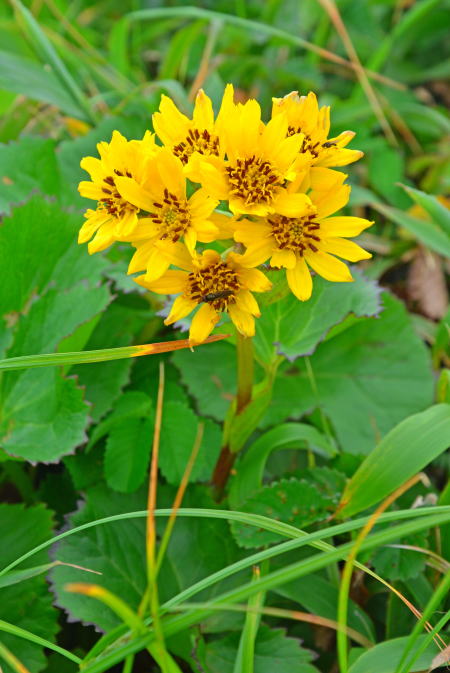
(2014/08/02, Mt. Gassan)
