Foreign-born Leaders Revitalizing Japan’s Rural Mountain Communities
Episode 4: Building Connections Through Cultural Exchange
Festivals as Platforms for Mutual Understanding
The primary objective behind establishing the Toyama–Nepal Cultural Exchange Association (hereafter referred to as the Association) was to foster mutual understanding between local residents and the growing Nepalese community in the region through direct interaction.
Unlike major metropolitan areas, rural prefectures such as Toyama had, until recently, relatively few opportunities for everyday contact with foreign residents. While international tourists occasionally visited the area, the number of long-term foreign residents remained limited. As the Nepalese population has increased rapidly in recent years, this demographic shift inevitably generated a degree of uncertainty and, at times, friction within the local community.
Dhalma believed that, as someone positioned between these two groups, it was essential to create opportunities for meaningful engagement in order to build trust and understanding.
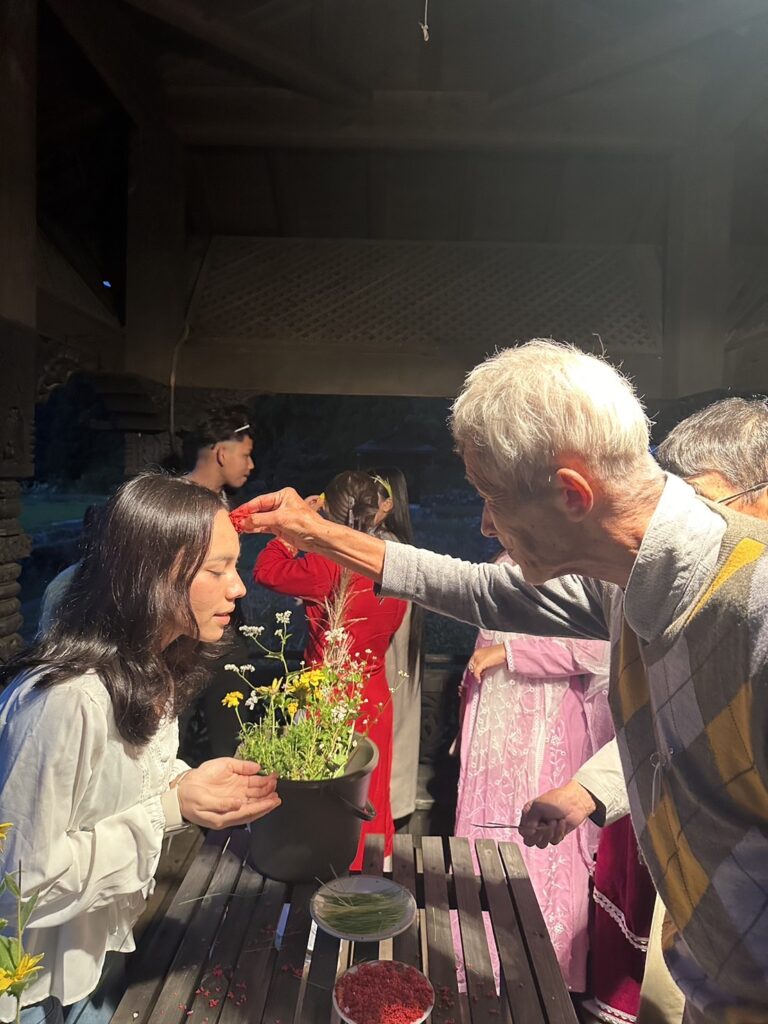
As a first step, the Association began organizing events that introduced Nepalese culture to local communities across the prefecture. Among these initiatives, the annual celebration of Dashain has become particularly significant.
Originally a Hindu festival held in autumn, Dashain is now the largest national celebration in Nepal. Lasting nearly two weeks, it provides an opportunity for family members and relatives who normally live apart to gather and celebrate together.
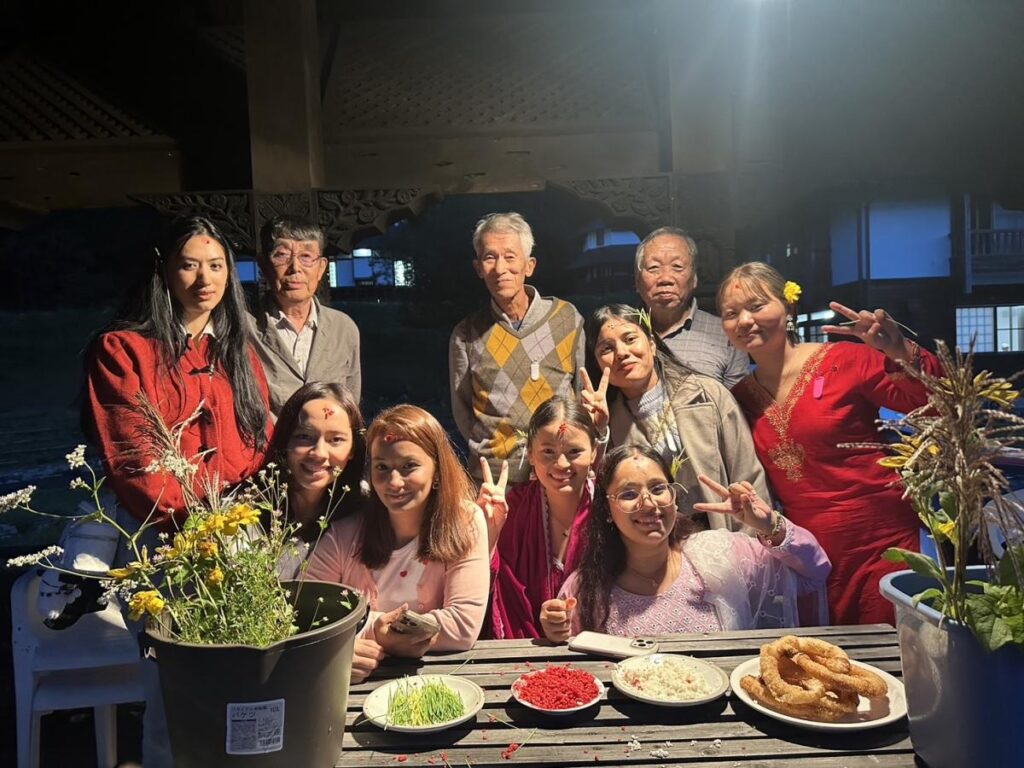
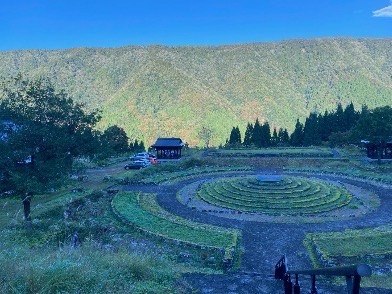
Since 2016, the Association has hosted a Dashain event each year during a weekend in late October. In 2024, approximately 80 Nepalese residents living in Toyama and neighboring areas participated, joined by around 30 Japanese residents. The two-day event was held at Meditation Village in Nanto City, located in the southern part of the prefecture.
Toyama is one of Japan’s most mountainous regions, and several municipalities have established sister-city relationships with towns in Nepal. Nanto City is among them, which is why it was selected as the venue.
However, the site is located far from the population centers in the northern part of the prefecture, such as Toyama City and Takaoka City, where many Nepalese residents live. Public transportation options are limited, and many Nepalese residents do not own private vehicles.
To address this, Dhalma coordinated with local acquaintances who owned larger vehicles to transport participants from various parts of the prefecture to the venue.
“That journey itself often becomes the starting point for exchange,” he explains. “Not everyone who offers a ride can speak English, and many Nepalese participants are not yet fluent in Japanese. But during the two-hour drive, people often become surprisingly close.”
Upon arrival, participants gathered around cooking equipment, food ingredients, and propane gas cylinders transported by Japanese volunteers using small trucks. Together, Nepalese and Japanese participants began preparing traditional Nepalese dishes for dinner.Japanese, English, and Nepali languages were heard throughout the venue, creating a warm and collaborative atmosphere.
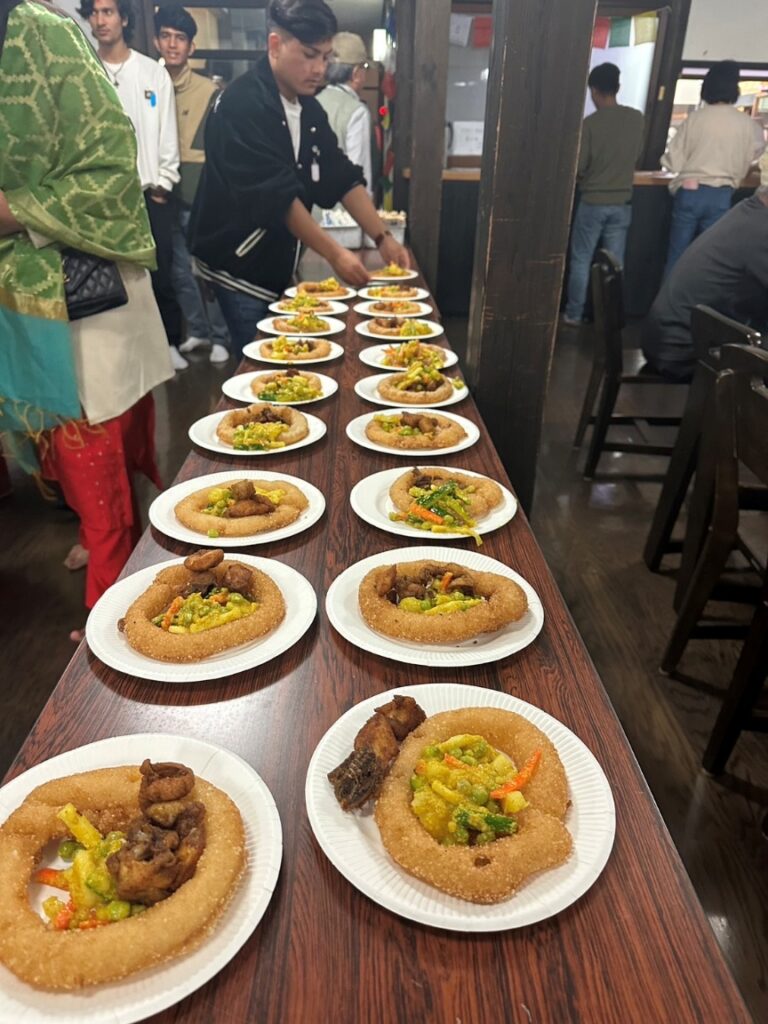
“We don’t insist on perfect authenticity,” Dhalma says with a smile. “Even if the dishes don’t turn out exactly right, it doesn’t matter. The important thing is that we cook together, eat together, and talk together.”
Before attending the event, I had assumed that most Japanese participants were either familiar with Nepal or had previously visited the country. While some had indeed spent time in Nepal as members of the Japan Overseas Cooperation Volunteers and spoke Nepali fluently, the majority of Japanese participants admitted that they had little prior knowledge of Nepal before being invited by Dhalma.
“At first, I joined simply because Dhalma asked me to,” one participant said. “I thought it might help keep my mind active.” However, after participating once, many returned year after year.
For Nepalese participants as well, the event provided an opportunity to discover the presence of fellow Nepalese residents living nearby. Many had not realized how many Nepalese people were residing in the region until they attended.
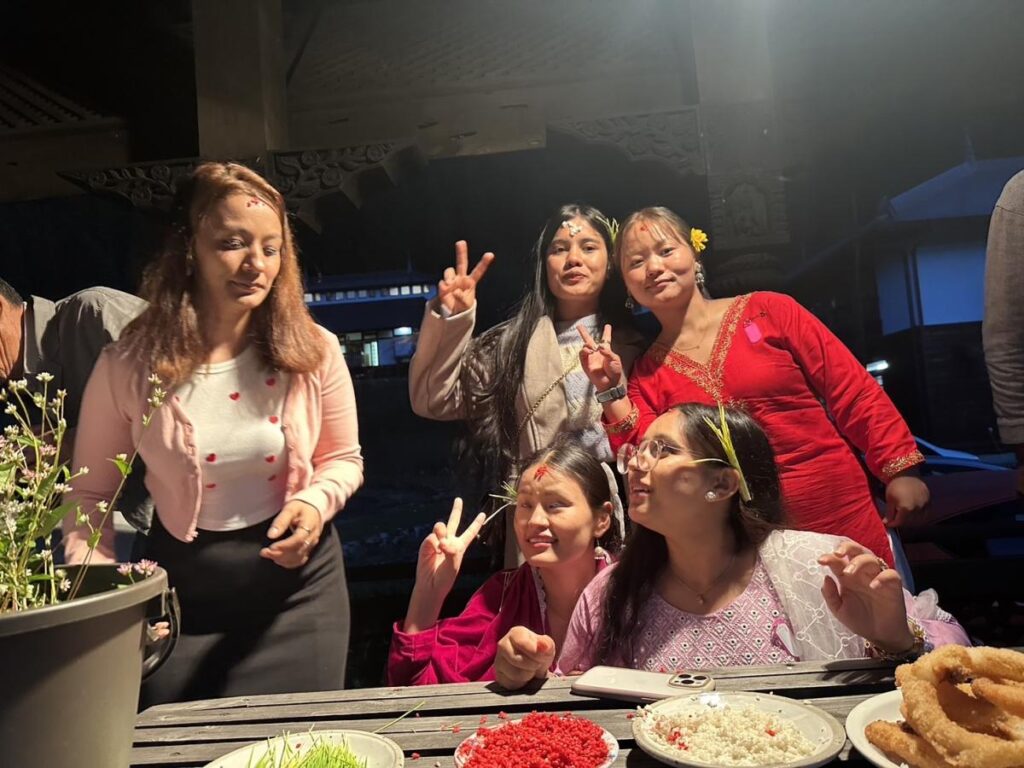
Daily life for many Nepalese residents in Toyama typically consists of commuting between their apartments, workplaces, and Japanese language schools, with limited opportunities for social interaction beyond occasional shopping trips.
For them, Dashain has become a rare occasion to speak Nepali freely, share meals, sing traditional songs, and dance together late into the night.
Unlike in Nepal, where differences in regional origin, ethnicity, or caste may shape social relations, here participants reaffirm their shared identity simply as Nepalese people.
New friendships often emerge through these gatherings, not only between Nepalese and Japanese participants, but also among Nepalese residents themselves.
“That wasn’t something I initially anticipated,” Dhalma says with a laugh. “But as the event has grown, it’s becoming increasingly difficult for me to manage everything alone. The Nepalese population here will likely continue to increase. Still, I’m sure we’ll find a way.”Perhaps that optimism is one of Dhalma’s defining strengths.
Related Topics
• Social Integration in Rural Mountain Communities
• Multicultural Community Building
• Cultural Exchange in Aging Societies
• Informal Networks for Local Cohesion
• Everyday Coexistence in Rural Japan
Learn More
This episode highlights how cultural exchange initiatives can foster social integration and trust-building between local residents and foreign-born community members in rural mountain regions.Related initiatives can be found in:
• Community-based Cultural Exchange Programs
• Multicultural Integration in Local Communities
• Participatory Social Inclusion Models