
Hello everyone,
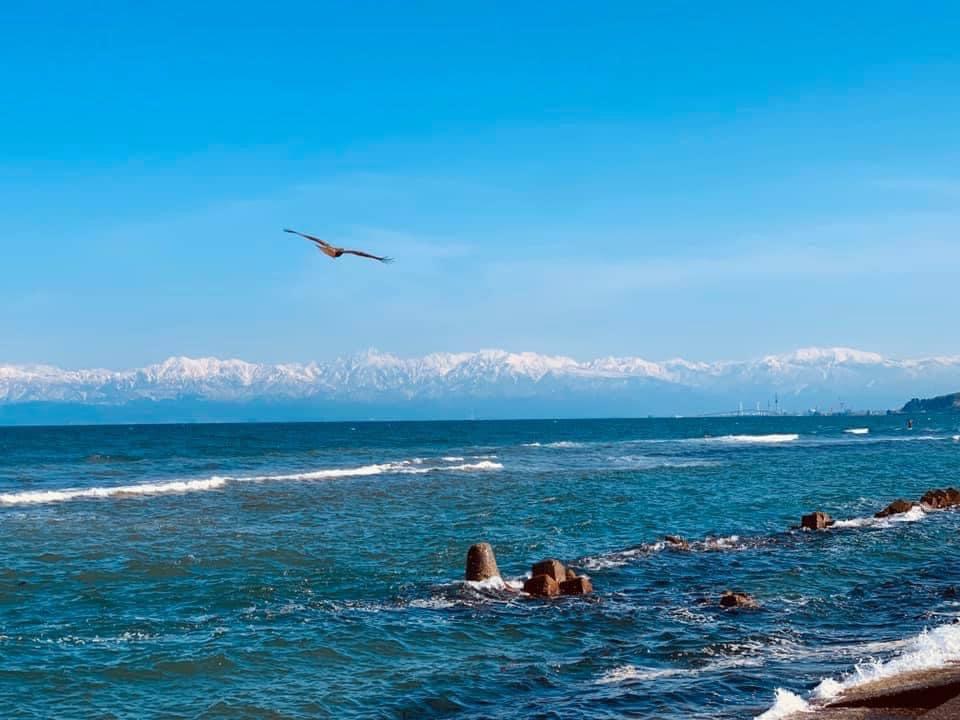
I am Yasuhiko Takano, Director of the Toyama Prefectural Tateyama Museum.Mount Tateyama, rising majestically along the Japan Sea coast, has inspired people for centuries. From Mt. Kureha in Toyama City, one can enjoy a sweeping view of the Tateyama Mountain Range—an outlook beloved by generations of local residents. But how did people in ancient times perceive this magnificent landscape?
One important clue can be found in Japan’s oldest anthology of poetry, the Manyōshū.

Tateyama in the Manyōshū
The earliest written references to Tateyama appear in the Manyōshū, a collection of more than 4,500 poems compiled in the late Nara period (8th century). At that time, the provincial capital of Etchū (present-day Toyama Prefecture) was located around what is now the area of Shōkō-ji Temple in Fushiki, Takaoka City—a place from which the Tateyama Range can still be seen.In 746, at the age of twenty-nine, Ōtomo no Yakamochi was appointed governor of Etchū Province. Deeply impressed by the grandeur of the mountains, he composed a long poem known as the Tateyama-fu before returning to the capital the following year. In this poem, he praises Tateyama as a mountain set apart from all others—one possessed by the gods, and worthy of being remembered and spoken of by those who had never seen it.
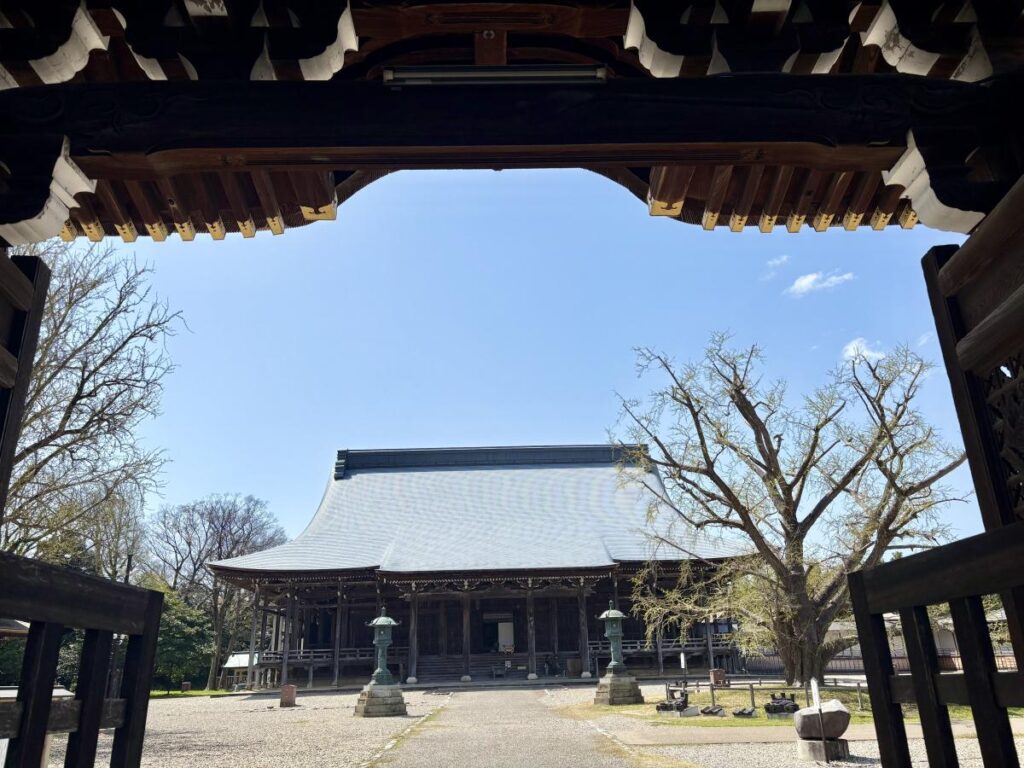
One of the accompanying short poems expresses this sentiment vividly: even in summer, the snow resting on Tateyama never grows tiresome to behold, for it is truly a divine mountain.
Yakamochi’s subordinate, Ōtomo no Ikenushi, responded with an even longer poem the next day, praising Tateyama bathed in the morning sun and describing it as a mountain bearing a sacred name bestowed by the gods. These poems, preserved in Volume 17 of the Manyōshū, represent not only the oldest literary depictions of Tateyama, but also some of the earliest literature of the Northern Japan Alps.
From “Tachiyama” to “Tateyama”
The Manyōshū also preserves an important linguistic clue. In the Nara period, Tateyama was pronounced Tachiyama, not Tateyama as it is today.
Scholars suggest that this shift in pronunciation likely occurred during the Muromachi period (14th–16th centuries). Earlier documents from the Heian and Kamakura periods consistently use Tachiyama, while later travel accounts clearly record the name as Tateyama.
Ancient Mountain Worship and Tateyama
The meaning of Tachiyama has been interpreted in various ways: as a mountain that “stands tall toward the heavens,” or as one shaped like a sharp blade (tachi). The folklorist Kunio Yanagita proposed another view, noting that the ancient word tatsu referred to the manifestation of a deity. In this sense, Tachiyama may mean “the mountain where the gods appear.”
Both Yakamochi and Ikenushi describe Tateyama as a mountain possessed by the gods, revealing an early form of mountain worship. In ancient Japan, high mountains were often regarded as the dwelling places of deities and were revered from afar rather than climbed. Such distant veneration, combined with elements of sun worship suggested by references to the morning light, characterizes the ancient faith surrounding Tateyama.
When we gaze upon the Tateyama Range from afar today, the sense of awe it inspires may not be so different from what people felt more than a thousand years ago.In the next installment, we will travel forward in time to explore Tateyama during the Heian period. I hope you will continue this journey with me.
Written by Yasuhiko Takano
Director, Toyama Prefectural Tateyama Museum
#https://www.yamanohi.net
#Toyama Prefectural Tateyama Museum
#Mountain Faith
#Manyoshu
