
Hello everyone,
I am Yasuhiko Takano, Director of the Toyama Prefectural Tateyama Museum.
In the previous installment, I introduced how Jigokudani (Hell Valley) on Mount Tateyama came to be revered as a place where hell described in Buddhist teachings was believed to exist in reality. I also discussed Heian-period Buddhist tales in which women who had fallen into hell were saved through metsuza kuyō—memorial offerings based on the Lotus Sutra—and were reborn in Trāyastriṃśa Heaven.
In this installment, I will focus on the relationship between Tateyama and Taishakuten, the deity believed to reside in Trāyastriṃśa Heaven, and examine his role within Tateyama faith.
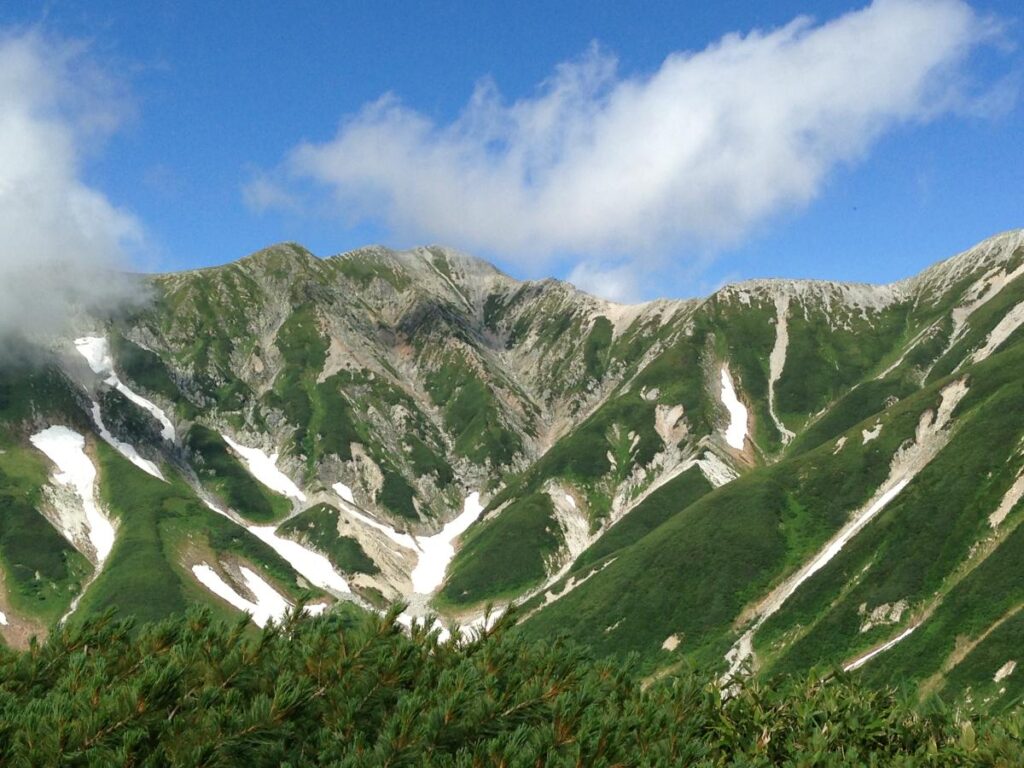
According to Volume 14 of the Konjaku Monogatari-shū, Tateyama is home not only to hell but also to a great peak known as Taishaku no Take, the mountain where Taishakuten is said to reside. There, Taishakuten gathers with officials of the netherworld to observe and judge the good and evil deeds of human beings, determining whether they are to be cast into hell.
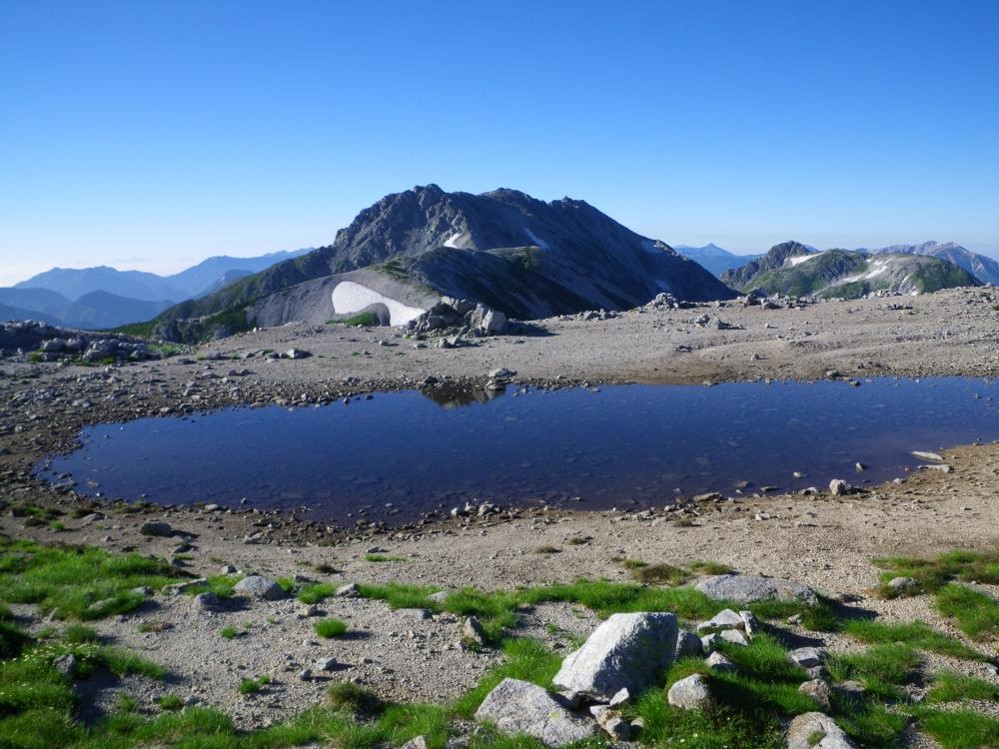
Taishakuten is one of the heavenly beings (tenbu) who protect Buddhism and originates from Indra, the ancient Indian god of war. He is sometimes depicted holding a brush and a scroll, symbolizing his role as a recorder and judge of human actions. In this respect, Taishakuten functioned much like King Enma, serving as a judge of hell in Buddhist belief.Edo-period (1615-1868) sources such as the Wakan Sansai Zue and the Tateyama Mandala identify Mt. Bessan, one of Tateyama’s three sacred peaks, by the alternate name Mount Taishaku. During this period, Taishakuten was enshrined on Mt. Bessan. Near its summit lies Suzuriga-ike (Inkstone Pond), believed to be the place where Taishakuten used its water as ink to record and judge the deeds of sentient beings.
(2) What the Inscriptions on the Standing Bronze Statue of Taishakuten Reveal
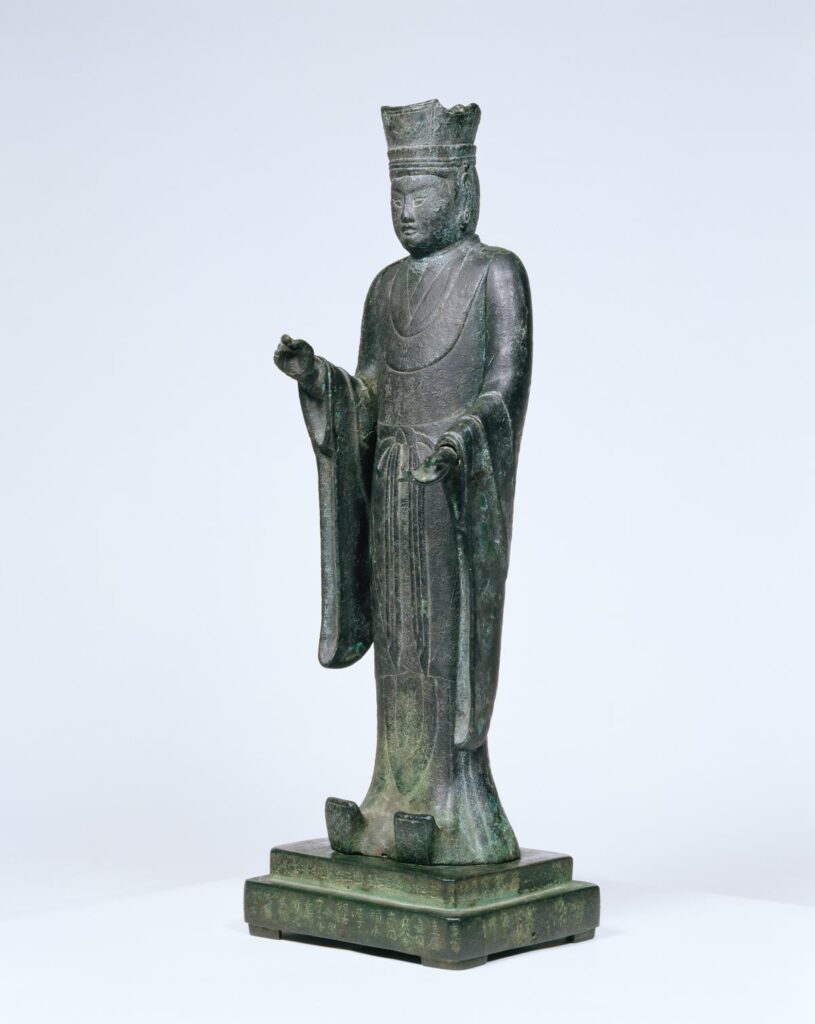
At the Toyama Prefectural Tateyama Museum, we preserve and display a Standing Bronze Statue of Taishakuten, designated a National Important Cultural Property of Japan. In 1991, the statue was exhibited overseas at the British Museum as part of the exhibition Kamakura Sculpture, and it is recognized as one of the representative sculptures of the Kamakura period in Japan.
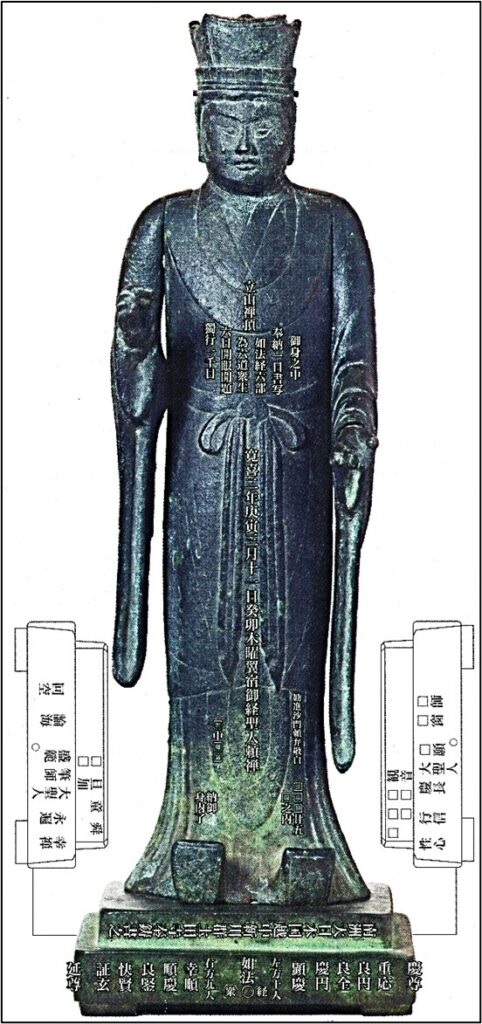
A distinctive feature of this statue is the presence of inscriptions carved across the chest, legs, and pedestal. These include the phrases “Tateyama Zenjō,” “Kanki 2,” and “Raizen.”
The term Zenjō means “mountain summit,” and it is most likely a reference to the summit of Mt. Bessan. Kanki 2corresponds to the year 1230, and Raizen is the name of a monk. From these inscriptions, we can understand that this monk dedicated the statue at the mountain summit.
According to the inscriptions, the purpose of this dedication was to save sentient beings wandering through the Six Realms of rebirth. To this end, the monk copied one fascicle of the Lotus Sutra each day for six consecutive days, following the practice known as nyohōkyō, and placed the completed sutras inside the statue before performing a memorial offering.
In fact, the interior of the statue is hollow and was designed to function as a container for the copied Lotus Sutra.
During the Kamakura period, ascetic practices centered on nyohōkyō—the copying and dedication of the Lotus Sutraaccompanied by rigorous austerities—were carried out on Mt. Bessan at Tateyama. It appears that through these practices, the extinguishing of sins (metsuzai) was believed to be achieved. The judgment of whether such salvation was granted was entrusted to Taishakuten.
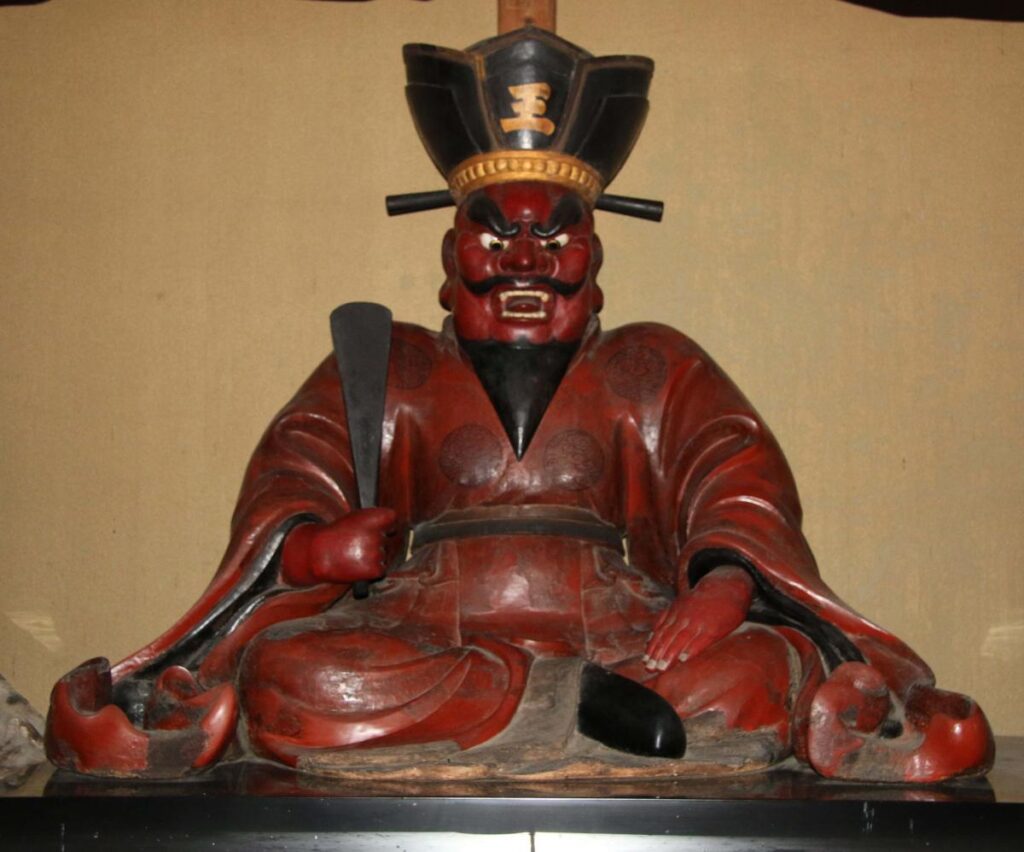
(3) Enma, King of Hell at Mount Tateyama
At Mount Tateyama during the Kamakura period, it can be confirmed that Taishakuten (Indra) initially fulfilled the role of judge of the underworld. By the late Kamakura period, however, this role appears to have been assumed by Enma, the King of Hell.
At Ashikuraji Temple in Tateyama stands the Enma Hall (rebuilt in 1928), which houses a seated wooden statue of Enma believed to date from the late Kamakura period. The statue measures over 160 centimeters in height and is relatively large in scale. As Pure Land Buddhism spread during the Kamakura period, it is thought that at Ashikuraji, Enma was enshrined together with Taizanō, Godō Tenrinō, Shimei, and Shiroku in what is known as the “Enma Five-Deity Configuration” (Enma Goson Keishiki). Incidentally, the name “Enma Hall” at Ashikuraji appears in historical documents for the first time in a donation record dated 1466 (Bunshō 1), made by the warrior clan Jinbō.
In addition, an Enma Hall once stood in Jigokudani (Hell Valley) and is depicted in several Tateyama mandalas and mountain pictorial maps from the Edo period. According to tradition, a metal statue of Enma was enshrined there, though the building itself no longer survives.Thus, at Mount Tateyama—known as a mountain of hell—the figure of the “judge of the underworld” came to be firmly established. Beginning with Taishakuten and later giving way to Enma, whose striking appearance and distinctive character captured popular imagination, Enma ultimately became the dominant figure.
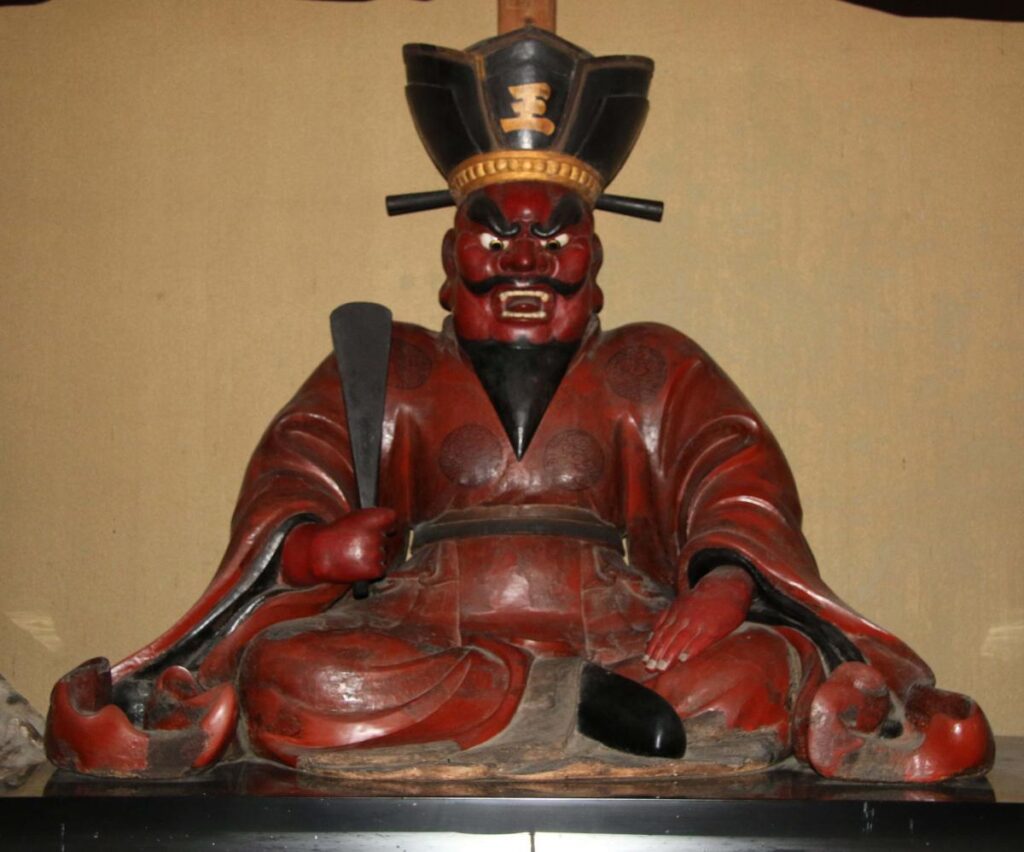
(Designated Tangible Folk Cultural Property of Toyama Prefecture; Kamakura period; housed in the Enma Hall of Ashikuraji Temple)
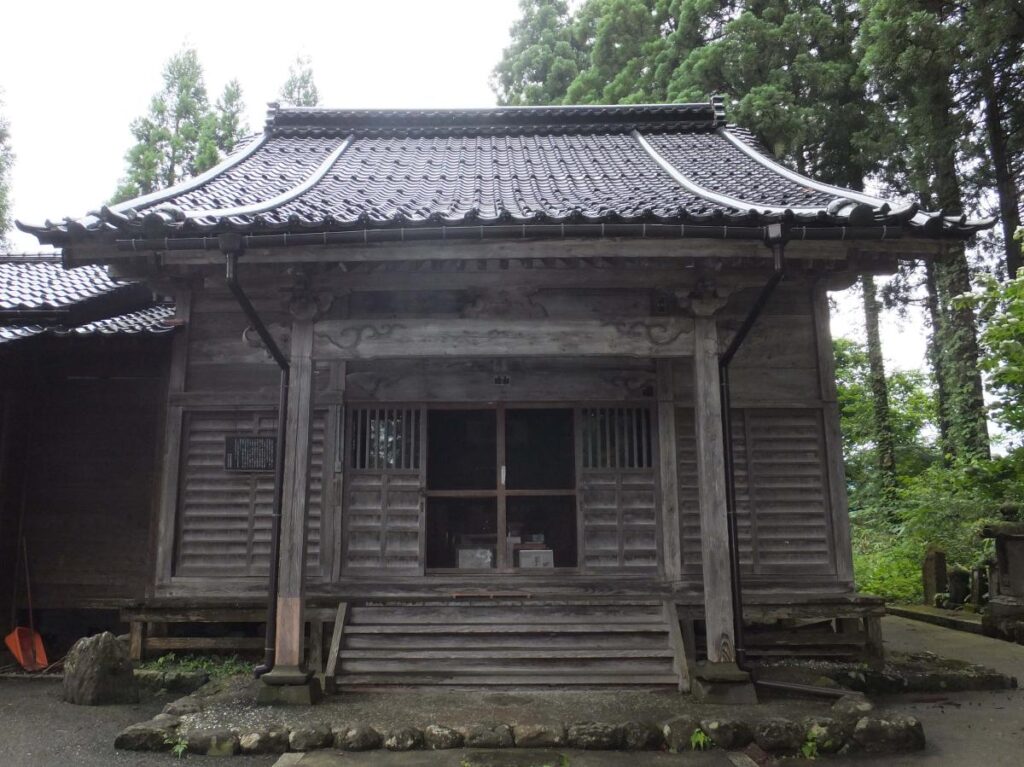
In the next installment, we will introduce the Ashikuraji and Iwakuraji settlements, which served as key centers of Tateyama worship during the Edo period. We hope you will continue to follow this series.
◎ For more on Taishakuten at Mount Tateyama, we recommend the exhibition catalogue Tateyama and Taishakuten, published in conjunction with a special exhibition.
For Enma, King of Hell at Mount Tateyama, the exhibition Tateyama × Hell is highly recommended.
For information on how to purchase these publications, please contact the Tateyama Museum.
#https://www.yamanohi.net
#Toyama Prefectural Tateyama Museum
#Mountain Faith
#Mt Tateyama
# Taishakuten
#Enma, King of Hell
