
Episode 2:
Kūkai (Kōbō Daishi) and the Origins of the Shikoku Henro
In 2014, banners and signboards proclaiming “1,200 Years Since the Founding of the Shikoku 88-Temple Henro” appeared at the Henro temples across Shikoku. At Zentsū-ji, the head temple in Zentsūji City, Kagawa Prefecture, a large commemorative Buddhist service was held to pray for peace and prosperity. Individual temples marked the anniversary by specially displaying normally hidden Buddhist images and treasures, offering limited-edition commemorative stamps at their Henro stamp offices, and distributing commemorative images of their principal deities. The 1,200th anniversary was celebrated on a grand scale.
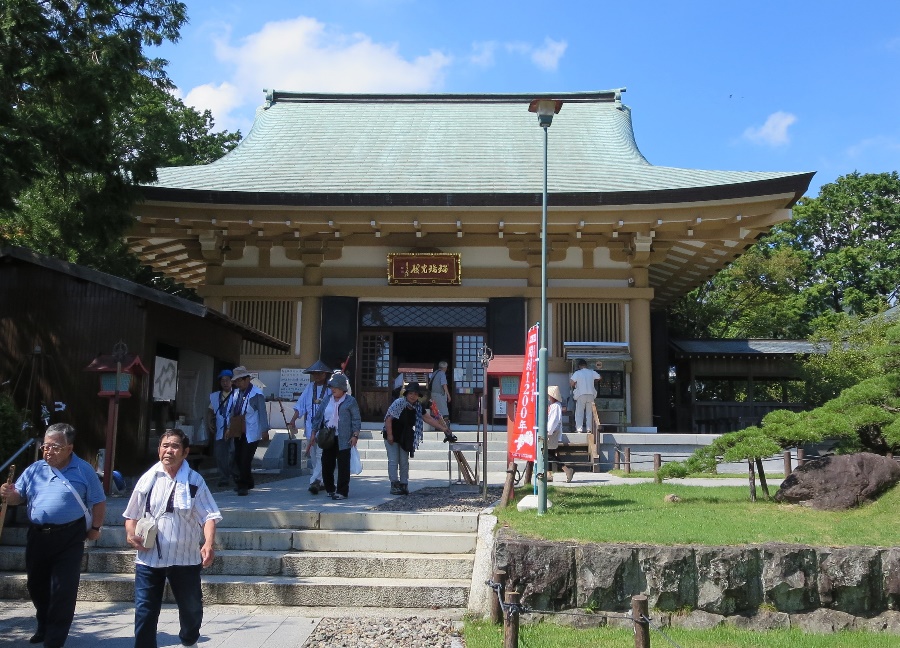
during the 1,200th-anniversary celebrations
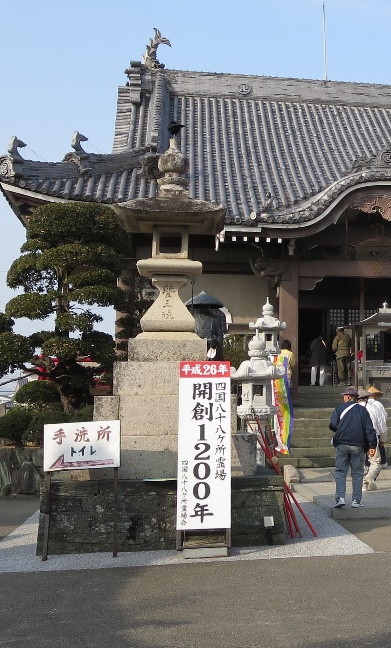
As an aside, I too made the Shikoku Henro during that anniversary year, joining a series of bus tours. Including a visit to Mount Kōya, there were 15 trips in all, each completed as a day trip.
The photograph shows my Henro stamp book from that time. Ordinarily, each temple page receives three red seals—identifying the temple number, the Sanskrit seed syllable of its principal deity, and the temple itself—along with three vertical lines of black calligraphy: an inscription of offering, the name of the principal deity, and the temple name. For the anniversary, an additional colored seal inscribed “1,200th Anniversary of the Founding” was stamped in the upper-left corner.
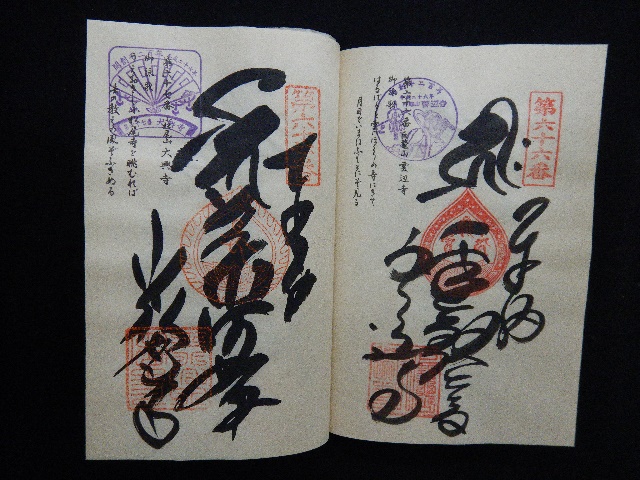
Returning to the story, I found myself wondering: from what year were those 1,200 years being counted? When I asked the chief priest of one Henro temple, he replied, “It is said that in 815, when Kōbō Daishi was 42—an age traditionally regarded as unlucky—he designated Shikoku as a place for religious training and established its sacred Henro sites.”
At the time, I did not give his answer much thought. Later, however, I realized that historical accounts of Kōbō Daishi rarely say that he founded the Shikoku Henro. Was the story really true? Perhaps the words “it is said” are important: they suggest a tradition handed down as legend rather than an established historical fact.
Still, as the saying goes, there is no smoke without fire. Thinking there must be some connection between the origins of the Shikoku Henro and Kōbō Daishi Kūkai, I began reading various books. I learned that in 797, at the age of 24, Kūkai wrote a one-volume work called Rōko shiiki, discussing the relative merits of Confucianism, Daoism, and Buddhism.
Note: Rōko shiiki was later retitled Sangō shiiki (Indications of the Goals of the Three Teachings).
In Sangō shiiki, Kūkai refers to “Ōtaki-dake in Awa Province,” saying that he climbed it. He also mentions “Cape Muroto in Tosa Province,” where he recited scriptures and undertook religious training.
Awa Province corresponds to present-day Tokushima Prefecture. The name Ōtaki-dake is thought to refer to Tairyū-ji, Temple No. 21 of the Shikoku Henro.
The temple’s full name is Shashinzan Jōjūin Tairyū-ji. Also known as the “Mount Kōya of the West,” it stands near the summit of Mount Tairyūji, 618 meters above sea level, at the southeastern end of the Shikoku Mountain Range. Centuries-old cedar trees tower overhead, lending this ancient temple a deeply spiritual atmosphere.
According to the temple’s founding tradition, halls and pagodas were erected in 793 at the request of Emperor Kanmu. Kōbō Daishi is said to have carved and enshrined images of various Buddhist deities, including Kokūzō Bosatsu (Ākāśagarbha Bodhisattva), the temple’s principal deity, thereby founding the temple.
Today, a bronze statue of Kōbō Daishi stands on a rocky outcrop called Shashin-ga-take, about 600 meters southwest of Tairyū-ji.
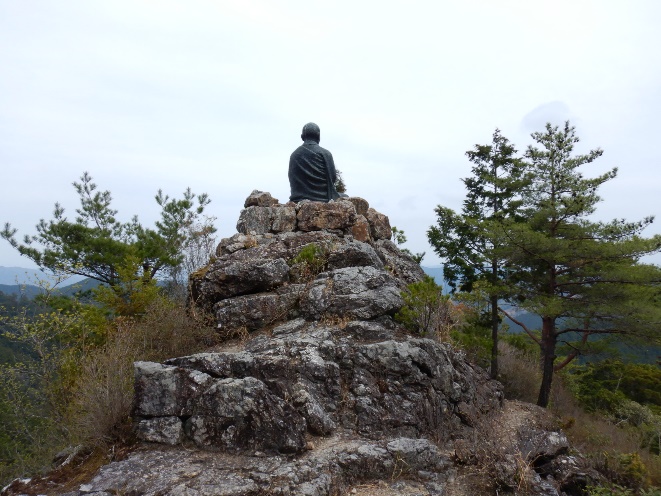
It seems likely that Kūkai climbed Mount Tairyūji and practiced religious austerities in its mountains. But what form did that practice take?
Tradition holds that he practiced Kokūzō Gumonji-hō, an esoteric Buddhist discipline associated with Kokūzō Bosatsu. It involves reciting the bodhisattva’s mantra—“On bazara aratannō on taraku sowaka”—one million times: 10,000 recitations a day for 100 days. This demanding Shingon practice is intended to enhance memory and wisdom.
What, then, is “Cape Muroto in Tosa Province”? Tosa Province corresponds to present-day Kōchi Prefecture, and the place named in the text is understood to be Cape Muroto.
At the tip of Cape Muroto are two caves where Kōbō Daishi is said to have trained: Mikurodo and Shinmei-kutsu.
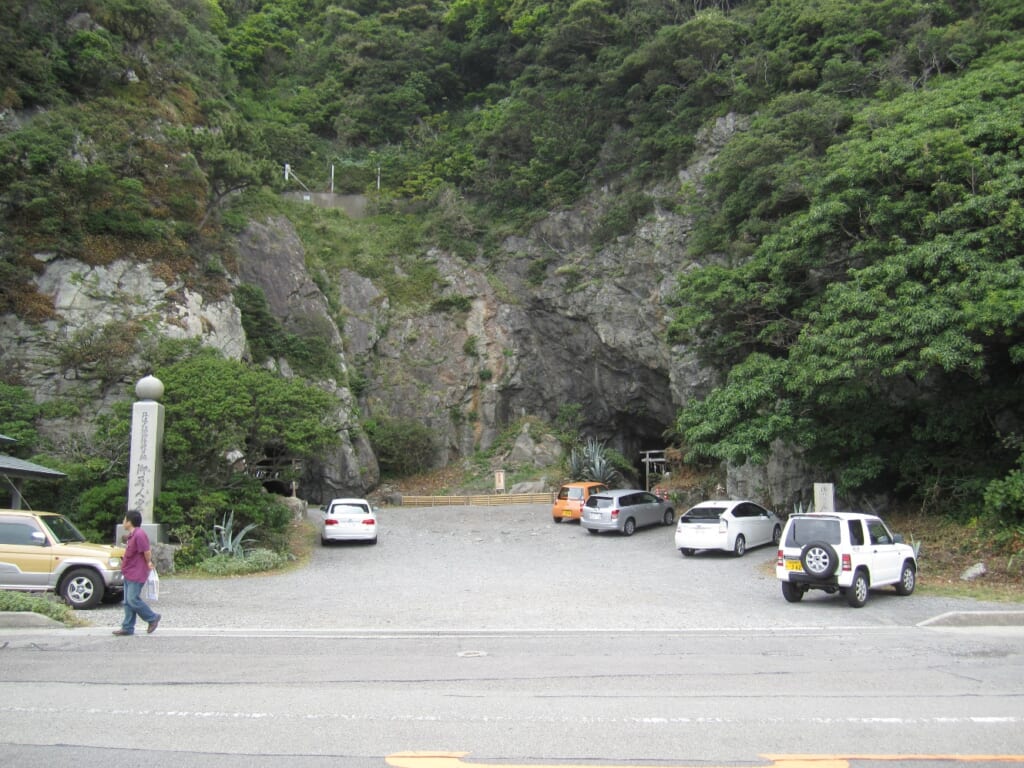
Mikurodo (on the left when facing the caves) is traditionally regarded as the place where he lived and ate, an interpretation associated with the character for “kitchen” in its name. Shinmei-kutsu (on the right) is said to have been his main place of practice. According to legend, while he was performing Kokūzō Gumonji-hō and other disciplines there, the morning star—Venus, understood as a manifestation of Kokūzō Bosatsu—flew into his mouth. He attained enlightenment, or, in the language of the tradition, realized the power of the Kokūzō Gumonji-hō practice.
It is also said that the sight of the “sky” (kū) and “sea” (kai) from these caves inspired him to take the religious name Kūkai, combining those two characters.
Today, National Route 55 passes directly in front of Mikurodo. Imagining a time when nothing but the open sky and the Pacific Ocean stretched before the cave, I can picture Kūkai absorbed entirely in his training, undisturbed by the outside world.
Immediately above Mikurodo stands Hotsumisaki-ji, Temple No. 24 of the Shikoku Henro.
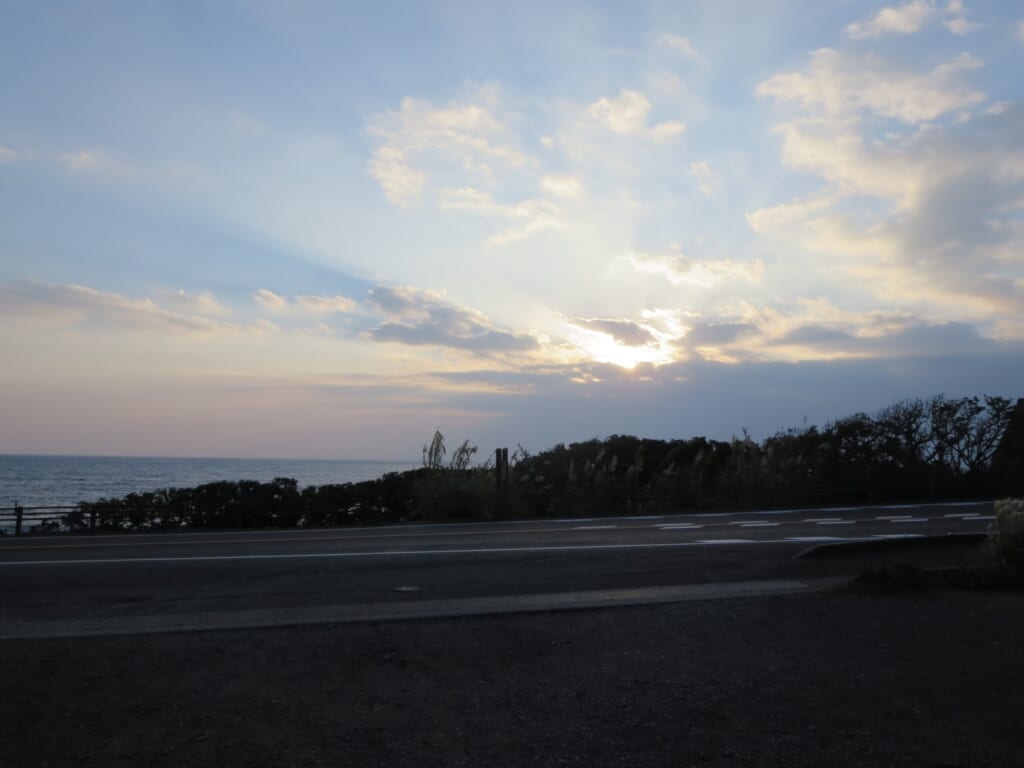
Hotsumisaki-ji’s full name is Murotozan Myōjōin Hotsumisaki-ji. It is the first Henro temple in the former Tosa Province and stands at the tip of Cape Muroto, overlooking the Pacific Ocean, where waves sometimes break fiercely against the coast.
According to its founding tradition, in 807 Kūkai carved an image of Kokūzō Bosatsu as the principal deity and built the main hall at this site, where he had realized the Kokūzō Gumonji-hō practice.
As we have seen, places mentioned in Sangō shiiki as sites of Kōbō Daishi Kūkai’s religious training later became temples on the Shikoku 88-Temple Henro. I believe this connection may help explain why the Henro’s origins are commemorated as dating back 1,200 years.
Next Episode
How did Kōbō Daishi’s religious training evolve? Episode 3 will explore the meaning of henro-related “training in remote borderlands” (henchi shugyō).
