
– Rediscovering the City Through Its Hidden Mountains
By Kazuhiko Miwa
Episode 4: Climbing a Miniature Mt. Fuji at Shinagawa Shrine
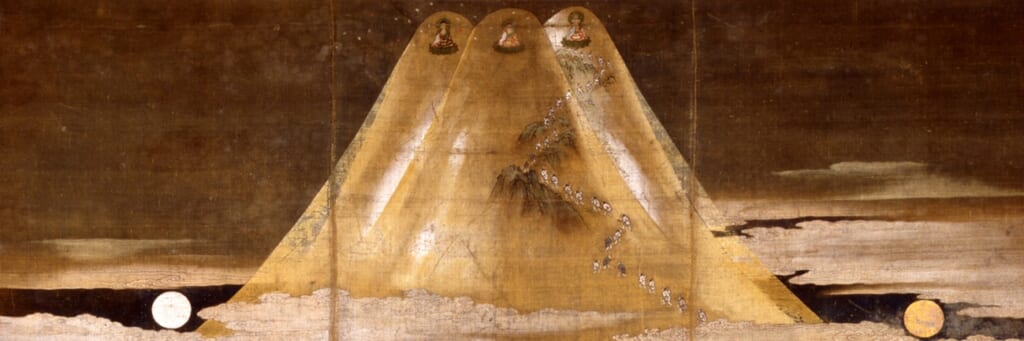
During the Edo period, the majestic peak of Mt. Fuji could be seen from almost anywhere in the city. People believed that Buddha resided on its summit, and pilgrims climbed the mountain chanting “Rokkon Shojo” (“Purification of the Six Senses”).
The illustration shown here is part of the Fuji Pilgrimage Mandala. It depicts a long procession of pilgrims climbing Mt. Fuji at night in order to worship the Buddha on the summit. Looking closely, however, one notices that all the climbers are men dressed in white pilgrimage robes. In those days, women and children were not permitted to make the pilgrimage to Mt. Fuji.
The men climbing the mountain were members of organizations known as Fuji-ko—religious associations devoted to Mt. Fuji worship. It is said that Edo had as many as “808 Fuji-ko groups.” The number 808 was not meant literally; it simply meant “countless.”
Each year, members pooled their money and selected several young representatives to climb Mt. Fuji on behalf of the group. Upon returning home, they carried back pieces of volcanic lava from the mountain. Using these stones, they constructed miniature versions of Mt. Fuji in their own neighborhoods. Several of these miniature mountains, known as Fujizuka (Fuji mounds), still survive today.One of the teachings of the Fuji-ko movement was the idea that “all people are equal.” Since women and children could not climb the real Mt. Fuji, the faithful created smaller versions that anyone could climb. It was believed that climbing one of these miniature mountains would bring the same spiritual benefits as climbing the real Mt. Fuji.
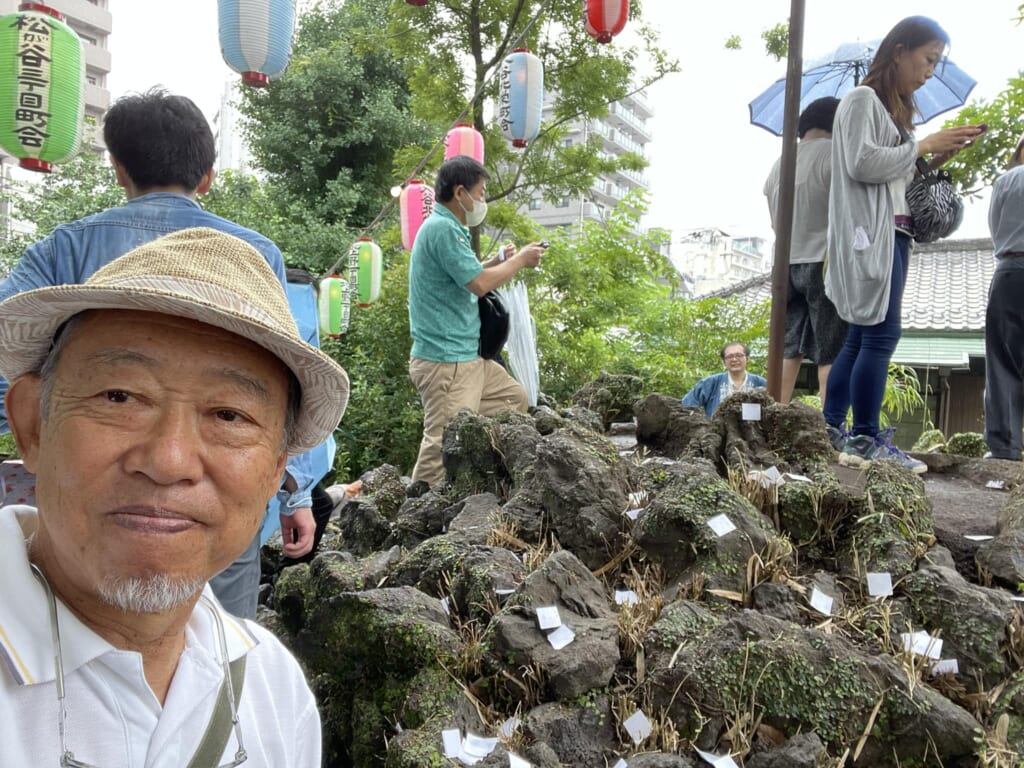
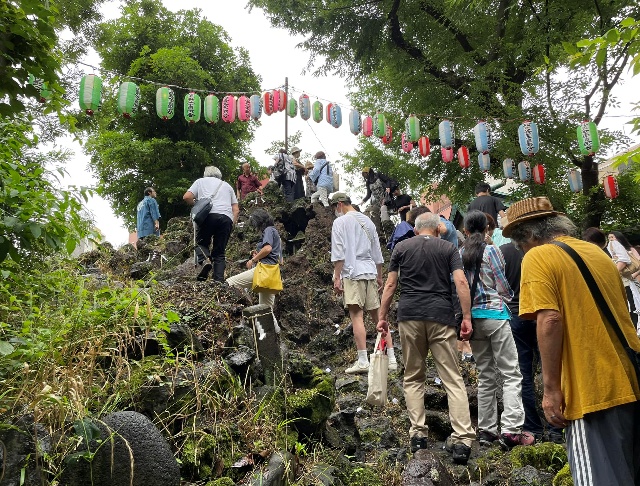
The photograph shows a Fujizuka in Shitaya, Tokyo, on July 1, the traditional opening day of the climbing season. Although this miniature Mt. Fuji is only about five meters high, the crowds are as dense as those found on a rush-hour train. I make a point of climbing it every year on this day.This particular mound, known as Shitaya Sakamoto Fuji, has preserved much of its original appearance and has therefore been designated an Important Cultural Property of Japan.
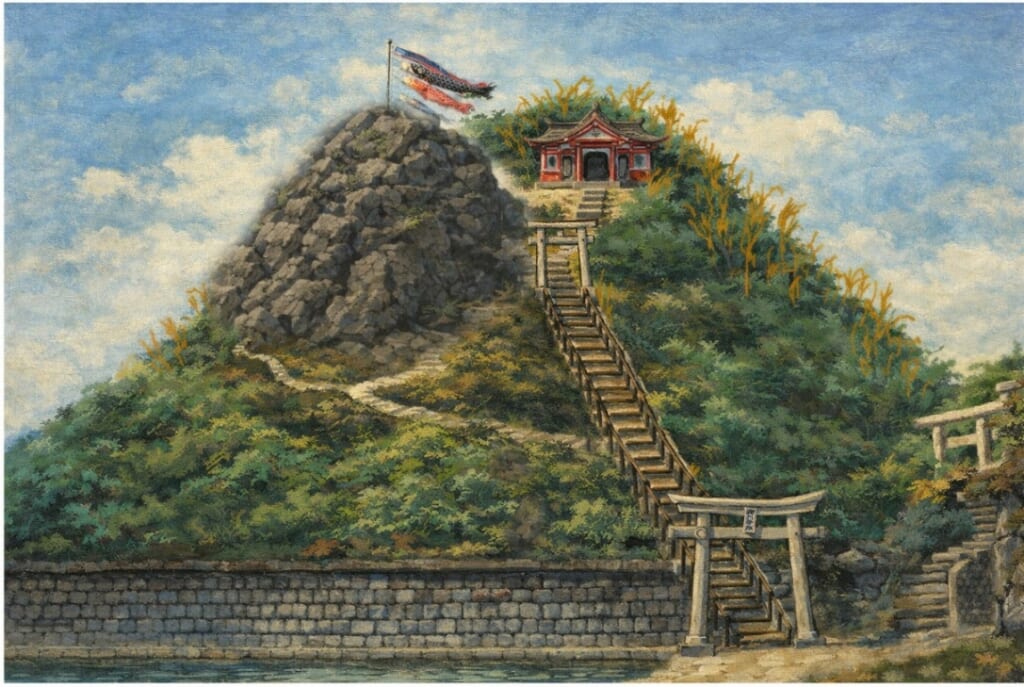
A few stations south of Shinagawa on the Keikyu Railway, near Shin-Bamba Station, stands another mountain that looks as though it has stepped out of an old picture scroll. It is located within the grounds of Shinagawa Shrine.Beside the shrine’s stone staircase rises a rugged artificial hill. A closer look reveals that it is constructed from genuine lava brought from Mt. Fuji. From the shrine grounds the mound appears to be only about three meters high, but the shrine itself stands on a terrace approximately ten meters above sea level. Seen from the road below, the Fujizuka reaches a height of about thirteen meters.
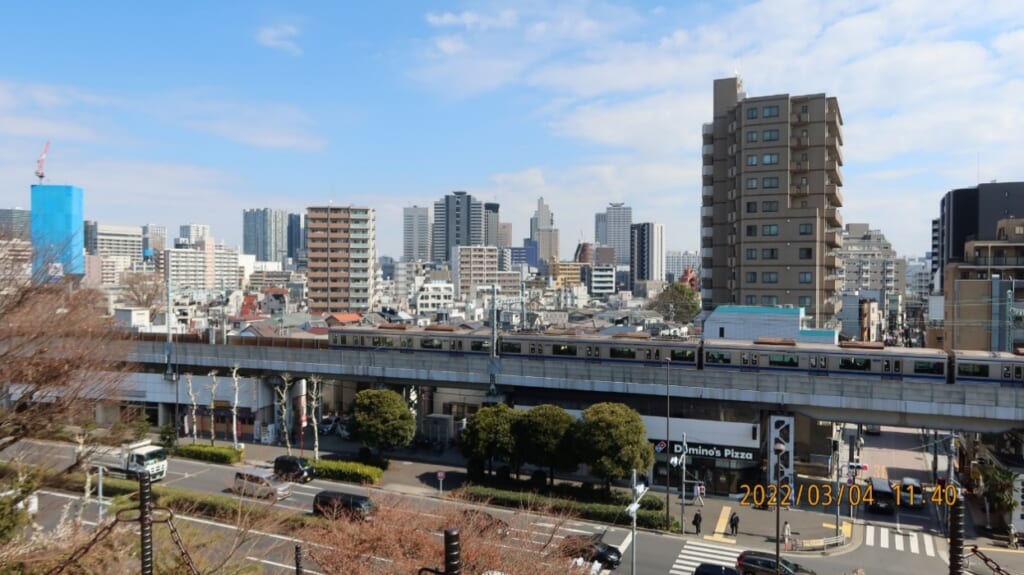
Because the Keikyu railway runs on an elevated track, passengers are rewarded with an excellent view of this miniature Mt. Fuji as the train passes by.
Visitors may climb the mound at any time. Approaching from the front, the climbing route is surprisingly narrow and steep, making it feel like a real mountain trail. One has to watch one’s footing carefully.
In the Edo period, climbers would have enjoyed a distant view of the real Mt. Fuji from the summit. Today, however, the view is blocked by countless buildings.
Looking toward the sea, one can see the modern highway and the old Tokaido route below. Beyond them stretch residential neighborhoods and, farther still, clusters of high-rise buildings.
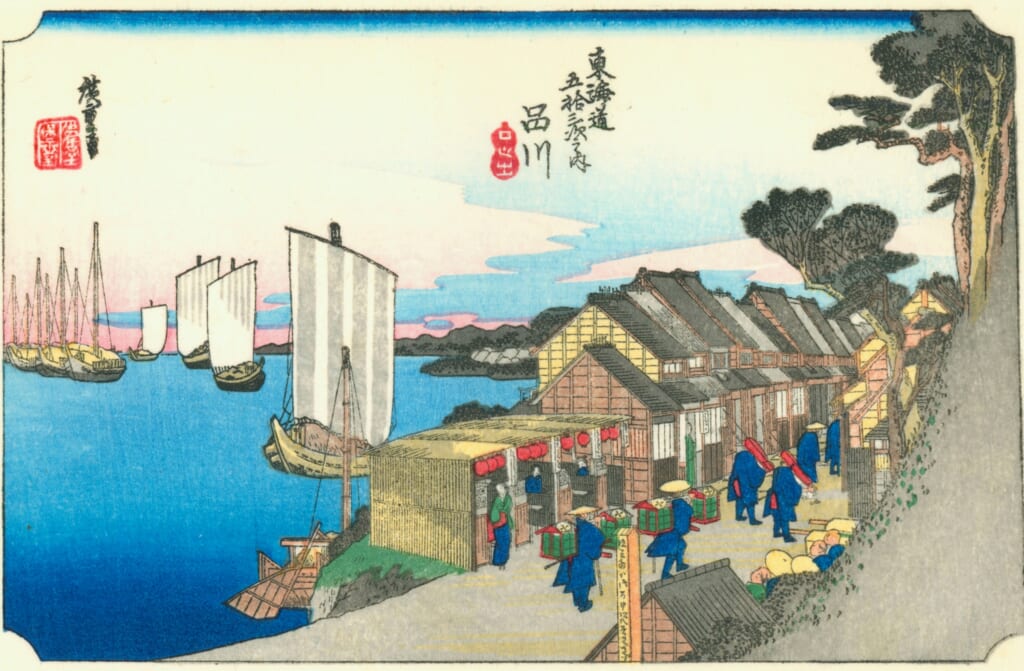
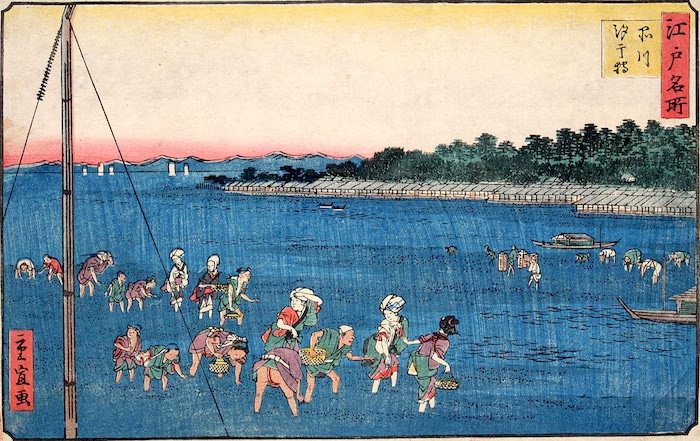
The two ukiyo-e prints shown below depict the Shinagawa area during the Edo period. One shows the Tokaido Road with sailing ships floating on the sea beyond. Today, houses fill the landscape east of the old Tokaido, but in those days the area consisted of shallow tidal flats where people gathered shellfish.
In the Edo period, five major highways radiated outward from the city. The most important of them was the Tokaido, which connected Edo with Kyoto through fifty-three post towns. Shinagawa-juku, the first of these post stations, stood here.
Shinagawa Shrine was one of the principal shrines serving the people of Shinagawa-juku. This miniature Mt. Fuji was undoubtedly one of the area’s famous landmarks as well.Today, visitors can still climb it and experience, in a small way, the spirit of a pilgrimage that once connected the people of Edo to Japan’s most sacred mountain.
#JapanMountainDayFoundation
#MountainPartnership
#HiddenLandscapesOfTokyo
#MountFuji
#Fujizuka
#FujiPilgrimage
