
From the Editorial Team
In 2027, the National Mountain Day Convention will be held in Kagawa Prefecture. To mark the occasion, we introduce the Shikoku Henro, a culture of walking that has been handed down on Shikoku for more than 1,200 years.
Over this 12-part series, Takahiro Katagiri, Director of the Sanuki City Henro Museum, who has spent many years collecting and researching materials related to the Shikoku Henro, will guide us through its history, culture, and present-day significance.
Episode 1: What Is the Shikoku Henro?
— Walking through Mountains, Satoyama, Towns, and the Seashore —
Kagawa Prefecture announced on February 9, 2026, that the 11th National Mountain Day Convention is scheduled to be held in the prefecture in August 2027.
The website of the Japan Mountain Day Foundation explains the purpose of the convention as follows: “The National Mountain Day Convention has been held every year on August 11, Mountain Day, since 2016. Its purpose is to deepen public interest in Mountain Day, which became a national holiday in 2016, to encourage people to enjoy mountains and nature, and to foster a greater sense of gratitude for the benefits they provide.”
Recently, Masahiko Kaji, President of the Japan Mountain Day Foundation, visited the museum and asked me whether I would write a series on the Shikoku Henro as an introduction leading up to the 11th National Mountain Day Convention, to be held in Kagawa Prefecture next year.
When I first received the request, my immediate reaction was: “What does the Shikoku Henro have to do with Mountain Day?”
On reflection, however, the connection becomes clearer. In simple terms, the Shikoku Henro is a vast temple pilgrimage around the island of Shikoku—comprising Tokushima, Kochi, Ehime, and Kagawa prefectures—linking 88 sacred sites associated with Kukai by a network of pilgrimage routes. The entire journey extends for roughly 1,400 kilometers, although it is commonly described as about 1,200 kilometers. Its two essential elements are therefore the 88 sacred sites and the pilgrimage routes that connect them.
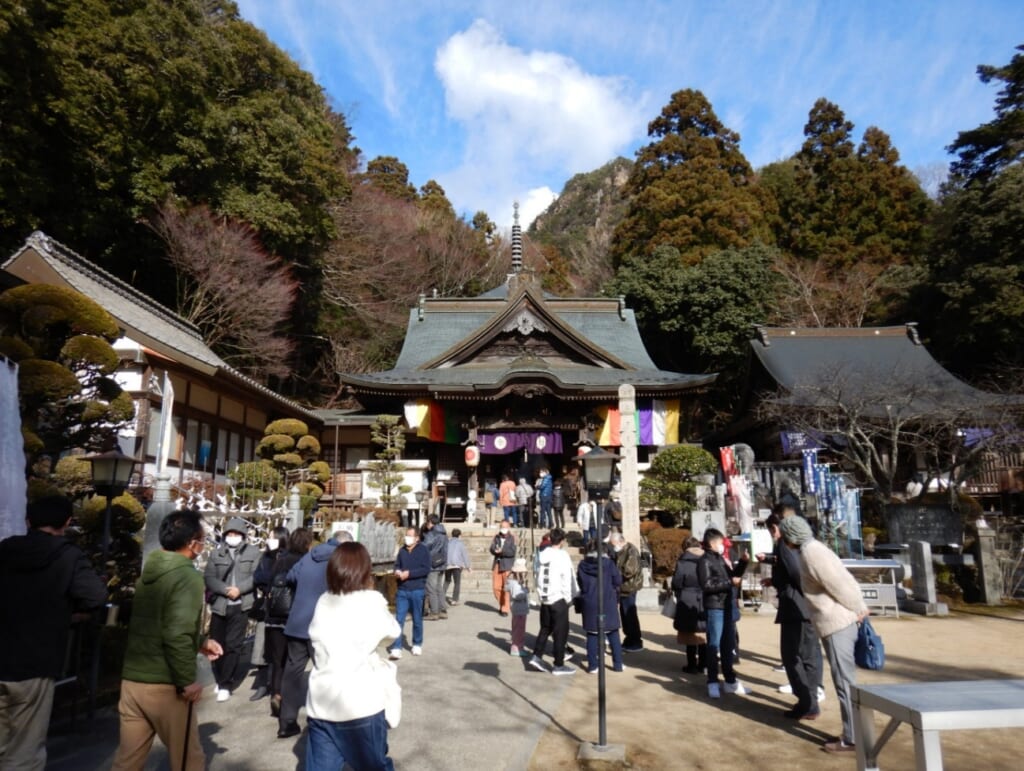
The settings of the 88 sacred sites vary greatly. Temple No. 21, Tairyuji, at an elevation of about 618 meters, and Temple No. 66, Unpenji, at about 911 meters, stand near mountain summits, while Temple No. 25, Shinshoji, and Temple No. 38, Kongofukuji, are situated close to the sea.
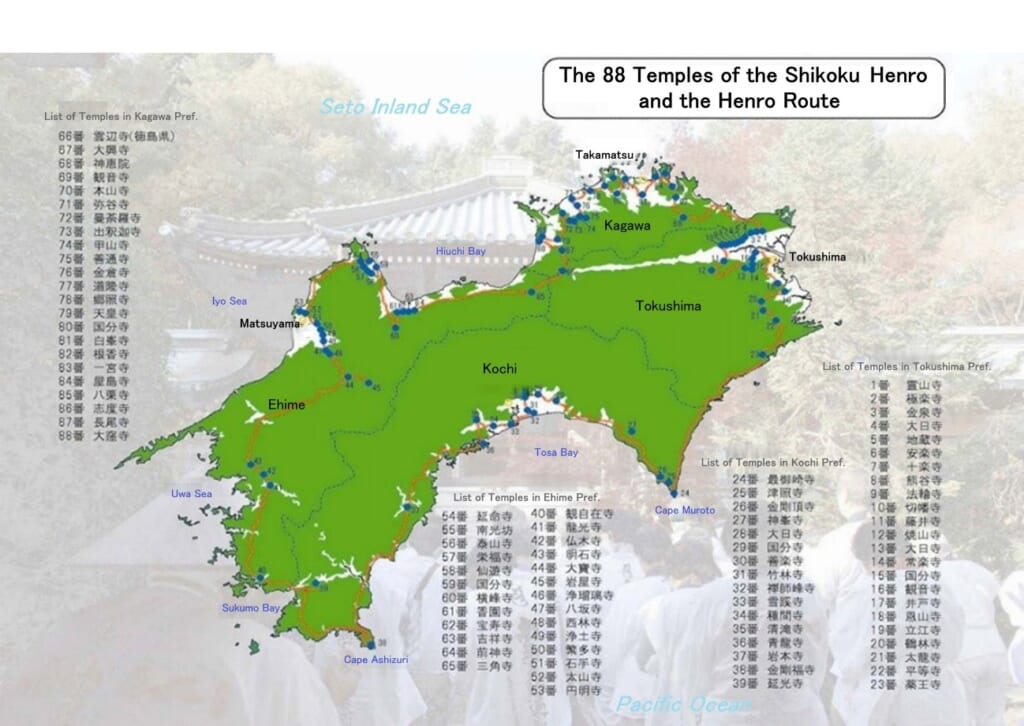
Looking at western Kagawa, for example, Temple No. 66, Unpenji, stands on Mt. Unpenji at an elevation of about 911 meters. Although administratively located in Tokushima Prefecture, it is counted among the Sanuki temples. Temple No. 67, Daikoji, lies at about 70 meters above sea level in a rural settlement at the foot of the Sanuki Mountains. The pilgrimage route then passes through the town of Kanonji to Temple No. 68, Jinnein, and Temple No. 69, Kannonji, on Mt. Kotohiki near the Seto Inland Sea, also at an elevation of about 70 meters. Following the Saita River upstream brings the pilgrim to Temple No. 70, Motoyamaji, in an urban area. Thus the sacred sites are scattered among mountain heights, satoyama and rural settlements, towns, and places facing the Seto Inland Sea—as though the pilgrimage repeatedly moves through “mountains,” “satoyama,” “towns,” and the “seashore.”
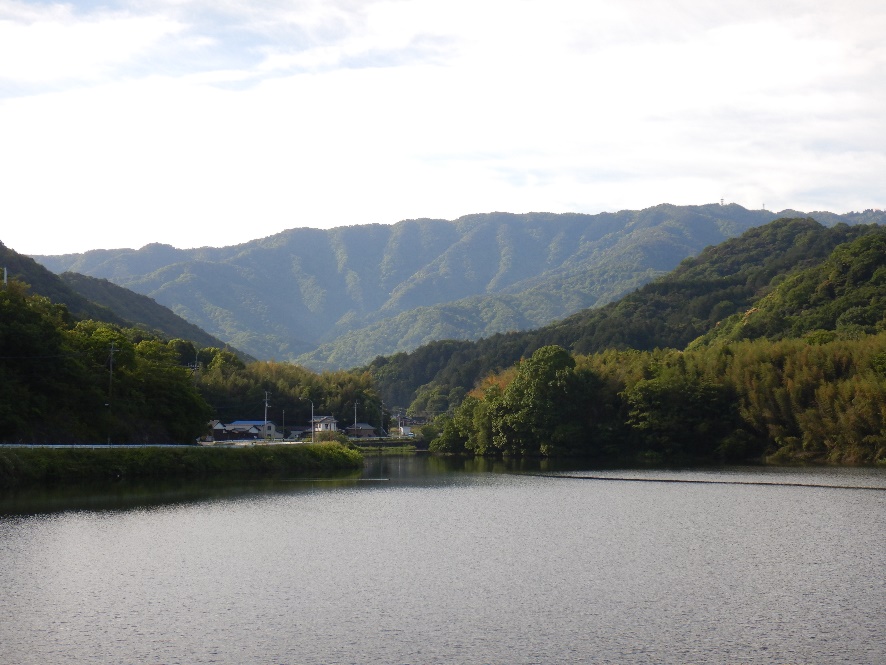
Mountains have long been regarded as realms of enlightenment—the other shore, or the Pure Land—a pure and undefiled world inhabited by Buddhas and bodhisattvas, in contrast to the secular world in which we live. Seen in this light, the Shikoku Henro may be understood as a form of spiritual practice that moves back and forth between the “mountain as sacred realm” and the everyday world. Ascetics and pilgrims approached mountains with reverence, entering into a dialogue with nature and, through their practice, seeking a sense of unity with it.
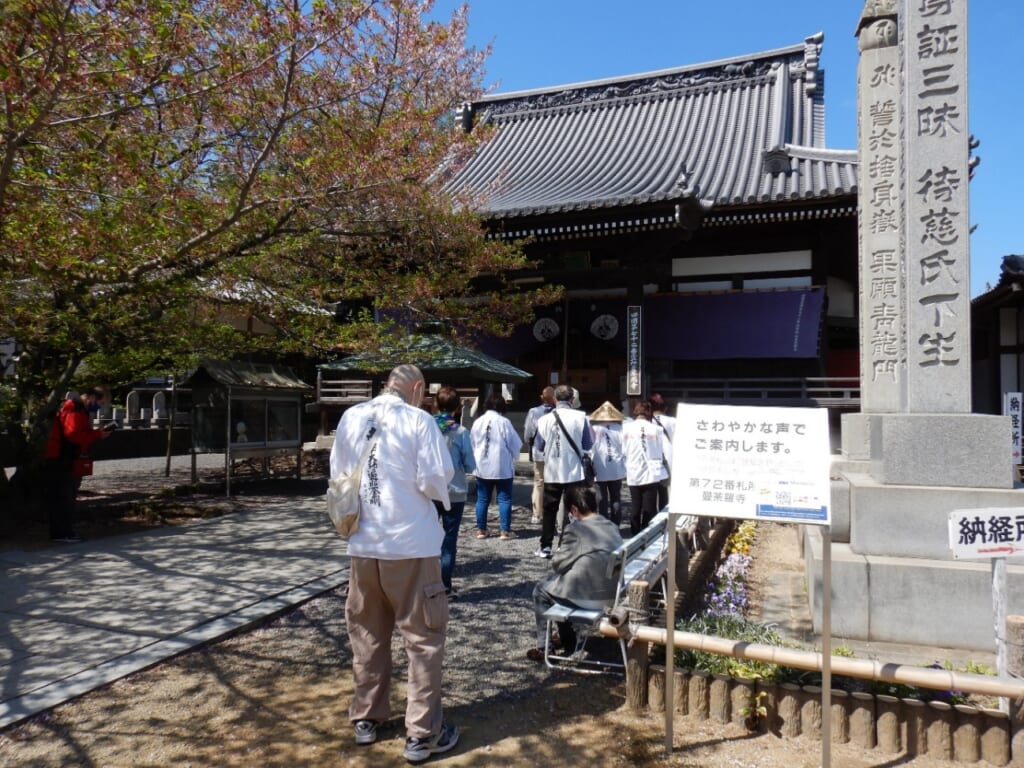
Kukai practiced ascetic disciplines in many parts of Shikoku, both along the coast and in the mountains. In later periods, his disciples and other practitioners traveled to places and historic sites associated with him. This practice developed into a journey around the outer reaches of Shikoku, gradually spread among ordinary people, and eventually incorporated elements of travel and tourism, leading to the Shikoku Henro as we know it today.
In this sense, the Shikoku Henro has continued for roughly 1,200 years since the time of Kukai. Even in the form that took shape during the Edo period, it has a history of about 350 years—and it will surely continue into the future.
We often describe the Shikoku Henro as a pilgrimage to “88 sacred sites associated with Kukai.” Historically, however, the connection between Kukai and some of these temples and shrines is not clear. Likewise, the traditional account that Kukai established the pilgrimage at the age of 42—an age traditionally regarded as inauspicious—cannot readily be accepted as historical fact; This is generally regarded today as the accepted historical view.
As I begin this series, I do not know how fully I will be able to convey the depth and appeal of the Shikoku Henro. I hope, however, to explore its history, the role of this Henro Museum, and the question of how far we can contribute to preserving and passing on the culture of the Shikoku Henro.
Author Profile
Takahiro Katagiri
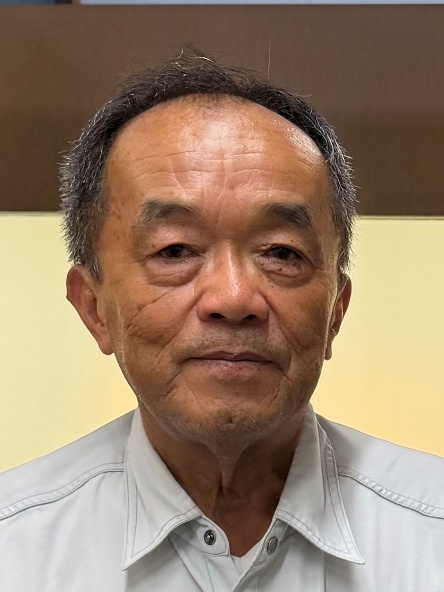
Director, Sanuki Henro Museum.
While working for the Kagawa Prefectural Government, Katagiri became involved in efforts to seek World Heritage inscription for the Shikoku Henro in 2007. Through surveys of the pilgrimage temples and routes, he developed a deep interest in the richness and appeal of the tradition. After retiring from the prefectural government, he became Director of the Henro Museum in April 2020. At the Sanuki City Henro Museum, he collects and researches materials related to the Shikoku Henro and communicates its history and culture through exhibitions, explanations of the collection, lectures, and other activities.
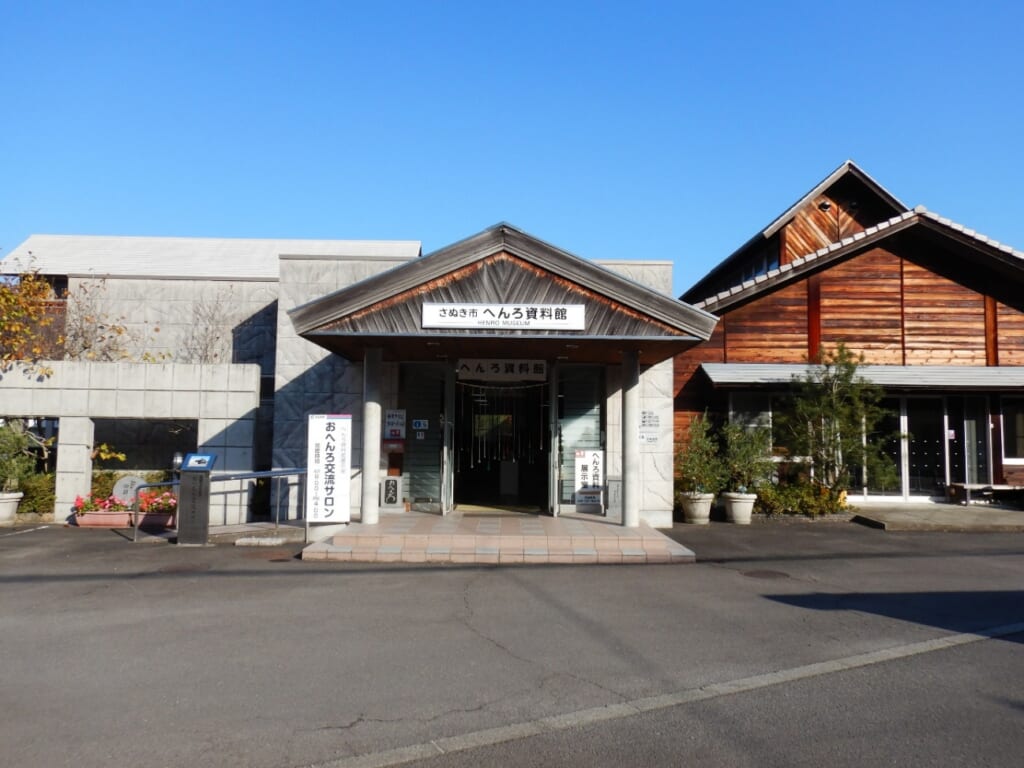
Sanuki City Henro Museum
The museum is located in Maeyama, Sanuki City, formerly part of Nagao Town. Because Temple No. 87, Nagaoji, and Temple No. 88, Okuboji, are located in the area, many materials related to the pilgrimage had been preserved by local residents and by the former Nagao Town Board of Education. To display these materials—and taking into account the museum’s location along the pilgrimage route from Nagaoji to Okuboji—the facility opened at its present site in 1999 as the Ohenro Koryu Salon. It was renamed the Henro Museum in 2023. It is the only museum in Japan devoted exclusively to the display of materials related to the Shikoku pilgrimage.
The museum includes a main floor, an exchange room, a permanent Henro exhibition room, and a special exhibition room. Just inside the main entrance is a large diorama of the whole of Shikoku, approximately 5.4 meters wide and 3.2 meters deep. Buttons around the display illuminate the locations of the 88 pilgrimage temples. The exchange room provides a place where local residents and pilgrims—and pilgrims with one another—can meet. The permanent exhibition traces the history of the Shikoku Henro from Kobo Daishi Kukai onward, drawing primarily on materials in the museum’s own collection. Special exhibitions are held during the summer and winter.
The museum collects, preserves, displays, and researches valuable historical materials in order to communicate the history and culture of the Shikoku Henro. It also introduces the pilgrimage routes and temples and serves as a base for travelers who wish to learn about—and walk—the Shikoku Henro.
Next
How did the Shikoku Henro begin?
In Episode 2, we trace the origins of the pilgrimage and its connection with Kobo Daishi Kukai.
#JapanMountainDayFoundation
#NationalMountainDayConventionKagawa
#ShikokuHenro
#SanukiCity
#KoboDaishiKukai
#ShikokuPilgrimageMuseum
