
— Nature Notes by Mouzuika (Yuukou Saito) —
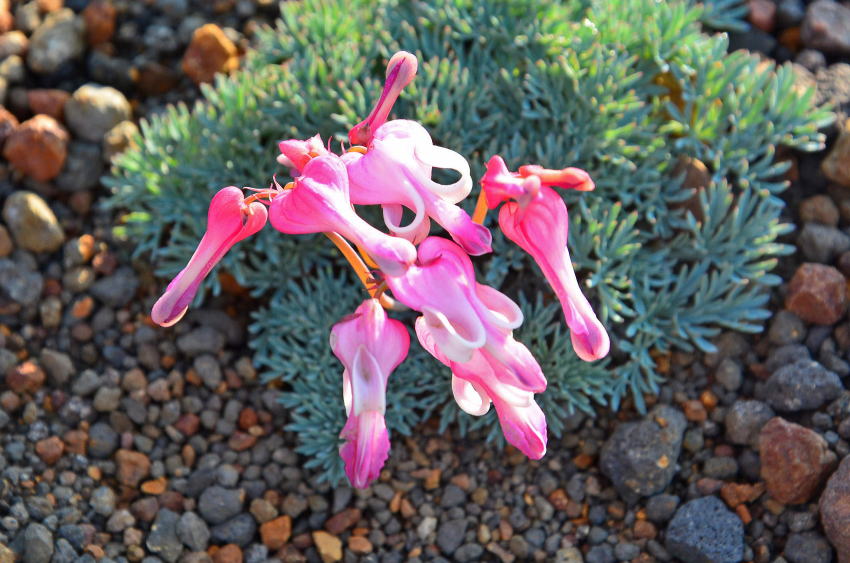
(1) Komakusa — The Queen of the Wasteland
The mountains of northeastern Japan are not especially high, and yet, for some reason, they are blessed with an extraordinary richness of alpine flora.
Let us begin with Komakusa.
The title “Queen of Alpine Flowers” seems inseparable from the harsh and desolate landscapes where this plant grows.
Its habitat stretches across northeastern Asia — from the Kuril Islands, Sakhalin, and the Kamchatka Peninsula to Hokkaido and central Japan.
In the Tohoku region, Komakusa is found only in a few isolated locations: Mt. Iwate, Mt. Akita-Komagatake, and the Zao Mountains.
(If Mt. Hiuchigatake in Oze is included, there are four.)
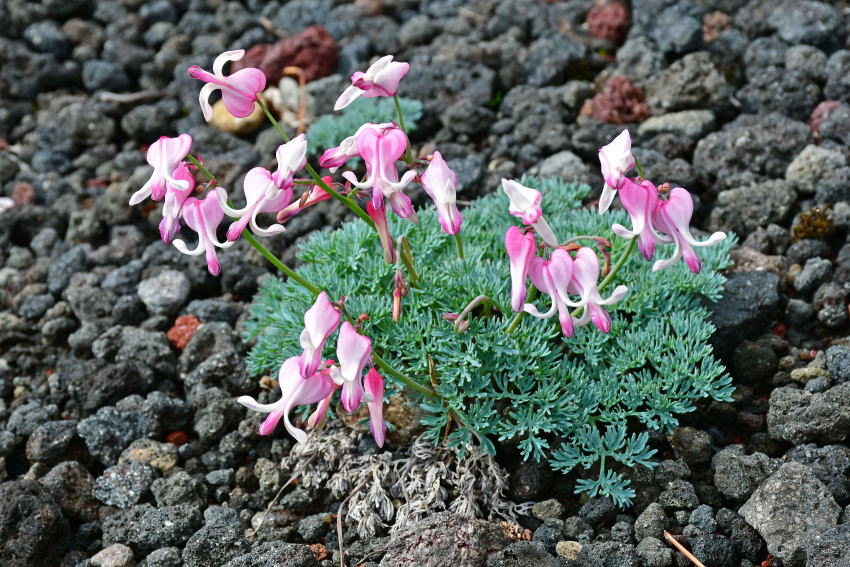
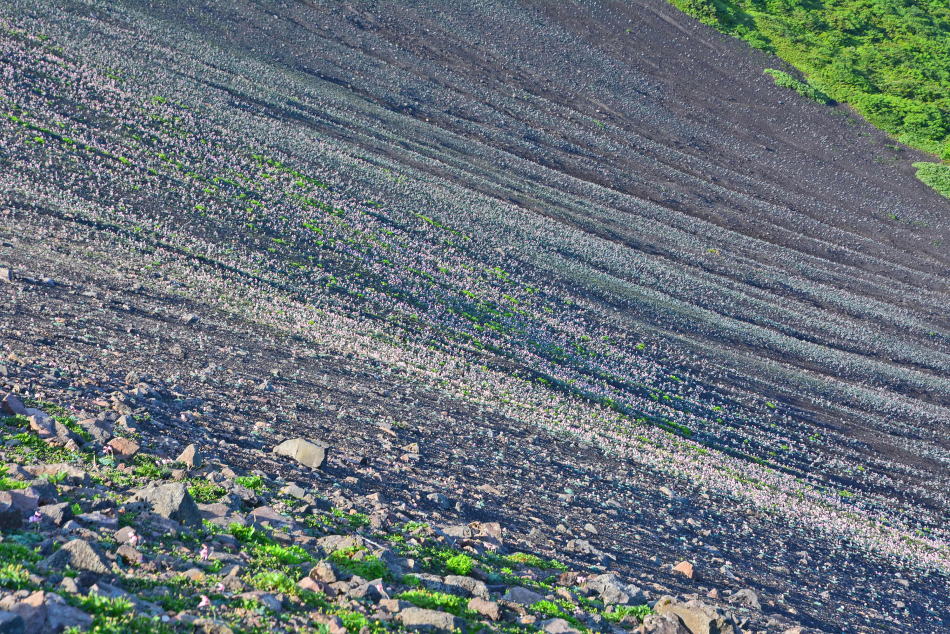
(2017/07/10)
(2) Returning for the Violets
There is a mountain in Tohoku remarkably rich in violets: Mt. Akita-Komagatake.
Among the flowers of this mountain, Komakusa is by far the most famous.
I had climbed this mountain many times since my youth to see it, yet strangely, I had almost no memory of its violets.
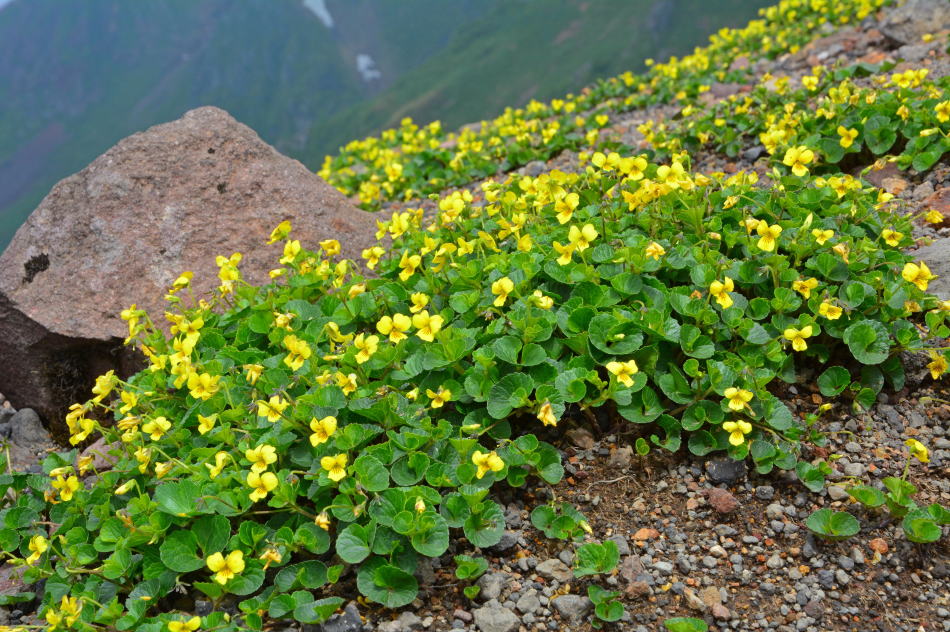
Mt. Akita-Komagatake (2015/06/21)
I first became aware of these violets about twenty-five years ago.
In Masashi Igari’s field guide Yama-Kei Handy Guide 6: Japanese Violets,
there was a breathtaking photograph of Takane-sumire blooming across an entire mountainside.
Why had I never noticed them before?
Simply because I always climbed Akita-Komagatake after July.
By then, the flowers of Takane-sumire had nearly finished blooming.
In June 2015, shortly after I resumed mountain climbing,
I returned to Akita-Komagatake specifically to see these flowers.
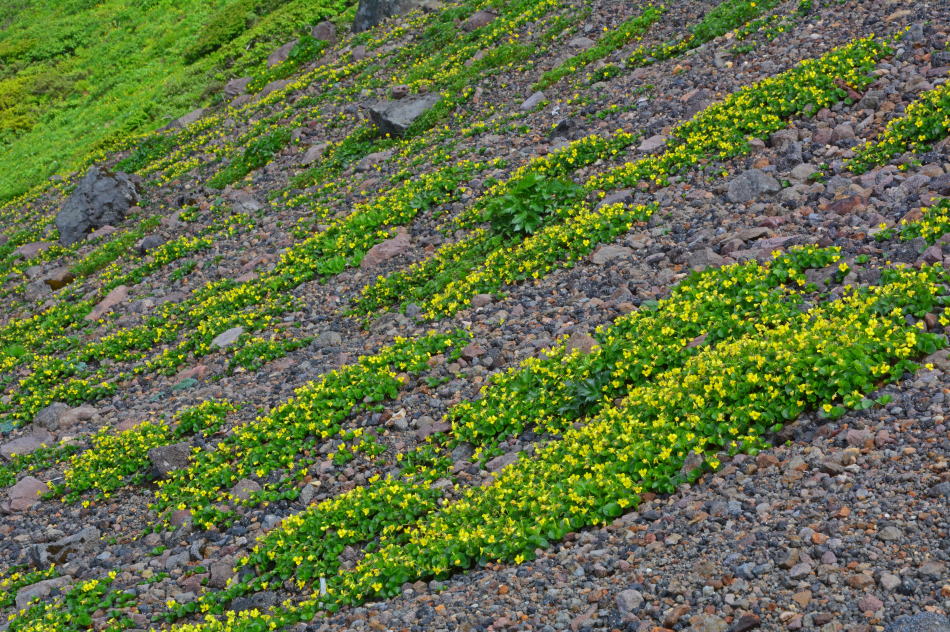
(2015/06/21)
(3) Seas of Hakusan Ichige
When people think of alpine flowers, what comes to mind first?
For me, it is Hakusan Ichige.
This flower often forms vast colonies — true alpine flower fields —
and because it blooms early in the climbing season, perhaps it leaves such a strong impression.
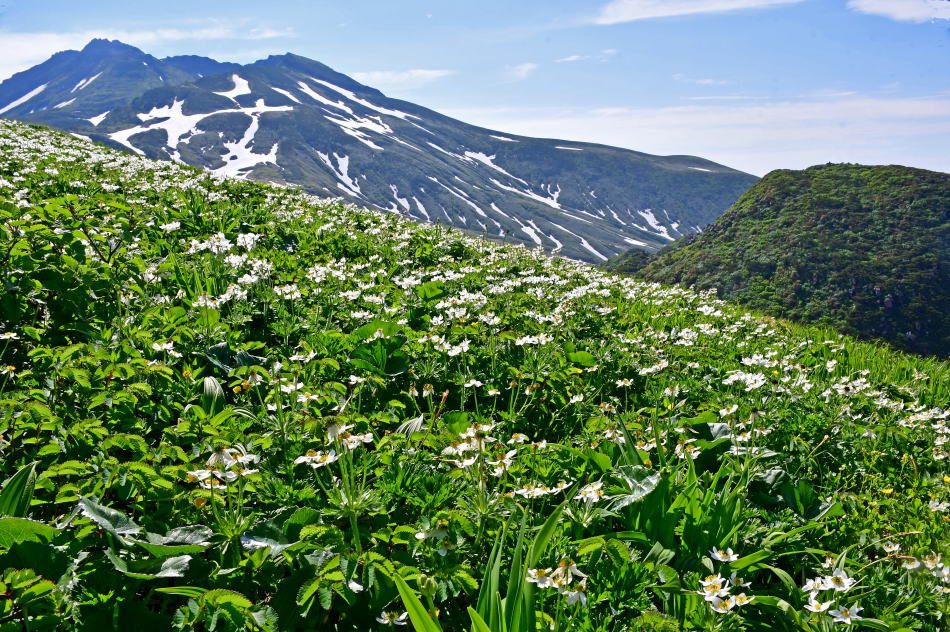
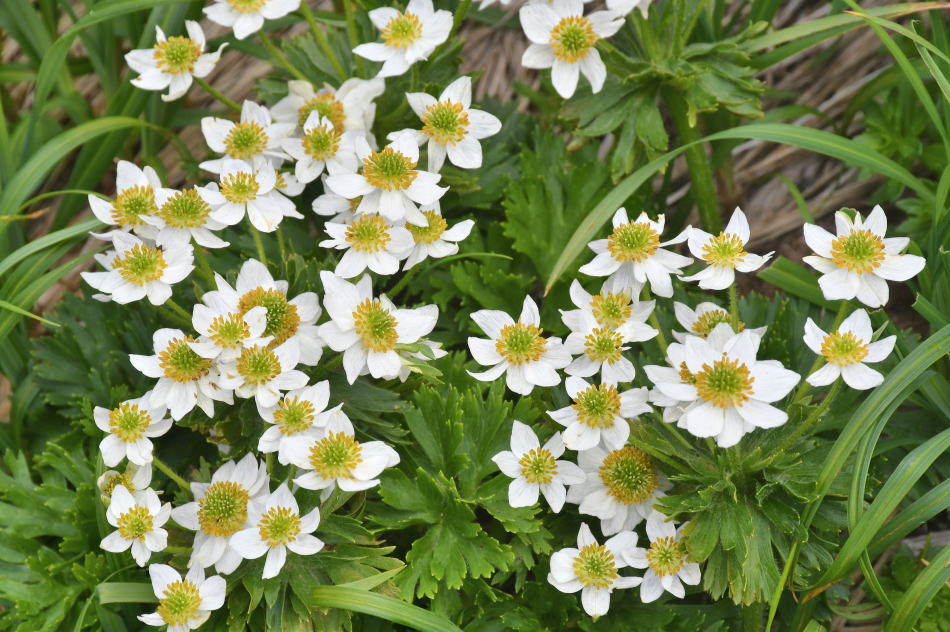
Several flowers bloom together at the tip of a single stem, usually two to five, sometimes even more.
So at the very least, it is not “one flower” (ichige),
and because they bloom in such abundance, I jokingly call it Takusan Ichige —
“the flower that comes in great numbers.”
In the mountains of central Japan, this species is quite common.
But what about Tohoku?
In fact, its distribution here is surprisingly limited.
Along the Sea of Japan side, it can be found from Mt. Chokai and Mt. Gassan southward to the Asahi and Iide ranges.
But in the Ou Mountains, it survives only in three isolated locations: Mt. Ugo-Asahidake, Mt. Yakeishi, and Mt. Fusōzan at the southern end of the Zao range.
Curiously, it is absent even from Mt. Hayachine, one of the richest mountains for alpine plants on the Pacific side of Tohoku.
(4) Endless Fields of Nikko Kisuge
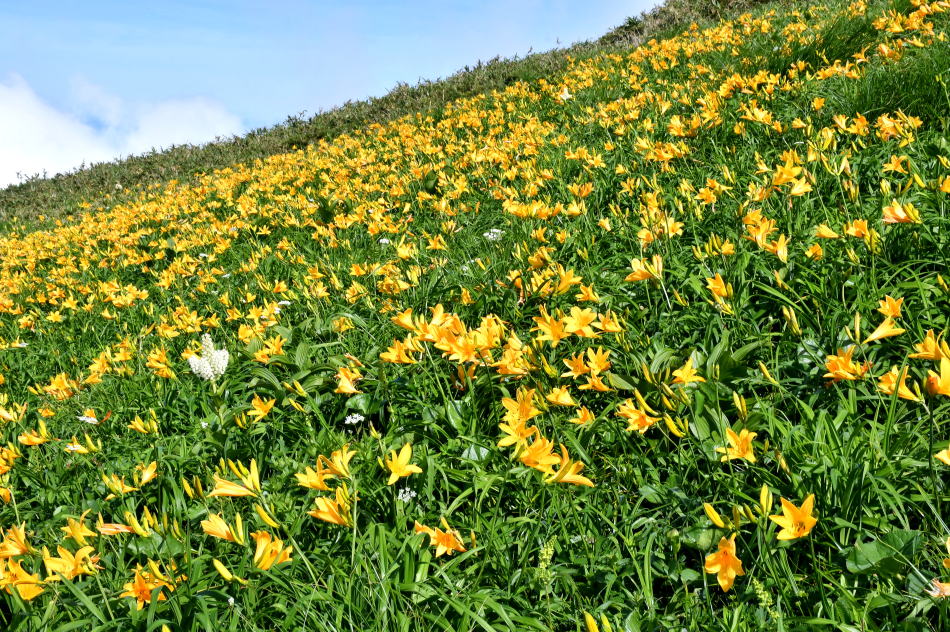
Nikko Kisuge may be the largest-flowered plant among Japan’s alpine flora.
Its vivid orange-yellow blossoms stand out brilliantly,
and because it often grows in great colonies, it creates magnificent alpine landscapes.
Nationally, famous viewing spots include Kirifuri Highlands in Nikko, Oze, and Kirigamine in Shinshu.
But in Tohoku, this flower can also be found not only in alpine regions, but in low mountains, wetlands, and even along the coast.
Here I introduce the particularly large colonies found on Mt. Chokai and Hachimantai.
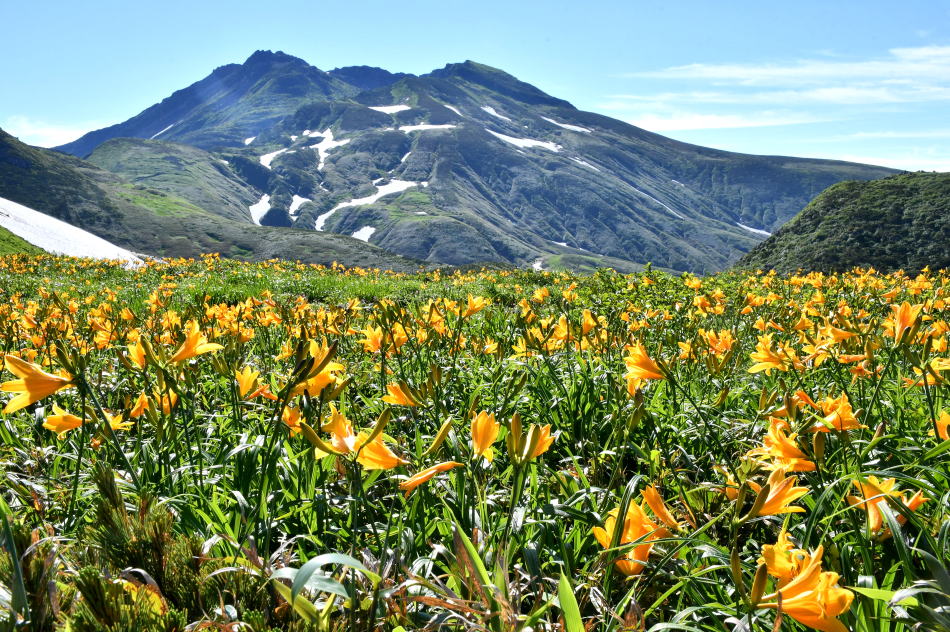
Great Colonies on Mt. Chokai
On the western side of Mt. Chokai, along the Nagasaka Trail ridge, lies a vast colony of these flowers.
A One-Day Flower
This flower belongs to the daylily family, and is therefore often called a “day lily.”
It seems almost wasteful that such magnificent flowers last for only a single day.
Wondering if that was truly the case, I observed a cultivated hybrid daylily (Hemerocallis) growing in my own garden.
To my surprise, many blooms remained open for nearly two days rather than one.
So perhaps they should be called “two-day lilies.”In any case, producing such large flowers one after another during the heat of summer must consume enormous energy.
It is no wonder that after a particularly abundant flowering season, the plant may spend the next two years rebuilding its strength.
(5) Hinazakra — Children of the Snow
Hinazakra (Primula nipponica) is a species of primrose commonly seen in the alpine regions of Tohoku.
These flowers often bloom in colonies on gentle slopes or wet flatlands left behind after snowfields retreat.
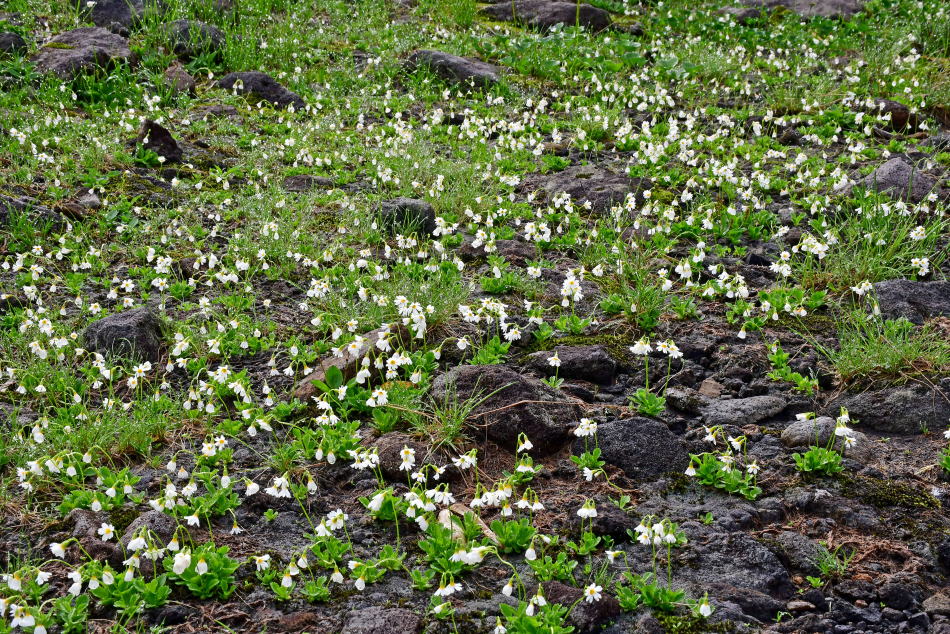
Perhaps because of its tiny white flowers,
whenever I encounter Hinazakra, I sometimes feel as though the snow that had finally melted has quietly returned once again.
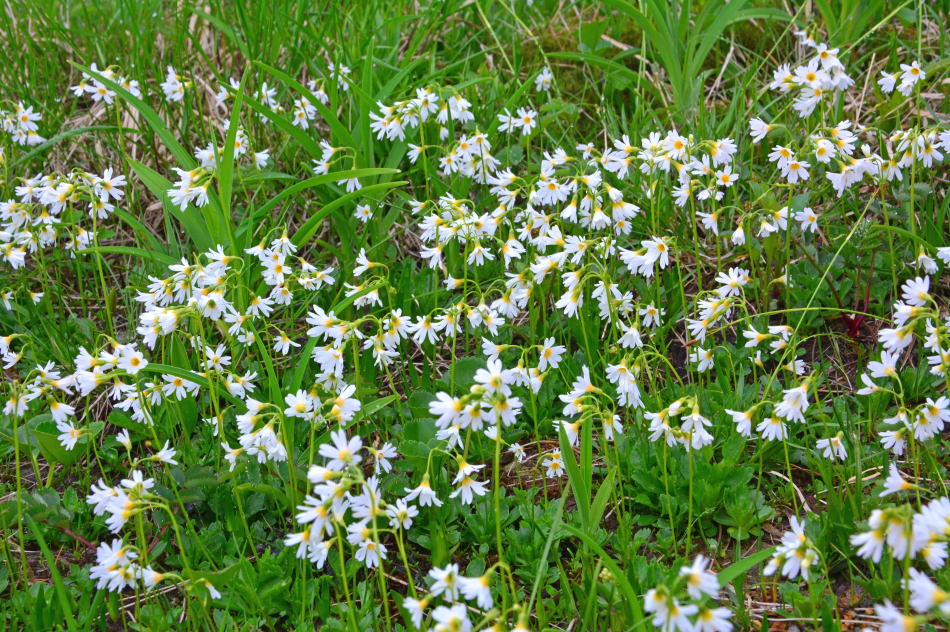
Distribution of Alpine Primroses in Tohoku
At the beginning, I mentioned that Hinazakra is commonly seen in the alpine mountains of Tohoku.
Yet in reality, its distribution is remarkably limited — almost entirely confined to the six prefectures of northeastern Japan.
Along the Ou Mountains, it ranges from the Hakkoda Mountains in the north to Mt. Nishi-Azuma in the south.
On the Sea of Japan side, it stretches from Mt. Chokai to the Asahi Range.
Curiously, it does not occur in the Iide Mountains, which extend into Niigata Prefecture.
(There, it is replaced by Hakusan Kozakura.)
Nor is it found on Mt. Hayachine on the Pacific side,
where another species, Himekozakura, takes its place.
