Episode 10: Nunobashi Kanjo-e
A Bridge-Crossing Ritual for the Salvation of Women
Hello everyone,
I am Takano, Director of the Tateyama Museum in Toyama Prefecture.
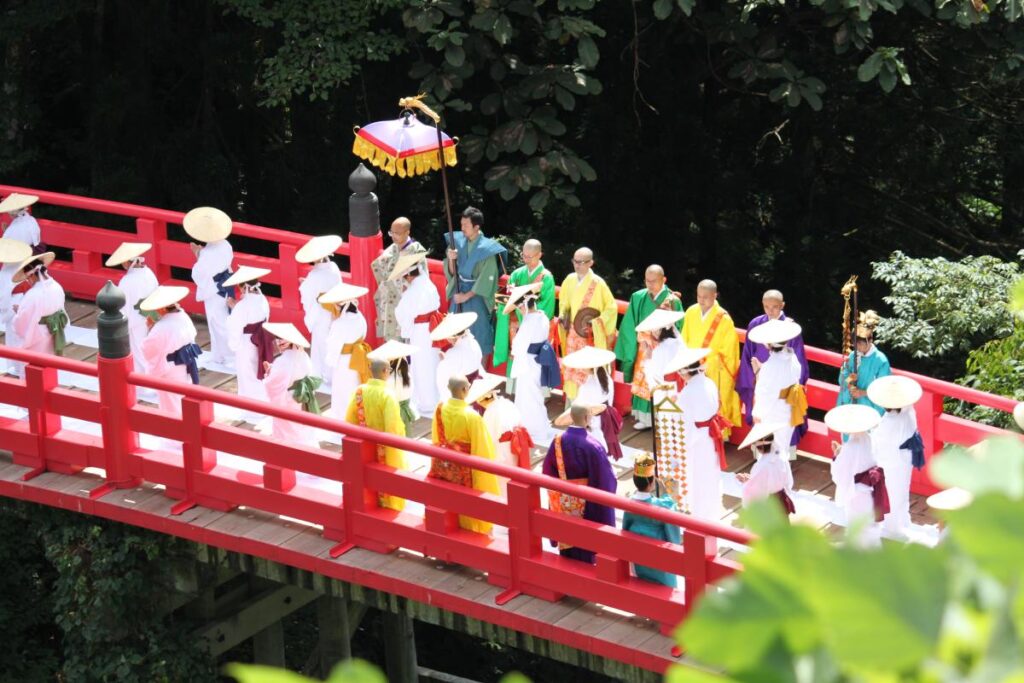
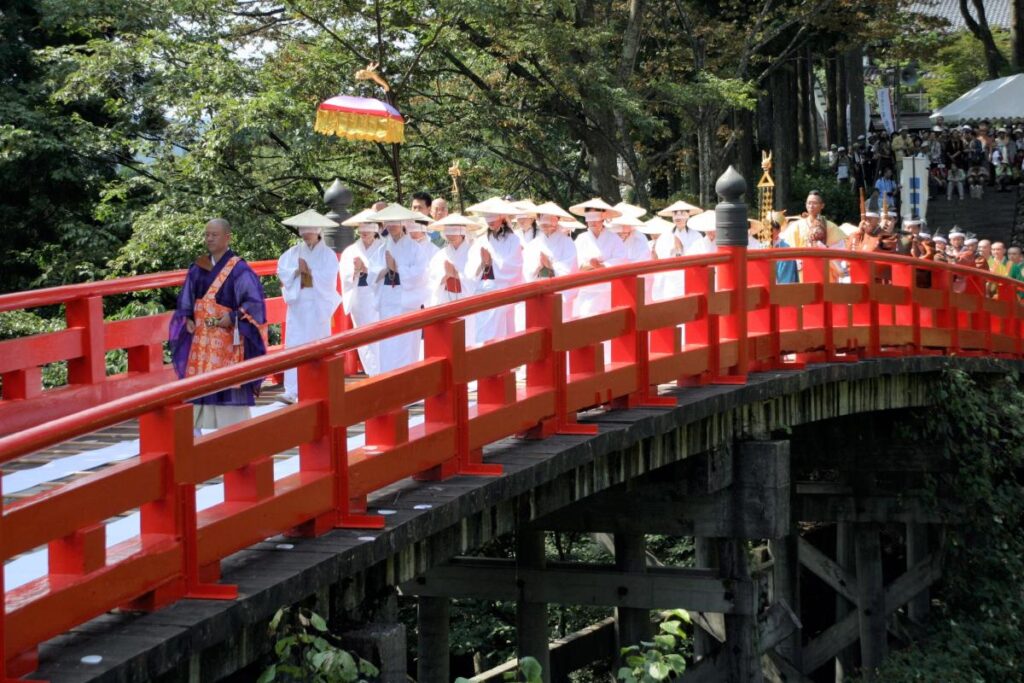
Since the Heian period, sacred Mt. Tateyama has been known as a holy mountain associated with the salvation of women. During the Edo period, a religious ceremony called the “Nunobashi Kanjo-e” (Cloth Bridge Consecration Rite) was held on the middle day of the autumn equinox. It was a ritual intended to save women from suffering in the afterlife. In this article, let us explore this unique ceremony together.
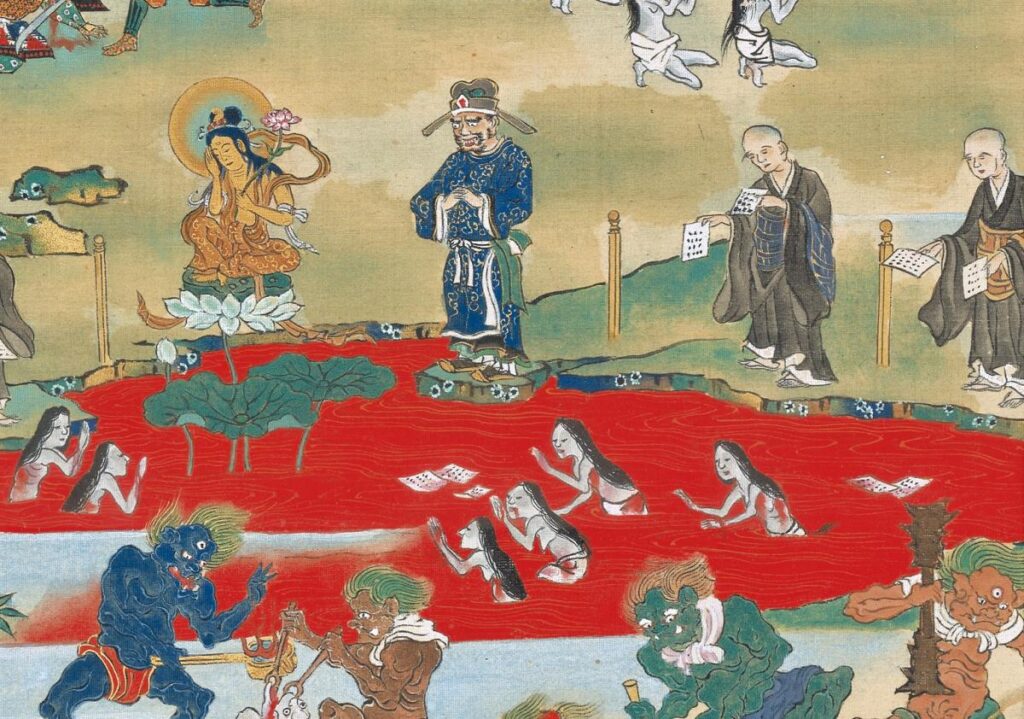
(from the Kisshobō Version of the Tateyama Mandala,
Tateyama Museum Collection)
(1) The Wishes of Women in the Edo Period
During the Edo period, men entered the mountains of Tateyama, believed to represent “the other world” or the afterlife. Through Zenjo-tohai — an ascetic pilgrimage in which worshippers climbed the mountain while engaging in spiritual training and prayer — they symbolically experienced death once in their lifetime. By enduring these hardships, it was believed that their sins would be purified and that rebirth in Paradise after death would be assured.
Women, however, were forbidden from entering the sacred mountain areas because of the custom known as nyonin kinsei, the prohibition against women entering certain sacred spaces.
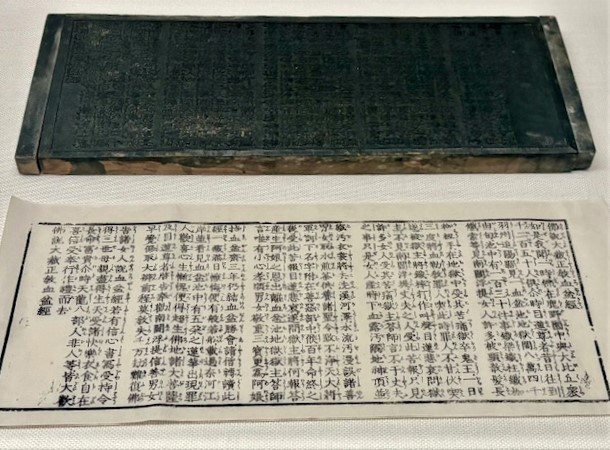
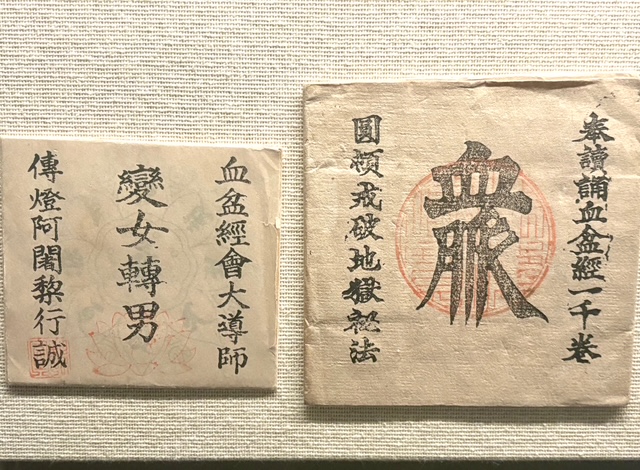
At that time, women were said to bear the burden of the “Five Obstacles and Three Obedience,” a Buddhist concept that taught women were destined to fall into hell after death and could not easily attain rebirth in Paradise. What women feared most was the “Blood Pond Hell,” a cold pond of blood believed to be the destination of sinful women. Many women longed to escape the suffering of this hell and achieve salvation in the next world.The religious communities of Ashikuraji and Iwakuraji at Tateyama taught that Tateyama was a sacred mountain capable of saving women. They encouraged women to obtain copies of the Ketsubon-kyo (The Blood Bowl Sutra) and protective amulets believed to cleanse the impurity associated with blood. They also promoted memorial services conducted at the “Blood Pond” near Jigokudani (Hell Valley), where sutra offerings were made. Through these practices, Tateyama became an important center of faith for women.

(2) What Was the Nunobashi Kanjo-e Ceremony?
During the Edo period, female pilgrims gathered at Ashikuraji in Tateyama on the middle day of the autumn equinox in late September.
First, the women dressed in white burial robes and underwent a confession ritual at the Enma-do Hall, dedicated to Enma, the judge of the dead. Next, wearing sedge hats and blindfolded, they were guided by religious leaders across the “Nunobashi” — the Cloth Bridge covered with white cloth and regarded as the boundary between this world and the next.
Crossing the bridge symbolized entering the world after death. After reaching the opposite side, the women entered the Ubado Hall, where they participated in a Tendai Buddhist rite known as the “Shika Hoyo.” There, they received a sacred talisman called a “Kechimyaku,” believed to possess spiritual power.
The women then crossed the bridge once again to return to this world. By doing so, they were believed to secure rebirth in Paradise after death. Scholars interpret this ritual as a symbolic ceremony of death and rebirth.
It is not entirely clear when this ritual first began. However, an old document called Ichizan Kyuki Hikae records that in August 1614, Hoshun-in (Matsu, the wife of Maeda Toshiie) and Gyokusen-in (Eei, the wife of Maeda Toshinaga) visited the Ubado Hall of Ashikura Chuguji Temple. On that occasion, cloth was spread over the bridge and a ceremony called the “Taibu no Gishiki” was performed. This is believed to have been the origin of the Nunobashi Kanjo-e.
In 1590, Maeda Toshiie, the first lord of the Kaga Domain, repaired the bridge, and in 1606, Maeda Toshinaga rebuilt it. In 1624, Maeda Toshitsune donated decorative bridge ornaments called giboshi as part of memorial rites conducted during his lifetime.
These contributions by the Maeda family and their wives likely elevated the prestige of the Nunobashi Kanjo-e ceremony.
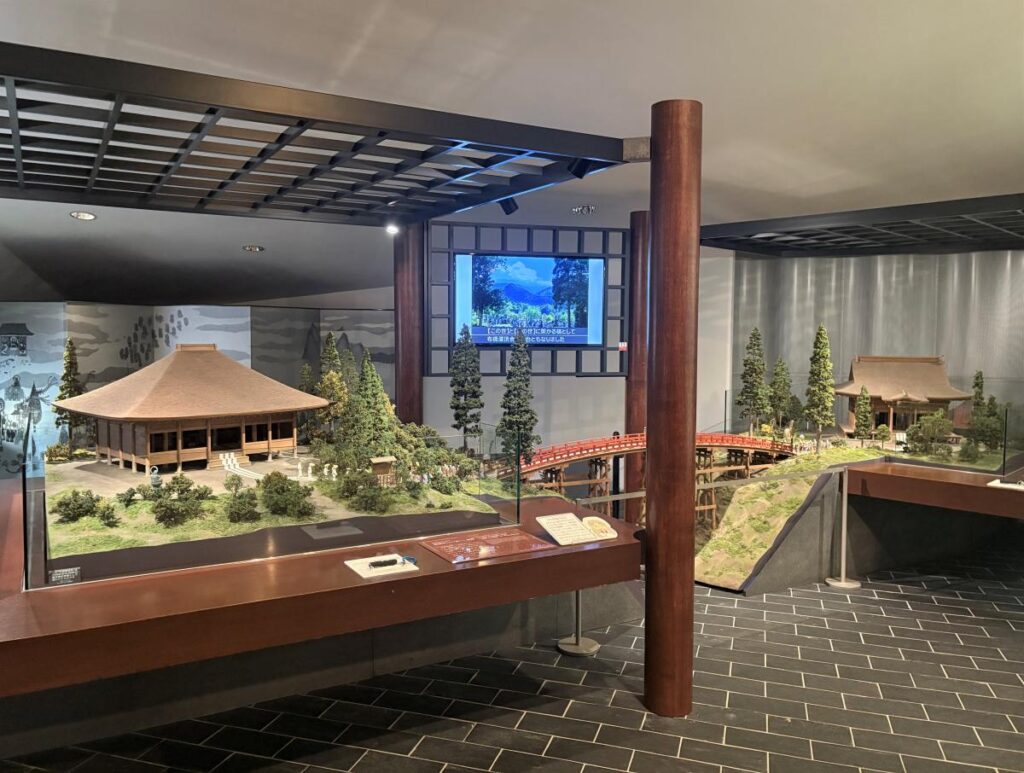
(Tateyama Museum Exhibition Hall)
(3) A Revived Ceremony of “Healing” in Modern Times
At the beginning of the Meiji period, the Ubado Hall was dismantled, the bridge gradually deteriorated, and the Nunobashi Kanjo-e ceremony ceased to be performed.
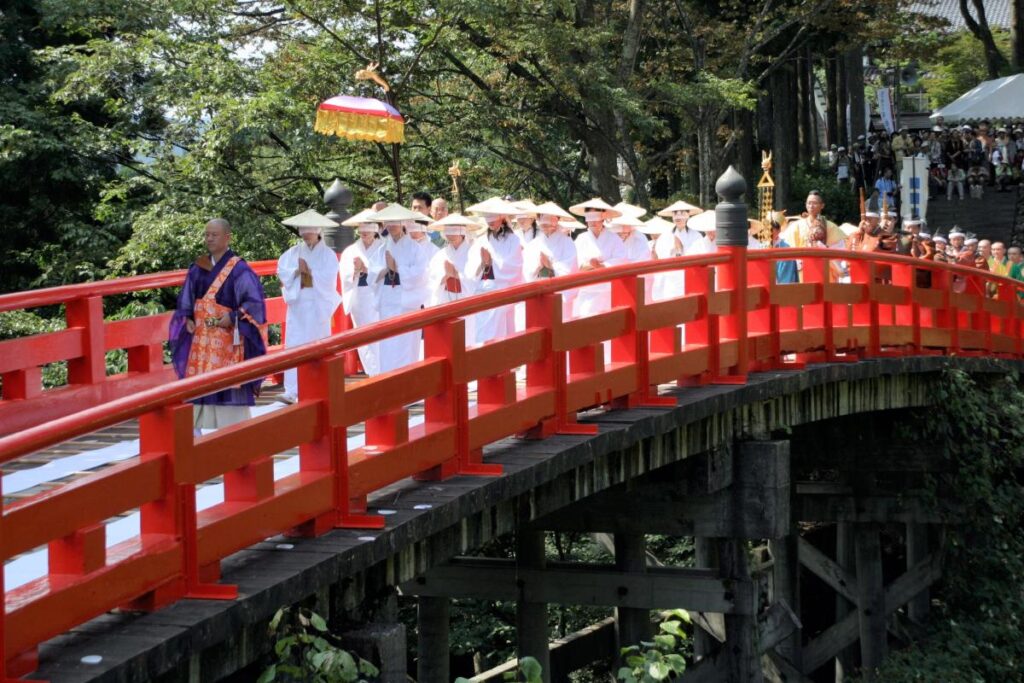
However, in 1996, during the National Cultural Festival held in Toyama Prefecture, the ceremony was revived. Enma-do Hall, a newly reconstructed Nunobashi Bridge (rebuilt in the 1960s), and the Tateyama Museum’s Yobo-kan Hall — serving in place of the original Ubado Hall — became the setting for the restored ritual.
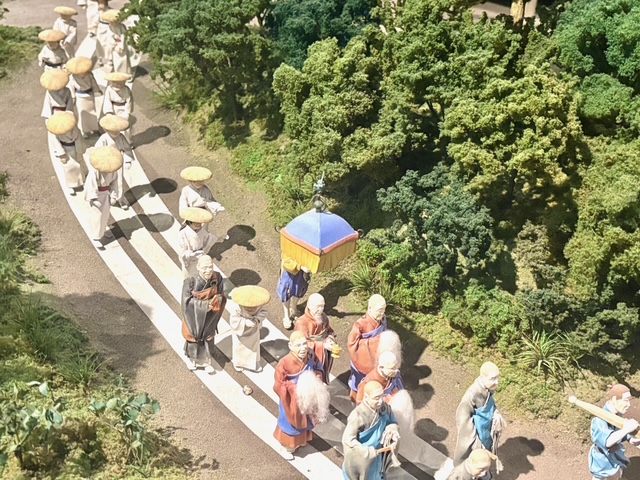
(Tateyama Museum Exhibition Hall)
Since 2011, the ceremony has generally been held once every three years by the Nunobashi Kanjo-e Executive Committee.
In 2011, the ritual was registered as a “Project Future Heritage” by the National Federation of UNESCO Associations in Japan. In 2014, the Executive Committee received the 36th Suntory Prize for Regional Cultural Activities.
Today, the Nunobashi Kanjo-e has gained new appeal as a cultural and spiritual event, and is widely appreciated as one of Toyama Prefecture’s representative modern “healing” traditions.
Next time, I will introduce the “Tateyama Faith Ritual Implements,” an Important Tangible Folk Cultural Property designated by the Japanese Government.I hope you will continue to enjoy this series.
◎ For readers who would like to learn more about the Nunobashi Kanjo-e, the Tateyama Museum recommends its illustrated guidebook “Nunobashi Kanjo-e” (200 yen including tax). For purchasing information, please contact the Tateyama Museum at +81-76-481-1216.