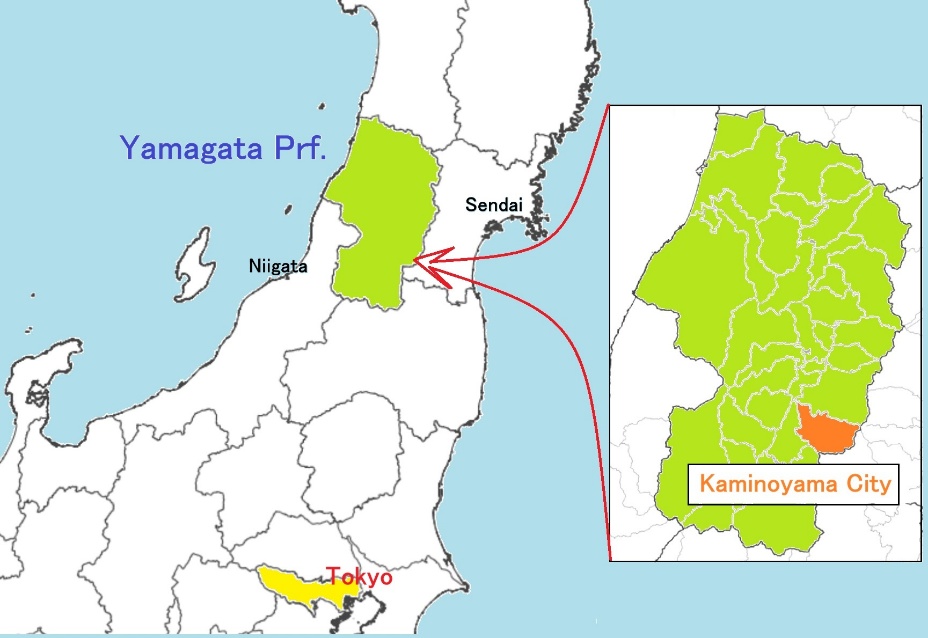
Every February 11, the quiet castle town of Kaminoyama transforms into a scene unlike anywhere else in Japan.
Men dressed in straw cloaks walk through the streets shouting “Kakkakkaa!” as residents splash them with buckets of water.
This is Kasedori, one of Japan’s most unusual winter festivals.
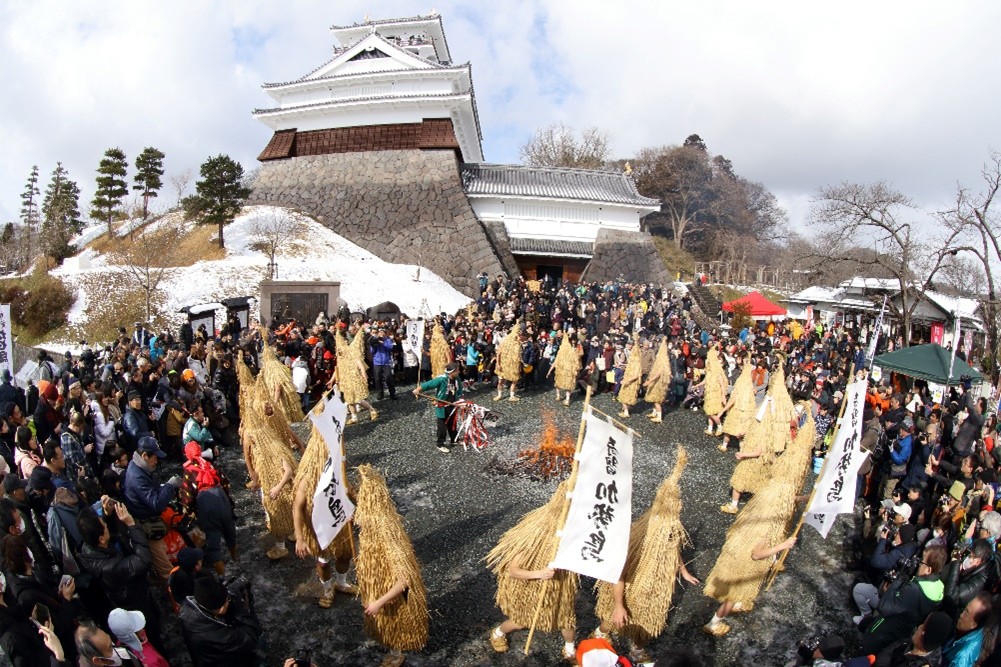
On a freezing winter morning in northern Japan, a strange figure appears in the streets.
Covered entirely in straw and shouting “Kakkakkaa!”, the figure walks through the old castle town while people throw buckets of water over him.
This dramatic scene is part of Kasedori, a traditional winter festival held every year on February 11 in Kaminoyama City, Yamagata Prefecture.Despite the cold, the festival is filled with laughter and excitement.
For the people of Kaminoyama, it is a joyful ritual that celebrates good fortune, prosperity, and protection for the year ahead.
A “Bird” That Brings Good Fortune
The name Kasedori is often interpreted as “the bird that brings prosperity.”
In earlier times, people believed that during the New Year season a divine spirit would visit villages from distant lands, bringing blessings for the coming year.
The Kasedori represents this visiting spirit.
As the straw-covered figure walks through the town, residents welcome it and pray for
- successful harvests
- thriving businesses
- family happiness
- and safety from disasters.
Why People Throw Water
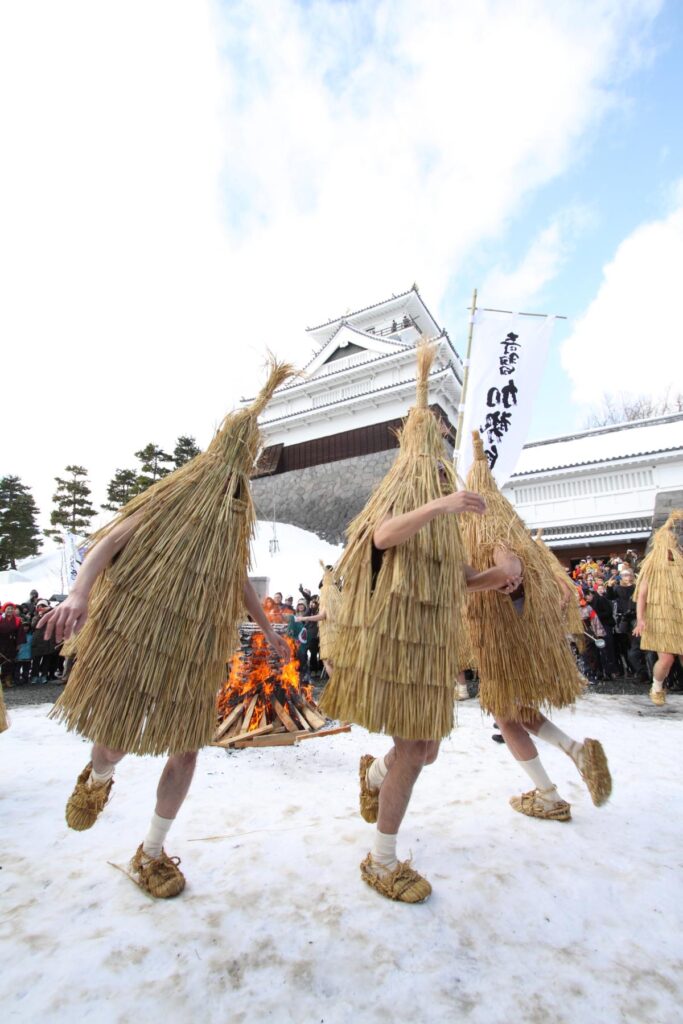
One of the most unforgettable sights of the festival is when residents pour water over the Kasedori.
The water is known as “celebration water.”
In traditional belief, clean water symbolizes life, purity, and abundance, so splashing water is a way of wishing prosperity for the year ahead.
There is another meaning as well.Kaminoyama experienced devastating fires in the past, and people once believed that a mysterious “fire-eating bird” in the sky spread flames during those disasters.
Because the Kasedori resembles a bird, throwing water on it also came to symbolize prayers for protection from fire.
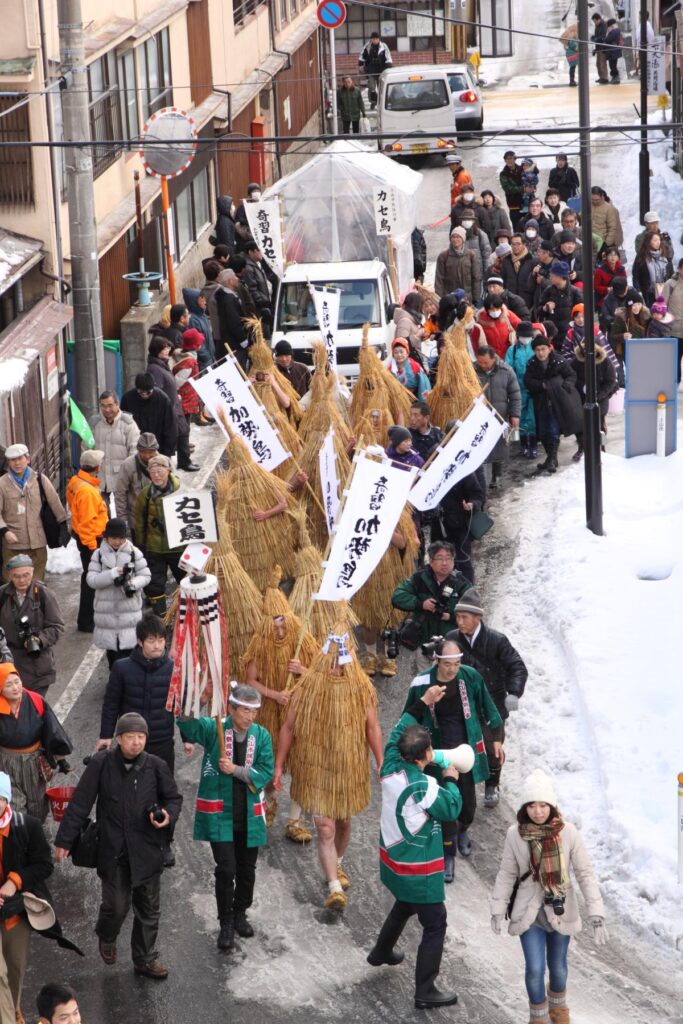
shouting “Kakkakkaa!” as part of the winter ritual.
A Costume Made from Straw
The performer wears a large straw cloak called a Kendai, woven entirely from rice straw.
It covers the body from head to toe and can weigh up to 10 kilograms when soaked with water.
Making this costume is itself a rare traditional skill.
Only a few members of the local preservation society still know how to weave the Kendai using traditional tools.The straw sandals worn by the performers are also handmade by local residents, reflecting the deep community involvement that keeps the festival alive.
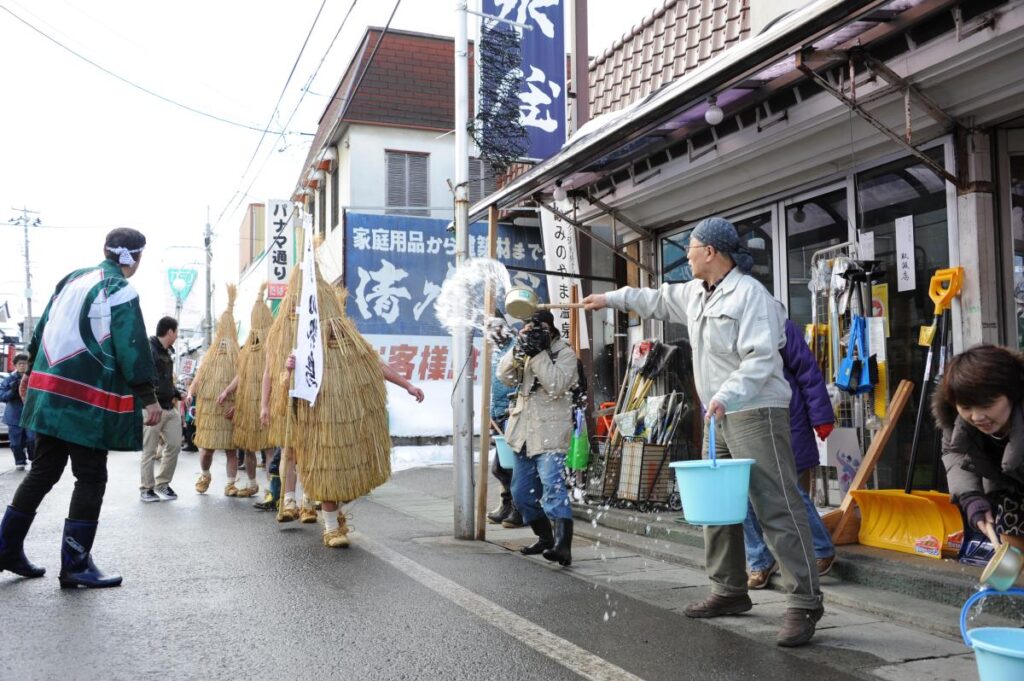
act believed to bring prosperity and protect the town from fire.
Good Luck from a Strand of Straw
Visitors can participate in several small traditions during the festival.
When the Kasedori arrives, people may wrap a new towel or cloth around the straw costume while making wishes for the coming year.
Strands of straw that fall from the costume are considered lucky charms, believed to carry the blessing of the visiting spirit.
A local saying even suggests that tying a girl’s hair with Kasedori straw will help her grow into a beautiful woman with long black hair.
A Tradition Revived
Like many traditional festivals in Japan, Kasedori once disappeared.
After the political changes of the late nineteenth century, the event was abolished and eventually faded away.
But in 1959, local residents revived the festival, determined to preserve their heritage.
Today the Kasedori Preservation Society continues to pass the tradition to younger generations.
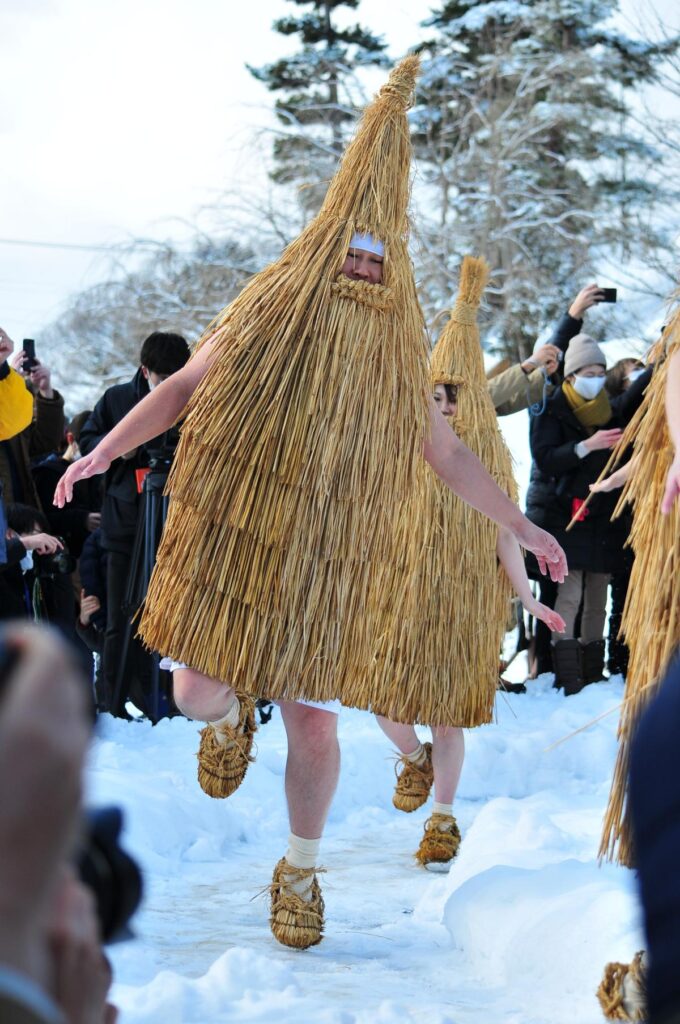
is carefully woven from rice straw by local craftsmen.
Experience Kasedori
Every year on February 11, the streets of Kaminoyama once again echo with the cry “Kakkakkaa!”
As the straw-clad figures move through the town and water splashes into the winter air, visitors can experience a living tradition that connects the present with centuries of local history.
Kasedori is not just a festival.
It is a celebration of community, resilience, and hope for the year ahead.
Acknowledgment
This article was prepared based on materials provided by the Kaminoyama Folk Festival Kasedori Preservation Society.All photographs are courtesy of the Kaminoyama Tourism and Products Association.