
This Millennium Forest did not begin as a project.
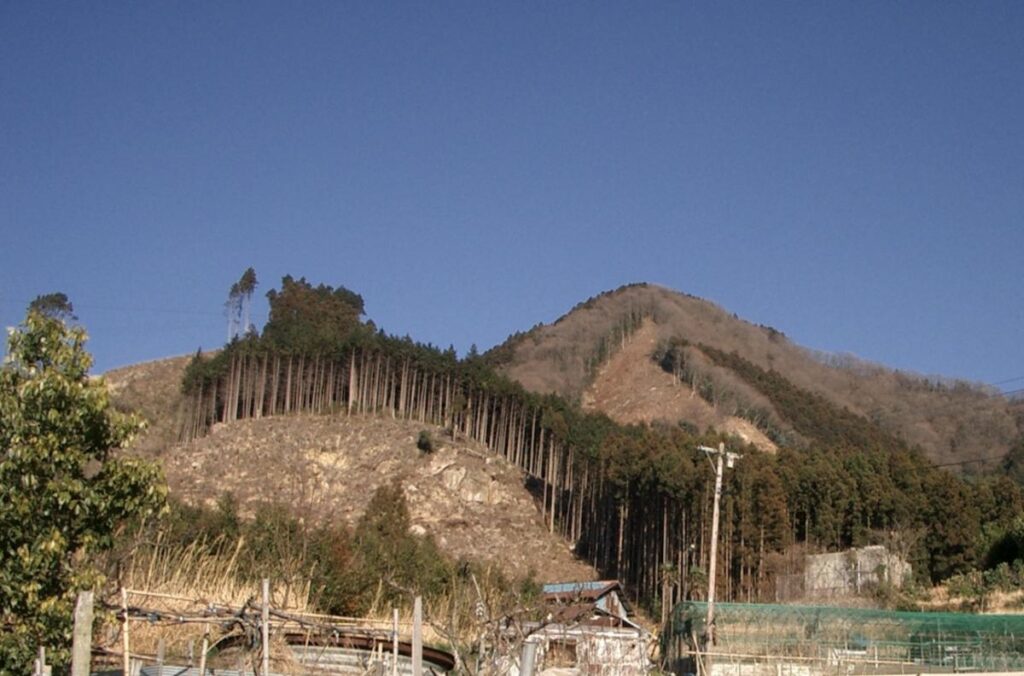
It began with one person standing before a clear-cut hillside,
asking how a human being should relate to nature—
and over what span of time.
Rather than seeking quick answers,
or attempting to control outcomes,
a simple choice was made:
to plant trees, and to entrust time to nature.
A forest does not respond immediately.
Yet to those who continue to stand with their questions,
it eventually begins to speak—quietly, through its form.A Millennium Forest is not only an act of reforestation.
It is a place where one learns, over a lifetime,
what it means for humans to live alongside nature.
Life Devoted to Forest Creation
In this three-part essay series, Takeo Tsurumi reflects on a life devoted to forest creation—
a journey shaped not by a single project, but by decades of quiet commitment to land, time, and learning from nature.
Born in 1946 to parents who returned to Japan from Manchuria after the Second World War, Tsurumi grew up in a postwar reclamation village, where life was marked by material poverty and hardship. These early experiences formed a lifelong sensitivity to the relationship between human survival, land, and time.
Over nearly fifty years, he has continued to engage in forest creation as a personal, long-term practice rather than a short-term intervention—planting trees, observing change, and allowing natural processes to unfold beyond human control.
A former professor at Ehime University with a Ph.D. in Economics, Tsurumi’s work bridges lived experience, academic inquiry, and hands-on forest practice. Through the creation of the Millennium Forest, he has come to see forests not as resources to be managed for immediate results, but as teachers—revealing, over time, how humans might live more humbly and responsibly alongside nature.
Part 1 — Origins of the Thousand-Year Forest
In the late 20th century, while teaching at an agricultural high school in Chiba, I began helping a friend manage a small forest. One day I saw an industrial waste site in the mountains, leaking toxic liquid into a valley stream. I realized then: once nature is destroyed, it may take a thousand years to heal. From this conviction, the idea of creating a “Thousand-Year Forest” was born.
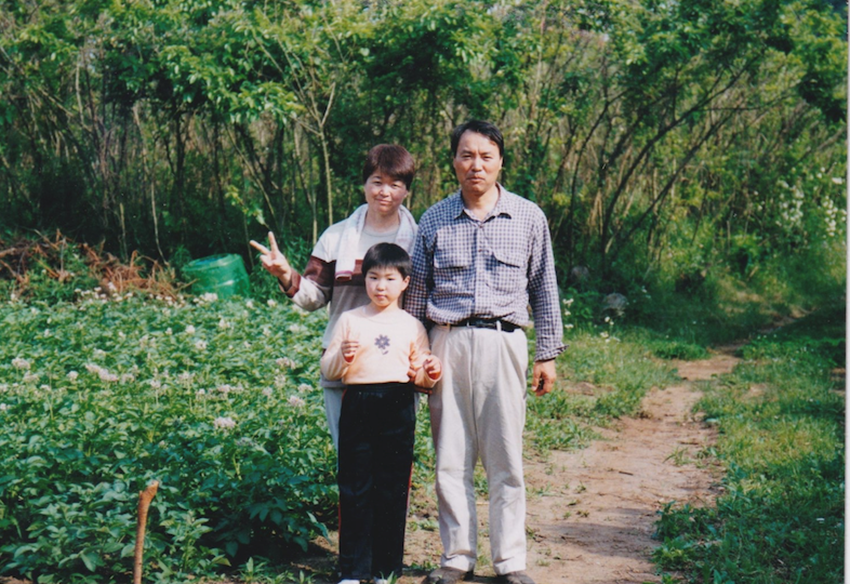
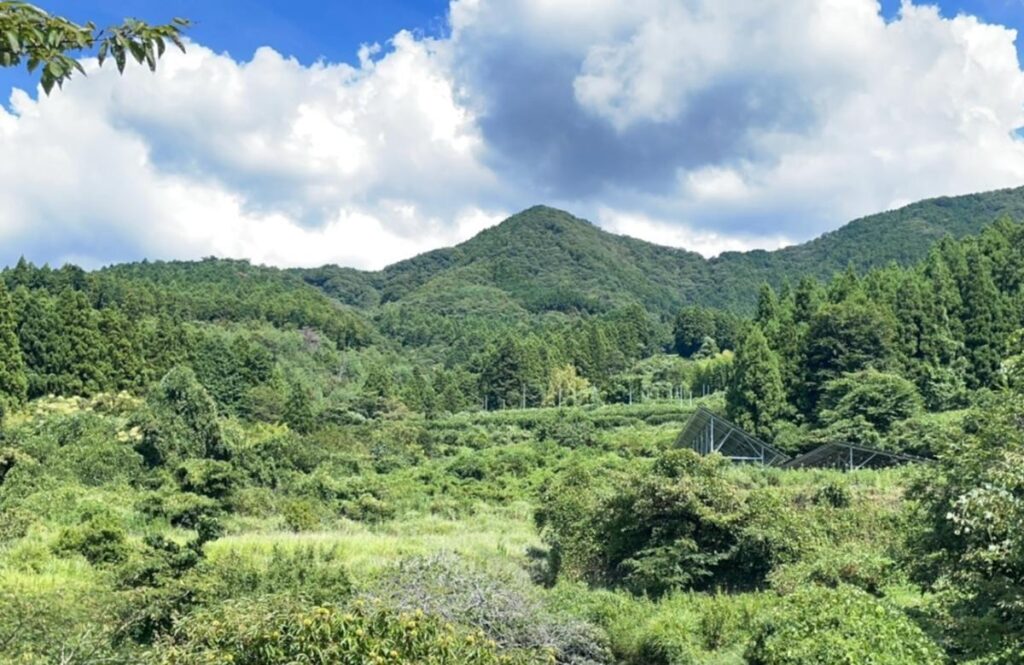
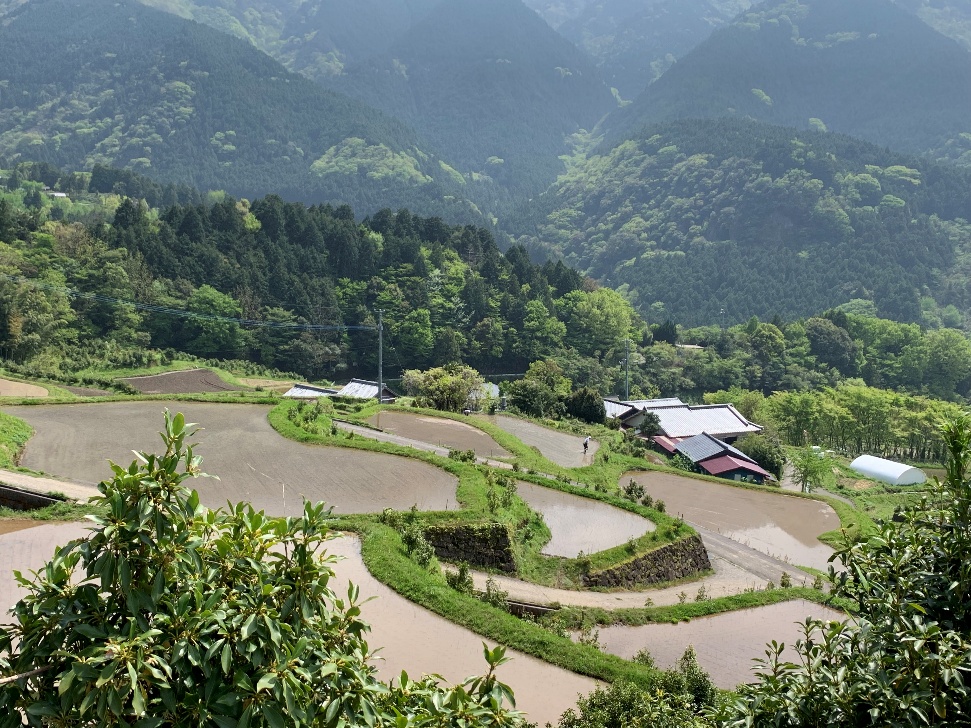
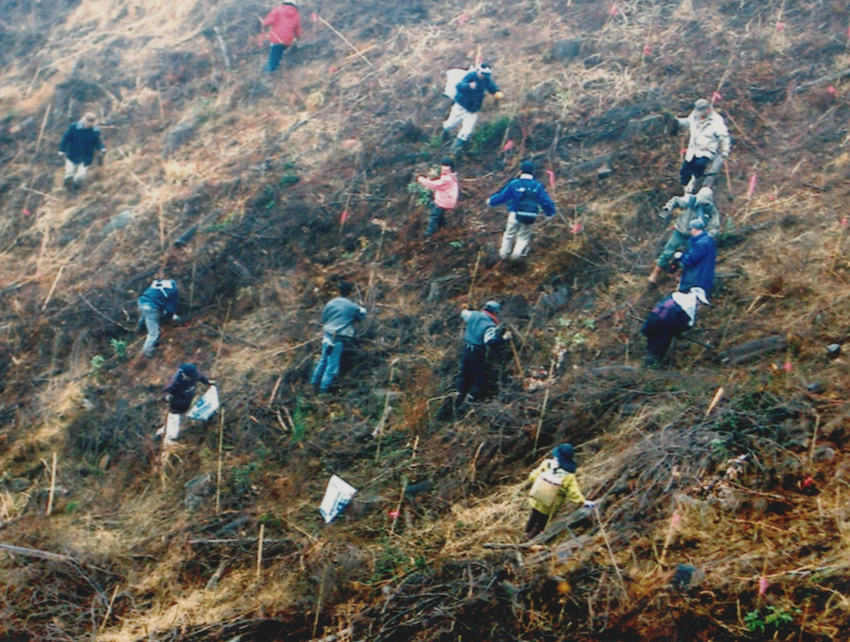
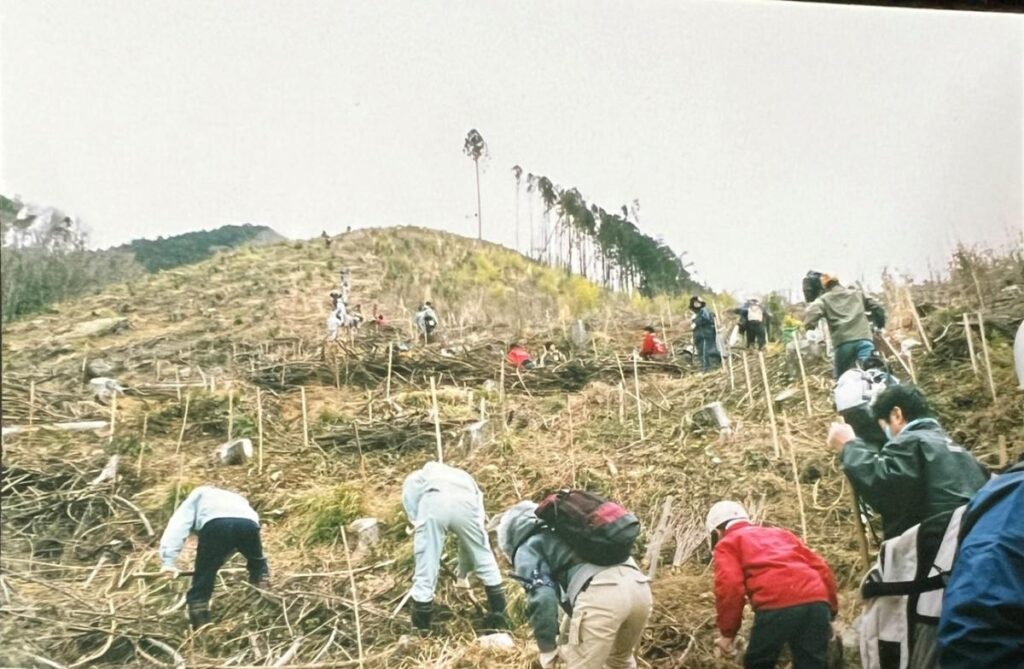
In 2000, I moved to Ehime Prefecture to take a university post. By chance, I purchased an old farmhouse in the terraced hills, where neighbors warmly welcomed my family and taught us how to cultivate rice. Soon after, I acquired six hectares of bare land nearby. For the first time, I had a place to plant freely, and together with volunteers we began restoring the mountain.
Over the years, we planted more than 9,000 broadleaf trees. Families joined to mark life events, children planted camellias as graduation memories, and couples planted trees for anniversaries. Each tree became more than a seedling; it carried human hopes and stories.What began as one professor’s personal commitment slowly grew into a community’s shared vision. The Thousand-Year Forest is not just a piece of land—it is a living symbol of care, resilience, and the belief that our actions today can shape a forest for generations a thousand
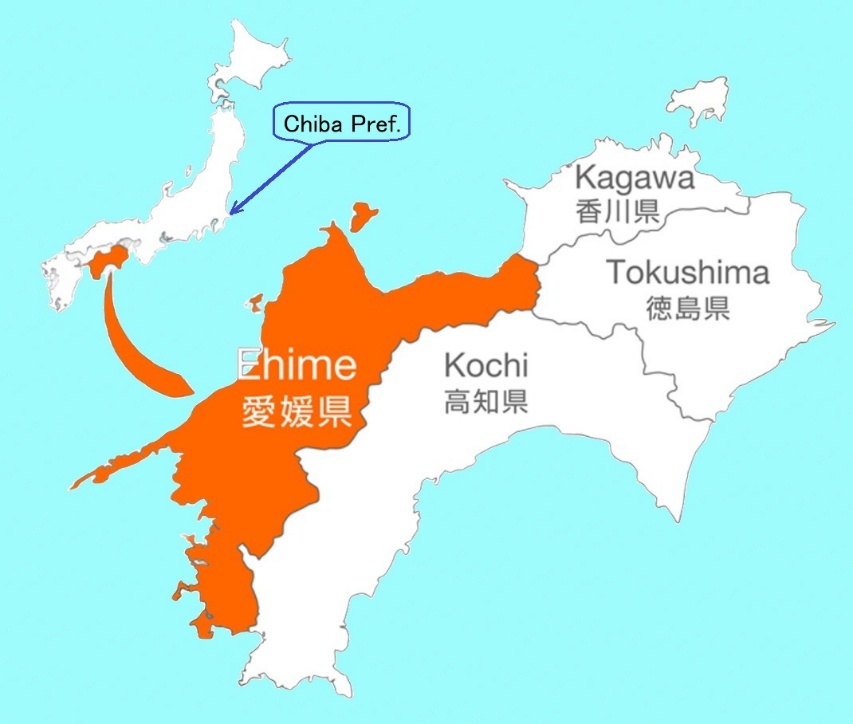
# Prof Takedo Tsurumi
# Reforestation
# Ehime Prefecture
Learning from the Forest
Ten years after intensive planting and maintenance began in the Kawauchi Millennium Forest, we asked a simple question: What had the forest become?
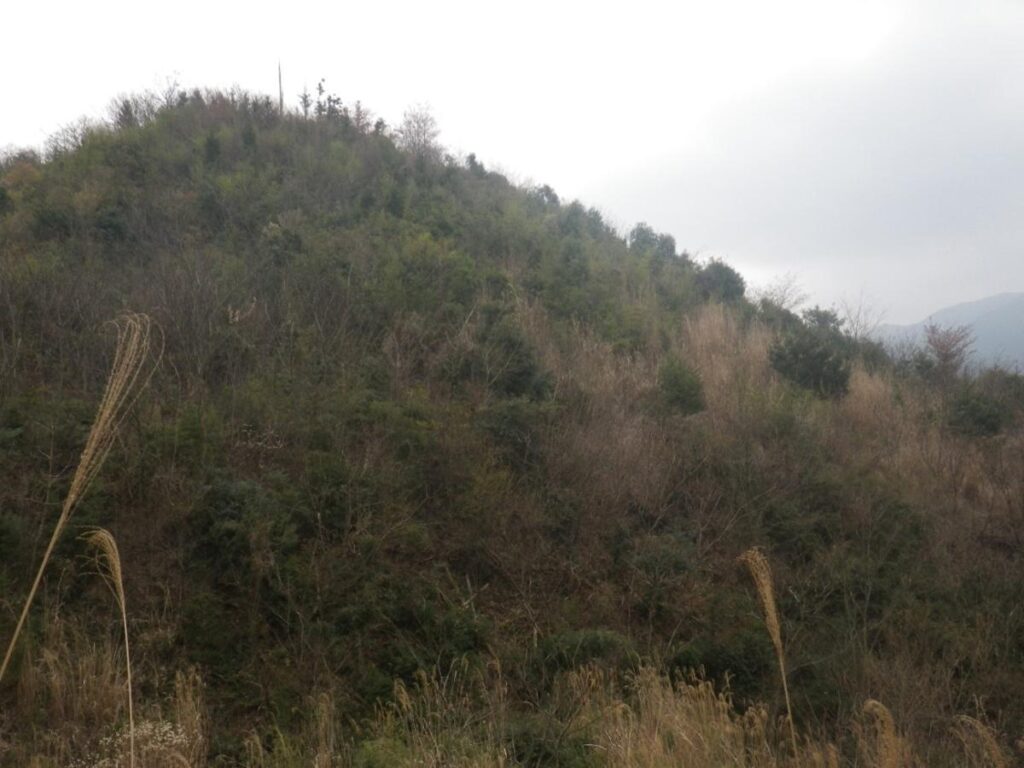
In 2014, after years spent preparing the land, planting trees, clearing undergrowth, and cutting vines across seven hectares of the ten-hectare site, we commissioned a professional forest survey.
At the time, I carried a sense of unease. Maintenance had not always been as thorough as I wished. Yet the survey results surprised and reassured me. The forest was described as “a good forest,” already developing rich biodiversity. Even when our human efforts had been limited, natural processes had continued to nurture the land. This realization brought both encouragement and relief.Ten years later, in 2024, we asked the same researcher to return. The second survey, focusing explicitly on the monitoring of broadleaf forests regenerating on former conifer clear-cut sites, reflected a deeper and more focused understanding than the first. Our questions had matured, and so had the forest.

Learning Through Science and Education
Between these two surveys, my own thinking underwent a significant transformation. From 2015 to 2018, I was involved in developing national high school curriculum guidelines in forestry, covering forest science, forest management, and forest product utilization. From 2019 to 2021, I authored the high school textbook Forest Science.
These years became a period of intensive learning for me. During the textbook’s preparation, I received frequent guidance from Professor Takao Fujimori, a leading forest ecologist. His advice was clear: forest ecosystem functions and services must be explained as a coherent story—one that shows how they can be harmoniously realized through appropriate management, and what kinds of technologies, human resources, and policies are needed to support them.While writing under strict deadlines, I often found myself watching ripe apricots fall from the single tree in our yard, slowly decaying in the terraced rice fields below. That quiet image became inseparable from my understanding of time, cycles, and patience in both forests and human learning.
Clarifying the Goal
The insights gained through study and practice gradually crystallized into a clear direction for the Millennium Forest. Our ultimate target forest type would be a natural forest. We defined our objective as the conversion of clear-cut sugi (Japanese cedar) and hinoki (Japanese cypress) plantations into broadleaf forests.
As activities progressed, the forest was divided into eight zones, each with a provisional target: planted forest, semi-natural forest, or natural forest. This zoning allowed us to continue learning through long-term observation rather than fixed prescriptions.
At the conclusion of the survey report, the researchers noted that clear management guidelines for volunteer-led broadleaf forest creation remain largely undeveloped. In that context, they expressed respect for the Kawauchi Millennium Forest as a rare long-term experiment—one that continues through trial and error under diverse natural conditions.
What the Forest Teaches
Part 2 marks a shift from doing to learning.
The forest is no longer something we shape alone; it is something that responds, teaches, and quietly corrects us over time. Through observation, study, and humility, the Millennium Forest has become not only a site of restoration, but a living classroom—one that continues to deepen our understanding of forests, people, and the long arc of coexistence between them.
# Prof Takeo Tsurumi PhD, (retired)
# Ehime Prefecture
What It Means to Create a Millennium Forest
The Point We Have Reached as of 2024
What does it truly mean to create a Millennium Forest?
By 2024, our answer has become clearer: it is not only about trees, but about people—and the relationships that grow alongside the forest.
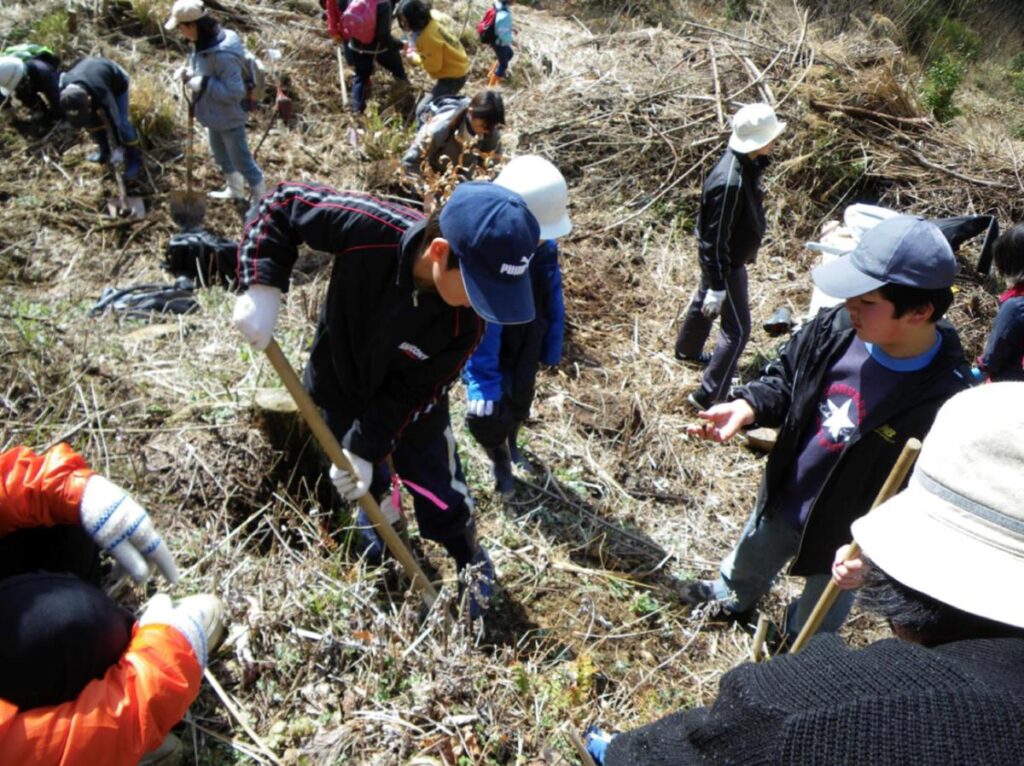
A Forest That Welcomes the Whole Person
From the beginning, the Ehime Millennium Forest Association has followed a simple principle: participation is never obligatory. People may join as much or as little as they wish, according to their interests, concerns, and physical condition at the time. We do not evaluate or rank participants by experience, skill, enthusiasm, or attitude.
For those unfamiliar with forestry, volunteer work in the forest can feel intimidating. We therefore place great importance on creating an environment where anyone can participate with a sense of safety and ease.
Within such an atmosphere, participants gradually gain emotional space. As they encounter their unadorned selves, many begin to reflect quietly on a deeper question: What is my own role, or purpose, in life?
Sharing Time, Sharing Awareness
We value group sharing sessions held at both the beginning and the end of each activity day. At the opening session, participants talk about recent experiences, thoughts, or feelings they bring with them. At the closing session, each person reflects on what they experienced during that day in the Millennium Forest.
Through these simple practices, individual awareness is shared, and mutual understanding deepens naturally. Over time, these repeated moments of reflection have strengthened two core aspirations of the Association: to provide a place where people can encounter their true selves, and to explore future-oriented, circular ways of living.The Millennium Forest is gradually becoming an irreplaceable place—not merely a forest to be managed, but a space for profound human and ecological experience.
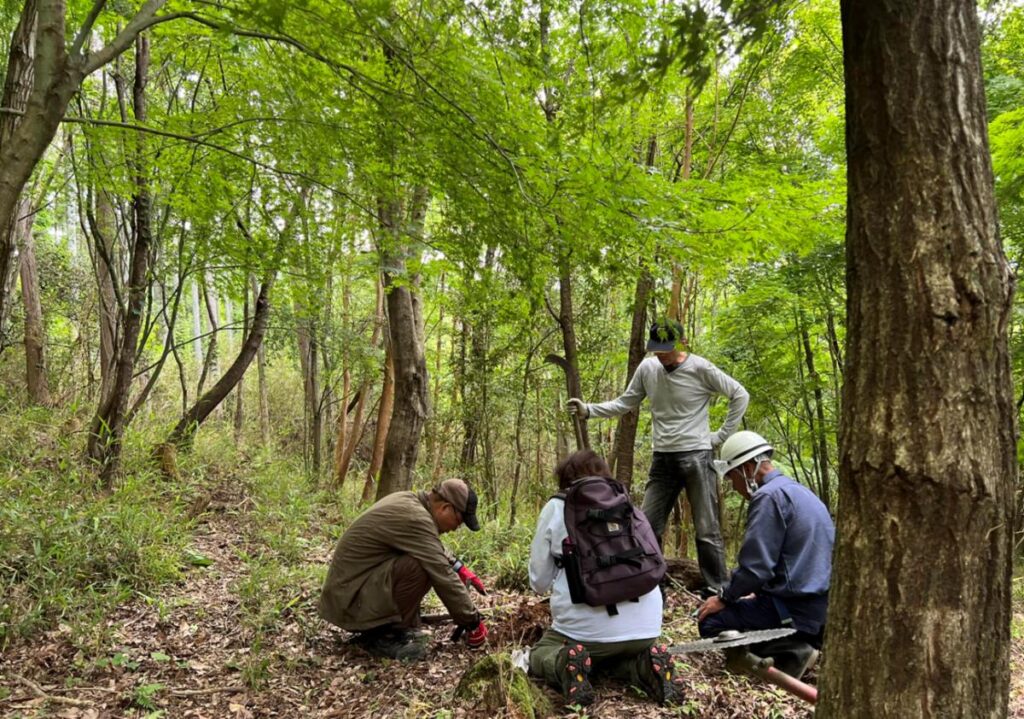
Continuing the Work, Together
Forest volunteer activities are held once a month, usually on the third Saturday. Tasks include maintaining walking paths, cutting bamboo grass, and removing vines. As I grow older, working across ten hectares has become physically demanding, and I am deeply supported by the presence of fellow volunteers.We also create opportunities for forest observation and hands-on experiences whenever possible. For us, entering the forest has become part of everyday life. For participants from urban areas, however, stepping into the forest—often for the first time—can be a powerful and moving experience in itself.
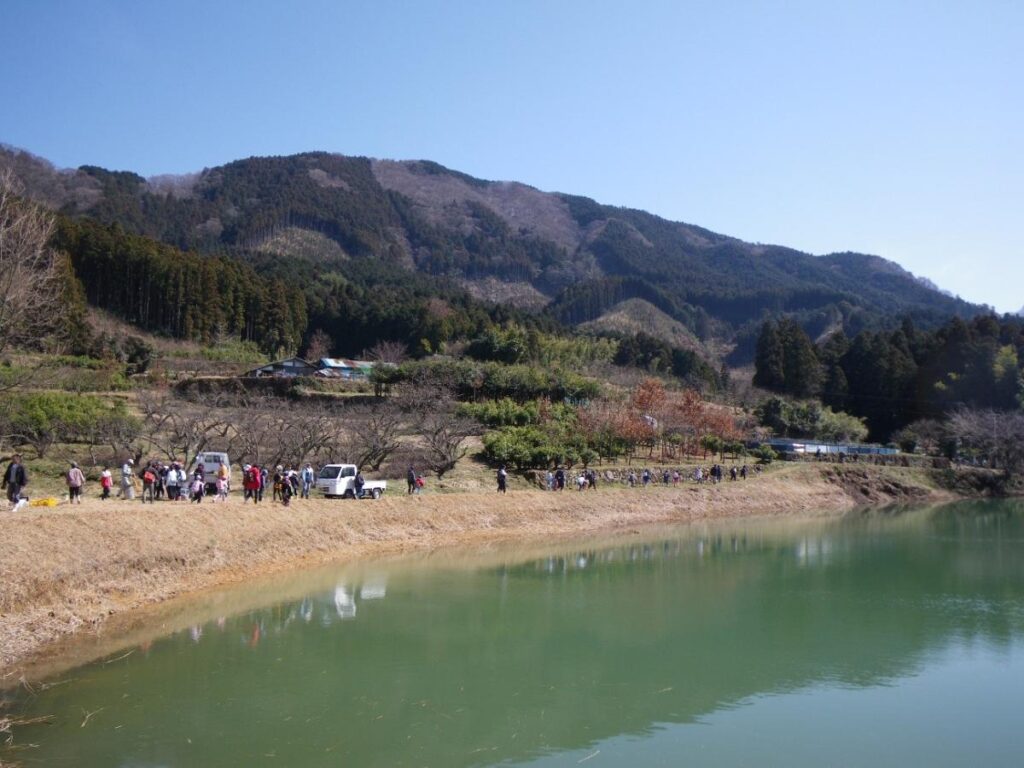
Learning from the Living Forest
Perhaps out of a sense of curiosity, I also try to share what the forest has taught me: how forest ecosystems provide diverse functions and services, and how these functions change as forests develop over time. Participants listen, reflect, and gradually incorporate these ideas into their own understanding of forest creation.Part 3 represents a shift from making a forest to living with one.
Here, the Millennium Forest reveals its deeper meaning—not as a completed achievement, but as an ongoing practice in which forests shape people, just as people care for forests.
Prologue:
This three-part essay series presents the life and work of Takeo Tsurumi, who has devoted his life to forest creation.He did not begin this work to be understood,
nor to be evaluated beyond his own conscience.
He simply continued, believing that time itself would respond.
# Professor Takeo Tsurumi PhD, (retired)
# Ehime University
# Ehime Prefecture
# Reforestation
