
Hello everyone,
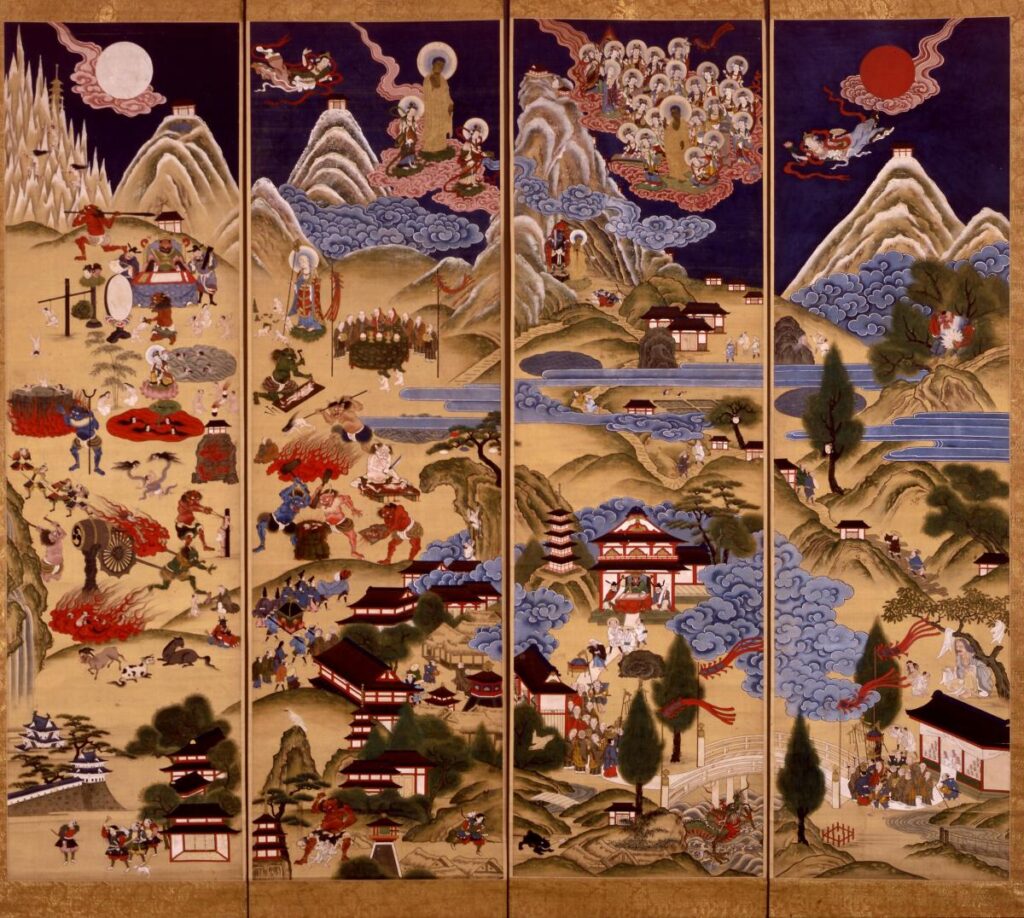
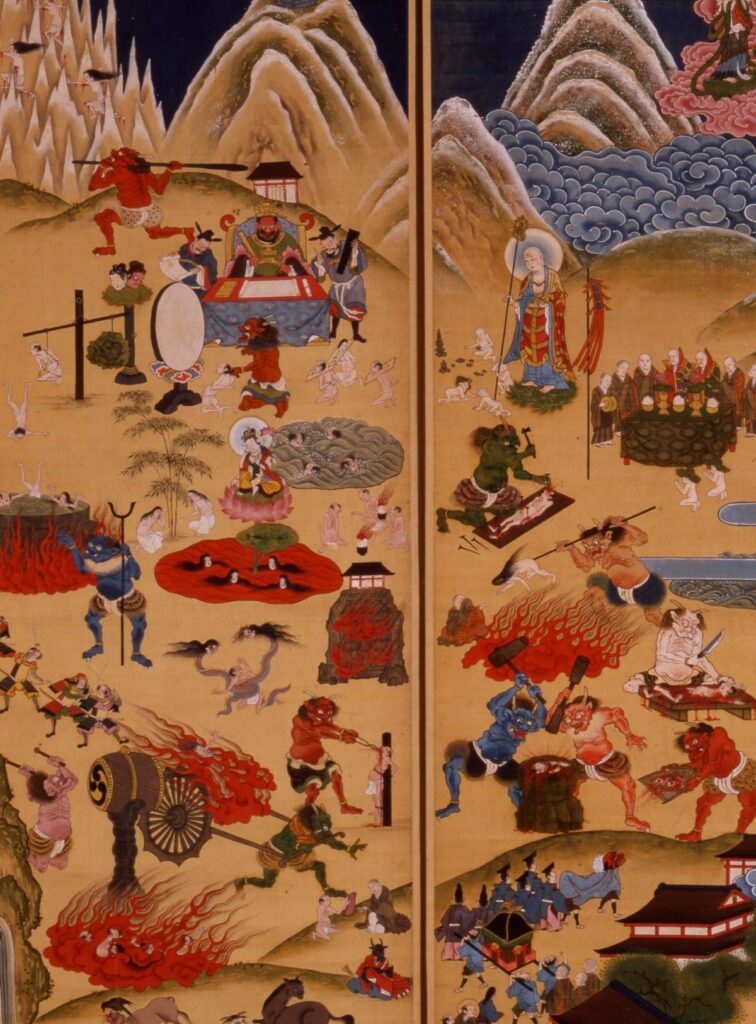
I am Yasuhiko Takano, Director of the Toyama Prefectural Tateyama Museum.A distinctive feature of Tateyama faith is the belief in the existence of hell within the mountains. The concept of hell at Tateyama is thought to have emerged from the ancient Japanese belief that the souls of the dead go to the mountains, combined with Buddhist ideas of the afterlife. In this installment, I will introduce Buddhist tales of Tateyama Hell that appear in late Heian-period works such as the Hokke Genki and the Konjaku Monogatari-shū.
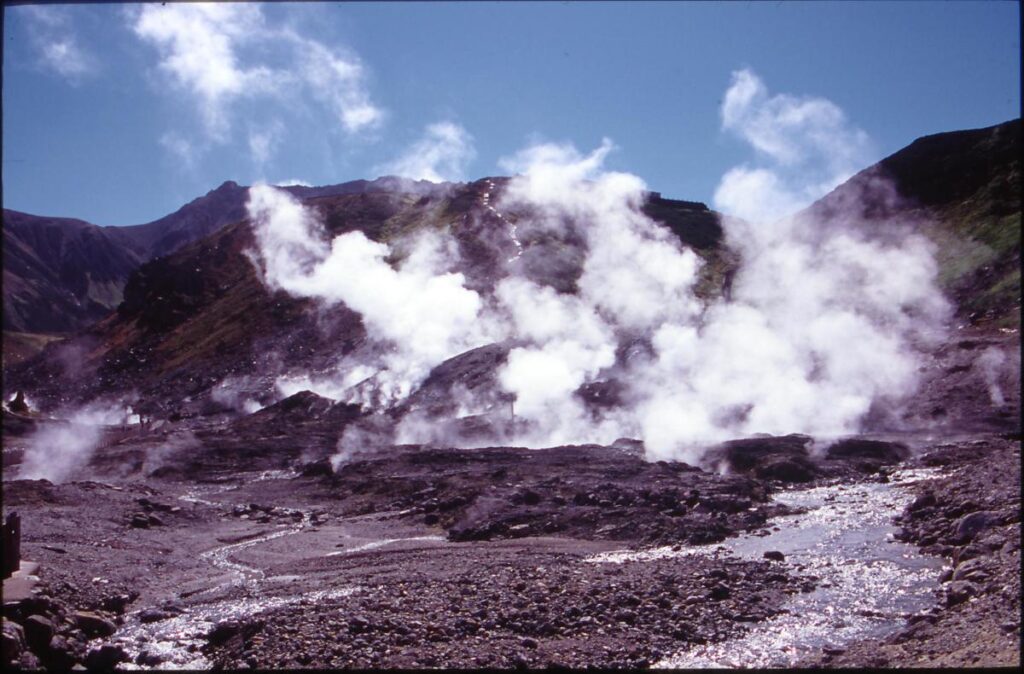
Jigokudani: The Hell Valley of Tateyama
Volcanic activity at Mount Tateyama (the Midagahara Volcano) is believed to have begun approximately 220,000 years ago. Around 100,000 years ago, repeated large-scale pyroclastic eruptions formed the Midagahara Plateau. After about 40,000 years ago, phreatic explosions created craters that became Jigokudani (Hell Valley), Mikurigaike Pond, Midorigaike Pond, and other features.
In Jigokudani today, pools of boiling water and vents emitting volcanic gases can be seen throughout the area. Bright yellow sulfur crystals formed by sublimation are scattered across the landscape, and the pungent odors of hydrogen sulfide and sulfur dioxide fill the air, creating an eerie and unsettling scene.
During the Heian period, mountain ascetics who traveled among sacred mountains throughout the country likely witnessed these extraordinary landscapes and conveyed stories of Tateyama’s hell back to the capital. The Konjaku Monogatari-shū records that “people of Japan who committed sins were often sent to the hell of Tateyama,” indicating that among aristocrats and monks in the capital, Tateyama was widely recognized as a place where hell existed.
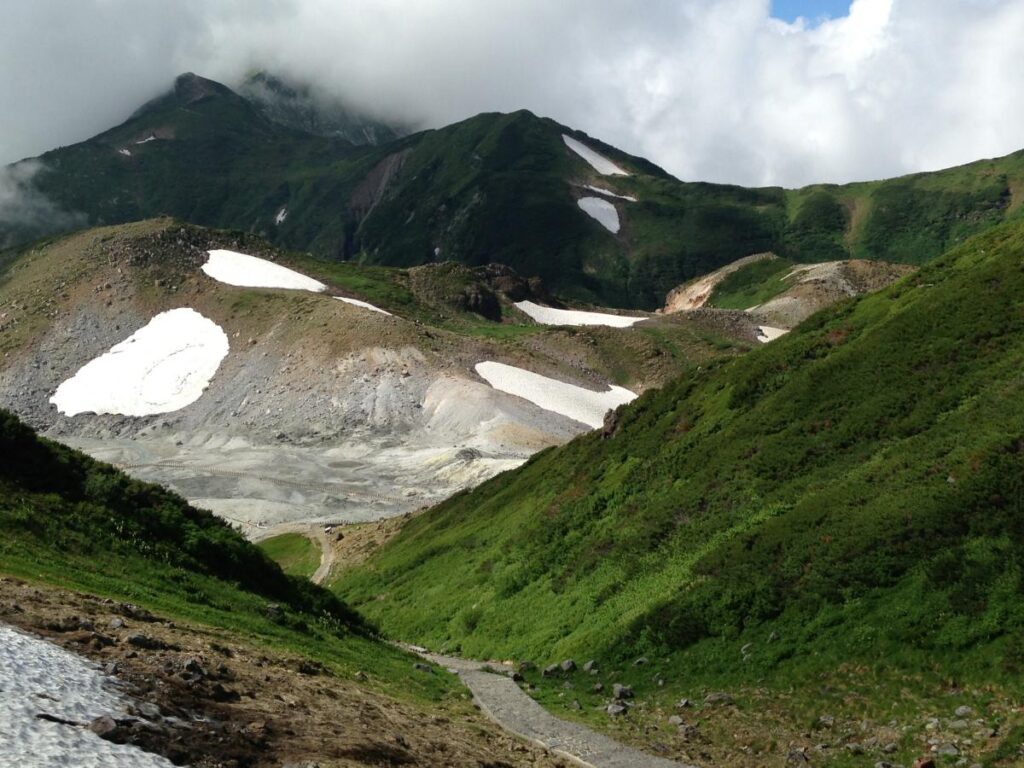
A Tale of Tateyama Hell in the Heian Period (1)
In Dai Nihon-koku Hokke Genki, Volume II, Tale 124, titled “The Woman of Tateyama in Etchū Province,” the following story is told.
An ascetic visiting Tateyama encounters a young woman in the mountains. She explains that she is the daughter of a Buddhist sculptor from Gamo District in Ōmi Province (present-day Shiga Prefecture) and that she fell into hell after death for the sin of selling Buddhist objects to support her own livelihood.
She further explains that she is able to leave hell temporarily because, during her lifetime, she had prayed to Kannon and observed a single day of vegetarian fasting. Because of this good deed, Kannon takes her place in hell once each month on the eighteenth day, bearing the suffering on her behalf. She entrusts the ascetic with a message for her parents. After hearing this message, her family commissions the copying of the Lotus Sutra as a memorial offering, and through this merit, the woman is reborn in Trāyastriṃśa Heaven, one of the celestial realms.
A nearly identical story appears in Volume 14, Tale 7 of the Konjaku Monogatari-shū.
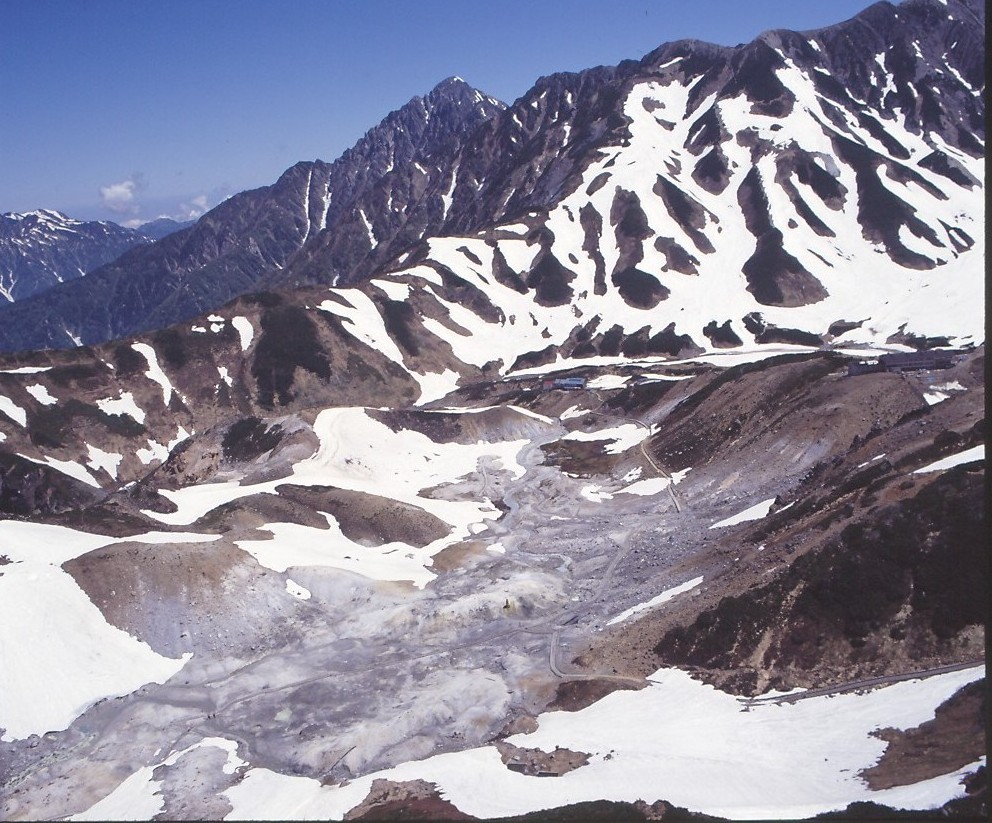
A Tale of Tateyama Hell in the Heian Period (2)
In Volume 17, Tale 27 of the Konjaku Monogatari-shū, another story is recorded.
An ascetic named Enkō, who is practicing austerities in the mountains of Tateyama, encounters a figure at around two o’clock in the morning. The figure introduces herself as a woman from Shichijō in Kyoto and explains that she died young and fell into the hell of Tateyama.
She recounts that during her lifetime she attended the Jizō devotional gatherings at Gidarin-ji Temple once or twice. Because of this good deed, Jizō Bodhisattva descends into hell and endures the suffering in her place three times a day—morning, noon, and night. She entrusts Enkō with a message for her family, who then create an image of Jizō Bodhisattva and copy the Lotus Sutra. As a result, the woman is saved from her suffering.
This tale was later illustrated during the Kamakura period and is now preserved as the Illustrated Scroll of the Miracles of Jizō Bodhisattva in the Freer Gallery of Art in the United States.
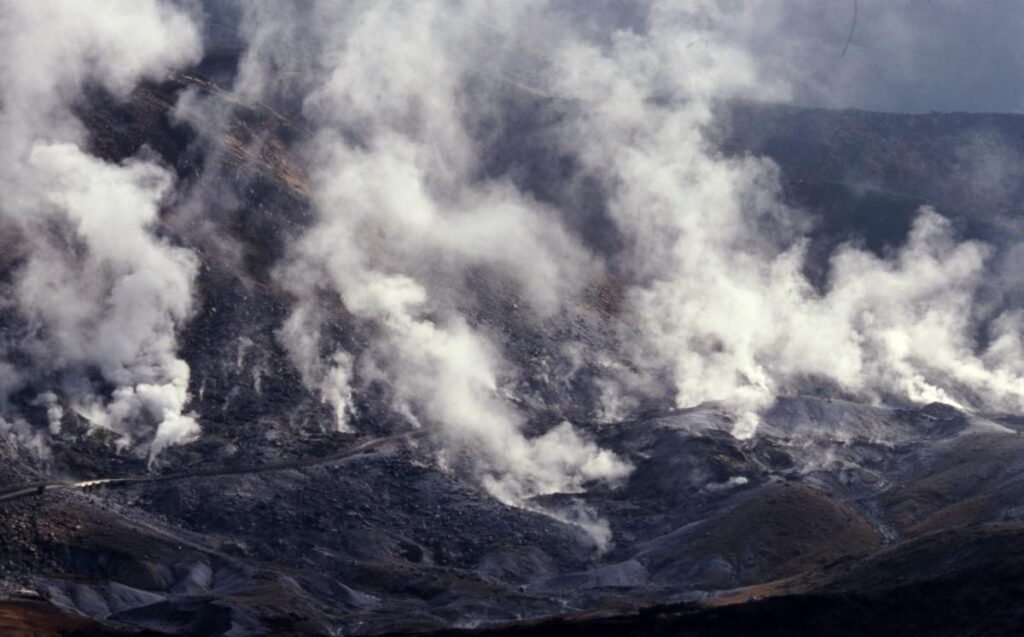
A Tale of Tateyama Hell in the Heian Period (3)
Another story set in Tateyama Hell appears in Volume 14, Tale 8 of the Konjaku Monogatari-shū.
A government clerk from Etchū Province (present-day Toyama Prefecture) performs memorial services on the forty-ninth day after his wife’s death. Later, his three children, together with a holy man, climb Tateyama to mourn their mother. Upon reaching Tateyama Hell, they hear her voice.
Their mother asks them to commission the copying of one thousand volumes of the Lotus Sutra as an offering in order to escape from hell. This request reaches the ears of the provincial governor. After the copying is completed and a Buddhist service is held, the family receives a revelation in a dream that the mother has been reborn in Trāyastriṃśa Heaven.
The Meaning of Tateyama Hell Tales
In these Heian-period tales, women who have fallen into hell appear either within Jigokudani or elsewhere in the mountains of Tateyama. In every case, they are saved from suffering through memorial offerings based on the copying of the Lotus Sutra, which was believed to extinguish sins.Stories associated with Tateyama Hell continued to be created in various forms in later periods, and Tateyama became widely known as “the mountain where hell truly exists.” During the Edo period, this reputation further developed into the image of Tateyama as a mountain of salvation for women, attracting widespread devotion among female believers.

In the next installment, we will explore Taishakuten and King Enma in the context of Tateyama faith. I hope you will continue to follow this series.
Written by Yasuhiko Takano
Director, Toyama Prefectural Tateyama Museum
Editorial Note
At the Toyama Prefectural Tateyama Museum, tales of Tateyama Hell are presented in an easy-to-understand format through interactive touch-panel displays. We also recommend several exhibition catalogs, including Tateyama in Literature, A Tour of Hell, and Tateyama × Hell Exhibition. For purchase details, please contact the Toyama Prefectural Tateyama Museum.
#https://www.yamanohi.net
#Toyama Prefectural Tateyama Museum
#Mountain Faith
#Mt Tateyama
# Tateyama Hell
#Konjaku Monogatari
#Lotus Sutra
# Amida Buddha
#Fudō Myōō
